23 Home Decor Ideas Living Room and Kitchen | Transform Your Space with Stylish Tips
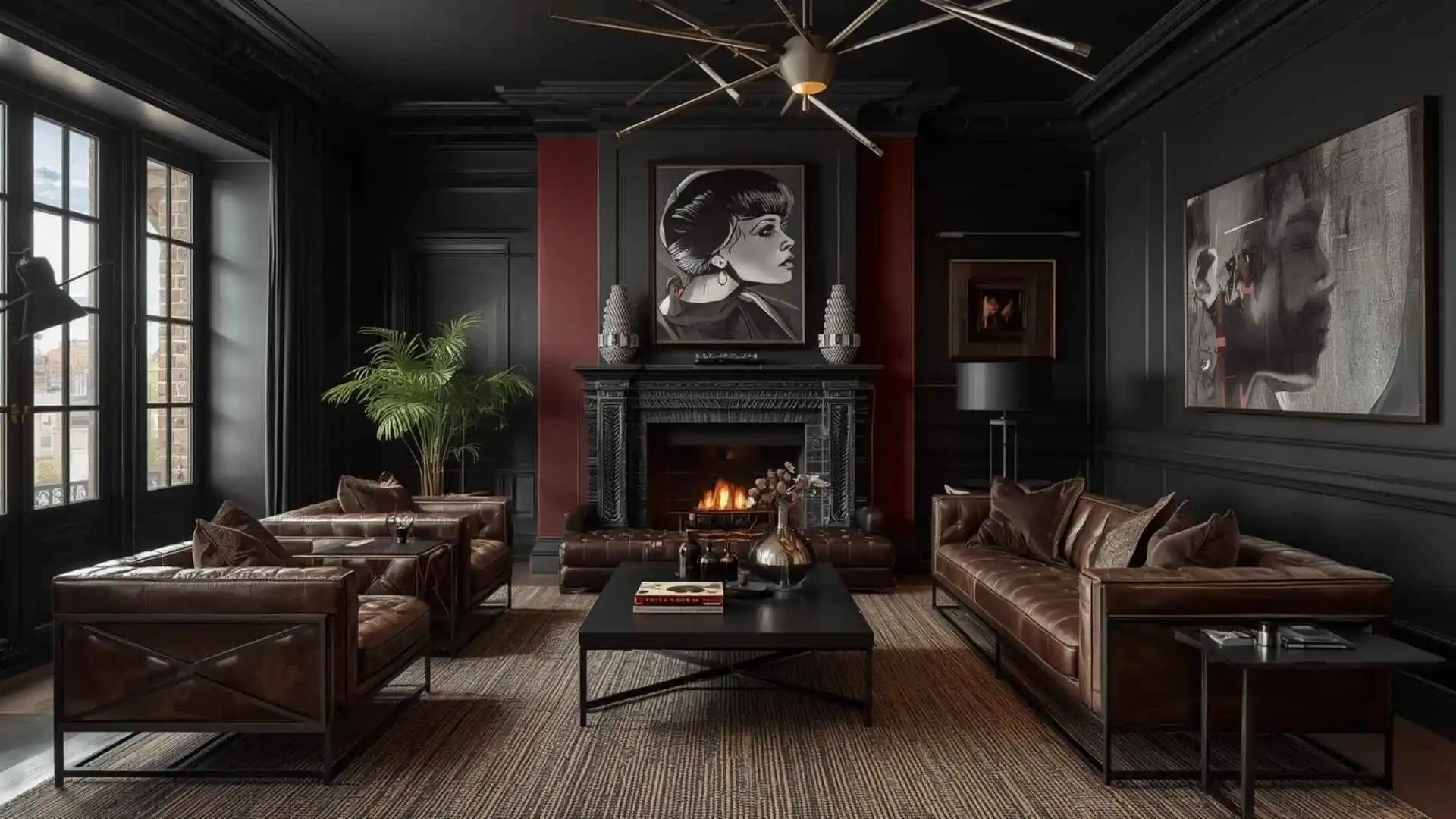
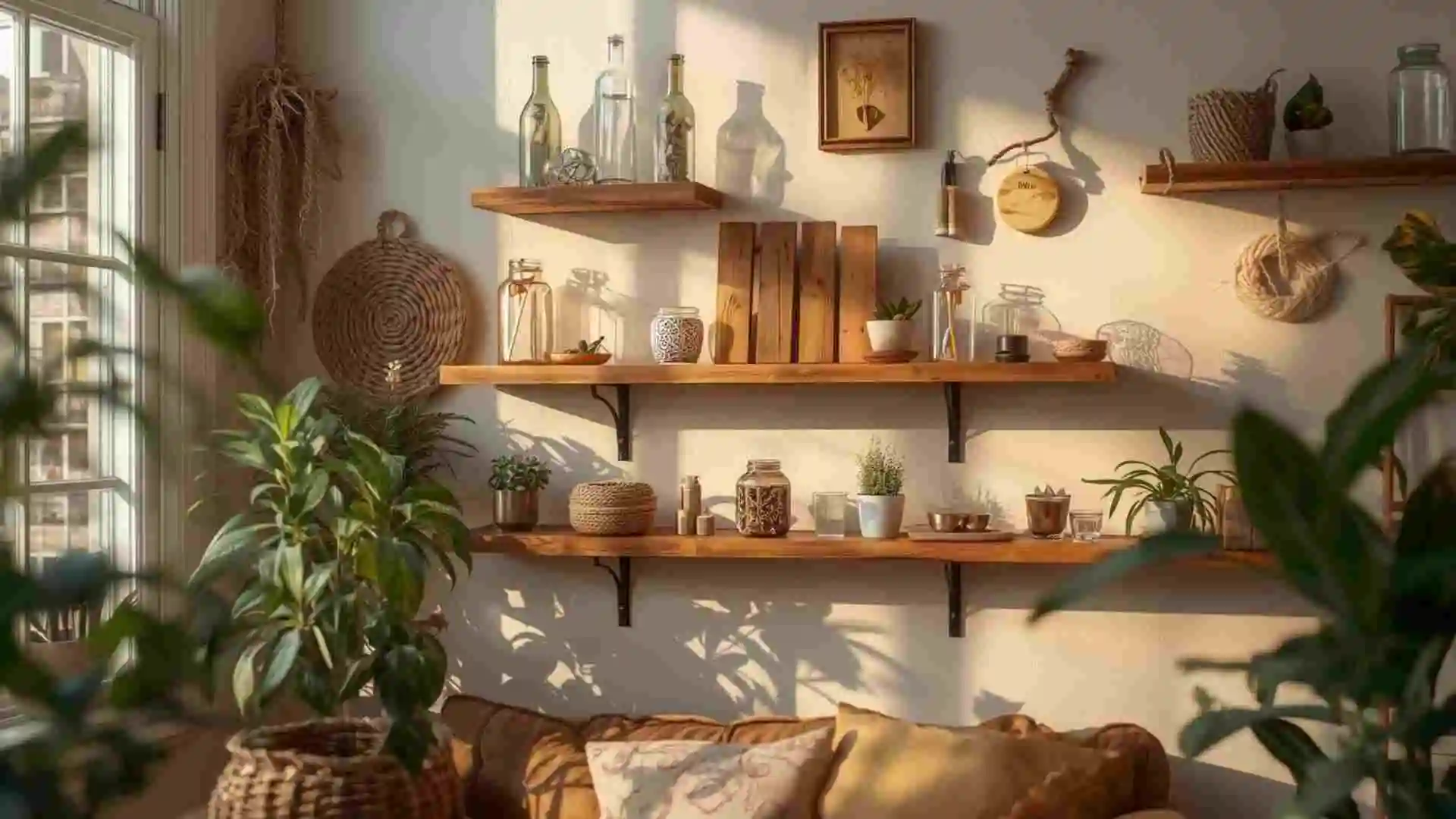
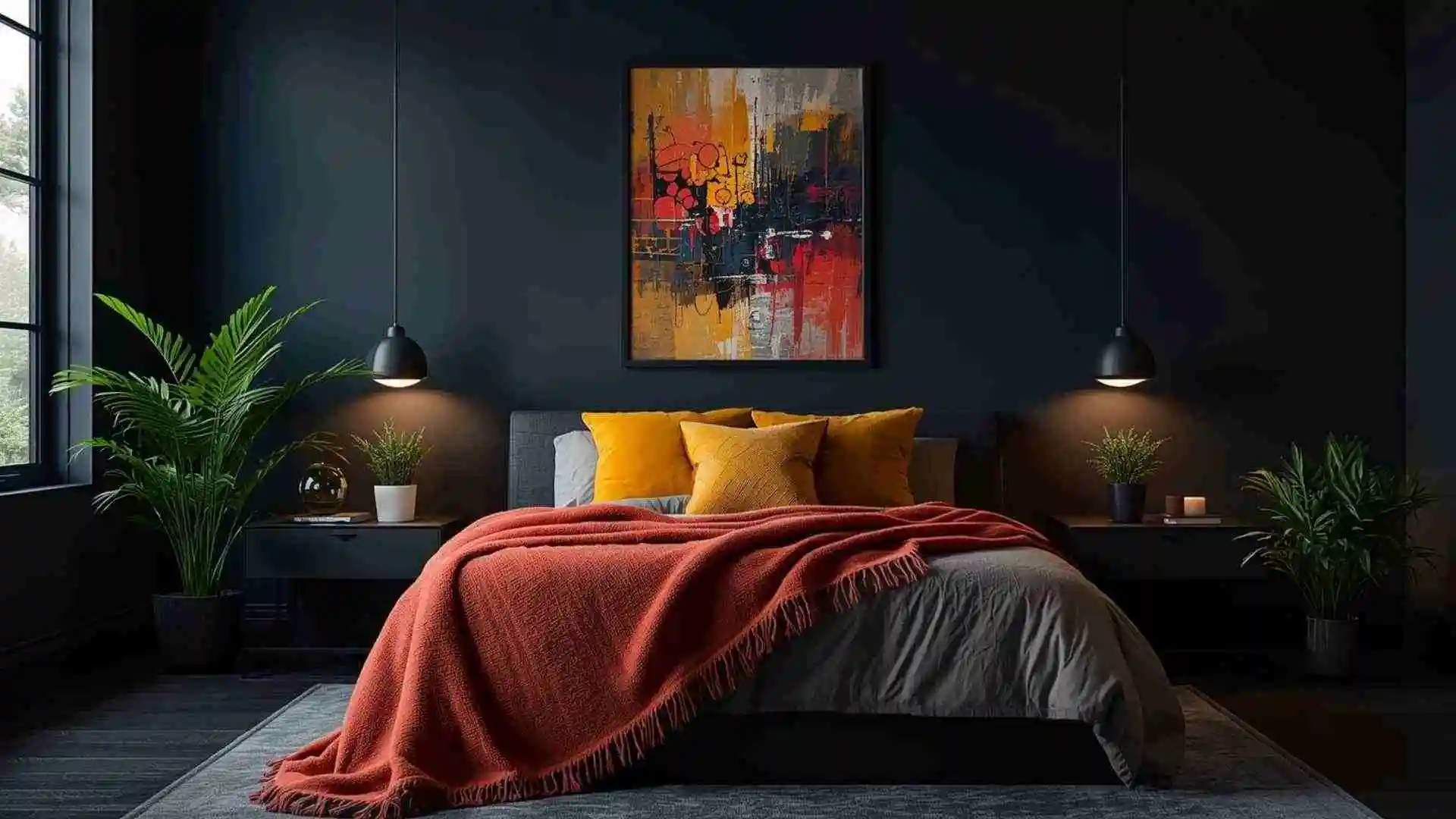
Creating a beautifully coordinated living room and kitchen can completely transform the feel of your home. By focusing on cohesive design elements, you can ensure that both spaces feel connected and harmonious. From color schemes to furniture layout, the right ideas can make your rooms appear larger, brighter, and more inviting. Thoughtful planning allows you to combine style with functionality, making everyday life more comfortable and aesthetically pleasing.
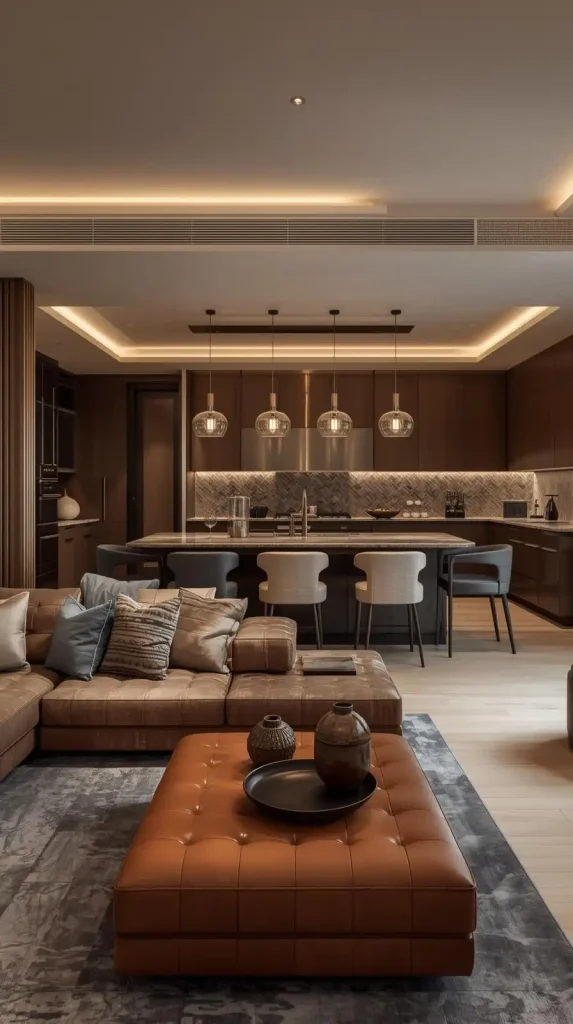
Whether you prefer modern minimalism, cozy farmhouse vibes, or eclectic charm, the key is consistency. Small details like matching accessories, coordinated lighting, and unified flooring can tie the two spaces together effortlessly. These 23 practical ideas will inspire you to create a living room and kitchen that reflect your style while maintaining flow and elegance throughout your home.
For a more elegant and refined look, you can also explore our Home Decor Ideas Living Room Cozy Classy guide, where you’ll find classy styling options to elevate your space.
1.Unified Color Palette Across Living Room and Kitchen
A consistent color palette across the living room and kitchen instantly creates a sense of harmony. Neutral shades like beige, grey, or soft white serve as a versatile foundation, while accent colors such as teal, mustard, or coral add warmth and personality. Coordinating wall colors, furniture, and decorative elements ensures a smooth visual flow and makes the space feel larger and more inviting. Small touches, including cushions, vases, or kitchen accessories, can echo the primary colors, subtly tying both areas together.

Maintaining a unified palette doesn’t mean your design has to be boring. You can mix textures, patterns, and finishes while keeping the core colors aligned. For example, a grey sofa in the living room paired with a grey kitchen backsplash creates cohesion, while patterned rugs or cushions add interest. Even lighting and fixtures can follow the color scheme, creating a seamless and stylish connection between both spaces.
2. Visual Zoning Without Walls
Visual zoning allows you to define living room and kitchen areas without physical barriers. Furniture placement, rugs, and lighting can subtly separate the spaces while keeping an open and airy feel. A sofa positioned to face the living area, combined with a kitchen island, naturally marks the kitchen zone. Using these techniques ensures each area has its own identity while maintaining connection and flow.
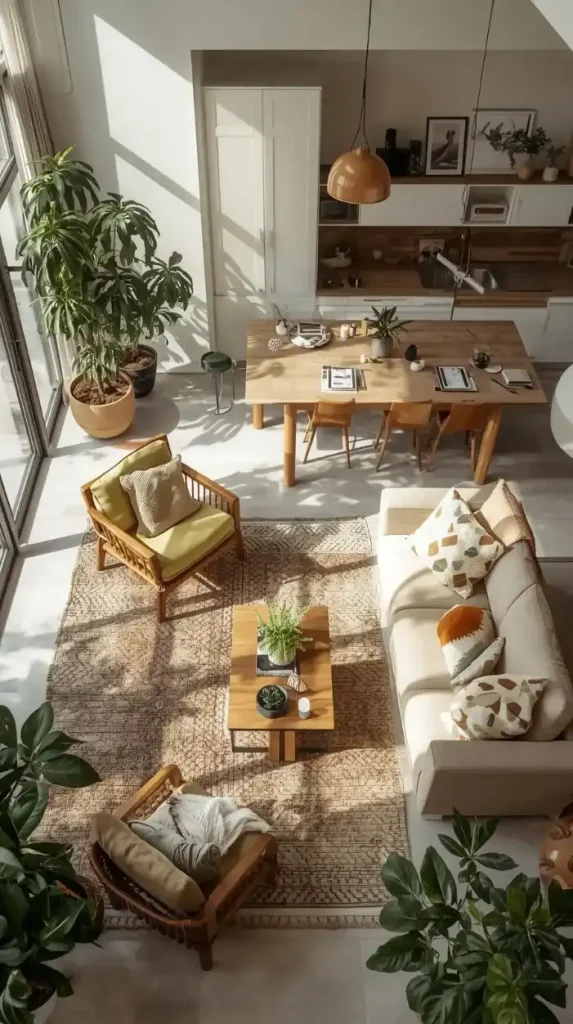
Decorative elements like low partitions, screens, or tall plants can act as soft dividers without closing off the space. Different flooring or ceiling treatments can further reinforce zoning, creating a sense of distinction while retaining openness. This approach keeps your home functional, stylish, and welcoming, ensuring both areas complement each other beautifully.
3. Cohesive Flooring That Links Both Areas
Using the same flooring in both the living room and kitchen helps tie the spaces together and creates a sense of continuity. Hardwood, laminate, or large-format tiles are excellent choices for seamless design. Consistent flooring ensures smooth visual flow, making the home feel larger and more cohesive. Even patterned or textured flooring can work if it complements the overall aesthetic of both spaces.
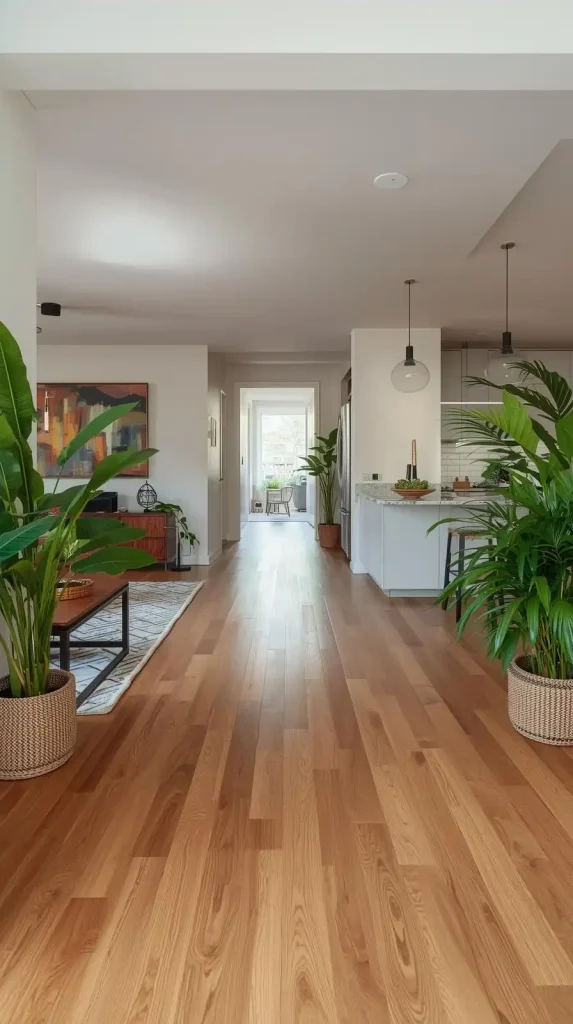
Choosing flooring also impacts the mood and atmosphere. Lighter shades make rooms feel bright and airy, while darker tones add warmth and sophistication. Area rugs in the living room can soften the look without breaking the connection with the kitchen. Thoughtful flooring choices enhance both style and functionality, making the open-plan design feel intentional and polished.
4. Lighting That Connects Yet Defines Each Zone
Lighting plays a vital role in shaping the mood of both the living room and kitchen. Pendant lights over the kitchen island, combined with soft ceiling lights in the living area, can create distinct zones while maintaining cohesion. Layered lighting, including floor lamps, under-cabinet lights, and wall sconces, ensures functionality and ambience. Thoughtful placement highlights key features and makes both spaces inviting and visually connected.
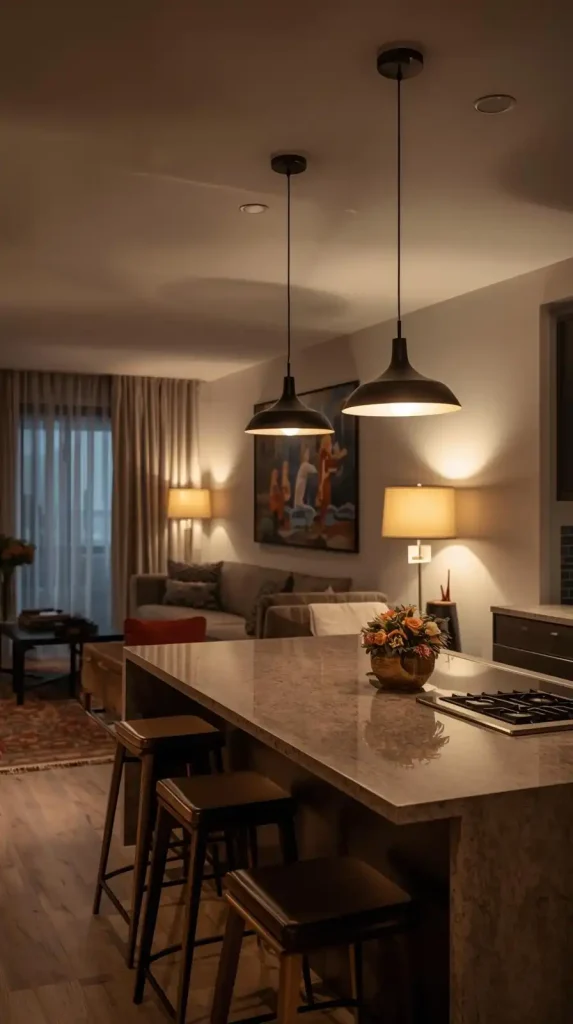
Using consistent lighting fixtures or complementary designs helps tie the areas together. Warm tones create a cozy atmosphere, while bright white lights enhance energy and clarity for cooking and daily activities. Coordinated lighting not only illuminates the space effectively but also enhances style, ensuring your living room and kitchen feel harmonious and well-planned.
5. Matching or Complementary Cabinetry & Built-ins
Kitchen cabinets and living room storage units can create a seamless design connection when matched or thoughtfully coordinated. Using similar wood tones, finishes, or hardware across both spaces creates visual unity. Even subtle echoes, like cabinet color mirrored in living room shelves or sideboards, enhance cohesion. Built-in storage also maximizes space and keeps clutter out of sight, adding both style and practicality.
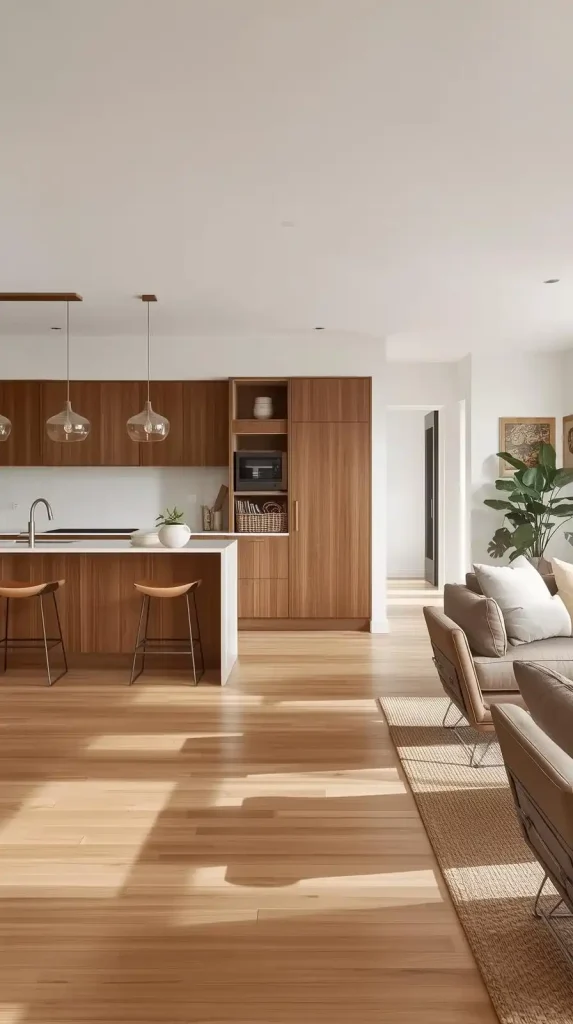
Complementary cabinetry doesn’t require identical pieces; you can mix styles while keeping the overall palette consistent. Open shelves, display units, and closed storage can blend textures and materials while reinforcing the flow between rooms. Thoughtful design choices ensure that both functional and decorative storage elements complement each other beautifully.
6. Incorporating Texture to Add Depth
Adding texture to your living room and kitchen creates visual interest and prevents a flat or monotonous look. Soft textiles like cushions, throws, and rugs in the living area can complement textured surfaces in the kitchen, such as stone countertops or patterned tiles. Mixing textures balances the visual weight, making both spaces feel layered and inviting without being overwhelming.
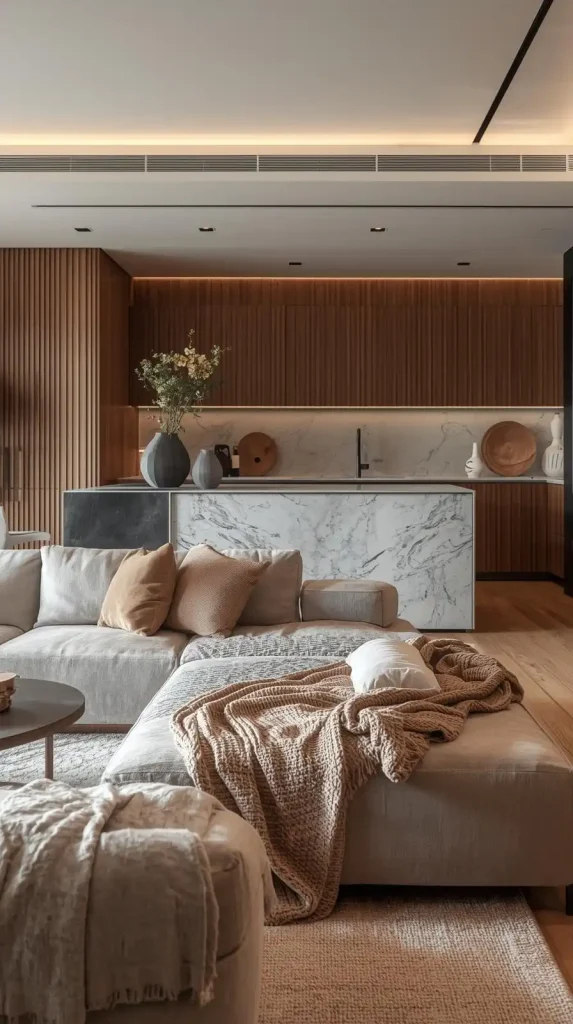
Textures also enhance the tactile experience, making your home more comfortable and welcoming. Wood, metal, glass, and fabrics can be combined creatively, creating contrast and depth. By thoughtfully layering textures, you add personality and warmth to the open-plan design while maintaining cohesion between the living room and kitchen.
7. Coordinated Hardware & Finishes
Small details like cabinet handles, faucets, and light fixture finishes can make a big difference in tying your living room and kitchen together. Choosing consistent metal tones—such as brushed gold, matte black, or chrome—across both spaces creates a polished and harmonious look. Coordinated finishes bring a sense of intentionality and cohesion that elevates the overall design.
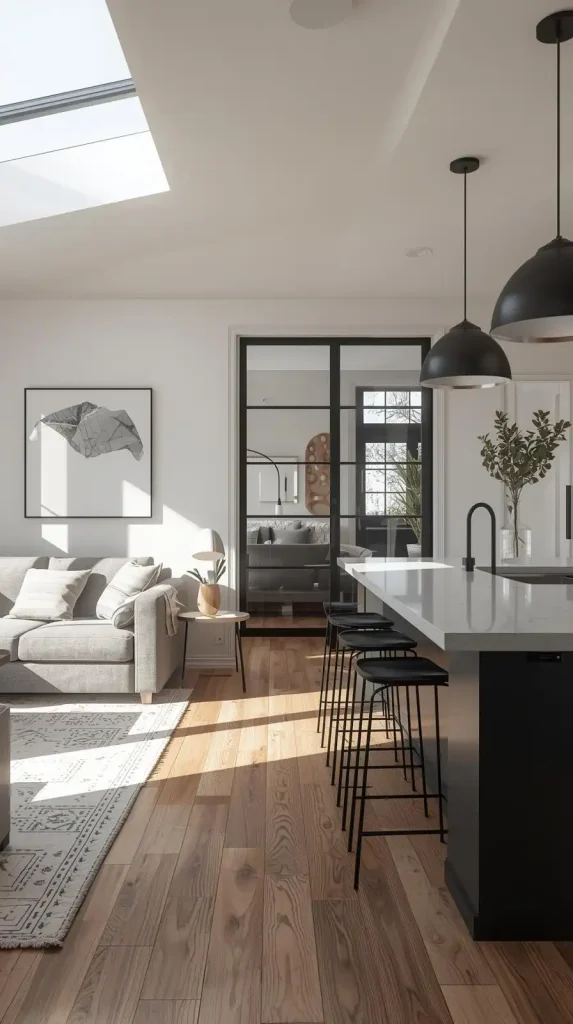
Beyond aesthetics, matching hardware improves the flow and readability of your design. Even subtle touches like matching drawer pulls or doorknobs in adjoining spaces enhance the sense of unity. Coordinated hardware and finishes show attention to detail and reinforce the style, whether modern, traditional, or eclectic.
8. Using Rugs to Anchor the Living Area
Rugs are a powerful tool to visually separate and anchor the living area in an open-plan home. They define seating zones, add comfort, and introduce color or pattern without interrupting the flow. A well-chosen rug complements the kitchen flooring while creating a distinct and cozy atmosphere in the living room.
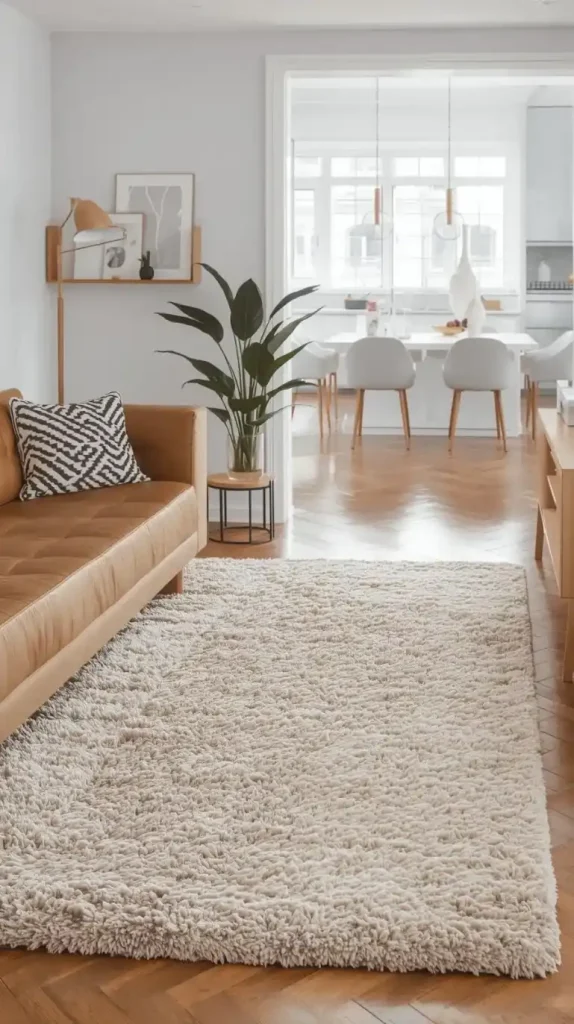
Layering rugs or using textured materials can add depth and interest to the space. Rugs also help to soften acoustics, making the open-plan home more comfortable. Selecting patterns and colors that echo elements in the kitchen ensures continuity while giving the living room its own personality and style.
9. Styling the Kitchen Island as a Focal Point
The kitchen island can serve as a visual anchor for the entire open-plan space. By styling it with decorative elements like pendant lighting, bar stools, and countertop accents, you can make it a standout feature while maintaining harmony with the living room. A well-decorated island balances function and aesthetics, drawing attention without overpowering the surrounding areas.

Choosing materials and colors that complement the living room creates a cohesive look. For instance, a marble countertop echoing tones in the coffee table or shelving units in the living room connects the spaces visually. Adding small décor items like plants or elegant bowls enhances the island’s appeal while keeping the design unified and stylish.
10. Choosing a Consistent Decoration Style
Selecting a consistent decoration style, such as modern, farmhouse, or Scandinavian, ensures both living room and kitchen feel connected. Maintaining similar themes in furniture, wall art, and accessories creates a seamless flow between the two areas. A consistent style gives the home a polished look, making design decisions easier and more intentional.
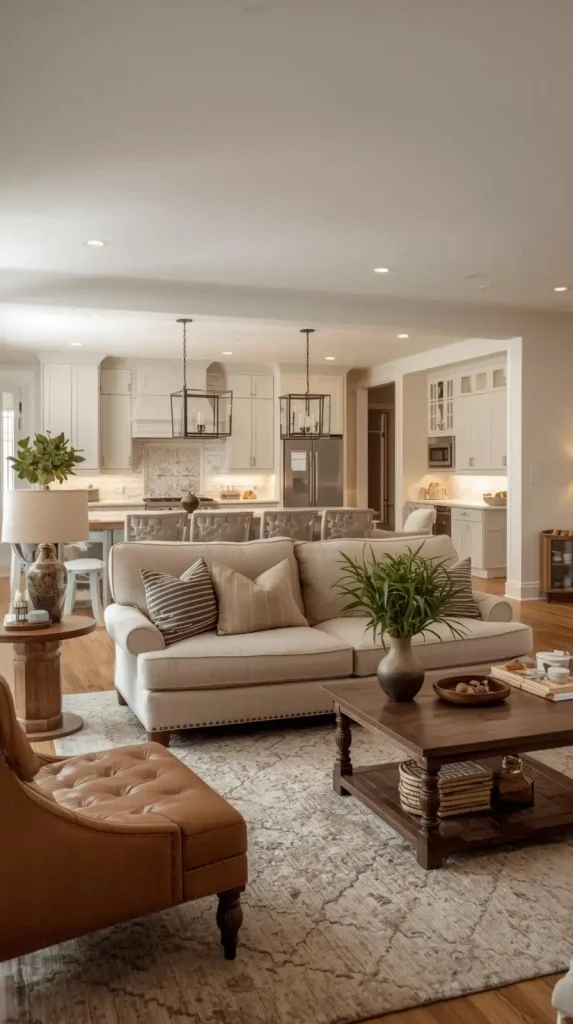
Small accents can reinforce the chosen style, like matching patterns, textures, or materials in both spaces. Even lighting, rugs, and decorative objects can subtly echo the theme, enhancing visual harmony. A cohesive decoration style ensures that the living room and kitchen complement each other while expressing your personal taste.
11. Furniture Layout That Promotes Flow Between Spaces
Arranging furniture strategically ensures smooth movement between living room and kitchen. Positioning sofas, dining tables, and islands thoughtfully maintains clear pathways while defining each zone. A well-planned layout makes daily activities easier and creates a comfortable, inviting environment.
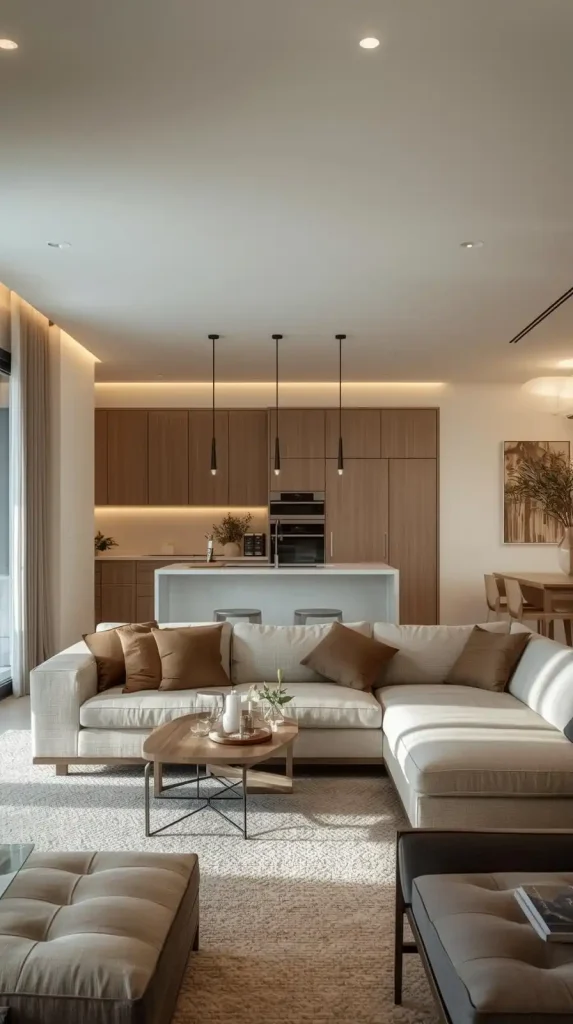
Consider multi-functional furniture that enhances both style and usability. Sectional sofas, movable islands, or storage benches can help divide spaces without blocking flow. By prioritizing circulation and comfort, your layout supports both functionality and aesthetic cohesion across the open-plan home.
12. Bringing in Greenery and Plants for Freshness
Indoor plants breathe life into any space, adding freshness and vibrancy. Strategically placing plants in the living room and kitchen ties the areas together while improving air quality. A mix of small potted plants, hanging greenery, and larger statement plants can create layers of visual interest throughout the open-plan home.
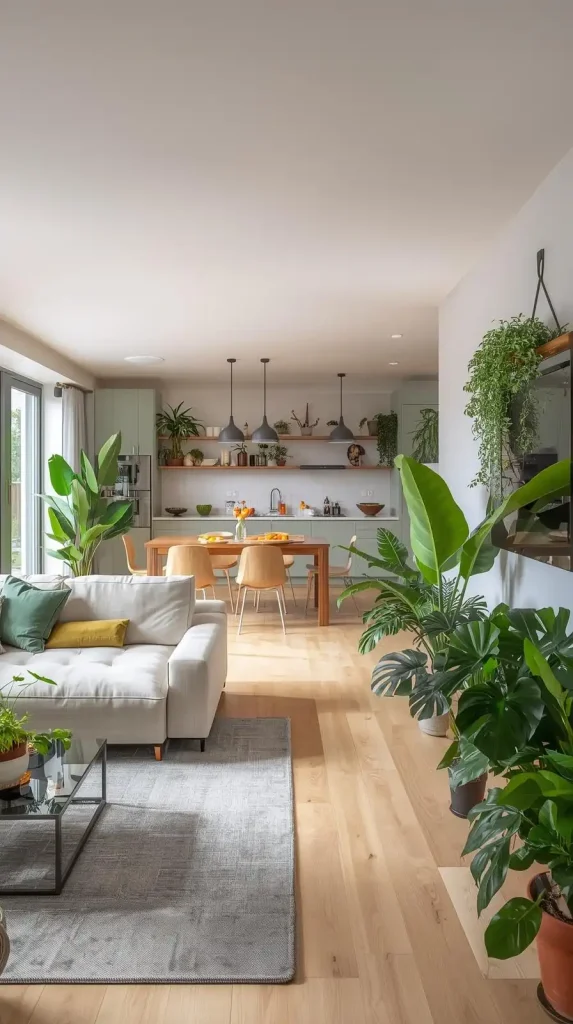
Choosing plants with complementary colors or textures enhances the overall design. Placing greenery near windows or on countertops ensures optimal growth while contributing to the décor. Plants act as natural connectors between living room and kitchen, introducing warmth, calmness, and a touch of nature into your home.
13. Using Artwork to Tie Both Spaces Together
Artwork can be a subtle yet powerful way to unify living room and kitchen décor. Selecting pieces with complementary colors, themes, or frames creates cohesion and adds personality. A thoughtfully placed painting, photograph, or wall décor can visually link the two spaces and enhance the overall aesthetic.
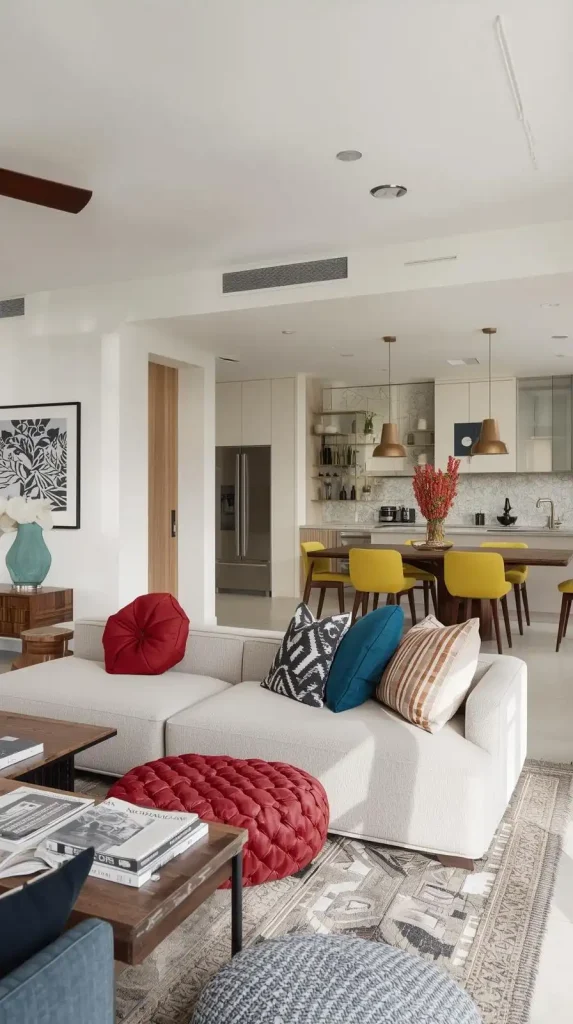
Even small decorative items, such as framed prints or decorative plates, can echo elements from one space to another. Art adds character and depth without overwhelming the rooms. Using artwork as a unifying element ensures your open-plan design feels intentional, stylish, and harmonious.
14. Styling Window Treatments for Cohesion
Coordinating curtains, blinds, or shades in both the living room and kitchen helps unify the spaces. Choosing fabrics and colors that complement the overall palette creates visual flow and adds softness to the design. Properly styled window treatments also control light, enhance privacy, and contribute to the room’s ambiance without breaking the connection between zones.

Mixing textures or patterns in a subtle way can add interest while maintaining cohesion. For instance, linen drapes in the living area can echo tones in the kitchen’s blinds, or patterned valances can reflect accent colors elsewhere. Thoughtful window styling ensures both areas feel intentional, comfortable, and visually harmonious.
15. Creating a Statement Wall That Runs Through Both Areas
A shared accent wall or continuous design feature can tie the living room and kitchen together visually. Bold paint, wallpaper, or textured panels create a focal point that links both spaces, adding personality and depth. This approach enhances continuity and draws the eye through the open-plan area naturally.
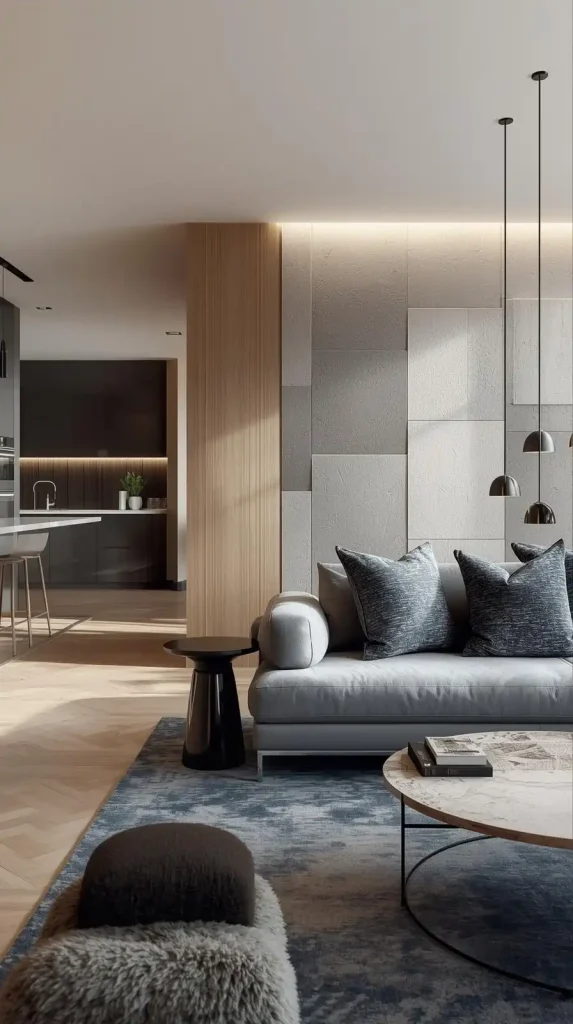
Even subtle treatments like a textured backsplash in the kitchen mirrored by a similar feature wall in the living room can create unity. The statement element should complement furniture and décor, maintaining balance without overwhelming the space. This design strategy provides a cohesive and striking connection between the rooms.
16. Mixing Materials Thoughtfully
Combining different materials—wood, metal, stone, and fabrics—adds visual interest while maintaining balance. Using consistent tones or finishes ensures that the mix feels deliberate rather than chaotic. For example, a wooden dining table in the kitchen can complement a wooden coffee table or shelving in the living room.

Textures also play a role in creating depth and dimension. Smooth countertops paired with soft textiles, or metal accents with wooden furniture, can create harmony across the open-plan home. Thoughtful material choices make both areas feel connected, stylish, and layered.
17. Incorporating Smart Storage Solutions
Efficient storage keeps both living room and kitchen clutter-free while enhancing style. Built-in cabinets, shelving, and multifunctional furniture help maintain a clean, organized look. Well-planned storage ensures each zone has designated spaces for essentials without interrupting the visual flow.

Hidden storage, like under-island cabinets or ottomans with compartments, adds functionality while keeping décor streamlined. Matching storage styles or finishes in both areas reinforces cohesion, making the open-plan layout feel tidy, intentional, and harmonious.
18. Personalizing with Unique Décor Accessories
Adding personal touches like vases, sculptures, or framed photos brings character to both the living room and kitchen. Coordinating colors or styles ensures these elements enhance cohesion rather than disrupt it. Thoughtful accessories reflect personality while contributing to the overall design narrative.
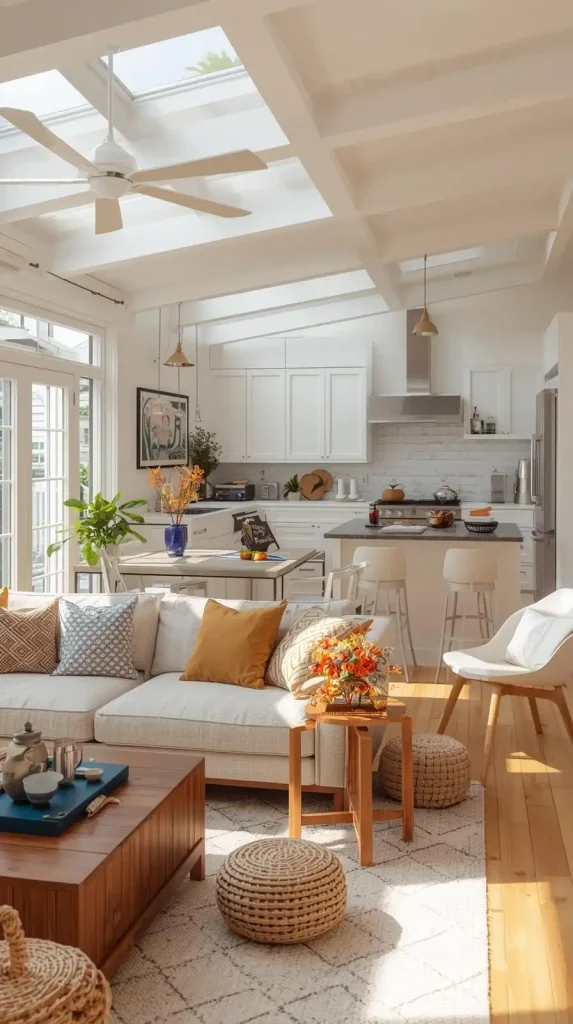
Even small items like decorative bowls, candle holders, or kitchenware in matching tones can subtly tie the spaces together. Personalization adds warmth and individuality, making the home feel inviting while maintaining harmony and style across the open-plan layout.
19. Reflecting Kitchen Style into the Living Room
Carrying elements from the kitchen into the living room creates a cohesive look. Matching countertop tones, cabinet finishes, or accent colors in furniture and décor bridges the two spaces. Subtle echoes in textures or patterns ensure a seamless visual flow, making the open-plan design feel intentional and unified.
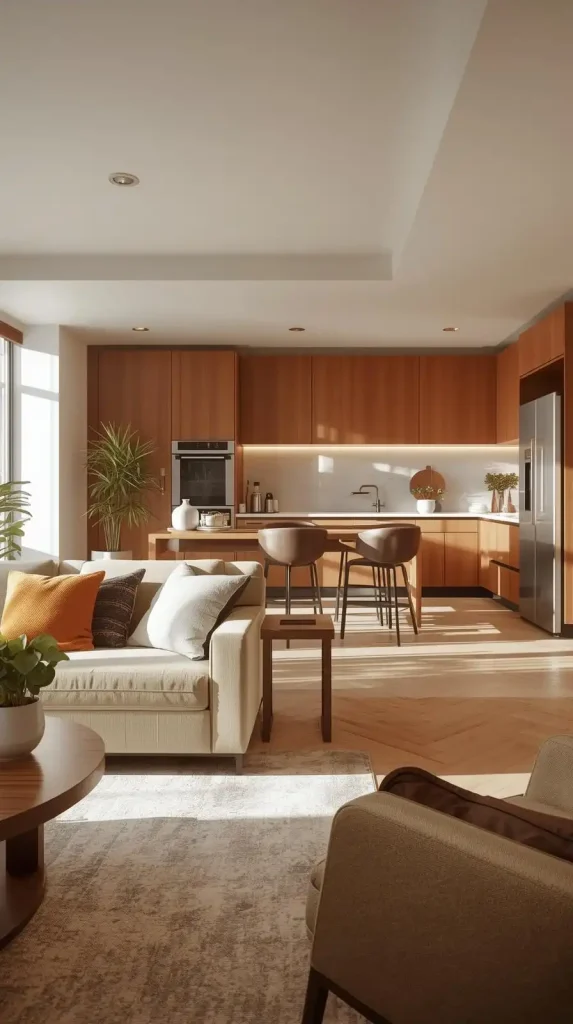
Even smaller details, like bar stools that complement living room chairs or kitchen lighting that echoes living room lamps, reinforce this connection. Mirroring the kitchen style subtly throughout the living area enhances harmony, making both spaces feel part of a single, well-designed home.
20. Transitioning Surfaces Seamlessly
Using continuous surfaces like countertops, flooring, or backsplash materials links the living room and kitchen visually. Smooth transitions make the space feel larger and more integrated, avoiding abrupt breaks that can disrupt flow. Coordinated surface materials also reinforce style consistency across both areas.
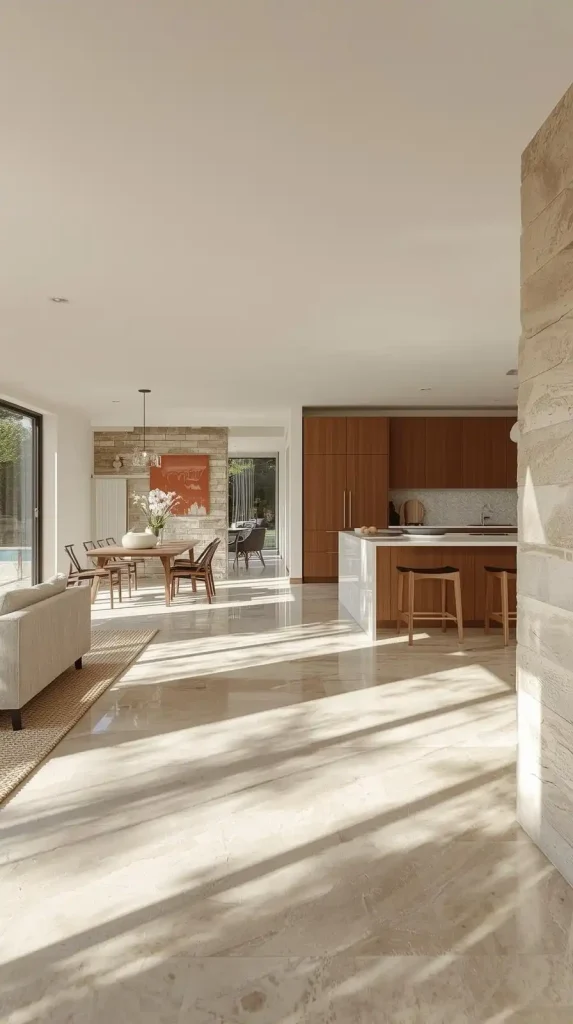
Even mixing materials can work if the colors or textures complement each other. For example, a stone kitchen countertop can echo stone accents in the living room table or shelving. Thoughtful surface transitions provide a polished, cohesive look while enhancing functionality and aesthetic appeal.
21. Applying Color Accents that Repeat in Both Zones
Repeating accent colors throughout the living room and kitchen ties the spaces together beautifully. Throw pillows, kitchen accessories, and artwork can share similar shades, creating a subtle visual connection that feels intentional and stylish. Color accents help unify the open-plan design without overwhelming it.
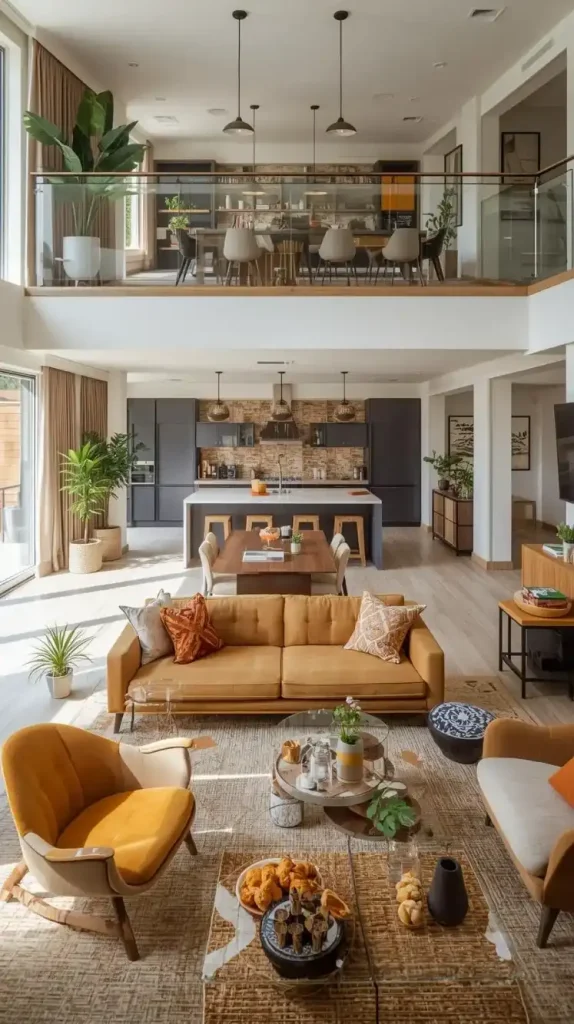
Layering these accent colors in textiles, decorative items, or small furniture pieces adds rhythm and interest. Using the same hues in both spaces ensures continuity while giving each area its own character. Coordinated color accents make the home feel harmonious, vibrant, and thoughtfully curated.
22. Flexible or Multi-functional Furniture
Furniture that serves multiple purposes enhances functionality in both the living room and kitchen. Extendable tables, storage ottomans, or convertible seating create practical solutions without compromising style. Multi-functional pieces help maintain an organized and spacious feel in open-plan layouts.
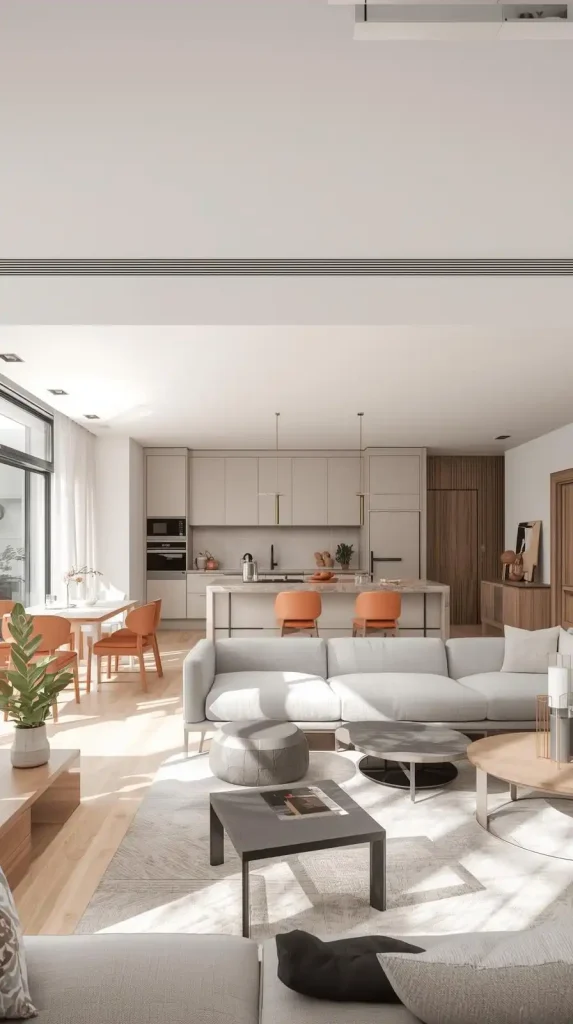
Choosing pieces that visually complement each space ensures cohesion. For example, a bench in the kitchen with matching cushions in the living room reinforces design continuity. Flexible furniture supports comfort, efficiency, and style, making the home adaptable and aesthetically pleasing.
23. Using Artful Lighting Accents
Adding decorative lighting elements like pendant lamps, LED strips, or accent lights highlights both functional and aesthetic zones. Coordinated lighting creates atmosphere, enhances design features, and unifies the living room and kitchen visually. Artful illumination elevates the home’s overall style while maintaining flow.

Lighting can also emphasize textures, colors, and decorative details, drawing attention to curated spaces. Matching lighting finishes or designs across both zones ensures cohesion while creating a warm, welcoming ambiance. Thoughtful lighting design adds depth, drama, and elegance to open-plan living.