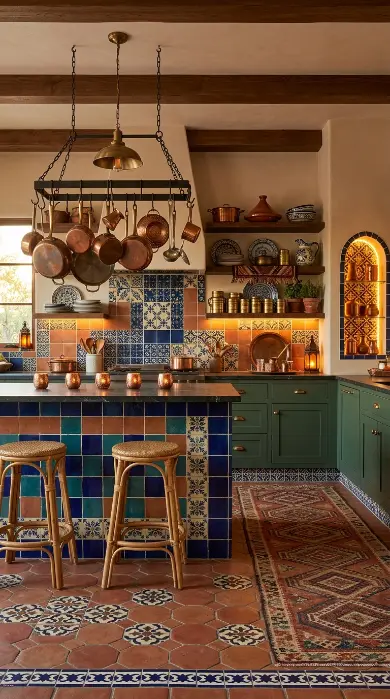
12 Bohemian Kitchen Ideas Global Patchwork Tile Copper Pots
There is a kind of kitchen that has been collecting itself for decades — where the back splash is a map of every market visited and every workshop found down a side street in a foreign city, where the copper pots hanging from an iron rack carry the patina of genuine use and genuine time, where the open shelving displays things that were beautiful enough to bring home from Morocco or Portugal or Mexico rather than things that were ordered from a catalogue. The global patchwork tile and copper pot kitchen is that kitchen — assembled rather than designed, rich rather than refined, and more alive than any kitchen that was ever conceived as a single coherent scheme.
Patchwork tile is the material language of the global collector. Each tile in a patchwork installation comes from a different tradition — a deep cobalt Moroccan zellige beside a hand-painted Mexican Talavera beside a Portuguese azulejo beside a plain terracotta beside an Indian indigo resist print tile — and the composition that results from placing them together is not chaos but a kind of richness that no single tile tradition can achieve alone. The copper pot collection is its functional counterpart: copper is the oldest cooking metal still in serious use, it conducts heat unlike any other material, and a collection of varied copper pieces — saucepans, braziers, Turkish coffee pots, hammered serving bowls — develops a patina over years of cooking that is more beautiful than anything a factory finish can produce.
These 12 ideas build the global patchwork tile and copper pot bohemian kitchen from every angle — the tile compositions, the copper collections, the open storage and display, the global textile and ceramic accents, and the complete kitchen as a single deeply layered space that rewards looking at from every angle and at every time of day.
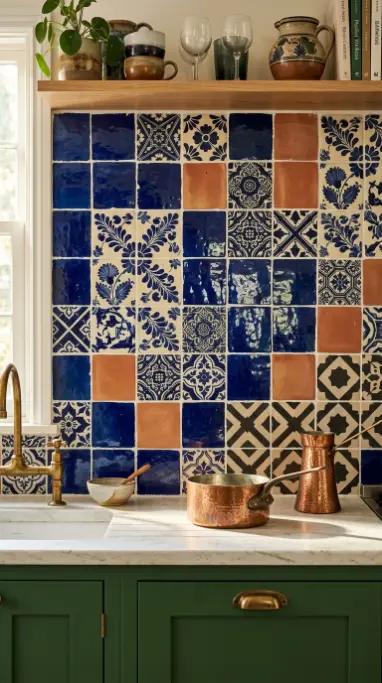
1. Global Patchwork Tile Back Splash — Full Composition
Cover the full kitchen back splash from counter to upper cabinet height in a hand-assembled global patchwork tile composition — individual tiles from at least six different traditions laid together without a fixed repeating pattern, each tile chosen for its individual beauty and its contribution to the whole. The composition: deep cobalt blue Moroccan zellige in irregular cut pieces, hand-painted Mexican Talavera tiles in cream and blue floral, Portuguese azulejo fragments in deep navy and white geometric, small Indian indigo and white resist-print ceramic tiles, plain warm terracotta tiles in a simple square format, and a few Moroccan encaustic cement tiles in geometric black and cream. White grout throughout, the grout lines reading as a unifying web across the varied tile faces.
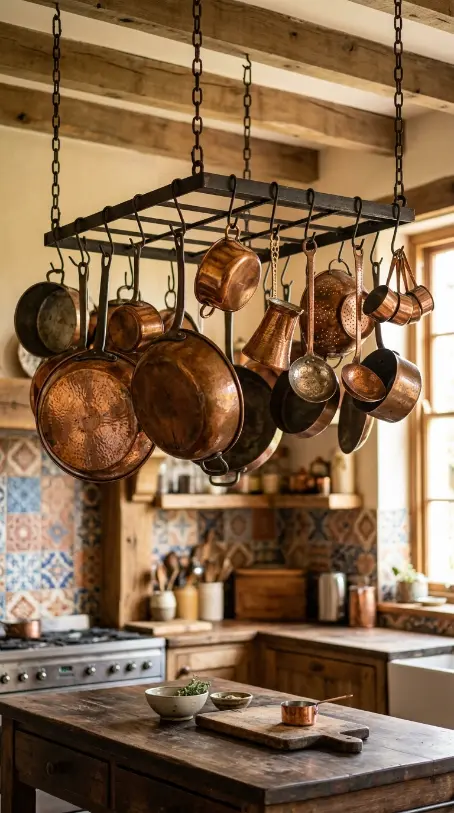
2. Hanging Copper Pot Collection on Iron Pot Rack
Install a wide ceiling-mounted iron pot rack above the kitchen island or counter — a wide rectangular or oval iron pot rack in dark forged iron or aged black steel, hung from the ceiling on iron chain or rod, with a full collection of varied copper pots and pans hanging from iron S-hooks on every available hook position. The copper collection: varied sizes and forms — a wide copper sauté pan, a deep copper stock pot, a small copper butter warmer, a Turkish copper coffee pot, a wide copper brazier, a hammered copper ladle and serving spoon, a wide copper colander, a small copper measuring cup collection. Every piece a different age and a different stage of patina — some bright and warm, some deep amber-brown with genuine cooking patina, some with areas of deliberate dark patina. The copper pot rack is the most commanding display element in the bohemian kitchen — a ceiling-height collection of the most beautiful cooking metal, making the kitchen infrastructure as visually rich as any decoration.
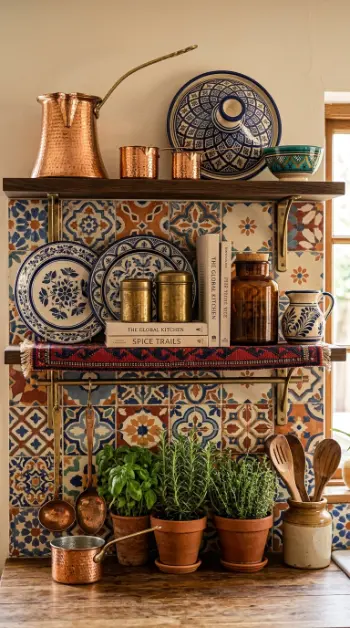
3. Global Open Shelving With Copper, Ceramic, and Textile Display
Replace upper kitchen cabinets with open shelving — shelves in dark timber or forest green painted timber on simple aged brass bracket arms — and style each shelf as a genuinely global collected display: Turkish copper coffee pots and small copper measuring cups beside Moroccan ceramic tagine lids used as decorative objects, Portuguese ceramic plates in blue and white beside Indian brass spice tins, a small Mexican Talavera ceramic pitcher beside a woven Moroccan kilim textile runner on one shelf, copper ladles and serving pieces hanging from hooks below the shelf edge, amber glass pantry jars with cork stoppers, small terracotta pots of fresh herbs. The global open shelf kitchen is a world tour in miniature — every object from a different place, every object beautiful, and all of them at home on the same shelf because someone collected them with a consistent eye for warmth and handmade quality.
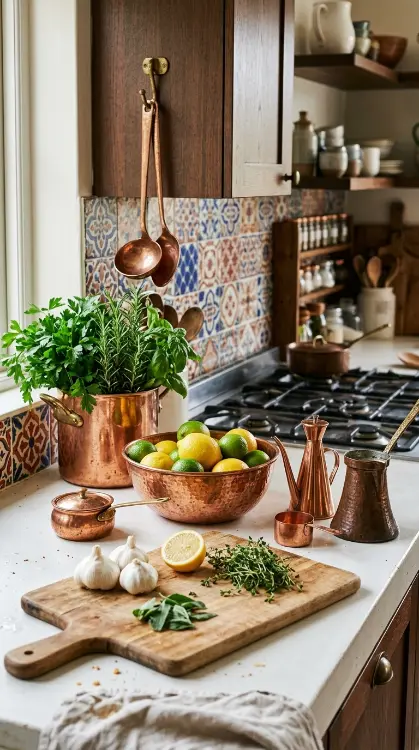
4. Copper Pot Counter Vignette as Kitchen Focal Point
Style the kitchen counter beside the stove as a copper pot vignette — a composition of copper pieces arranged as a functional still life: a wide hammered copper bowl holding lemons and limes, a tall copper stockpot on the back counter with a bunch of fresh herbs standing in it, a small copper butter warmer in the foreground, a copper olive oil pourer, a wide wooden chopping board with fresh garlic, herbs, and citrus, a Turkish copper coffee pot on the counter surface, and a copper measuring cup and a copper ladle hanging from a hook on the side of the cabinet. The counter copper vignette is where the bohemian kitchen principle of beautiful functional objects is most purely expressed — every copper piece on the counter is there because it is used, and because it is beautiful, and because the distinction between using and displaying has been deliberately dissolved.
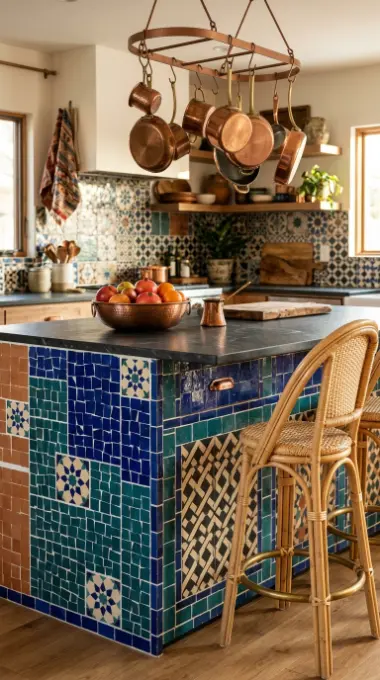
5. Moroccan-Style Kitchen Island With Patchwork Tile Face
Build the kitchen island with a full Moroccan-inspired patchwork tile cladding on all three visible cabinet faces — each face covered in a composition of Moroccan zellige in deep cobalt, teal, and warm terracotta, interspersed with small Moroccan hand-painted ceramic tiles in cream and deep blue geometric motifs, and Moroccan encaustic cement tiles in black and cream geometric patterns. The island face becomes a three-dimensional display of Moroccan tile artistry in a patchwork rather than a uniform installation, white grout visible between all tiles. Topped with a thick dark slate or natural stone counter, copper hardware throughout, and a set of copper bar stools or rattan stools at the bar overhang. The Moroccan-tiled island is the most dramatic single element in the global patchwork kitchen.
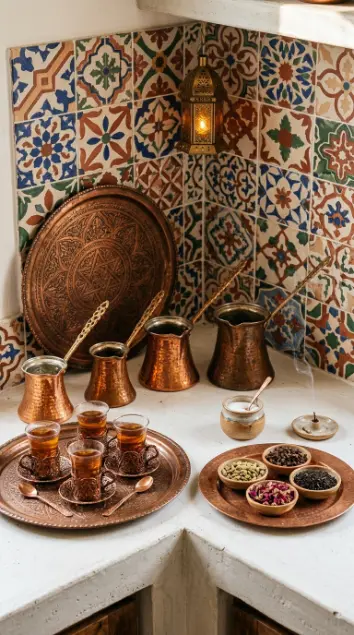
6. Turkish and Middle Eastern Copper Coffee Corner
Dedicate one kitchen counter zone to a Turkish and Middle Eastern coffee and tea service display — a small corner counter or narrow counter section styled entirely around the ritual objects of the coffee and tea traditions: a wide copper cezve (Turkish coffee pot) collection in varied sizes and patina stages, a wide engraved copper tea tray, small ceramic or copper tea glasses in a hammered copper holder, a wide copper serving plate with a collection of small ceramic bowls holding cardamom pods, cloves, dried rose petals and loose-leaf tea. The Turkish coffee corner is the kitchen zone where the global collector principle is most intimately expressed — these are objects from a specific place and a specific daily ritual, brought into a bohemian kitchen because the ritual and the objects that serve it are both genuinely beautiful.
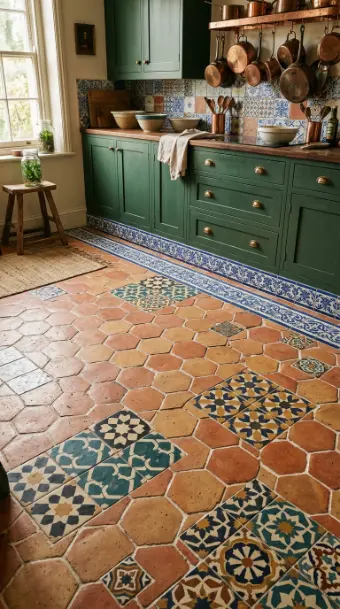
7. Global Patchwork Tile Kitchen Floor
Lay the kitchen floor in a global patchwork tile composition — a wide floor area in a mixed tile installation combining Moroccan encaustic cement tiles in varied geometric patterns, plain terracotta hexagonal tiles as the primary field with inset sections of Moroccan patterned encaustic, a border section of Portuguese azulejo-inspired deep blue and white hand-painted ceramic tiles, and individual antique Moroccan and Spanish tiles used as accent pieces scattered through the terracotta field. The patchwork tile floor turns the kitchen’s largest surface into its most decorative one — the eye travels across the floor as it would across a map, finding different patterns and tile traditions at every step, and the copper pots and global objects above the floor are reflected in the glaze of the patterned tiles below.
8. Copper and Ceramic Global Spice Collection Display
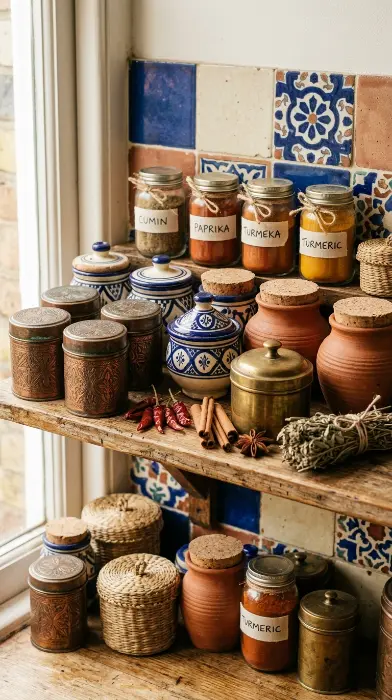
Build a dedicated spice collection display along one kitchen counter or on a narrow wall-mounted spice shelf — a wide collection of spices stored and displayed in varied global vessels: small copper spice tins with engraved lids, small ceramic pots in Moroccan blue and cream, small Indian brass spice tins, small hand-thrown terracotta spice jars with cork stoppers, small glass jars with hand-written labels, small woven seagrass spice baskets with lids — the collection arranged on a narrow wooden shelf or directly on the counter surface in front of the patchwork tile back splash. A global spice collection display in a bohemian kitchen is the point where the kitchen’s decorative and functional lives are most completely unified — the spices are organized, the containers are beautiful, and the display makes the act of cooking in this kitchen feel like a ritual from many traditions simultaneously.
9. Woven Global Textiles in the Kitchen — Kilim Runner, Hanging, and Cushion
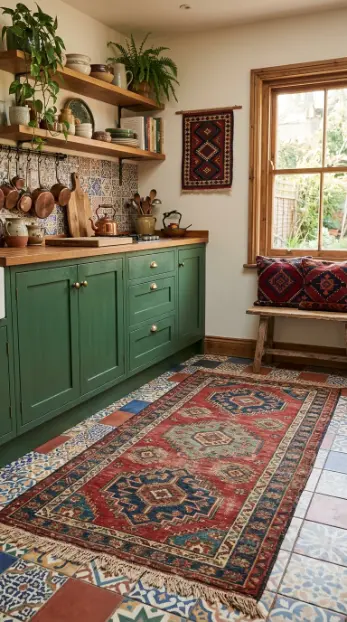
Bring global woven textiles into the kitchen space — a wide vintage kilim runner on the kitchen floor in front of the counter, a small woven Moroccan textile panel mounted on the kitchen wall beside the shelving, and a few kilim cushion covers on the kitchen window seat or on a small bench. A Turkish or Moroccan kilim in a kitchen is an unexpected and genuinely beautiful material contrast — the soft woven textile against the hard tile floor, the geometric pattern of the kilim against the patchwork pattern of the tile back splash, the warmth of the wool or cotton fibre against the cold practicality of the kitchen surfaces. The kitchen with a kilim runner is the kitchen that understands that a room is not defined by its function alone.
10. Copper-Lit Kitchen at Evening With Warm Amber Atmospheric Lighting
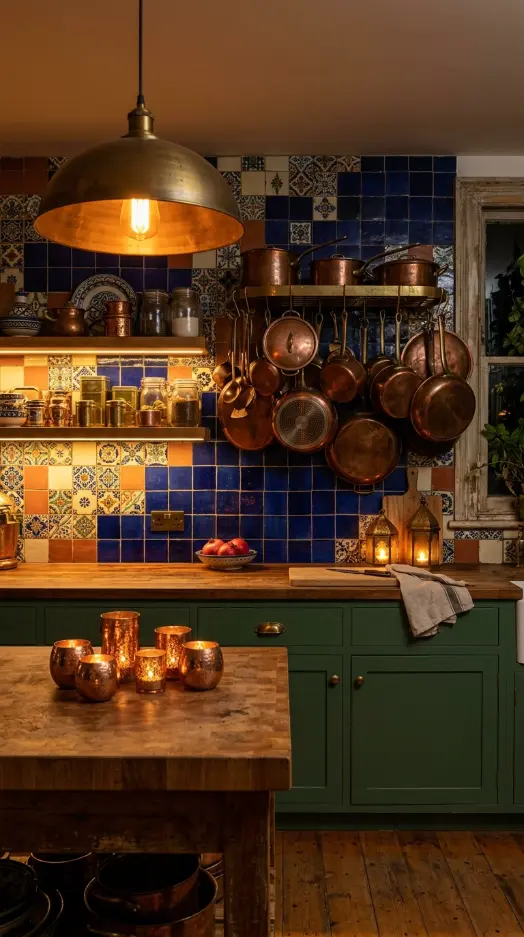
Design the global patchwork tile and copper pot kitchen for its evening appearance — the kitchen lit with warm amber lighting from concealed LED strips under upper cabinets washing across the patchwork tile back splash, an aged brass pendant light above the island with a warm amber bulb, a collection of small votive candles in hammered copper candle holders on the counter, and the copper pot collection catching the warm ambient light and glowing with their deepest amber-brown patina. The evening patchwork tile kitchen is a fundamentally different space from the afternoon one — the zellige tile cobalt deepens in warm amber light, the copper glows amber-gold, and the kitchen becomes the warmest room in the house.
11. Global Patchwork Tile Niche With Copper Vessel Display
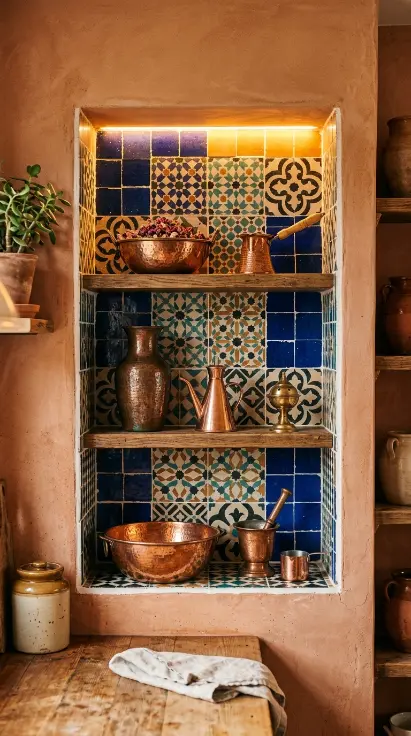
Build or commission a shallow rectangular wall niche in the kitchen — a recessed niche approximately 40cm deep, 80cm wide and 90cm tall — and line the interior back wall and sides entirely with a Moroccan-style mirror and patchwork tile composition, then dress the niche interior shelves with a curated copper vessel collection. The tiled niche with copper display is the most architecturally considered display element in the global patchwork kitchen — it gives the copper collection a framed, lit, three-dimensional home within the wall structure, and the tiled interior multiplies the warm copper reflections across the mosaic and tile surfaces within the niche.
12. Complete Global Patchwork Tile and Copper Pot Kitchen — All Elements Together
Design the most complete global patchwork tile and copper pot bohemian kitchen — every element simultaneously present and in conversation: full global patchwork tile back splash in six tile traditions, patchwork tile floor in terracotta hexagonal and Moroccan encaustic inset and blue and white border, Moroccan patchwork tile-clad island, iron pot rack fully hung with a varied copper collection, global open shelving with Turkish coffee pots and Moroccan ceramics and Indian brass and Mexican Talavera and woven textile shelf runner, Turkish copper coffee corner with cezve collection and engraved tray, global spice collection display, Moroccan tile-lined wall niche with copper vessel display, vintage kilim runner on the patchwork floor, global woven textile panel on kitchen wall, kitchen at the transition to warm evening with copper votive candle holders lit and warm amber back splash LED and Moroccan lanterns glowing, and the deep jewel tone of the cobalt zellige and the warm amber of the copper collection declaring the bohemian global kitchen at its most fully realized.