18 Easy Spring Classroom Crafts – Coffee Filter Butterflies
There is something almost magical about a coffee filter butterfly. You start with the most ordinary object imaginable — a plain white cone or basket filter that costs less than a penny — and within twenty minutes you have something that looks like it flew in from a wildflower meadow. The colors bleed and bloom in ways that feel completely unpredictable and completely beautiful at the same time. No two are ever identical. Every child ends up with something that is genuinely, unmistakably their own.
I have made coffee filter butterflies with children of almost every age — from three-year-olds who mostly just enjoyed squeezing the dropper bottles to ten-year-olds who spent forty minutes perfecting their color gradients — and every single time, without exception, the moment the filter unfolds after drying and reveals the full spread of colors is the moment every face in the room lights up. That reveal is the magic. And it costs almost nothing to create.
The coffee filter butterfly is one of those rare classroom crafts that ticks every box a teacher or parent needs ticked: inexpensive materials, minimal prep, easy cleanup, developmentally appropriate for a wide age range, deeply satisfying results, and a finished product beautiful enough to display proudly. These 18 ideas take the basic concept and show you every direction you can take it — from the simplest possible version for the youngest children to elaborate multi-technique projects that challenge older students while still being entirely achievable in a classroom setting.
1. Classic Watercolor Bleed Coffee Filter Butterfly
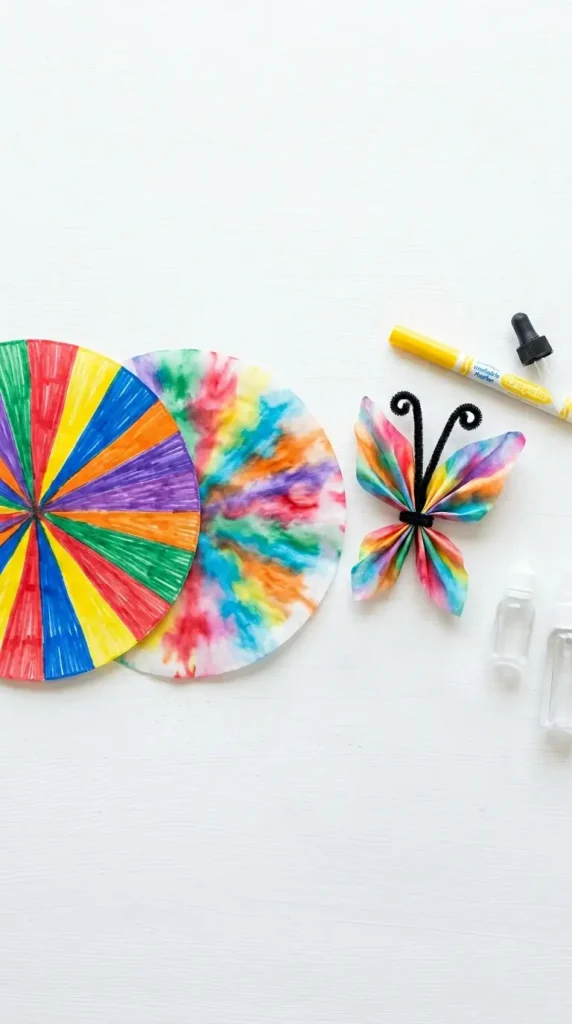
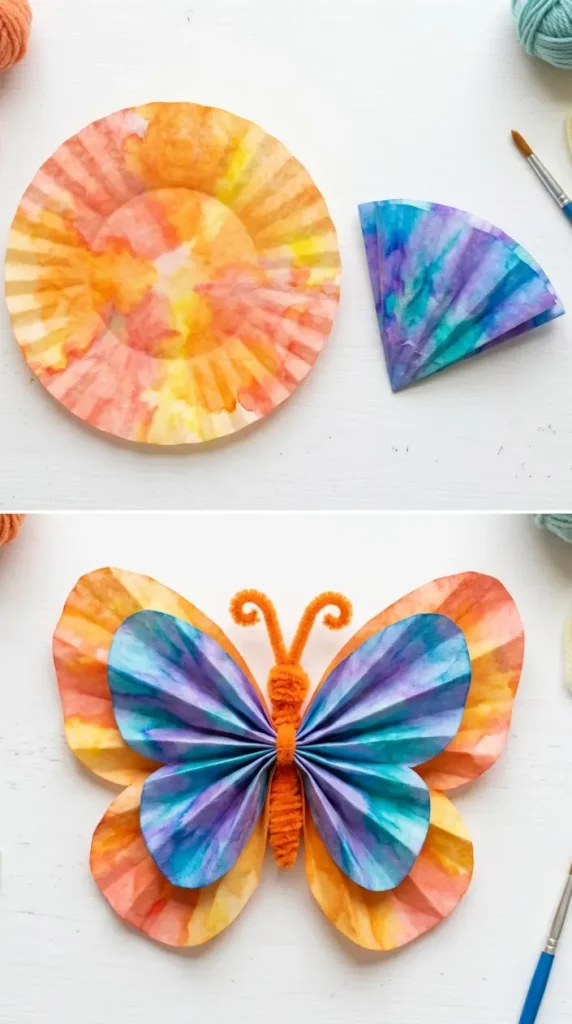
The original and most beloved version — a flat basket coffee filter colored with washable markers, then spritzed with water to make the colors bleed and bloom into each other, gathered at the centre and twisted into a pipe cleaner body. This is the foundational technique that every other coffee filter butterfly builds from. Use primary and secondary colors in chunky washable markers so children can color boldly without worrying about precision. The water spritz is the moment of transformation — watching the colors bleed into each other, soften, and create new tones where they meet is one of the most visually exciting moments in any classroom craft session. Let dry completely before shaping.
2. Liquid Watercolor Dropper Butterfly
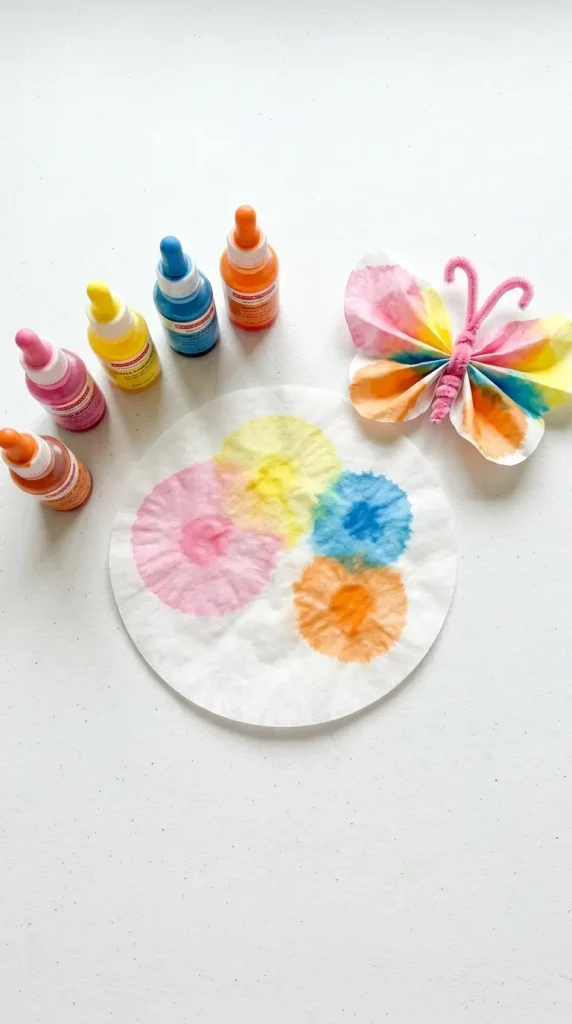
Instead of markers and a water spritz, use liquid watercolors applied directly with dropper bottles — the colors drop onto the dry filter and spread organically outward in soft circular blooms. Each drop of color creates its own natural pattern as it spreads through the filter paper fibers. Children squeeze one drop of one color, watch it spread, then add another color nearby and watch the two blooms meet and merge. The dropper bottle technique gives children more control over color placement while still delivering completely unpredictable and beautiful results. The finished butterfly wings have a more delicate, botanical illustration quality than the marker bleed version.
3. Tissue Paper Bleeding Color Butterfly
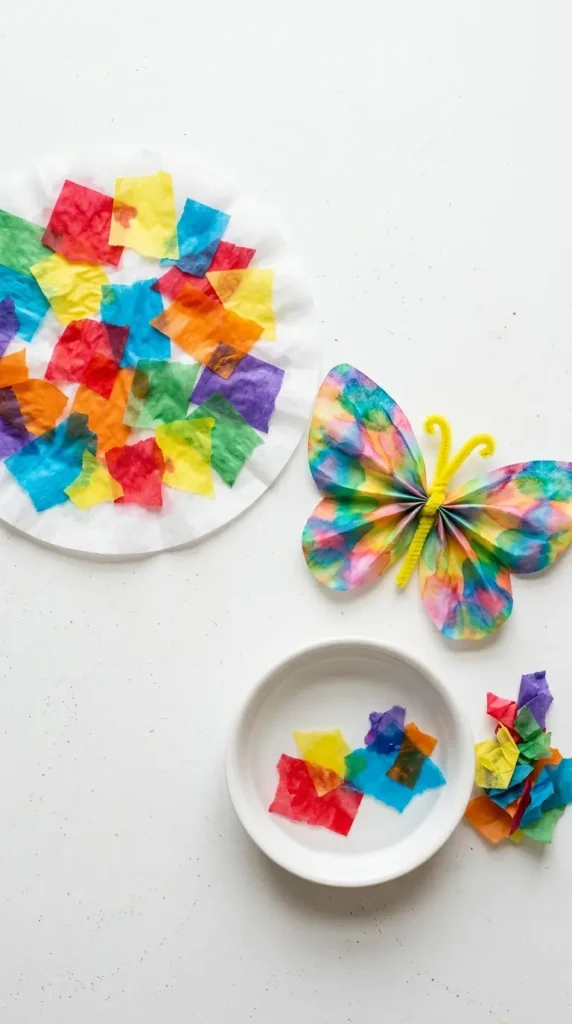
Tear small pieces of brightly colored tissue paper and layer them onto a damp coffee filter — as the tissue paper gets wet it bleeds its color directly into the filter paper beneath, creating a stained glass effect of overlapping transparent color. Peel the tissue paper away after two to three minutes and the colors remain on the filter in translucent, jewel-like patches. This technique requires no markers or paint — just tissue paper and water — making it one of the most accessible and least messy variations for very young children. The translucent color effect when the finished butterfly is held up to the light is extraordinarily beautiful.
4. Rainbow Gradient Coffee Filter Butterfly
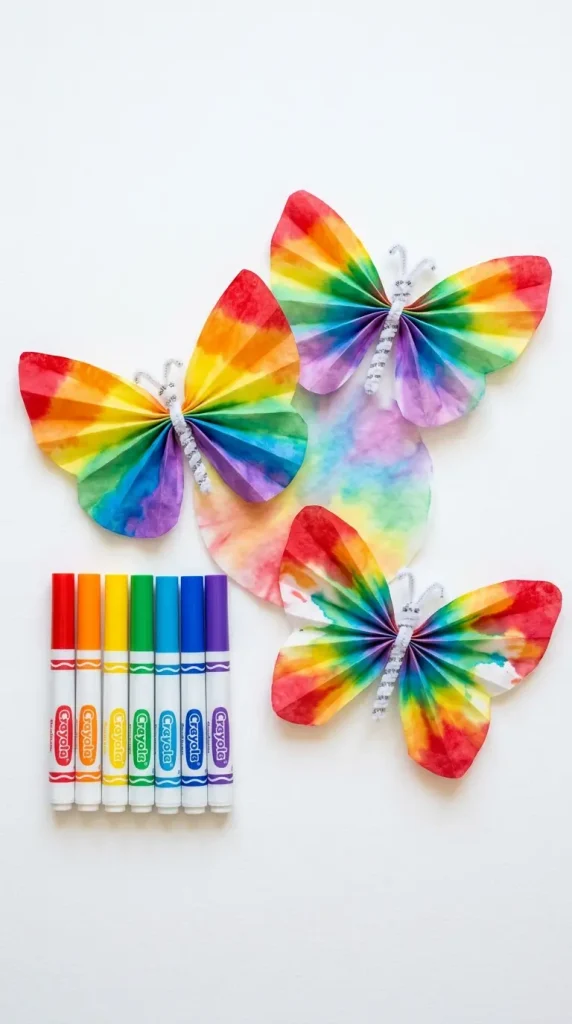
A rainbow gradient butterfly uses the classic marker-and-water technique but with one specific rule: colors must be applied in rainbow order — red, orange, yellow, green, blue, purple — radiating outward from the centre so the finished wings display a perfect gradient rainbow progression from wing tip to wing tip. Teach children to color in arched sections following the wing shape, each color section touching the next so the colors bleed into each other at the transitions. The result is a butterfly that carries the full spectrum of the rainbow across its wings — one of the most visually striking versions of the coffee filter butterfly and perfect for a classroom display of multiple butterflies showing different children’s individual rainbow interpretations.
5. Spring Flower Garden Butterfly Display
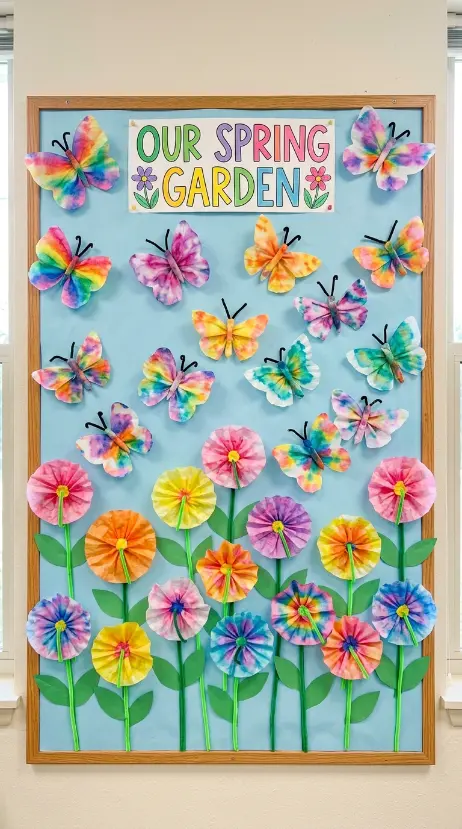
Take the individual coffee filter butterfly one step further by creating a complete spring garden display — butterflies mounted on the wall or a bulletin board alongside coffee filter flowers made by the same technique. Coffee filter flowers: use the same marker-and-water bleed technique on a second filter, then pinch the centre and secure with a green pipe cleaner stem. Mount the flowers in groups of three to five on the bulletin board with green paper stems and leaves. Mount the butterflies among the flowers as if they are visiting the garden. The combined display of twelve to twenty coffee filter butterflies and flowers covering a full classroom bulletin board is one of the most beautiful spring classroom displays achievable with minimal materials.
6. Coffee Filter Butterfly with Crayon Resist
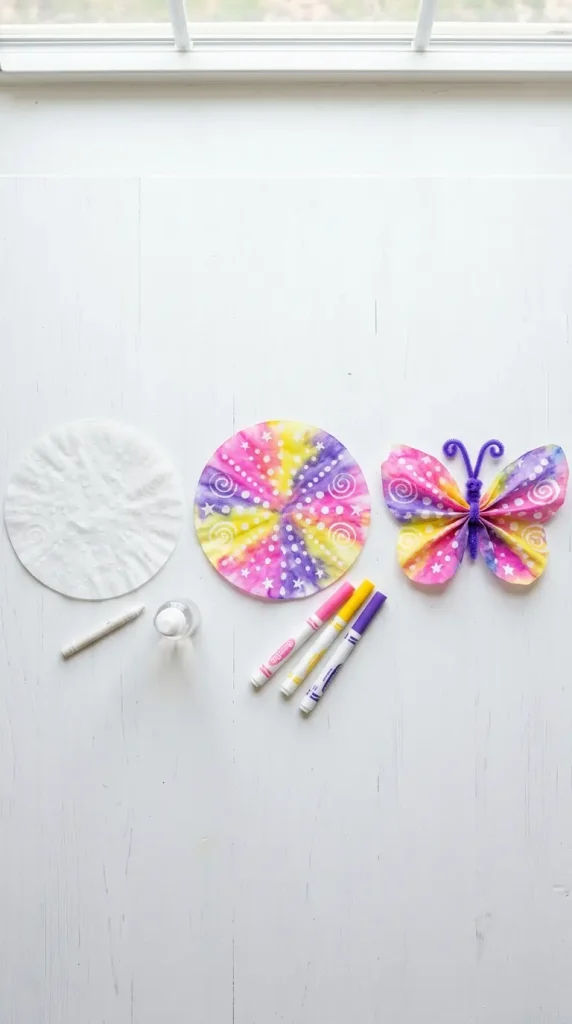
Before coloring with markers and water, have children draw patterns on the coffee filter with white or light-colored wax crayons — simple shapes like dots, spirals, small flowers, zigzag lines — then color over the wax drawing with markers and spritz with water. The wax resists the water-based markers, so wherever the crayon was applied, the original white filter paper shows through, creating a batik-like resist pattern within the watercolor bleed wings. This technique adds a layer of planning and intentionality to the craft that is particularly satisfying for older primary school children who want more control over the final result.
7. Two-Filter Layered Butterfly for Extra Wing Detail
Use two coffee filters per butterfly — a larger flat basket filter as the outer wings and a smaller cone filter as the inner wings — colored in complementary or contrasting colors. Layer the smaller colored cone filter on top of the larger flat filter and gather both together at the centre with the pipe cleaner body. The two layers of colored filter create a four-wing butterfly with depth and dimension — the outer wings visible beyond the inner wings, each in its own color family. This creates a more realistic butterfly silhouette and allows children to work with two different color stories simultaneously — one palette for outer wings, a different palette for inner wings.
8. Coffee Filter Butterfly with Googly Eye Body
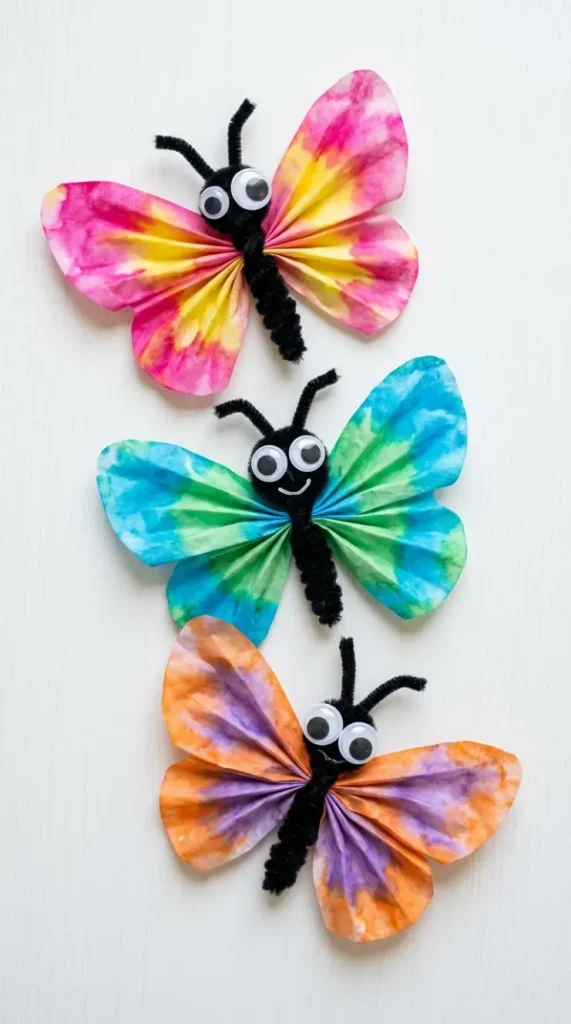
For younger children — preschool and kindergarten — adding large googly eyes to the pipe cleaner butterfly body transforms the craft into an adorable character rather than a decorative object. Use a thick black or colored pipe cleaner for the body and twist two larger eyes sections at the top for a head, then hot glue or craft glue two large googly eyes to the head section. Add a small smile with a fine black marker if desired. The googly-eye butterfly becomes a puppet, a storytelling prop, a character with a name — and that transformation from craft object to beloved character is one of the most joyful outcomes of any early childhood craft.
9. Butterfly Life Cycle Craft Set
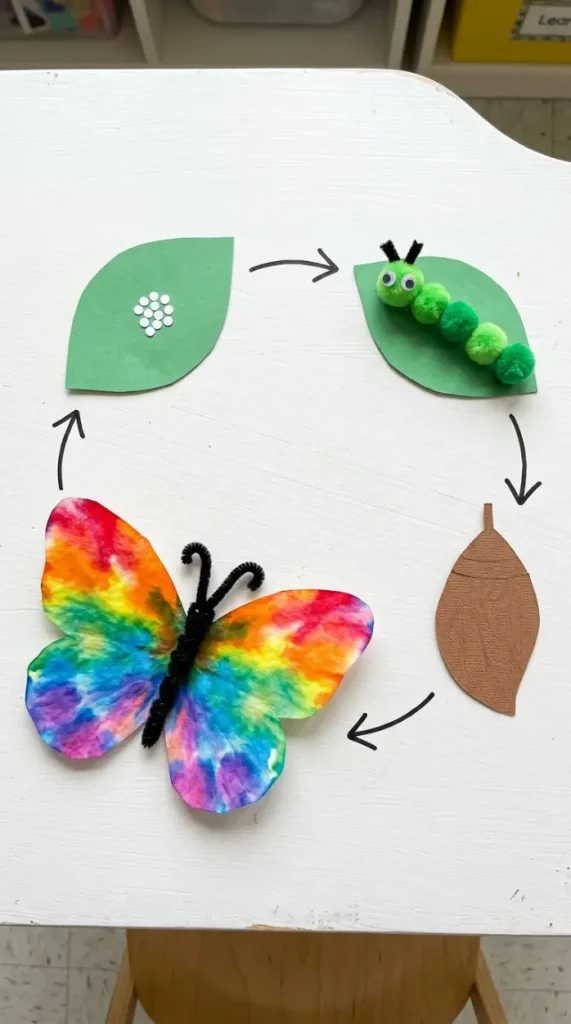
Pair the coffee filter butterfly craft with a simple three-stage life cycle craft set that teaches the butterfly life cycle while creating a complete display. Stage one: a paper egg cluster — small white paper dots glued to a leaf shape. Stage two: a caterpillar — green pom-poms glued in a line with googly eyes. Stage three: the coffee filter butterfly. Stage four: a simple paper chrysalis — a teardrop shape of brown paper. Mount all four stages on a large leaf or branch background for a complete lifecycle display. The coffee filter butterfly is the final and most spectacular stage — the dramatic reveal that makes all the preceding stages feel like they were building toward something extraordinary.
10. Coffee Filter Butterfly Suncatcher Window Display
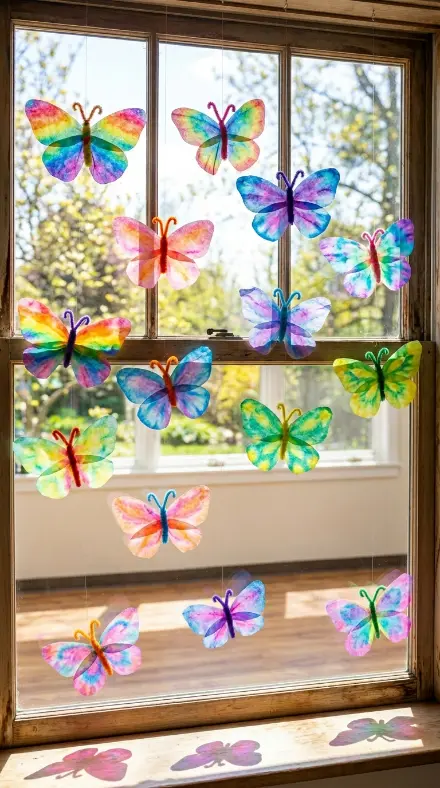
Instead of mounting butterflies on a flat surface, hang completed coffee filter butterflies in a classroom window where natural light passes through the translucent colored filter paper — transforming them into glowing, jewel-like suncatchers that fill the classroom with colored light. Hang each butterfly from a length of clear fishing line or thin monofilament attached to a small loop of tape at the top of the butterfly body. Vary the hanging heights so butterflies appear to be in natural flight at different levels across the window. When morning sunlight hits a window full of coffee filter butterfly suncatchers, the entire classroom wall opposite the window fills with soft colored light and dancing butterfly shadows.
11. Butterfly Name Tag Craft for First Day of School
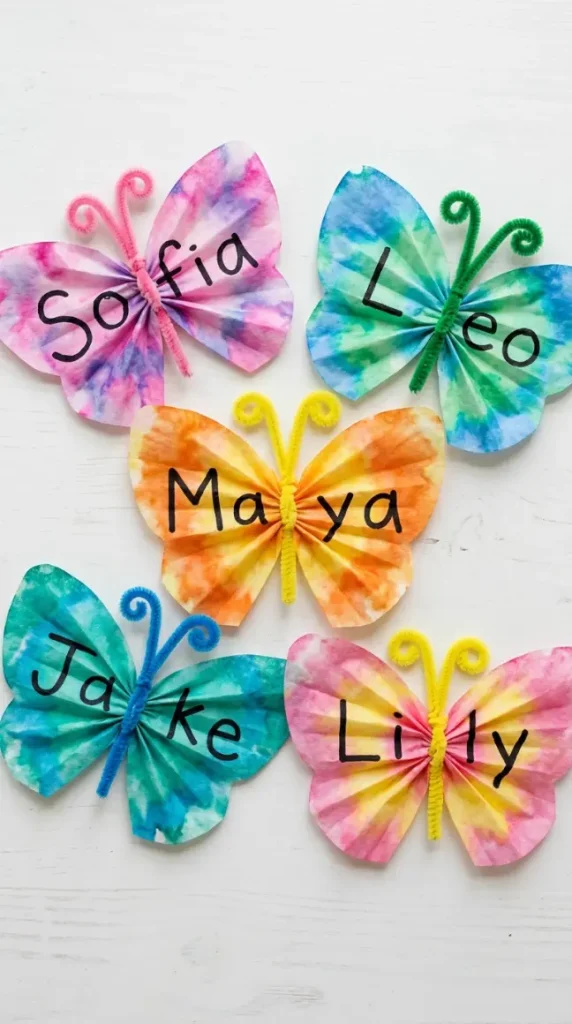
A coffee filter butterfly with the child’s name written across the wings in fine black marker — made during the first week of school as a name tag craft — creates a personal, beautiful name display that doubles as an introduction activity. Have each child write their name across both wings of their butterfly before coloring, or write it afterward in permanent marker over the dry colors. Mount the name butterflies on a classroom door display or name wall. The combination of each child’s individual coloring and their own handwritten name makes a name wall display that is simultaneously a piece of art and a personal statement from every child in the class.
12. Coffee Filter Butterfly Wreath
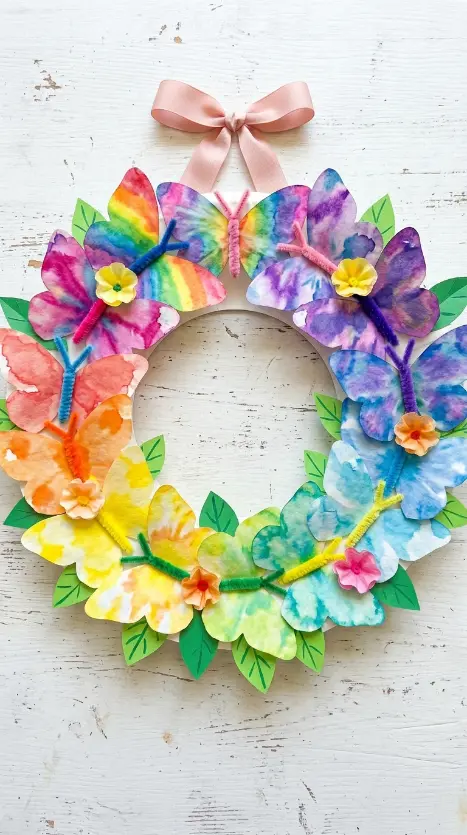
Use twenty to twenty-five completed coffee filter butterflies to create a classroom wreath — glue them in a circle onto a paper plate with the centre cut out, or onto a pre-made wreath ring, overlapping their wings slightly so the wreath surface is completely covered in butterfly wings of different colors. Add a few coffee filter flowers and some paper leaves between butterflies. Hang the completed wreath on the classroom door or window as a collaborative spring decoration. The wreath is a genuinely impressive finished piece that demonstrates the power of combining individual contributions into a unified collective artwork — an important classroom community lesson delivered through craft.
13. Coffee Filter Butterfly with Watercolor Resist Salt Technique
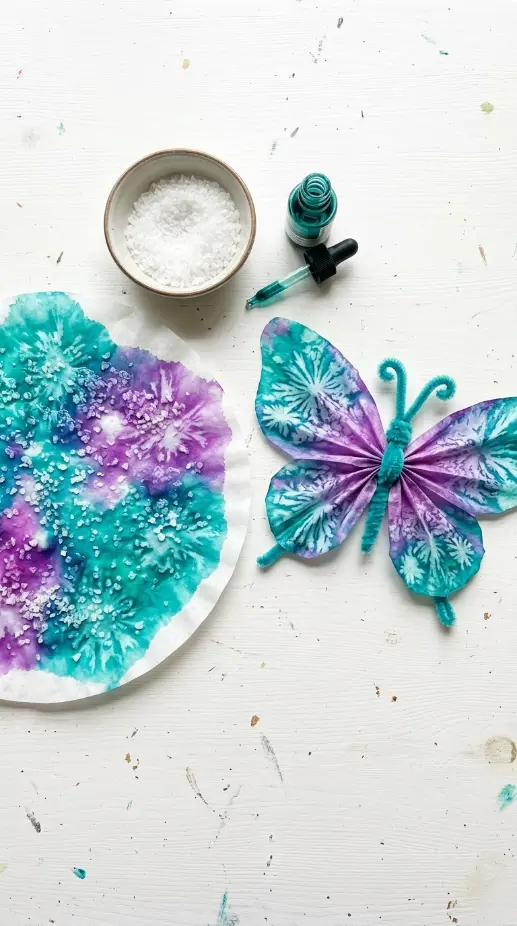
After coloring with liquid watercolors, immediately sprinkle coarse sea salt or kosher salt across the wet filter surface. The salt crystals absorb the surrounding watercolor, creating starlike patterns of lighter color radiating from each salt crystal across the wing surface. Shake off the salt after the filter dries completely and the salt crystal patterns remain as beautiful texture variations in the finished wings. This technique teaches a basic chemical reaction — salt absorbing liquid — while producing butterfly wings with a genuinely extraordinary surface texture that no other technique can replicate.
14. Coffee Filter Butterfly Mobile
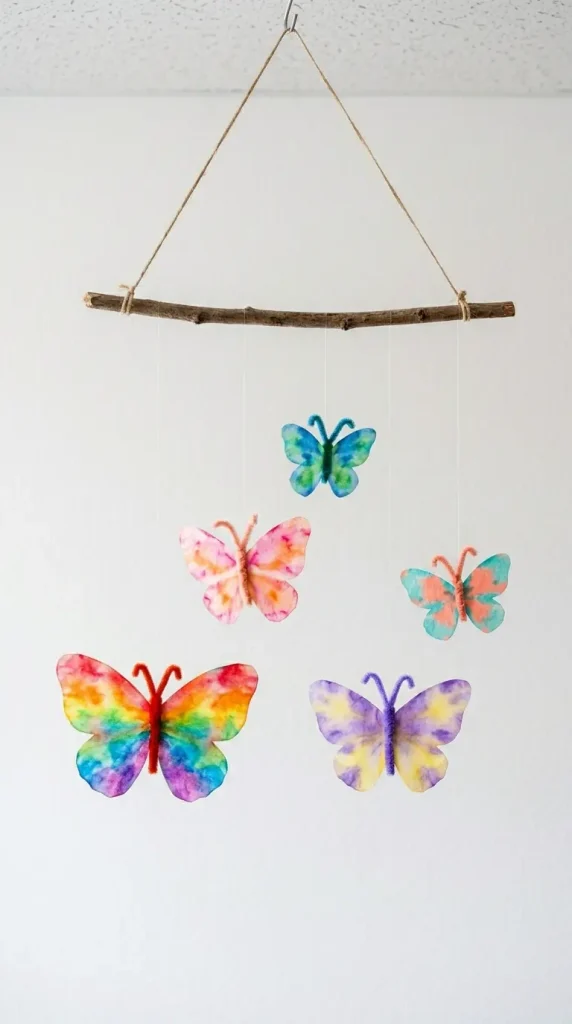
String five to seven completed coffee filter butterflies at different heights from a natural twig or painted wooden dowel — each butterfly hanging from clear fishing line or thin ribbon — to create a hanging mobile that moves gently in the air. Vary the butterfly sizes (using different filter sizes), the hanging heights, and the color combinations to create a dynamic, layered composition. Hang one mobile per student over their desk or create a large class mobile with every child’s butterfly contributing to one dramatic hanging installation from the classroom ceiling. The gentle movement of the butterflies in classroom air currents makes the mobile feel genuinely alive.
15. Coffee Filter Butterfly Poetry Craft
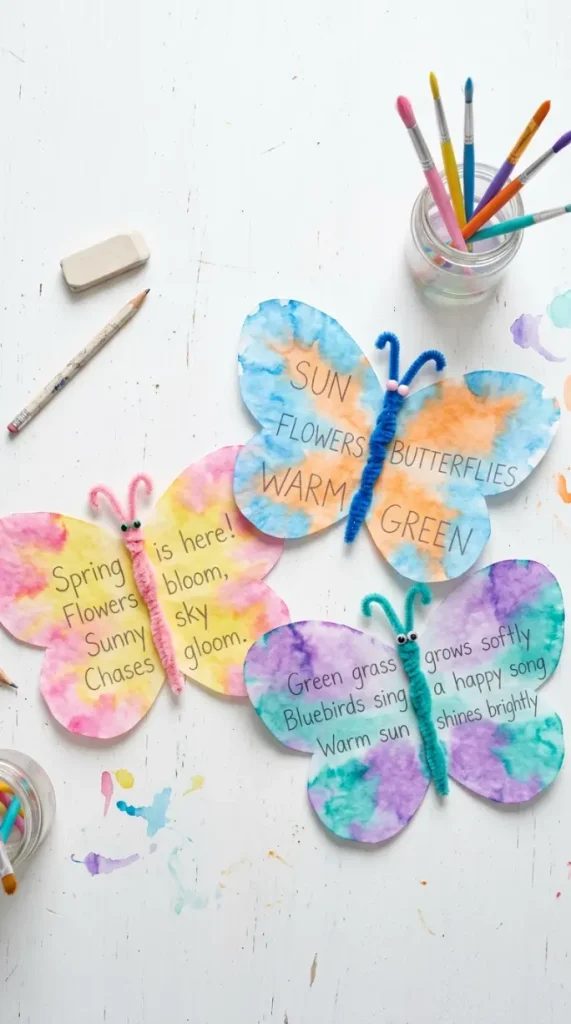
Combine the butterfly craft with creative writing — have children write a short spring poem on the coffee filter wings before coloring, using a pencil or fine permanent marker. Keep the poem simple: a haiku, a four-line rhyme, or just five spring-themed words chosen by the child. Then color over the written words with markers and water bleed so the words become part of the wing surface — visible through the watercolor, integrated into the wing design rather than separate from it. The finished butterfly carries both a visual artwork and a written one simultaneously, making it one of the most richly educational coffee filter butterfly variations available.
16. Giant Class Collaborative Coffee Filter Butterfly
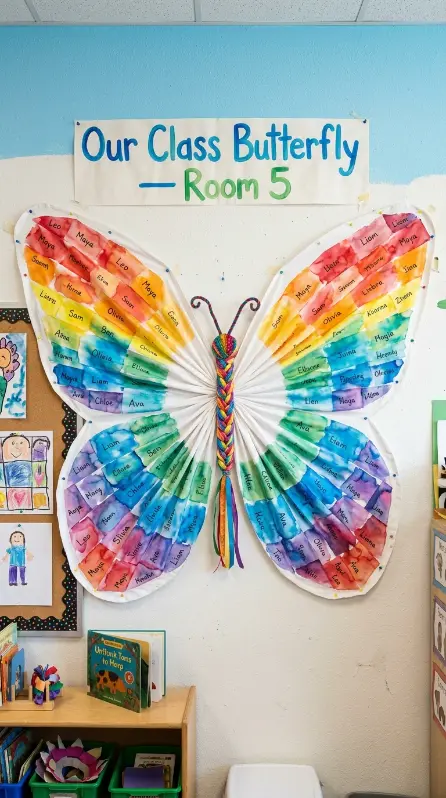
Instead of individual small butterflies, the whole class works together to create one giant butterfly using a large-scale version of the same technique. Use a large piece of white cotton fabric or a very large paper circle instead of a coffee filter, and have each child color and spray their own section of the giant wings using the same marker and water bleed technique. Each child signs their section. When assembled and mounted on the classroom wall, the giant collaborative butterfly — perhaps 100 to 150 centimeters across — represents the whole class working together, each child’s color contribution part of an enormous shared artwork.
17. Coffee Filter Butterfly Greeting Card
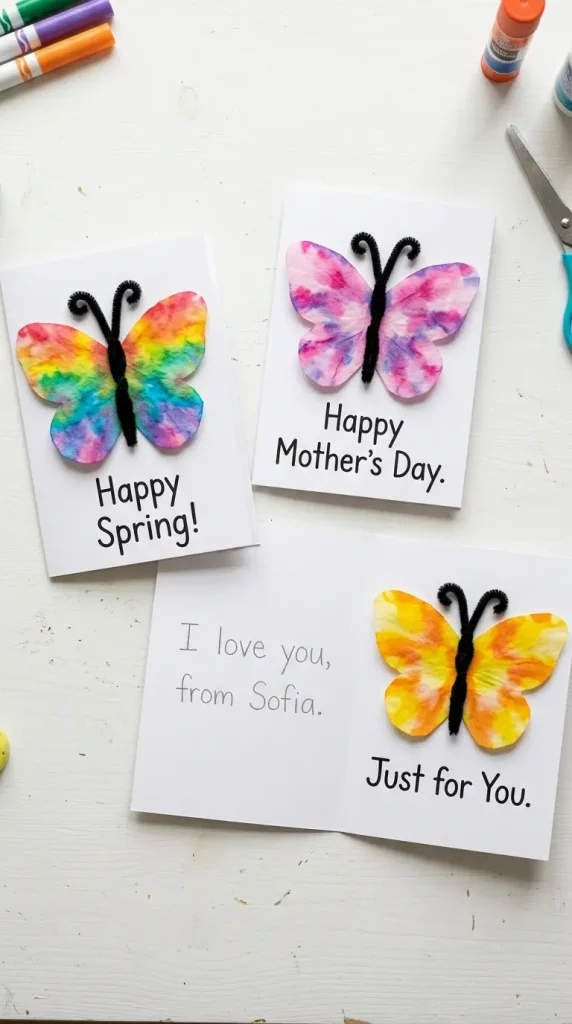
Fold a piece of card stock in half to make a simple greeting card and glue a small completed coffee filter butterfly to the front — wings spread, body at the fold edge, antennae curling upward. Inside, have children write a spring message: “Happy Spring!” or a Mother’s Day or Easter message. The coffee filter butterfly greeting card turns a classroom craft into a gift that children can bring home — making the craft meaningful beyond the classroom and ensuring that the butterfly finds a home where it will be genuinely treasured rather than eventually recycled with classroom artwork.
18. Full Spring Coffee Filter Butterfly Classroom Station Setup
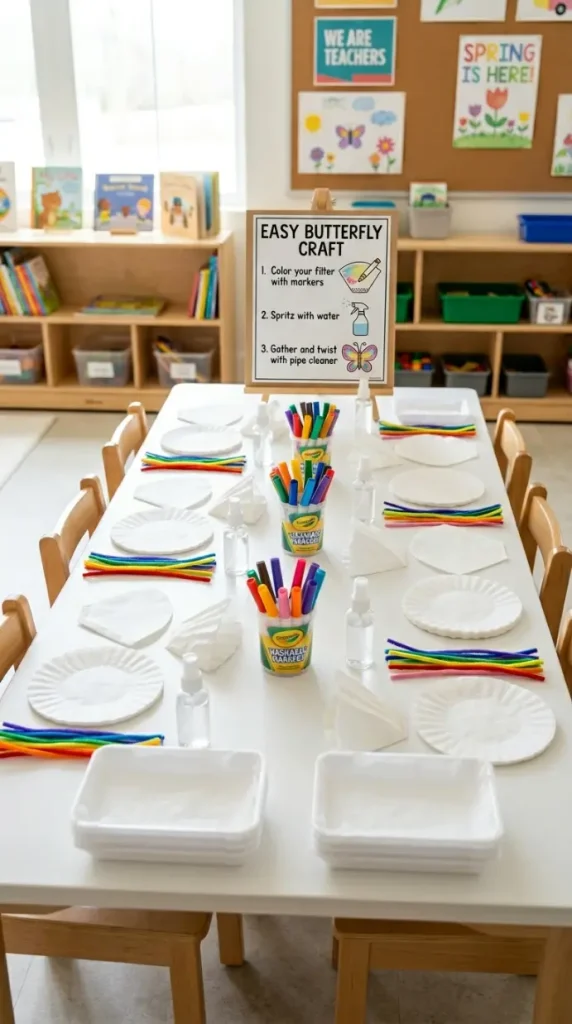
The final idea is the complete picture — a fully set up coffee filter butterfly craft station ready for a full classroom session. A long craft table with all materials pre-set at each position: one flat basket coffee filter and one cone coffee filter per student, a shared set of washable markers in the centre, a small spray bottle of water at each position, one pipe cleaner in various colors, safety scissors, and a small tray lined with paper towel for the wet filter to dry on. A simple three-step instruction chart displayed on an easel beside the table. The craft station setup communicates calm, prepared, achievable creativity — the visual organization of a well-prepared classroom activity that teachers will recognize immediately.