20 Simple Front Yard Landscaping Stepping Stone Path
There is something quietly honest about a stepping stone path. It does not pretend to be a driveway or a paved terrace — it is simply a series of flat stones placed at the right distance for a human stride, laid through a garden with enough thought to feel considered and enough simplicity to feel inevitable. The stepping stone path is one of the oldest forms of garden design, and it remains one of the best because it solves the problem it was given — how to get from here to there — with exactly the right amount of beauty and exactly the right amount of material.
In a front yard, the stepping stone path does something that a solid paved path never quite manages: it allows the garden to breathe around it. Planting grows between the stones, over the edges, through the gaps. The path and the garden become one continuous thing rather than two separate elements divided by a kerb. And because stepping stones are simple to install, easy to rearrange, and available in every natural stone from rough-cut slate to polished river pebble, they are also one of the most accessible front yard projects a homeowner can take on.
These twenty ideas keep the focus entirely on the stepping stone path itself — every idea a different interpretation of that single, simple form.
1. Irregular Flagstone Path Through Creeping Thyme
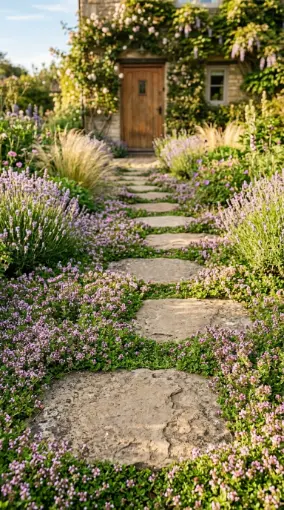
Lay a series of large irregular natural flagstone stepping stones — warm buff sandstone or grey slate — through a dense ground cover of creeping thyme, spacing each stone at a natural walking stride and allowing the thyme to fill every gap and grow over every stone edge. The creeping thyme between flagstones is one of the most satisfying planting combinations in garden design: the thyme releases its scent when stepped on or brushed, it blooms in tiny pink and purple flowers in summer, and it keeps the path looking soft and natural rather than hard and installed. Low maintenance, drought tolerant, and more beautiful every year.
2. Round Stepping Stone Circles Through Lawn
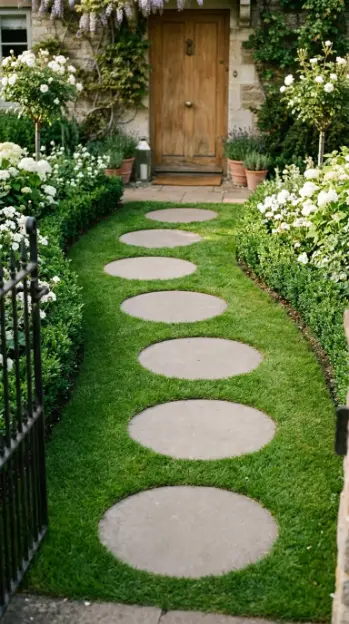
Cut perfect circles into an existing front lawn and set large round concrete or natural stone disc stepping stones flush with the grass surface — each disc perfectly level with the lawn, the grass growing right to the stone edge. A series of round stepping stone discs set flush into lawn is one of the cleanest and most minimal front yard path ideas possible — the circular form of each stone against the green lawn surface creates a simple graphic quality that looks considered without being complicated. Use large discs — at least 50cm diameter — and space them generously for a confident, unhurried pace.
3. Moss-Filled Stepping Stone Woodland Path
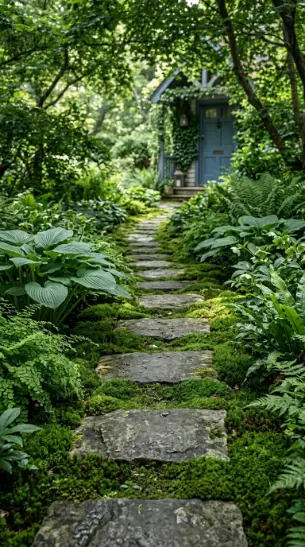
Lay large flat natural stone stepping stones through a shaded front yard area and encourage or plant dark green moss to fill every gap between and around each stone — so that the path becomes a moss-and-stone composition that looks like it emerged from a woodland floor rather than being installed. A moss-filled stepping stone path has a quality of age and naturalness that no other ground cover can replicate — the deep green moss cushions make the stones appear ancient, the path appears self-seeded, and the entire front yard takes on a cool, quiet woodland atmosphere that is unlike anything else in garden design.
4. Gravel-Set Stepping Stone Path With Border Planting
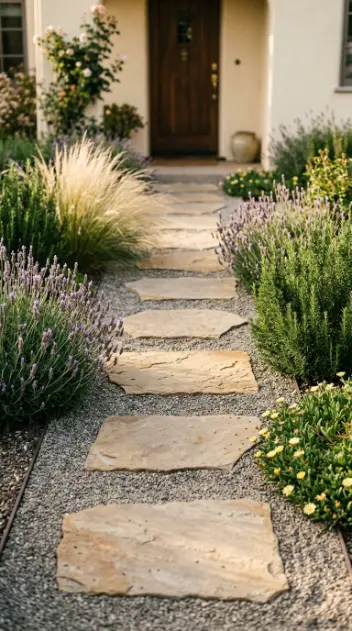
Set stepping stones into a raked fine gravel or decomposed granite surface rather than soil or lawn — the gravel filling all gaps between stones and extending as the ground cover on both sides of the path, contained by simple steel or timber edging. Planting sits in beds cut into the gravel surface on both sides: lavender, rosemary, ornamental grasses, and low spreading perennials softening the gravel edges. The gravel-set stepping stone path is one of the most low-maintenance front yard path ideas possible — weed suppressing, drought tolerant, and with a clean, resolved quality that suits both contemporary and cottage-style homes.
5. Stepping Stone Path Through Native Wildflower Meadow
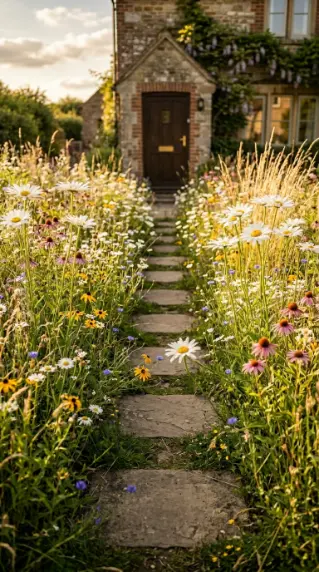
Lay a simple stepping stone path through a front yard planted as a native wildflower meadow — tall grasses and wildflowers growing freely on both sides of the stones, the path cutting a simple walking line through the naturalistic planting. A stepping stone path through a wildflower meadow front yard is one of the most ecologically generous and visually dramatic front yard designs possible — the stones provide access, the meadow planting provides everything else: color through the seasons, pollinator habitat, and a sense of abundance that a conventional lawn can never achieve.
6. Reclaimed Brick Stepping Path Through Cottage Garden
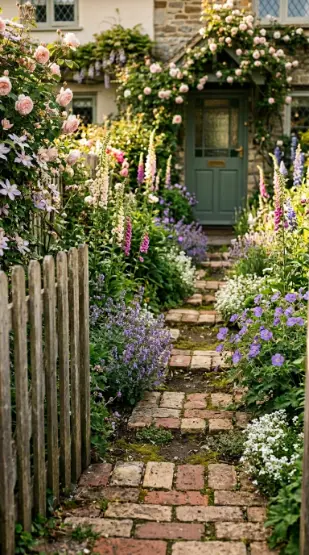
Use reclaimed red or buff clay bricks as stepping stone units — laying each brick flat as an individual stepping stone, or grouping two or three bricks together as a wider stepping unit — set through a cottage garden front yard planting of roses, foxgloves, catmint, and hardy geraniums. Reclaimed bricks have a warmth and patina that no new material can replicate — the aged clay color, the worn edges, the slight variation in surface tone from brick to brick all contribute to a path that looks like it belongs to the garden rather than being placed in it. Perfect for cottage, heritage, or traditional-style homes.
7. Large Format Concrete Stepping Slabs Through Low Ornamental Grass
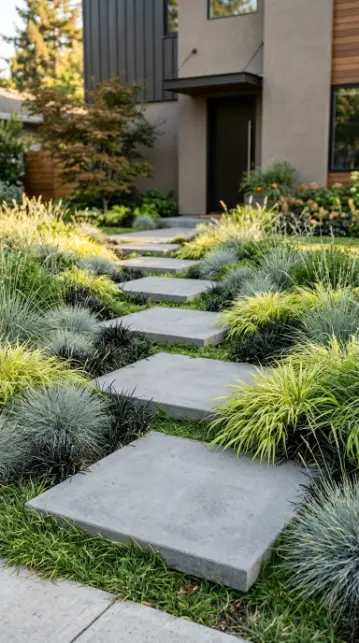
Pour or source large format square or rectangular smooth concrete stepping slabs — 60cm x 60cm or larger — and lay them as generously spaced stepping stones through a front yard planted entirely with low ornamental grasses: blue fescue, black mondo grass, and soft green Japanese forest grass. The large concrete slab against the fine texture of ornamental grass planting is one of the most graphic and satisfying material contrasts in contemporary garden design — the bold geometry of the slab against the soft movement of the grass, the hard grey concrete against the varied greens and blues of the planting.
8. Slate Stepping Stone Path With Pebble Mosaic Infill
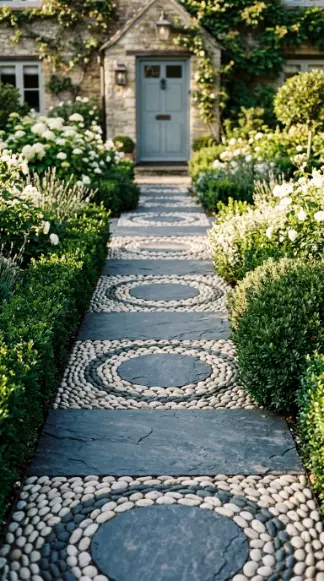
Use large flat dark grey or blue-grey slate stepping stones and fill every gap between the stones with a simple hand-set pebble infill — smooth cream and dark grey river pebbles arranged in a simple pattern between each stone. The pebble infill transforms the gaps between stepping stones from plain soil or gravel into a decorative mosaic surface that makes the entire path feel hand-crafted and considered. Keep the pebble pattern simple — concentric circles, alternating stripes, or a simple two-tone mix — and let the contrast between the flat dark slate and the rounded pale pebbles do all the visual work.
9. Stepping Stone Path Edged With Solar Pathway Lights
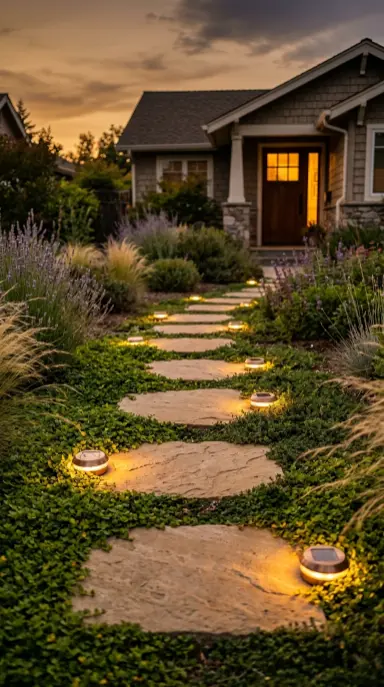
Lay a simple stepping stone path and edge each stone with a small recessed solar pathway light — so that the path illuminates automatically at dusk, each stone outlined in warm amber LED light and the path visible and welcoming after dark. Solar pathway lighting along a stepping stone path transforms a daytime garden feature into a night-time one, extending the path’s usefulness and beauty into every hour of the day. Choose low-profile solar lights that sit flush or nearly flush with the ground surface to keep the daytime aesthetic clean and uncluttered.
10. Stepping Stone Path Through Fern and Shade Garden
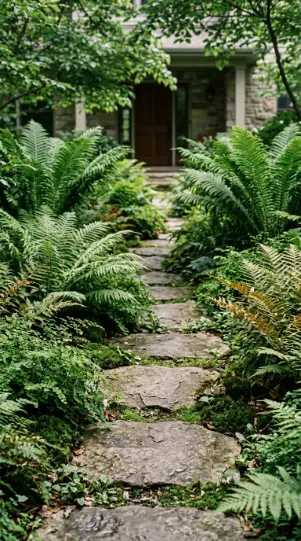
Lay large flat stepping stones through a shaded front yard area and plant both sides densely with ferns — a rich mix of soft green lady ferns, bold ostrich ferns, low-growing autumn ferns, and ground-hugging maidenhair ferns — allowing fern fronds to arch over the stone edges and partially obscure the path boundaries. A stepping stone path through a fern garden has a quality of deep naturalness and cool beauty that is particularly effective in shaded front yards where flowering plants struggle — the varied textures and greens of multiple fern species make the garden as visually rich as any flowering border, simply in a cooler and quieter key.
11. Staggered Stepping Stone Path With Herb Border
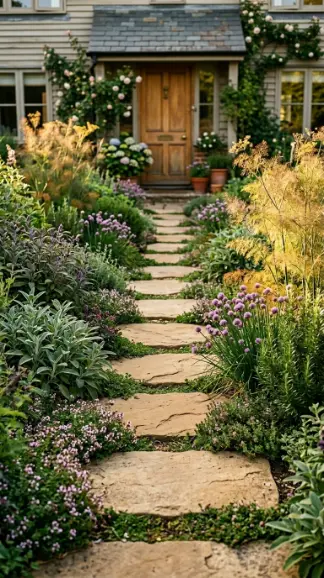
Lay stepping stones in a slightly staggered rather than straight-line pattern — each stone offset from the previous one by one step-width to the left or right — creating a gentle informal zigzag path rather than a straight line. Plant the borders tightly with culinary and ornamental herbs: thyme, sage in grey-green and purple forms, oregano, chives, rosemary, and bronze fennel — herbs that release scent when brushed and that blur the path edges with a soft informality. A staggered herb-bordered path slows the walker down, engages all the senses, and gives the front yard an abundance and generosity that a straight path through a neat lawn can never provide.
12. Stepping Stones Set Into Ornamental Pebble River Bed
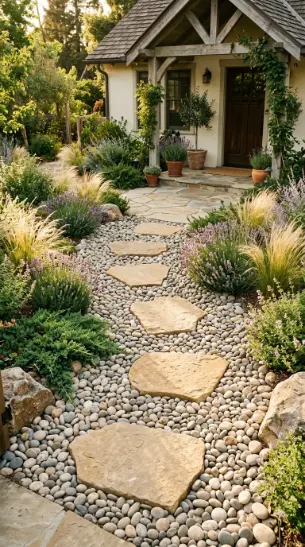
Create a decorative dry river bed composition across the front yard — smooth river pebbles in warm grey and cream tones arranged as a naturalistic dry stream — and set the stepping stone path directly within this pebble river bed, the stones appearing to ford a dry river crossing. The stepping stone dry river bed combines two classic garden features into one satisfying composition — the decorative pebble garden and the stepping stone path — in a way that requires virtually no maintenance and looks completely deliberate from the street.
13. Stepping Stone Path With Low Box Hedge Edging
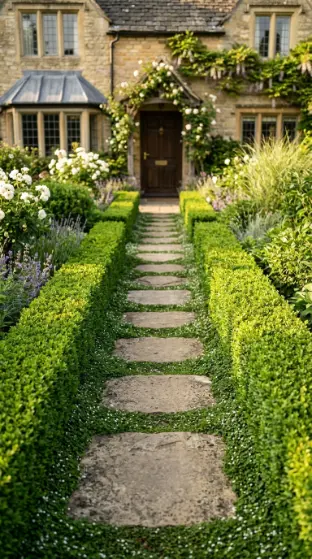
Line both sides of a simple stepping stone path with a low clipped box hedge — a single row of tightly clipped box plants creating a low green wall approximately 20-25cm tall on each side of the path, containing the path edges with a formal precision that makes even the most informal stepping stone arrangement feel considered and complete. The low box hedge gives the stepping stone path an architectural quality — the hedge provides the structure, the stepping stones provide the informality, and the two together create a path with both formal intention and natural charm.
14. Exposed Aggregate Concrete Stepping Pads
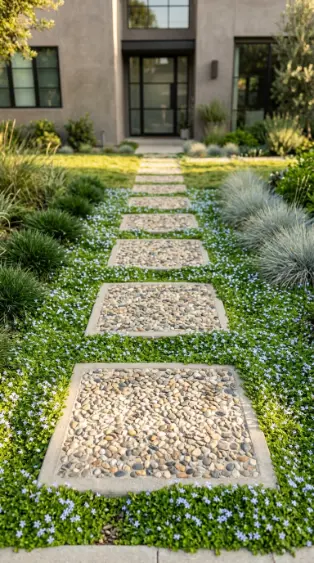
Pour exposed aggregate concrete stepping pads — each pad a simple square or rectangle with the aggregate surface exposed by brushing the wet concrete to reveal the embedded pebble and stone aggregate — set into a low ground cover planting. Exposed aggregate stepping pads have a warmth and texture that plain brushed concrete lacks — the embedded pebbles give each pad a naturally varied surface, the aggregate adds non-slip grip, and the overall effect is a contemporary stepping stone that suits modern homes while maintaining the natural material quality of a traditional stone path.
15. Timber Sleeper Stepping Path Through Garden Beds
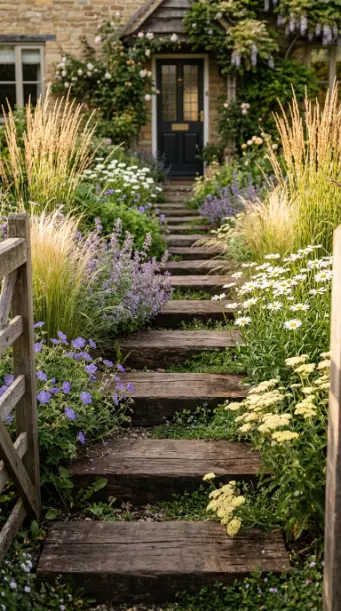
Use thick hardwood or treated pine railway sleeper sections as stepping stones — each sleeper section approximately 40cm long, 25cm wide, and 10cm thick — set at walking stride intervals through garden beds or a planted area, the dark brown timber surface contrasting with the surrounding planting. Timber sleeper stepping paths have a robust, warm quality and suit gardens with a naturalistic or cottage character — the chunky dark timber form sits naturally in a planted setting, weathers attractively over time, and provides a stepping surface that feels solid and grounded underfoot.
16. Stepping Stone Path With Planted Gaps of Sedum
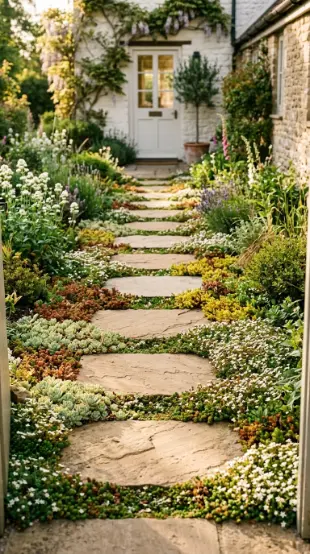
Set stepping stones with generous gaps between each stone and fill every gap with low-growing sedum — a drought-tolerant succulent ground cover that spreads to fill available space, produces tiny star-shaped flowers in summer, and maintains its low carpet quality year-round. Sedum-filled stepping stone gaps are one of the most rewarding and low-maintenance path planting combinations available — sedum requires almost no water once established, it spreads naturally to fill unplanted gaps, and it turns a simple stepping stone path into a living carpet of varied green, bronze, and gold succulent rosettes.
17. Cobblestone Cluster Stepping Path
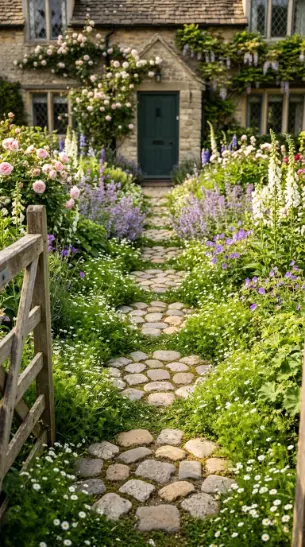
Group Belgian cobblestones or tumbled granite setts into clusters of seven to nine stones — each cluster forming a loose circular or organic grouping approximately 40-50cm across — and place these cobblestone clusters at walking stride intervals as stepping units, rather than using a single large flat slab per step. The cobblestone cluster stepping path has a historic village street quality that suits traditional and heritage homes — the rounded stone surfaces, the slight irregularity of each cluster grouping, and the natural grey and buff tones of the cobblestones give the path a depth and character that flat slab stepping stones can never achieve.
18. Stepping Stone Path Bordered by Ornamental Alliums
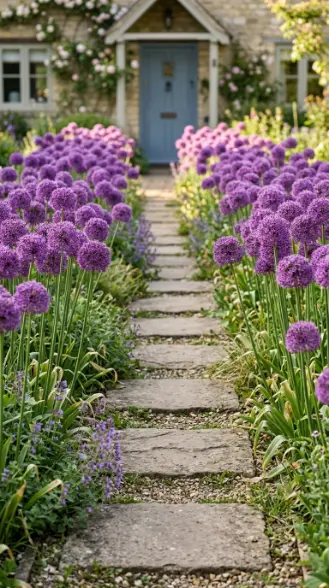
Plant both sides of a simple stepping stone path with ornamental alliums — tall straight stems topped with large purple, white, or pale lilac globe flower heads — massed in generous drifts so that the path runs between walls of tall allium globes in full spring bloom. Allium-bordered stepping stone paths are one of the most dramatic seasonal front yard displays possible: for three to four weeks in late spring, the path becomes a processional avenue of floating purple globes on straight green stems, and the spectacle from the street is unlike anything else in the front yard calendar.
19. Stepping Stone Path Curving Around a Feature Tree
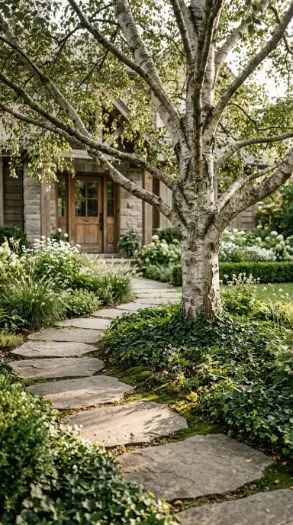
Design the stepping stone path to curve naturally around the base of a single large feature tree in the front yard — the path bending to follow the tree’s root zone, stepping stones placed to navigate around the trunk, the tree becoming the organizing element that gives the path its curve and its reason. A stepping stone path that curves around a tree has a quality of organic logic — the path goes where it goes because the tree is where it is, and that simple relationship between path and tree gives the front yard a sense of having grown naturally over time rather than being designed in an afternoon.
20. Winter Stepping Stone Path With Evergreen Ground Cover
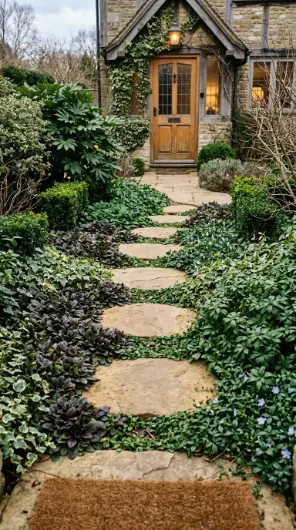
Design the stepping stone path specifically for year-round interest by choosing evergreen ground cover plants that remain beautiful through winter — dark green pachysandra, variegated ivy, Ajuga reptans with dark bronze-purple rosettes, or low-growing evergreen Vinca minor with small blue flowers in spring — so that the path looks as considered in January as it does in July. A stepping stone path with well-chosen evergreen ground cover is one of the most reliable front yard investments possible: it requires minimal maintenance, it provides ground cover that suppresses weeds, and it ensures the front yard never looks bare or neglected regardless of season.