12 Kids Room Corner Decor Inspiration Art Station Creative
A child’s art corner is the most honest room in the house. It does not perform functionality — it simply provides it, in the most direct way possible: a surface to work on, something to sit on, somewhere to put the things that are needed, and enough light to see what is being made. The child does the rest. The adult’s only real job in designing a creative corner for a child is to remove every obstacle between the child and the making — to ensure that the paper is where it can be found without asking, that the pencils do not need to be located, that the space feels genuinely theirs rather than borrowed from another purpose.
The corner is the right location for an art station for two reasons. The first is spatial: a corner is the room’s least versatile floor area, bounded on two sides and therefore difficult to use for any activity that requires open movement. Giving it to the art station is the most efficient possible use of a space that has limited competing claims. The second reason is psychological: children work better in partially enclosed spaces. The two walls of a corner create a sense of shelter and definition — a place within the room that is dedicated to a single activity, separated from the rest of the room’s possibilities by its own physical identity. The corner art station is not just a desk in a corner. It is a room within a room.
These 12 ideas explore every dimension of the children’s room corner art station — from the simplest single-surface setup to the fully fitted creative studio corner, from the storage systems to the display strategies, from the lighting to the floor treatment and the wall decoration that makes a creative corner feel genuinely inspiring.
1. Simple Timber Desk in Corner With Open Pegboard Above
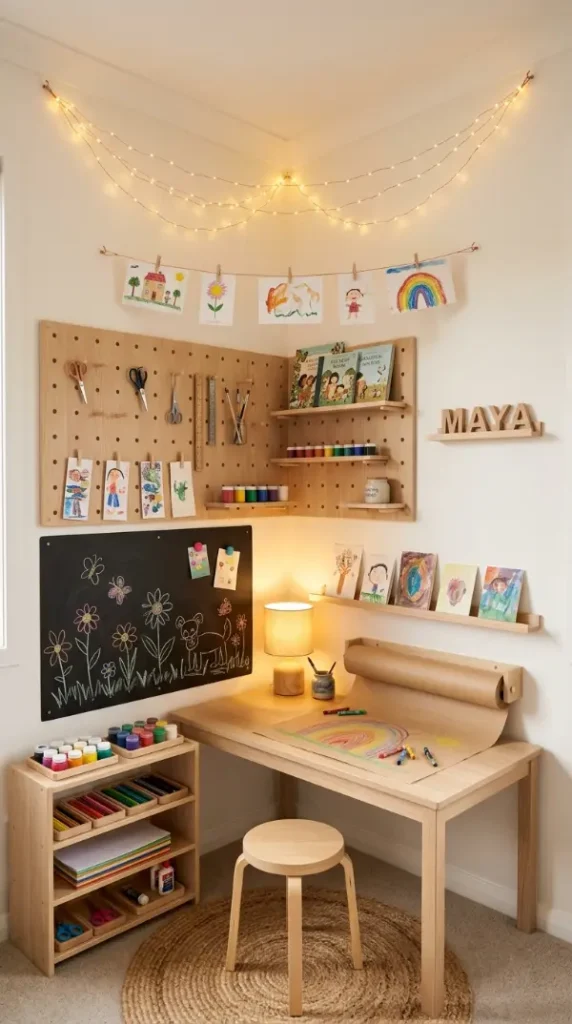
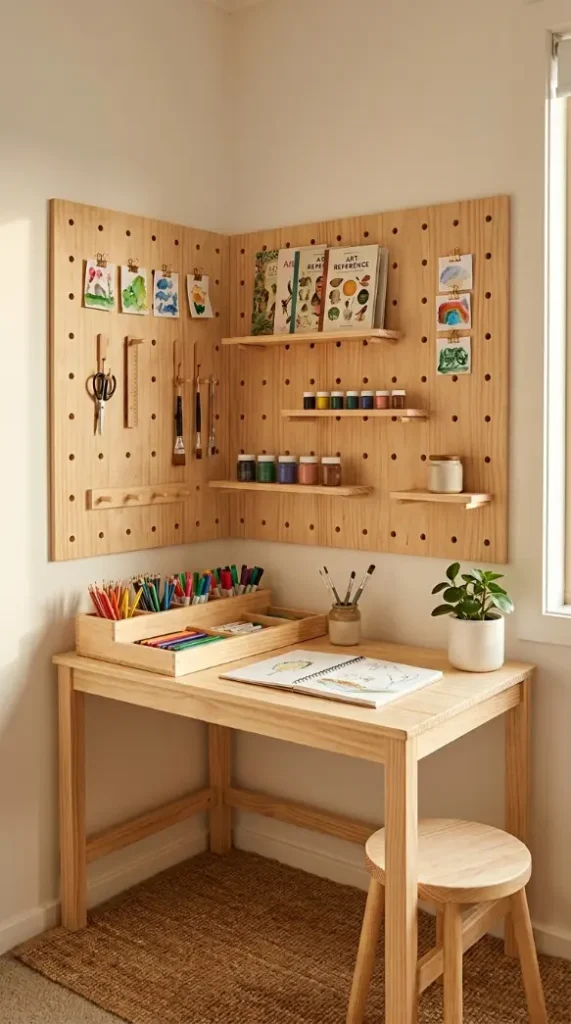
Position a clean simple timber desk — a wide rectangular desk in natural pine or pale oak, approximately 100cm wide and 55cm deep — in the room corner, and mount a large pegboard panel directly above it on the two corner walls, styled with hooks, small shelves, and holders for art supplies. The corner desk with pegboard above is the most spatially efficient and organizationally honest art station setup — the desk provides the working surface, the pegboard provides all storage visibly and accessibly at arm’s reach above the work surface, and the two-wall corner mounting means the pegboard has maximum wall area without requiring a single freestanding storage piece on the floor.
2. Wall-Mounted Fold-Down Art Desk in Corner
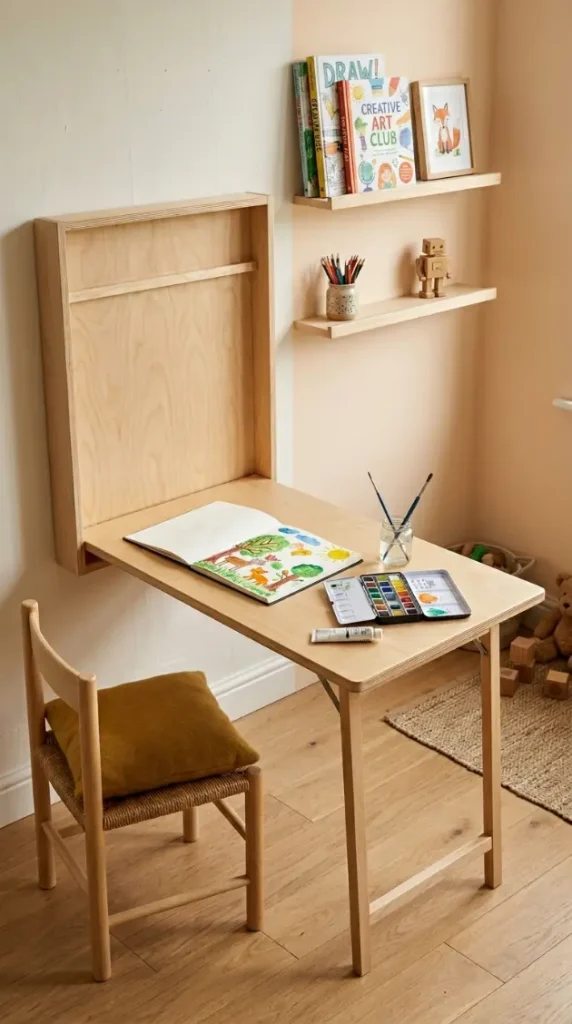
Install a wall-mounted fold-down art desk — a wide hinged panel in natural timber or painted white MDF, approximately 100cm x 55cm, that folds flat against the wall when not in use and folds out to a full desk surface when needed — in the room corner, so that when folded away the corner returns completely to the room and when deployed it creates a dedicated art workspace. The fold-down wall desk in a child’s room is the most space-honest approach to a small corner: it commits no floor space to the art station when the child is playing, sleeping, or the room is being used for anything other than making, and it creates the full workspace in the same thirty seconds it takes the child to decide they want to draw.
3. Low Floor-Level Art Station for Young Children
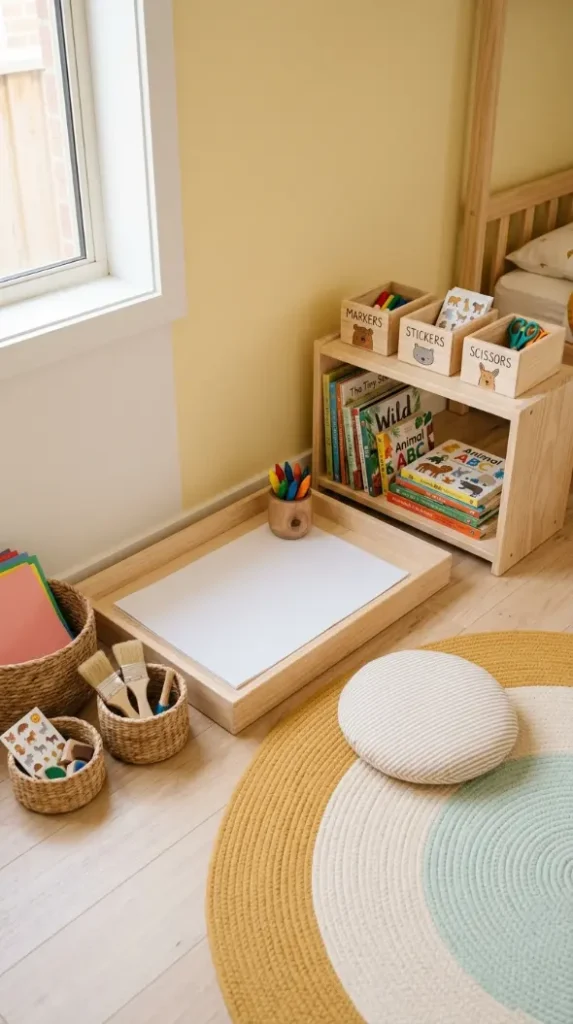
Create a floor-level art station for young children — a low wide tray or shallow wooden crate sitting directly on the floor as the work surface, surrounded by low storage: small baskets, a low open shelving unit at floor height, a small art supply organizer — so that the entire art station is accessible without the child needing to climb onto or reach up to any surface. For toddlers and very young children, the floor is the primary work surface and play space, and an art station that acknowledges this rather than forcing young children into adult furniture proportions is both more practical and more honest about how young children actually work.
4. Corner Art Nook With Curtain Privacy Screen
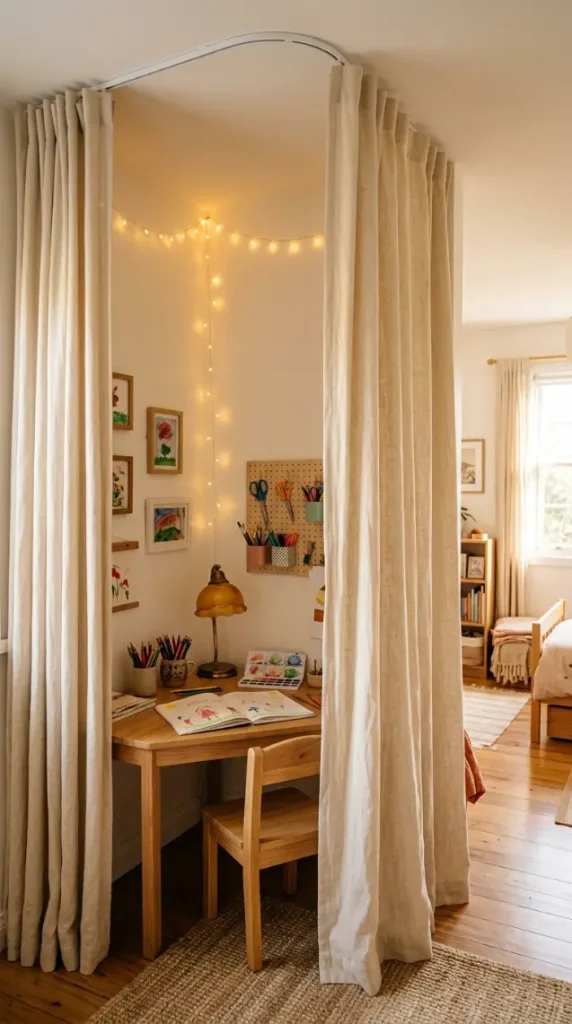
Create a corner art nook with a simple fabric curtain hung from a ceiling-mounted curved or L-shaped curtain track — the curtain enclosing the corner art desk and storage when drawn, creating a private dedicated creative space within the room that the child can open and close independently. When the curtain is open, the art nook is part of the room; when drawn, it is a private studio. The curtained art nook is one of the most psychologically generous things a children’s room can offer — it gives the child genuine agency over their creative space, a door they can close, a private place that belongs entirely to them within a room they may share or that may be frequently entered by adults.
5. Art Supply Wall With Magnetic Chalkboard Paint Corner Panel
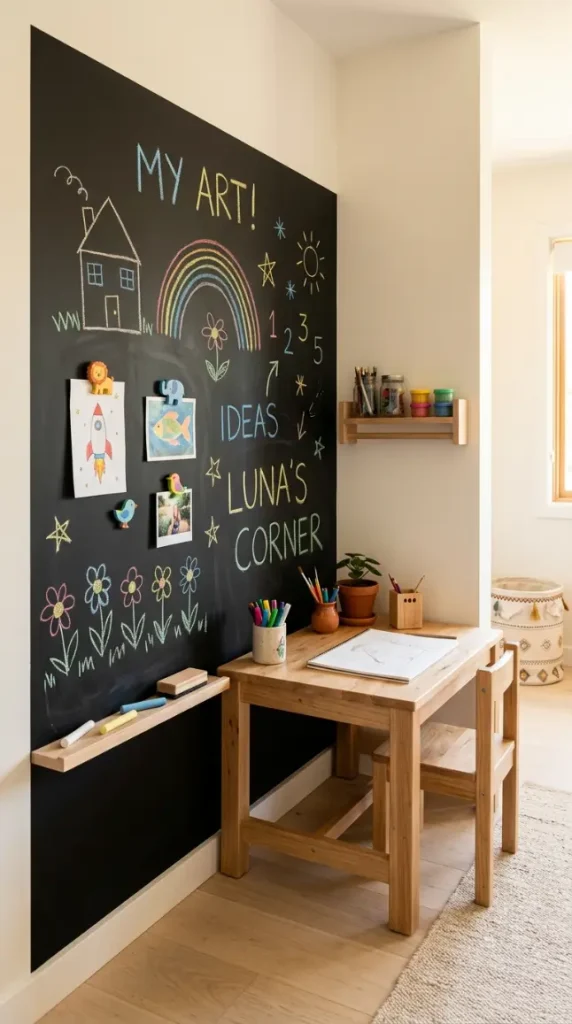
Paint one corner wall panel — from floor to approximately 150cm height — in magnetic chalkboard paint, creating a combined magnetic and chalkboard surface directly beside the art desk that the child can draw on with chalk, stick magnets to, hang lightweight art supply organizers from, and use as a drawing surface that requires no paper. The magnetic chalkboard corner panel is one of the most interactively rich surfaces a children’s art corner can have — it adds a vertical drawing surface to the horizontal desk, it allows the child to display reference images, inspiration, or their own works on the magnetic surface, and it provides an essentially infinite erasable drawing canvas that resets completely with a single wipe.
6. Ikea-Hack Art Station Corner With Trofast or Kallax Units
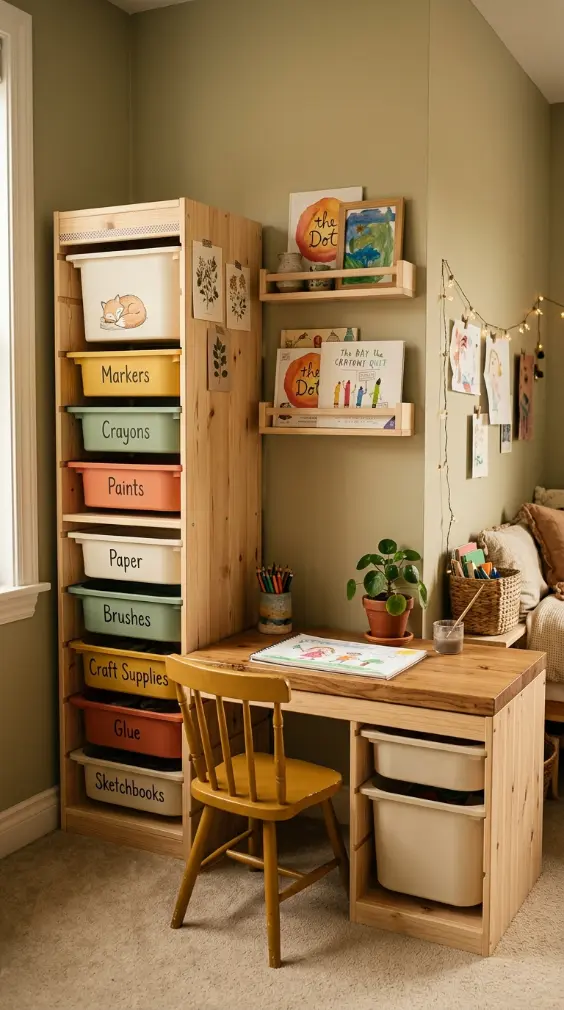
Build an art station corner using commonly available children’s storage units — Trofast open storage frames with colourful bins arranged as a two-unit corner composition, or a Kallax unit on its side used as a low desk base — customized with paint, replaced hardware, adhesive paper, or plant and art styling to feel personal and warm rather than straight off the shop floor. The Ikea-hack children’s art corner is the most practically accessible version of the creative corner idea — the storage units are designed for the exact scale and function of a child’s art station, they are affordable and widely available, and with simple customization they become the warm and personal creative corner that an expensive bespoke joinery solution would provide.
7. Art Display Corner — Artwork Hanging System for Children’s Work
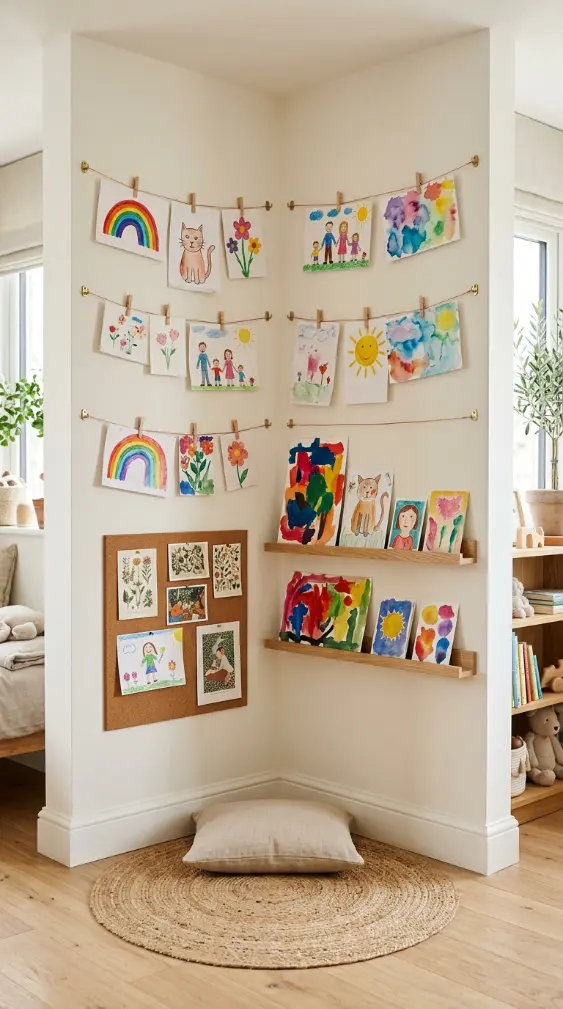
Design the art corner focused not on the making but on the displaying — a dedicated corner display system for children’s artwork using multiple methods simultaneously: a string of thin wire or jute twine stretched between two corner wall hooks at varied heights with small pegs or clips holding artwork, a simple narrow picture ledge at low height along one wall holding framed or unframed artwork leaning, a dedicated square section of cork board on one wall corner panel for pinning. The art display corner is equally as important as the art-making corner — it says that the child’s work is worth looking at after it is made, that the room considers completed artworks as valuable objects, and that making something is the beginning of a relationship with that thing rather than the end of it.
8. Corner Art Station With Roller Paper Dispenser
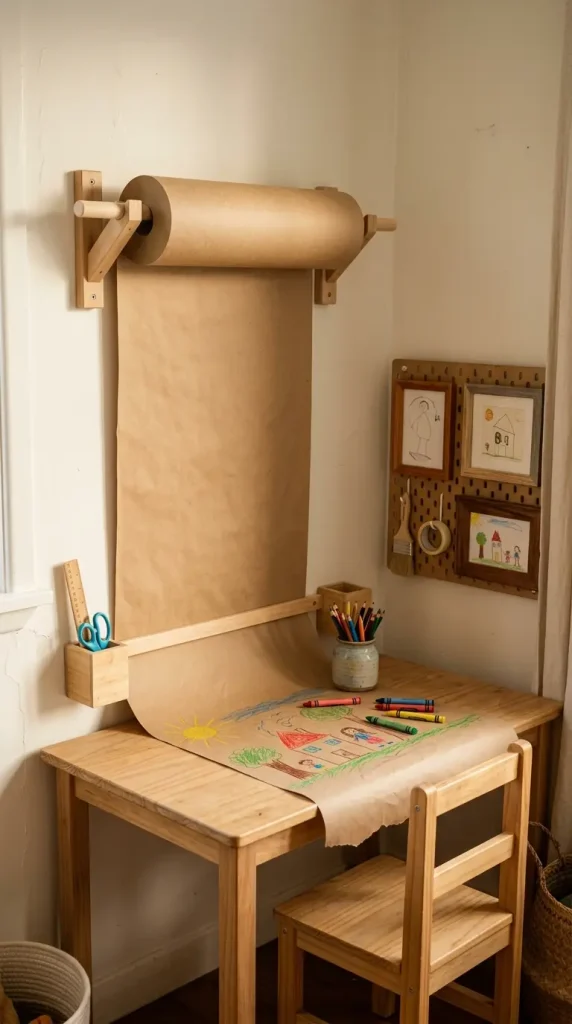
Mount a wall-mounted roller paper dispenser — a wide horizontal kraft paper roll approximately 60cm wide mounted on a simple dowel and wall bracket — at one side of the corner art desk, the end of the paper feeding directly onto the desk surface so the child can pull a fresh sheet of paper at any time without finding or cutting paper from a stack. The roller paper dispenser at the art station is the most practical single addition to any children’s creative corner — it eliminates the perpetual small frustration of finding paper at the right moment, it makes a fresh working surface available in three seconds at any time, and the kraft paper roll is large enough to function as a drawing surface for the entire year without needing replacement.
9. Art Corner With Fairy Light Canopy Overhead
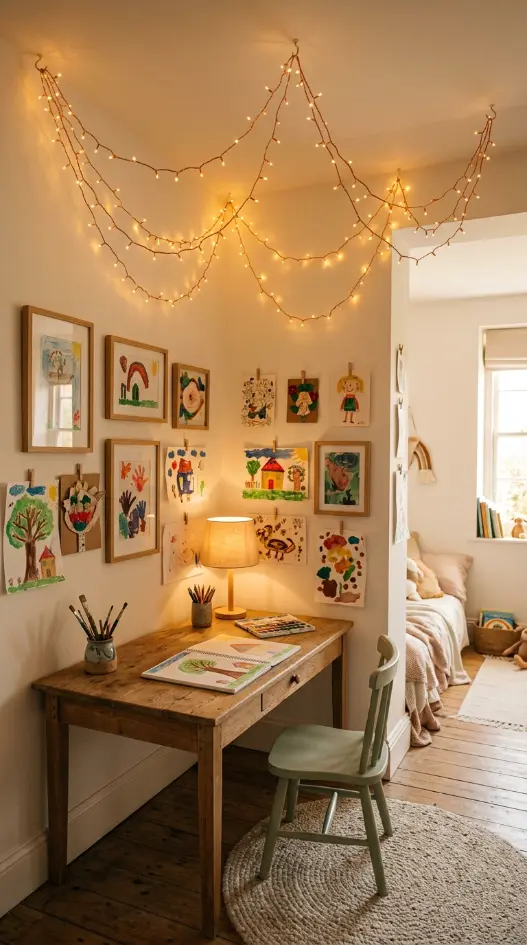
String a canopy of warm fairy lights across the ceiling of the art corner — thin copper wire fairy lights looped and draped from corner ceiling hooks at varied heights to create a warm twinkling light canopy above the art desk, making the corner feel like a magical private space within the room that is not just functionally lit but atmospherically beautiful. Fairy lights above a child’s art corner transform the working space from a functional zone into a genuinely enchanting environment — children work longer and more contentedly in a space that feels beautiful and private, and the warm twinkling light of a fairy light canopy above a desk provides the most psychologically comforting overhead light quality available to a children’s room.
10. Shared Twin Art Station for Two Children
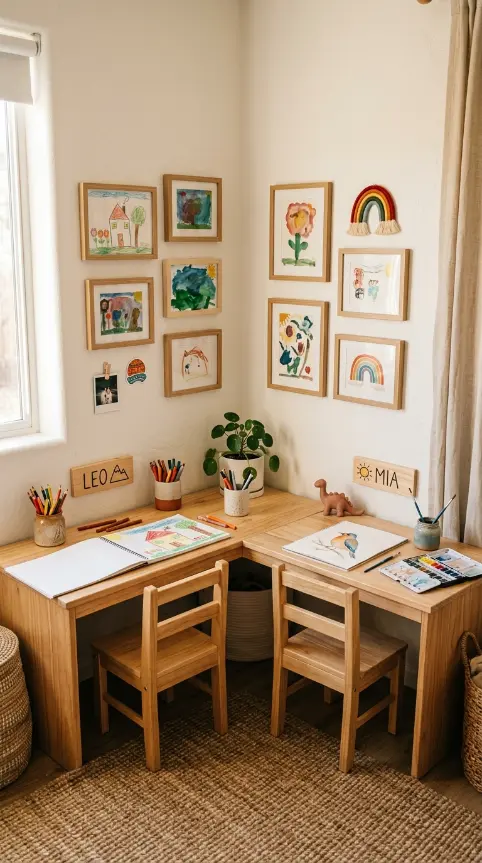
Design a corner art station for two children to use simultaneously — a wide L-shaped desk or a long double-width straight desk that fits into the corner, with two chairs side by side or at right angles to each other, two separate supply storage zones on the desk top or wall above, and two clearly personal sections of display wall above each child’s workspace. The shared art station is the most socially generative creative corner a children’s room can have — two children working side by side at the same time learn to share materials, develop parallel creative practices, and produce the kind of sustained creative play that single children working alone rarely sustain as long.
11. Montessori-Style Open Art Corner With Low Accessible Shelving
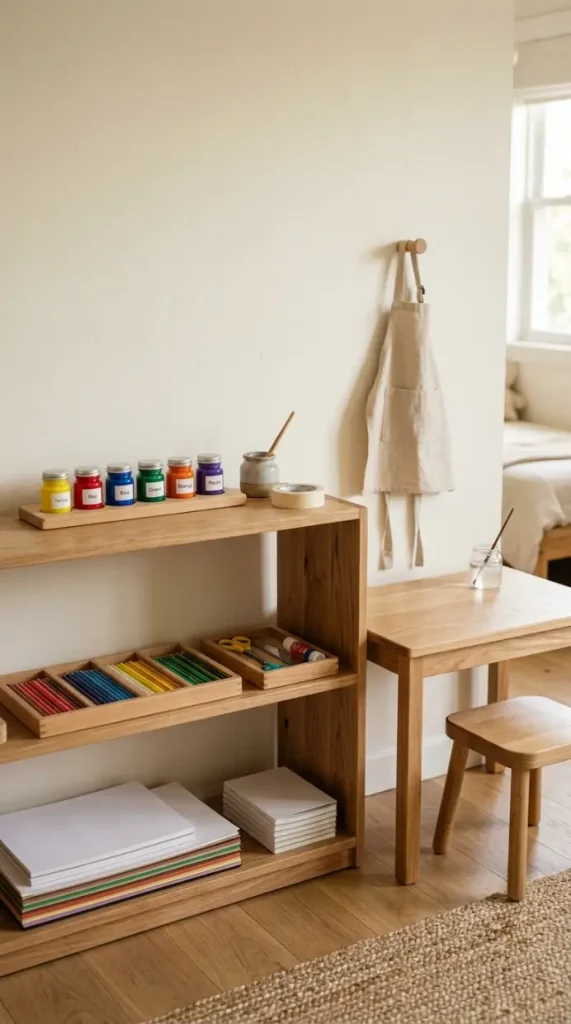
Design the art corner according to Montessori principles — everything accessible, everything visible, everything at the child’s height, nothing requiring adult assistance to reach. A low open natural timber shelving unit with all art supplies organized in visible open trays and containers at the child’s eye level, a small low desk at exactly the right height for the child, a small functional child-height sink or water bowl on a low surface for paint rinsing, an apron hanging from a low hook at child height. The Montessori art corner is the most child-empowering version of the creative station — it is designed entirely around the premise that the child is fully capable of beginning, conducting, and cleaning up a creative session without requiring adult involvement at any stage.
12. Complete Children’s Room Corner Art Station — All Elements Together
Design the most complete children’s room corner art station as a single fully cohesive composition — every element simultaneously present: a wide natural timber corner desk with a kraft paper roll dispenser on one side, a large pegboard spanning both corner walls above the desk with organized hooks, shelves, and art supplies, a section of magnetic chalkboard paint on one lower corner wall panel below the pegboard, a wire artwork display line with clipped children’s artworks, a warm fairy light canopy across the corner ceiling, a simple narrow picture ledge along one wall with leaning artworks, a small Montessori-principle low open shelf unit at one side with organized visible supplies, a small natural round rug below the desk, a simple natural timber stool, warm white walls with the child’s name or an inspiring quote in natural timber lettering, and a warm small desk lamp with a linen shade providing focused task lighting on the desk surface. This is the corner where every child should be able to make anything they want, any time they need to.