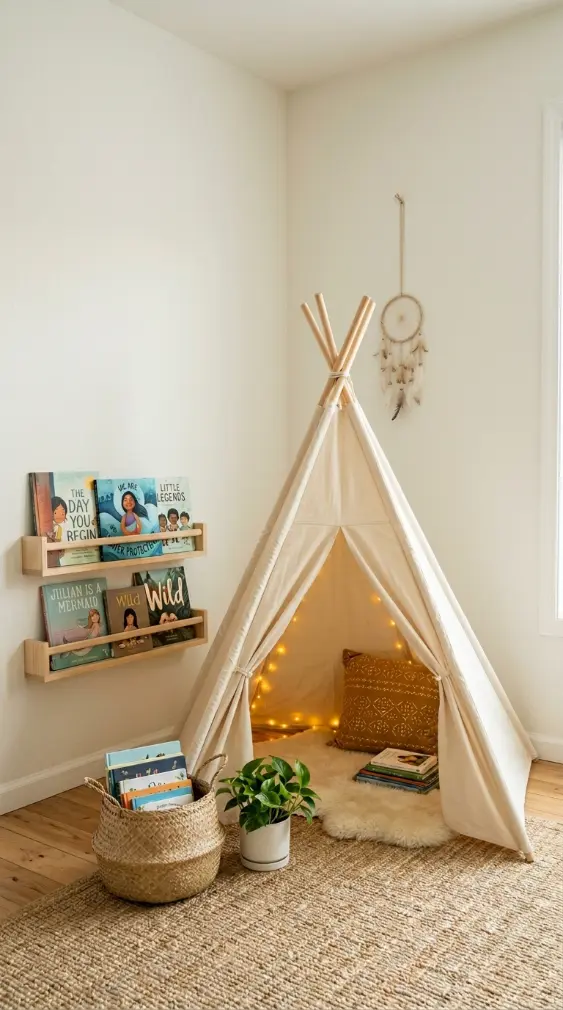
10 Kids Room Corner Decor Inspiration Cozy Reading Teepee
Every child deserves a corner that belongs entirely to them. Not a corner with a toy basket shoved into it, not a corner with a laundry pile waiting to be dealt with, but a corner that was genuinely designed with one small person in mind — a place where they can disappear into a book, let their imagination run freely, and feel a sense of private ownership over a space in a home full of shared surfaces and adult decisions.
The reading teepee has become the defining kids room corner idea of 2026 for reasons that go well beyond aesthetics. Children are hardwired to seek enclosed, partially covered spaces — developmental psychologists call it the instinct for refuge, the same reason every child ever born has attempted to build a fort out of sofa cushions and bedsheets at least once. A teepee satisfies that instinct permanently and beautifully. It creates a physical boundary that says this is mine without requiring a door or a lock. It reduces sensory input from the wider room, making it easier for children to focus, calm down, and settle into quiet activity. And it turns the act of reading — which can feel like a solitary, passive choice compared to the stimulation of screens and toys — into something that feels like an adventure before the first page is even opened.
In 2026, the best kids room reading teepees are not about buying the most expensive tent or filling the corner with the most Pinterest-worthy accessories. They are about understanding what genuinely makes a child feel comfortable, safe, and inspired — and then building that feeling into a small, considered corner of their room with materials and details that will grow with them rather than age out of relevance in six months.
These ideas will show you exactly how to do it.
1. Choose a Natural Wood Pole Teepee in Cream or Neutral Canvas
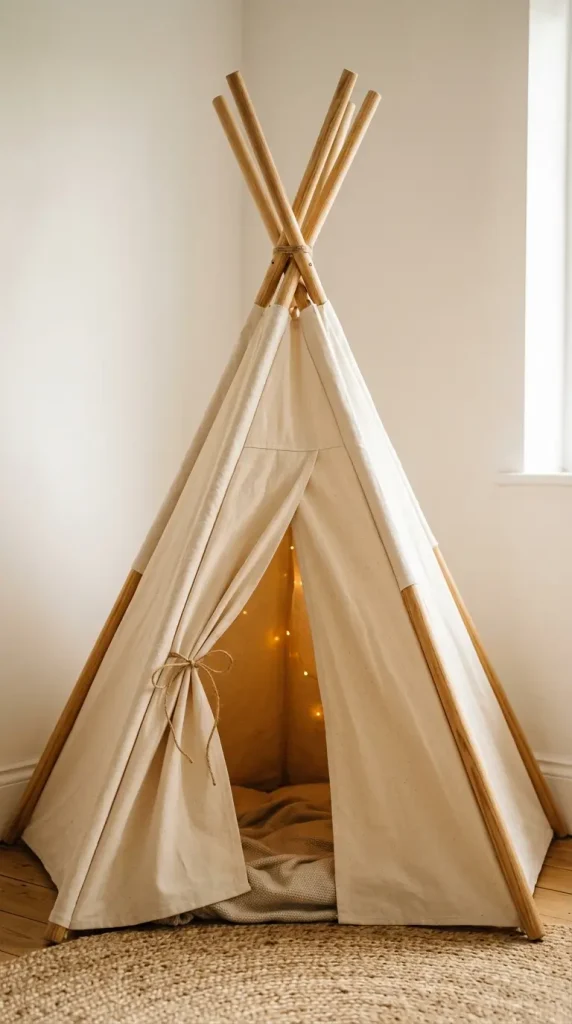
The foundation of any reading teepee corner is the teepee itself — and in 2026, the choice that holds up across every age, every interior color palette, and every design direction is a natural wooden pole teepee in cream, warm white, or oatmeal canvas fabric. The wooden poles are the structural and visual backbone of the piece: real wooden dowels or branches give the teepee an organic, slightly imperfect quality that mass-produced metal-framed tent alternatives entirely lack. The cream or neutral canvas fabric does something that patterned or brightly colored fabric cannot — it recedes visually into the corner and allows everything placed inside and around it to become the story. Stars printed on dark navy fabric, cartoon characters on colored canvas, licensed characters on synthetic fabric — all of these date almost immediately and create a visual limit on how the corner can grow and develop over time. Cream canvas is a blank page. It works at two years old and at twelve. It works with boho interiors, Scandinavian neutrals, and warm maximalist color palettes equally well. It also diffuses the warm amber glow of fairy lights in a way that darker fabrics cannot, which transforms the entire interior of the teepee into something that looks genuinely magical when photographed or simply experienced at dusk.
2. Layer the Teepee Floor With a Round Jute Rug and Sherpa Cushions
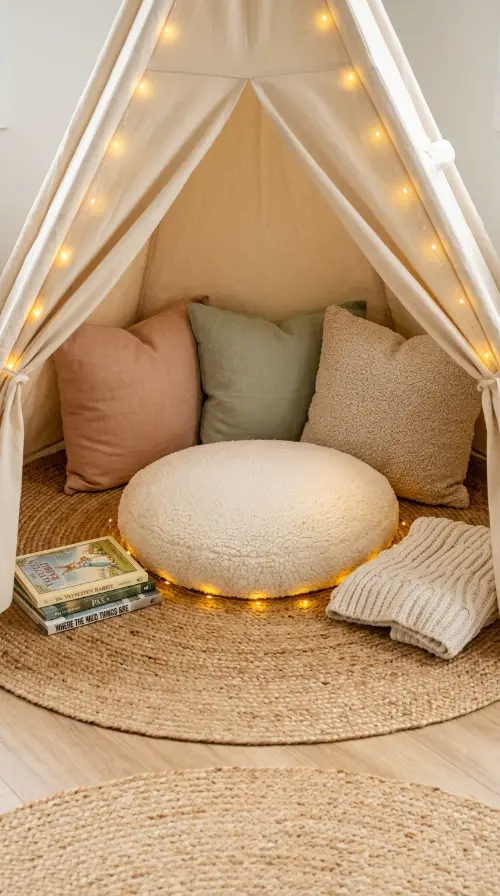
The floor of the reading teepee is where the real comfort lives — and it deserves the same layered, considered approach that any adult lounge seating area would receive. Start with a round jute rug in natural warm tones that extends several centimetres beyond the teepee base on all sides, visually anchoring the teepee to the floor and defining the reading zone as a distinct area within the wider room. On top of the jute rug, inside the teepee, place a large round floor cushion in thick sherpa or boucle fabric in cream or warm white as the primary seating surface — deep enough that a child sinks into it slightly and feels genuinely held. Layer two or three smaller linen throw pillows in complementary neutral or soft earthy tones against the back of the teepee interior for back support and additional texture. The combination of the natural jute texture, the soft sherpa cushion, and the linen pillows creates the kind of tactile layering that children respond to instinctively and that makes a corner feel genuinely cozy rather than simply decorated.
3. String Warm Amber Fairy Lights Inside and Around the Teepee Apex
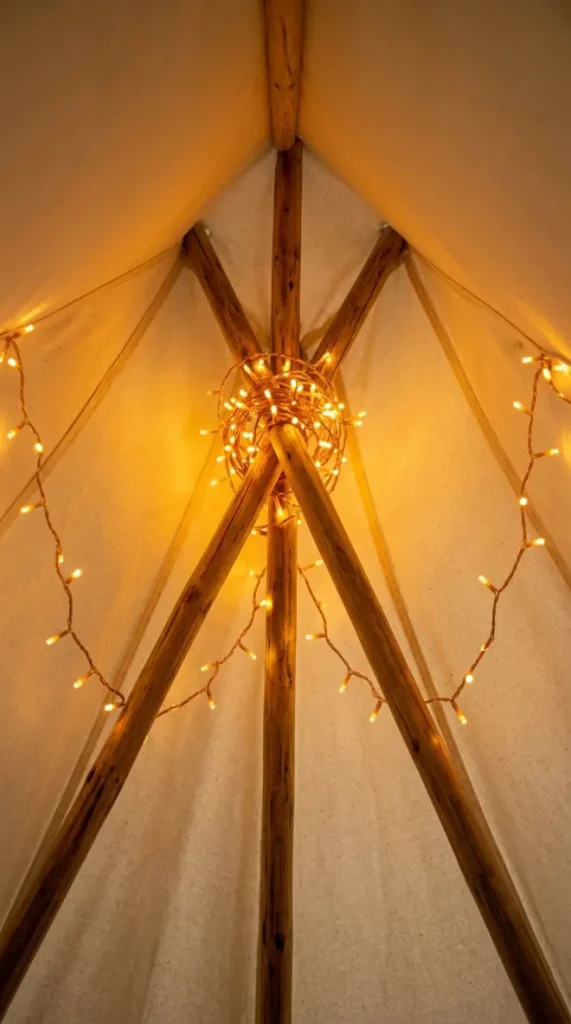
Lighting is the single detail that transforms a teepee from a tent into a sanctuary. The warm amber glow of fairy lights inside a cream canvas teepee creates a quality of light that no ceiling fixture, no floor lamp, and no bedside light can replicate in that small enclosed space — it is intimate, it is warm, and it is unmistakably magical in the way that children understand magic before they can articulate what the word means. Drape a battery-operated string of warm amber fairy lights around the interior apex of the teepee — looped once around the crossing point of the wooden poles at the top — so the lights hang downward inside the canvas walls in loose, natural festoons. The battery pack tucks neatly behind one of the poles at the teepee base and is completely invisible from the outside. Use lights with a warm 2700K amber tone rather than cool white or multicolored — the difference between the two is the difference between a fairy tale and a birthday party, and for a reading corner the fairy tale wins every time. Keep a small rechargeable battery pack rather than single-use batteries so the lights can be switched on independently by the child as part of the ritual of entering their reading space.
4. Mount a Low Face-Out Book Ledge on the Adjacent Wall
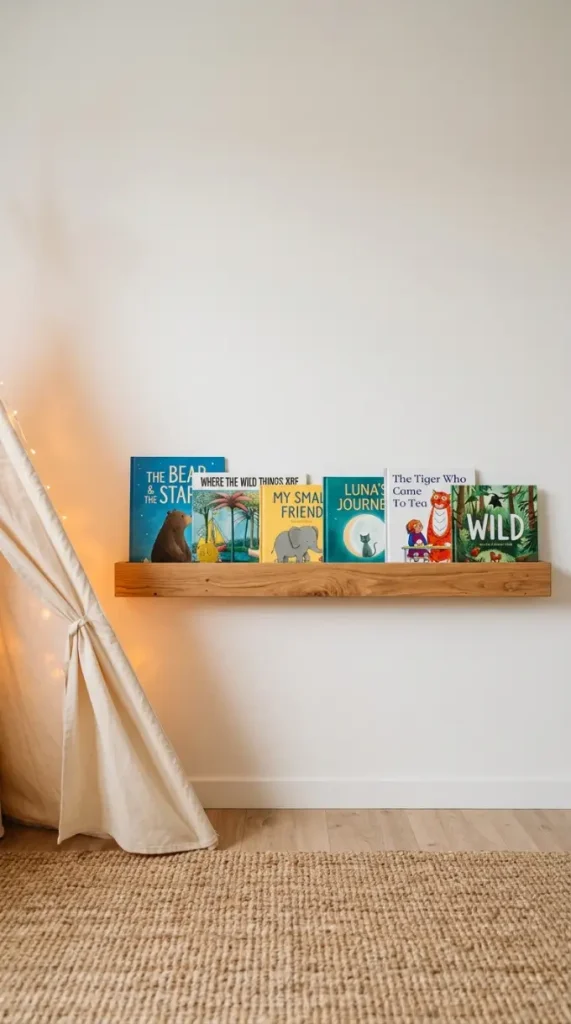
A reading corner without accessible books is a beautiful decoration rather than a functional space — and the book storage solution matters almost as much as the teepee itself. A low wall-mounted book ledge in natural timber, positioned on the wall directly beside the teepee at child height — approximately 50 to 70 centimetres from the floor — with books displayed face-out so their covers are visible rather than their spines, is the most inviting book display a child’s reading corner can have. Children choose books by their covers. They are drawn to the image, the color, the character they recognize. A shelf full of spines is a library. A shelf of face-out covers is an invitation. Keep the ledge shallow — a single-book depth is enough — and change the selection every few weeks so the corner always has something new to offer without requiring any additional storage space. Paint or stain the timber ledge in a tone that complements the teepee and rug — natural warm wood, white-painted, or dark walnut — and it becomes a permanent design feature of the corner rather than an afterthought bolted to the wall.
5. Add a Small Timber Side Table Inside the Teepee for a Lamp and Snack
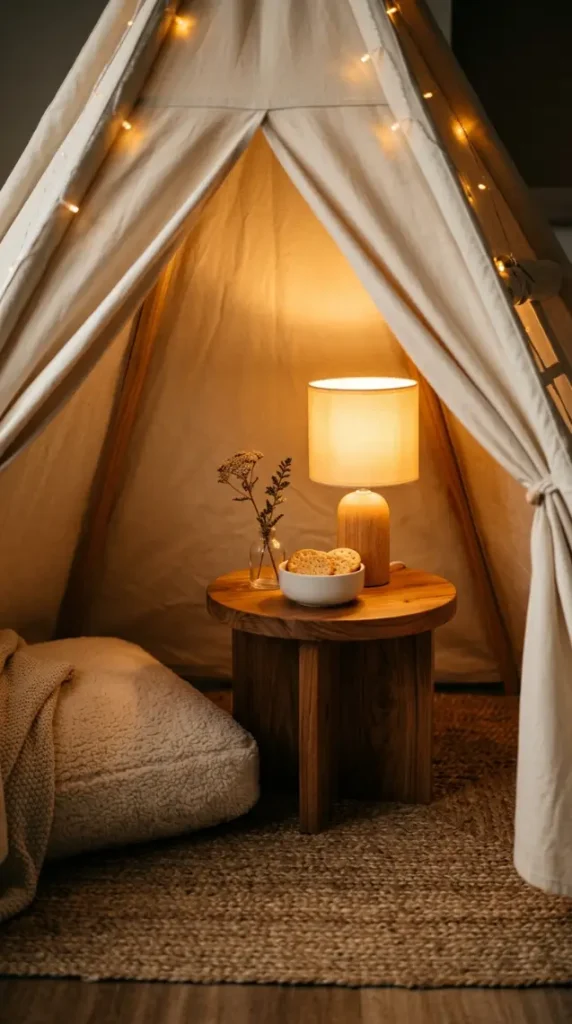
The one functional detail that most reading teepee setups overlook is a surface — a small, low surface inside the teepee where a child can place a cup of warm milk, a small bowl of crackers, or the library book they are currently working through without having to balance it on their lap or pile it on the cushion beside them. A small round timber side table at approximately 30 to 35 centimetres height — low enough to be completely usable from a floor cushion sitting position — placed inside the teepee to one side of the main cushion adds a layer of genuine domestic comfort to the reading space that transforms it from a styled corner into a genuinely functional daily retreat. On the table: a small rechargeable table lamp in warm white or natural timber with a warm amber bulb for reading light that is independent of the overhead fairy lights, a small ceramic bowl for snacks, and one plant cutting in a tiny bud vase. The combination of the lamp, the surface, and the small personal objects makes the teepee interior feel like a miniature room rather than a tent — which is exactly the quality that children find most captivating about truly well-made reading nooks.
6. Personalize the Teepee Canvas With the Child’s Name in Simple Block Letters
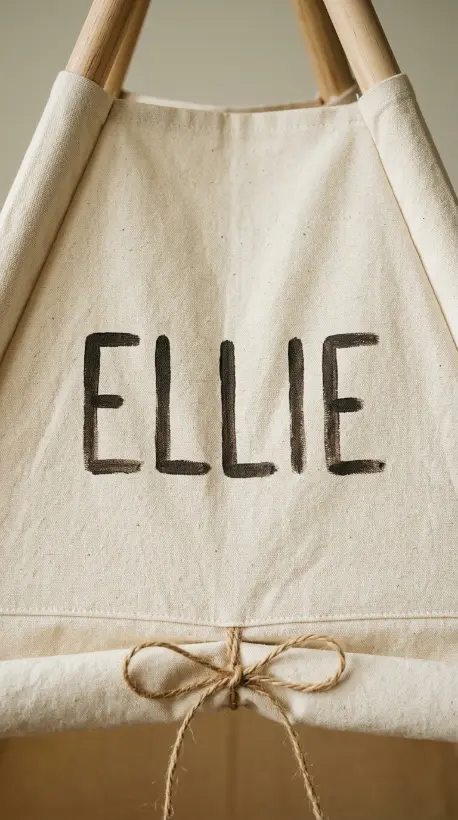
A reading teepee with the child’s name on it stops being a piece of furniture and becomes a possession — and that shift in ownership is enormously meaningful to a child who spends most of their time in spaces that were designed by and for adults. Stenciling, stamping, or hand-painting the child’s name on the exterior canvas of the teepee in simple block letters or a clean script — using fabric paint in a tone just slightly darker than the canvas itself for a tone-on-tone effect, or in a warm dark ink for a more graphic look — takes less than an hour and produces a result that makes the corner uniquely theirs in the most direct and permanent way possible. Keep the lettering simple and the placement deliberate — centered above the teepee entrance at approximately eye height for a standing child, or positioned on the upper canvas panel where it reads clearly from across the room. Avoid stickers, iron-on transfers, or vinyl lettering — fabric paint that has been lightly brushed or stamped on has a slightly imperfect, handmade quality that feels warm and personal rather than manufactured.
7. Hang a Dream Catcher or Macrame Wall Hanging Above the Teepee
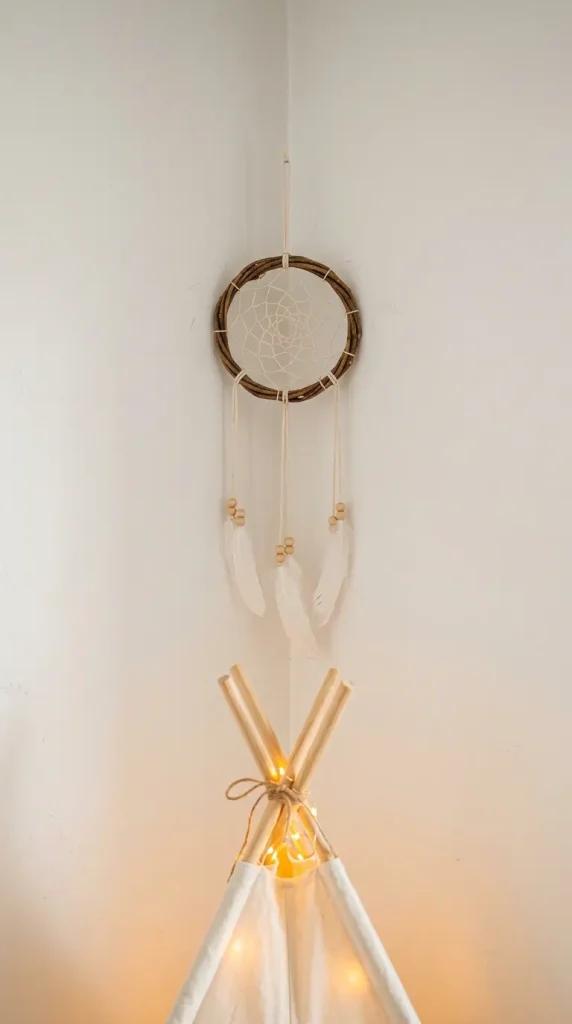
The wall space directly above a reading teepee — the corner junction where the two walls meet behind the teepee apex — is one of the most valuable and most neglected design surfaces in a kids room corner setup. A single considered object hung at this junction, visible above the teepee and framed by the corner walls on both sides, creates a vertical design presence that anchors the whole corner composition and gives it a completed, intentional quality. A simple handmade dream catcher in natural materials — a small willow hoop wrapped in natural cotton thread with a few soft white or cream feathers hanging below — or a small macrame wall hanging in natural jute with simple knotwork and a few wooden bead accents both work beautifully in this position. Keep the scale modest — approximately 25 to 35 centimetres wide — so it reads as a decorative detail rather than competing with the teepee itself for visual attention. The materials should echo the teepee: natural, warm, handmade in feeling.
8. Create a Small Basket Library Beside the Teepee for Easy Book Rotation
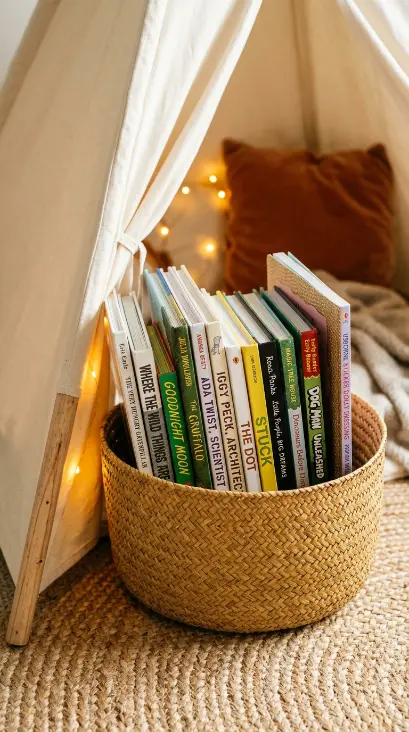
The best reading corners for children are the ones where books are always within arm’s reach and always feel like they are offering something new — and a small round basket or woven storage container positioned just outside the teepee entrance as a dedicated book library achieves both goals simultaneously. A natural seagrass or rattan basket approximately 35 centimetres in diameter and 25 centimetres tall, filled with a rotating selection of twelve to fifteen books in a mix of picture books, early readers, and one or two activity or puzzle books, placed directly beside the teepee opening so a child can reach from inside the teepee to browse the basket without getting up, is both the most practical and most visually appealing book storage solution for this kind of corner. Changing the basket contents every two to three weeks keeps the reading corner feeling fresh without adding any new purchases — simply rotating the family’s existing book collection through the basket is enough to maintain the sense of discovery that keeps children returning to the space independently.
9. Introduce a Small Potted Plant or Trailing Vine to the Corner
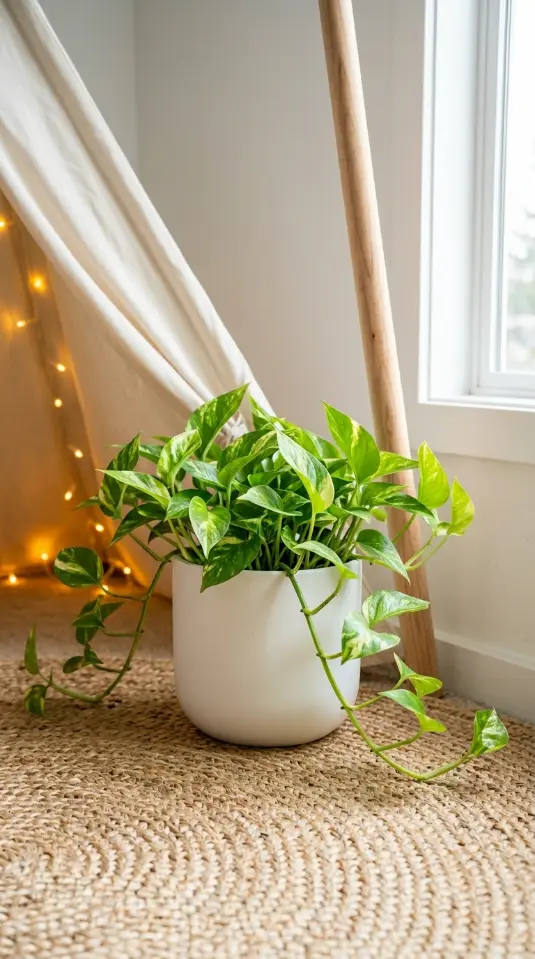
A reading corner with a living plant in it feels different from one without — in a way that is difficult to fully articulate but completely unmistakable once you experience it. The presence of something genuinely alive in a cozy, enclosed space introduces an organic quality that no amount of cushions, lighting, or carefully chosen props can replicate. For a kids room reading teepee corner, keep the plant choice simple, low-maintenance, and visually generous: a small potted trailing pothos in a white ceramic or natural rattan pot, positioned at the corner of the jute rug beside the teepee, with its trailing stems allowed to grow naturally toward the teepee base over time. A pothos is practically indestructible, tolerates the lower light levels typical of a corner position, and produces new trailing growth consistently enough that the corner always has a sense of something quietly changing and growing — which is exactly the kind of subtle living quality that makes a space feel genuinely inhabited rather than styled.
10. Keep the Corner Walls Minimal to Let the Teepee Be the Hero
One of the most common mistakes in styled kids room reading corners is the impulse to fill the walls around the teepee with gallery art, alphabet prints, decorative letters, wall decals, and every other surface decoration available to a children’s room. The result is a corner that looks busy, visually noisy, and more like a display than a retreat. The reading teepee works best — feels most magical, photographs most beautifully, and functions most effectively as a calm reading space — when the walls around it are deliberately restrained. One small dream catcher or macrame piece above the teepee apex. One low book ledge on the adjacent wall at child height. Everything else left empty. The white or softly painted wall surface around the teepee is not a missed opportunity — it is the breathing room that allows the teepee, the fairy lights, the plant, and the basket of books to each read clearly as distinct, considered elements. Restraint in a kids room corner is not minimalism for its own sake. It is the design decision that makes a child feel calm rather than stimulated the moment they enter the space — which is the entire point of a reading corner in the first place.