12 Herb Planter Ideas Vintage Galvanized Metal Collection
There is something about a collection of vintage galvanized metal planters that no terracotta pot, no ceramic vessel, and no modern fiber planter has ever quite managed to replicate. It is the way the metal ages. The way the zinc surface develops a soft, uneven patina over months and years that makes every container look like it has a story attached to it. The way a row of mismatched galvanized buckets, troughs, and watering cans planted with fresh herbs on a windowsill or a potting bench communicates something warm and genuine about the person who put them there.
In 2026, the vintage galvanized metal aesthetic has moved far beyond farmhouse kitchens and country garden styling. It sits just as comfortably in urban apartments on a sunlit kitchen shelf, in minimalist Scandinavian interiors on a clean white windowsill, and in wildly overgrown cottage gardens on a weathered potting table. The aged zinc surface plays equally well against raw timber, white painted walls, and exposed brick — which is part of why the look has proven so enduringly popular across every interior and garden direction.
Galvanized metal also happens to be one of the most practical planting materials available. It resists rust. It handles temperature variation. It lasts decades with zero maintenance beyond the occasional wipe down. And its thermal mass warms the soil slightly faster in spring than ceramic or plastic, which herbs — always eager to get going — quietly appreciate.
Whether you are starting your first windowsill herb garden or adding to a collection that has been growing for years, these ideas will show you exactly what a vintage galvanized metal herb planter collection can look like when it is done with intention.
1. Line a Kitchen Windowsill With a Row of Mismatched Galvanized Pots
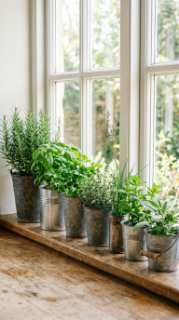
The kitchen windowsill herb garden is one of the oldest and most practical ideas in home growing — and the vintage galvanized version of it is also the most visually compelling. The key is resisting the urge to buy a matching set. Instead, gather galvanized pots and containers in varying heights, diameters, and surface finishes — some newer with a bright zinc surface, some older with a soft grey patina, some with embossed diamond or corrugated patterns, some completely plain. The variation is the entire point. A row of identical pots is a product. A row of mismatched galvanized containers planted with different herbs is a collection — and collections have a warmth and character that coordinated sets never achieve. Plant each container with a single herb variety and arrange them by height, letting the tallest rosemary or basil anchor one end and the smallest thyme or chives trail at the other.
2. Transform a Galvanized Livestock Trough Into an Outdoor Herb Bed
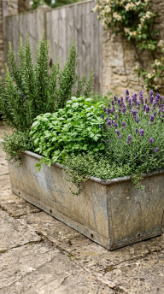
A galvanized livestock trough is the most dramatic single-container option in the entire vintage galvanized herb planting world — and it is available at agricultural supply stores for a price that would make any garden center blush. A standard trough measuring 120 by 45 by 30 centimeters, drilled with drainage holes along the base, filled with quality herb compost, and planted with a full productive herb collection becomes the most functional and visually impressive feature any outdoor entertaining or kitchen garden area can have. Plant it generously — rosemary at the back growing tall and structural, lavender at one end for fragrance and beauty, basil and flat parsley in the center for daily use, creeping thyme at the front edges to spill slightly over the trough rim. The aged galvanized metal surface of a well-used trough, with its natural dents, surface variation, and warm zinc patina, makes the whole arrangement look like it has been there for decades even when it was planted last spring.
3. Repurpose a Vintage Galvanized Watering Can as a Trailing Herb Planter
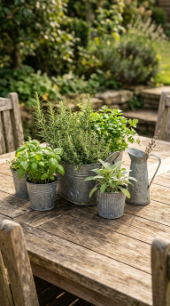
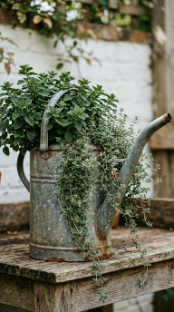
A galvanized watering can has one of the most recognizable and beloved silhouettes in the entire world of garden objects — and when it is repurposed as a planter rather than used for its original function, it becomes something genuinely surprising and beautiful. The long spout creates a natural exit point for trailing herbs, the wide body provides enough soil volume for proper root development, and the combination of the industrial metal form with living green foliage growing from every opening creates a visual tension that makes the whole thing look like an art installation rather than a plant pot. Use it for trailing varieties that appreciate the statement: a tumbling thyme that drapes over the spout, a sprawling oregano that fills the opening of the can body, a compact mint contained in a liner inside to prevent its characteristic root aggression. Placed on a potting bench or at the corner of a garden table, a planted watering can stops every person who sees it.
4. Build a Tiered Wooden Crate and Galvanized Pot Display Stand
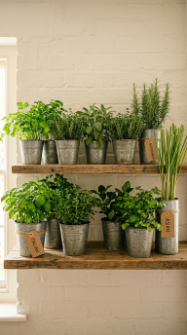
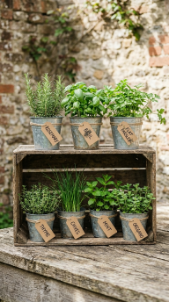
A tiered display of vintage galvanized herb planters gives a collection visual architecture that a flat arrangement on a single surface simply cannot achieve. Build a simple two-tier stand from two weathered timber crates — one inverted and stacked beneath the other to create a raised second level — and arrange your galvanized pots across both levels. Taller herbs on the upper tier, shorter trailing varieties on the lower. The combination of rough-hewn timber crates and aged galvanized metal at different heights creates a layered, market-stall quality that looks genuinely editorial. Add small hand-lettered herb labels tied with jute twine to each pot for an extra layer of considered detail that makes the whole display feel styled rather than simply functional. This is equally effective as an indoor kitchen feature, a covered outdoor dining area display, or a potting shed focal point.
5. Use Galvanized Metal Buckets With Swing Handles as Hanging Herb Planters
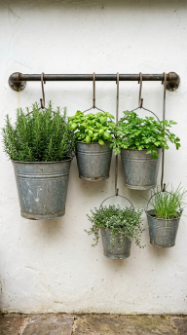
The swing handle on a vintage galvanized metal bucket is not just a carrying feature — it is a hanging point. A collection of galvanized buckets in varying sizes, hung from a simple length of horizontal timber dowel or a reclaimed iron pipe mounted on a wall or fence at varying heights, creates one of the most charming and space-efficient herb displays possible. The hanging arrangement takes up zero bench or counter space, brings the herb planting to eye level where foliage can be properly appreciated, and creates a strong vertical design element on any plain wall or fence panel. The natural swing and slight movement of hanging metal buckets in a gentle breeze — each one planted with a different herb variety — has a quality that no static shelf display ever quite replicates. Use buckets in three sizes: large for rosemary or basil that needs volume, medium for parsley and mint, small for thyme or chives that need less root space.
6. Create a Galvanized Metal Herb Garden on a Potting Bench
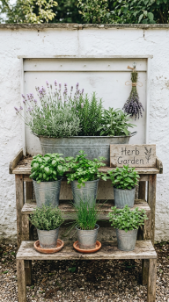
A potting bench is the natural home of a serious galvanized herb collection — and when it is styled with intention, it becomes the most photographed corner of any garden. The key is layering: a large trough planter at the back, two or three medium buckets and pots in the middle tier, and small individual pots at the front edge where they can be reached and used daily. Place a few terra cotta saucers under the galvanized pots at the front to catch any drainage and introduce a warm material contrast against the grey metal. Lean a small hand-lettered timber sign against one of the larger containers. Hang a bundle of dried herbs from a small hook on the potting bench backboard. The finished display reads as a working herb garden that has been curated rather than simply arranged — the kind of setup that looks effortless because every detail was thought about before the first pot was placed.
7. Age New Galvanized Metal With a Vinegar and Salt Solution
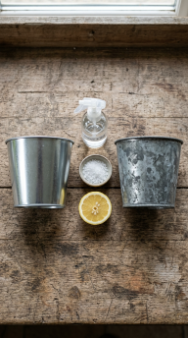
Not every great galvanized herb planter collection starts with genuinely old or found containers. New galvanized metal — with its uniform bright silver-zinc finish — lacks the patina and character that makes vintage pieces so visually compelling. The simple solution is aging it yourself, and the process takes less than an afternoon. Mix white vinegar, table salt, and hydrogen peroxide in a spray bottle, apply it generously to the clean dry metal surface of your new galvanized containers, and allow them to dry completely in sunlight. The vinegar and salt break down the uniform zinc coating while the hydrogen peroxide accelerates the oxidation reaction, producing a surface variation that closely mimics years of natural weathering. Two or three applications over a single day produces a result that is genuinely convincing — a mottled grey-silver surface with subtle tonal variation that reads as aged and found rather than newly purchased. From that point, plant, display, and allow natural weathering to continue the aging process authentically over time.
8. Plant a Galvanized Metal Herb Ladder Shelf Against a Garden Wall
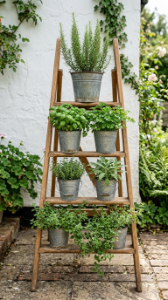
A garden ladder shelf — a simple A-frame ladder structure with horizontal timber rungs serving as display shelves — is one of the most space-efficient vertical growing structures possible, and a set of vintage galvanized herb planters arranged across its rungs creates a display that is genuinely striking at any garden scale. The natural lean of the ladder against a wall introduces a diagonal geometry that a straight shelf or flat bench cannot provide. Small galvanized pots on the upper rungs where they are reached for daily use, trailing varieties on the lower rungs where they can spill forward naturally, and a slightly larger container at the very top to anchor the composition. The ladder structure itself — ideally in natural timber or dark-stained wood — creates a warm material contrast against the grey metal of the pots, and together they produce the kind of layered, botanical display that stops people mid-scroll on Pinterest immediately.
9. Display a Galvanized Herb Collection on an Outdoor Dining Table
An outdoor dining table styled with a central collection of galvanized herb planters is one of the most effortlessly beautiful and practical table decoration choices possible — because the herbs are both the decoration and the ingredient for whatever meal is about to be served from them. Group three to five galvanized containers of varying heights and sizes at the center of the dining table, arranged as a loose cluster rather than a formal centerpiece. Include a small galvanized pitcher or jug alongside the pots for visual variety in silhouette. Allow the herb foliage to be generous and slightly untamed — the contrast of lush, slightly wild herb growth against the clean geometric form of aged galvanized metal is exactly what makes this kind of table styling feel genuine rather than decorated. Snip sprigs directly from the pots as cooking or garnishing requires and the display remains functional through every meal it presides over.
10. Label Every Galvanized Herb Planter With Handwritten Slate or Timber Tags
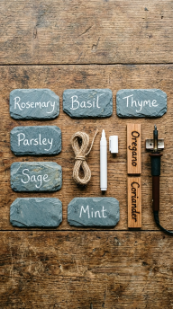
A collection of galvanized herb planters without labels is a collection that only the person who planted it can navigate. Labels transform a planting display from personal to shareable — they communicate the care and intentionality behind every pot, they make the display more useful to guests who might want to pick a sprig, and in visual terms they add a layer of handcrafted detail that makes the whole collection feel curated. The best labels for vintage galvanized planters are either small pieces of natural slate with herb names written in white chalk pen, or thin strips of dark timber with the name burned on using a wood burning tool or written in dark ink. Attach them to the pot rim with a loop of natural jute twine, or press a small timber stake into the soil of each container. The handwriting does not need to be perfect — in fact, the slight imperfection of a genuinely handwritten label is exactly what gives the whole collection its warmth and authenticity.
11. Group Galvanized Herb Planters by Cuisine on a Kitchen Shelf
Organizing a galvanized herb collection by cuisine rather than by plant variety is one of those ideas that makes the collection simultaneously more beautiful and more useful. Group three galvanized pots together on a kitchen shelf or windowsill — Italian herbs in one cluster: basil, flat parsley, and oregano. Asian herbs in the next: Thai basil, Vietnamese coriander, and lemongrass in a slightly taller galvanized container. Mediterranean in the third: rosemary, thyme, and sage. Small hand-lettered kraft tags on each grouping label the collection as a cuisine station rather than just a plant display. The grouping creates stronger visual clusters than a single row of individual pots, the taller containers for taller-growing herbs naturally create height variation within each cluster, and the culinary organization means every meal starts at the shelf rather than at the supermarket.
12. Use a Vintage Galvanized Metal Colander as a Drainage-Perfect Herb Planter
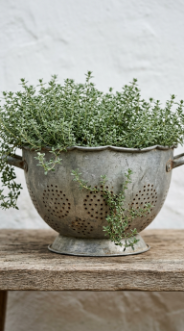
A galvanized metal colander is one of the most overlooked repurposing opportunities in the entire vintage galvanized world — and it is also one of the most practical, because the perforated base provides drainage so effective that overwatering is almost impossible. A large galvanized colander planted with a single herb variety makes a planter with more visual personality than almost any purpose-made container. The perforated holes in the base and sides catch the light in a way that solid metal cannot. The simple, functional form of a colander — its flared sides, its two small side handles, its completely utilitarian shape — takes on a completely different character the moment green herb foliage begins growing from it. Plant it with a sprawling herb that will eventually drape over the colander rim and through the side holes: trailing thyme, creeping oregano, or a tumbling variety of mint contained within a liner. Display it on a worn timber surface, a stone windowsill, or a kitchen shelf and it becomes an instant talking point.