18 Herb Garden Ideas Indoor Kitchen Window Terracotta
There is a version of the kitchen that smells like nothing in particular. And then there is the version with a windowsill full of terracotta pots — basil catching the morning light through the glass, rosemary releasing its scent when you brush past it reaching for the kettle, thyme and oregano in a row along the sill like small green soldiers ready for the evening’s cooking. The difference between those two kitchens is not cost, not square footage, not even particularly good gardening skill. It is the decision to put a few terracotta pots on the kitchen window and fill them with the herbs you actually use.
The kitchen window herb garden is the most accessible and most immediately rewarding form of indoor gardening available to any home. It requires a sunny window — ideally south or west-facing, receiving at least four to six hours of direct light daily — a handful of terracotta pots with drainage holes, a good quality potting compost, and a modest collection of culinary herbs. The terracotta pot is the material choice that makes the indoor herb garden not just functional but beautiful. Its warm raw clay surface breathes with the soil inside it, regulating moisture in the way that glazed ceramic and plastic cannot, which keeps the roots of herbs like basil, rosemary, and thyme — all of which prefer drier soil between waterings — exactly as healthy as they want to be. And the warm earthy tone of raw terracotta against a kitchen window, herbs growing above it into the light, is one of the most quietly beautiful domestic still-life compositions available in any home.
In 2026, the kitchen window herb garden has evolved from a simple row of pots on a sill to a genuinely designed interior feature — with floating glass shelves capturing multiple levels of window light, hanging terracotta arrangements, rope-and-plank suspension systems, hand-labeled pots in coordinated sizes, and curated collections organized by cuisine or fragrance. These 18 ideas cover every approach to creating a beautiful, functional, and genuinely thriving indoor kitchen window herb garden using terracotta as the defining material throughout.
1. A Classic Row of Terracotta Pots on the Kitchen Windowsill
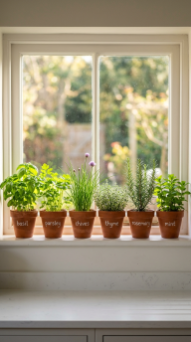
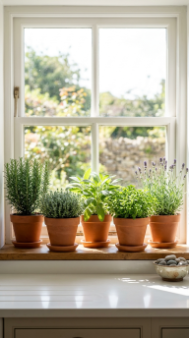
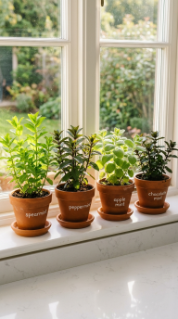
The simplest and most universally loved indoor herb garden arrangement is also the most beautiful: a single row of terracotta pots of matching size lined up along the kitchen windowsill, each holding one herb variety, each pot spaced just far enough from its neighbor for leaves to grow freely without crowding. Uniformity is key here — use pots of the same size, shape, and material and line them up along your kitchen windowsill for a display that reads as designed rather than accumulated. Choose five or six varieties that are both culinary workhorses and good indoor performers: basil at the front where it can catch the most direct light, flat-leaf parsley, chives, thyme, rosemary, and mint — each in its own pot so the more aggressive spreaders like mint cannot take over their neighbors. A small handwritten label pushed into the soil of each pot, or painted directly onto the terracotta with a white paint pen, turns the row from a plant collection into a kitchen still life that belongs exactly where it is.
2. Stack Terracotta Pots on a Slim Glass Floating Shelf at the Window
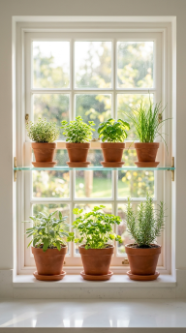
A slim glass floating shelf mounted directly in front of the kitchen window — at approximately mid-window height — doubles the available growing surface at the window without blocking any light, because the transparent glass of the shelf allows the full height of the window light to pass through to the pots below on the windowsill. Arrange terracotta herb pots of coordinating sizes — taller pots with larger herbs at the back of the windowsill, smaller pots with compact herbs on the glass shelf — so the taller plants at the back catch the upper light and the smaller ones on the shelf catch the mid-window light. The glass shelf also creates a beautiful visual layering effect: the herbs on the shelf appear to float in the window light, the terracotta pots catching the morning sun from behind and glowing warmly, the whole arrangement reading like a living window display rather than a functional growing system. Each pot sits in a matching terracotta saucer to protect the glass shelf surface and catch any water overflow.
3. Hang a Rope-and-Plank Suspended Herb Shelf in the Window
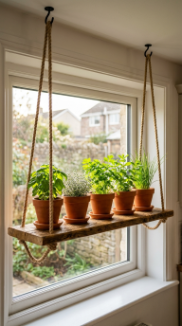
A suspended shelf system — natural timber planks held at each corner by four lengths of natural sisal or jute rope attached to ceiling hooks — is one of the most visually beautiful and most Pinterest-loved kitchen window herb garden installations available, and it is genuinely simple to build. The suspended shelf can hold a single level of terracotta herb pots at window height, or two levels at different heights that both capture window light from different angles. The natural rope and natural timber combination sits perfectly with the warm earthy tone of terracotta, creating a material palette — rope, timber, terracotta, green herbs, and window light — that is entirely cohesive and genuinely beautiful from every angle in the kitchen. The suspended format allows the shelf to move very slightly in kitchen air currents, which is part of its charm, and the rope and timber construction is sturdy enough to hold six to eight terracotta pots without any concern.
4. Use Graduated Terracotta Pot Sizes for a Natural Visual Hierarchy
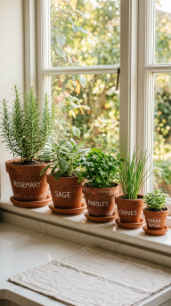
One of the simplest and most effective ways to make a kitchen window herb garden look intentionally styled rather than randomly assembled is the use of graduated terracotta pot sizes — arranging herb pots from the largest at one end or the back, through medium-sized pots in the center, to the smallest at the other end or the front. The graduating scale creates a natural visual rhythm across the windowsill that the eye reads as designed and considered, and it also serves a practical purpose: the largest pots at the back hold the tallest and most established herbs like rosemary and sage without their height blocking the light from the smaller pots in front, and the smallest pots at the front hold compact herbs like thyme and Greek basil that suit a smaller container. When all the pots are in raw unglazed terracotta — the same material in different sizes — the graduated arrangement reads as a cohesive collection rather than a mixed selection, and the warm earthen tones of every pot tie the display together across every size variation.
5. Label Terracotta Pots With Hand-Painted White Lettering
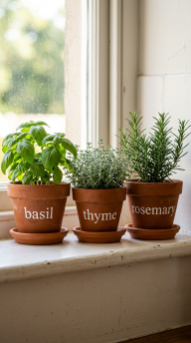
The label is the finishing detail that takes a kitchen window herb garden from a plant display to a genuinely designed kitchen feature — and the terracotta pot itself is the perfect label surface. A white paint pen or a small brush with exterior white paint applied directly to the smooth front face of a raw terracotta pot produces a clean, warm, handmade label that costs almost nothing, looks genuinely beautiful, and does not require any separate stakes or tags cluttering the soil surface. Write the herb name in simple lowercase lettering — basil, thyme, mint, rosemary — in a clean sans-serif or casual serif style, and seal with a coat of clear varnish for a finish that survives regular watering. For a slightly more rustic approach, use a chalk pen on the pot surface for a label that can be changed as herbs are rotated through the seasons. The labeled pot collection reads as a kitchen still life — a row of named herb vessels lined up at the kitchen window like small cookbooks, each one telling you exactly what it contains and ready to contribute to the evening’s meal.
6. Create a Terracotta Herb Garden on a Floating Kitchen Shelf Beside the Window
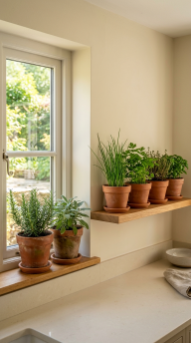
Not every kitchen has a wide enough windowsill to hold a generous herb collection, but almost every kitchen has wall space beside the window — and a slim floating timber shelf mounted on the kitchen wall adjacent to the window, at the same height as the windowsill, captures the reflected and angled window light while extending the herb garden’s footprint beyond the sill itself. A single floating shelf in natural oak or pine, approximately 80cm wide, mounted at windowsill height on the wall immediately to the side of the kitchen window, can hold four to six terracotta herb pots in a row that reads as a seamless continuation of any pots on the windowsill itself. The wood tone of the shelf and the warm terracotta of the pots sit together in the same earthy material family, and the herb plants above them bring the fresh green that the kitchen needs. When the shelf is mounted at the right height and the pots are in graduating sizes, the whole installation — windowsill pots plus adjacent shelf pots — reads as a single unified kitchen herb garden feature rather than two separate elements.
7. Grow a Dedicated Basil Collection in Terracotta at the Sunny Window
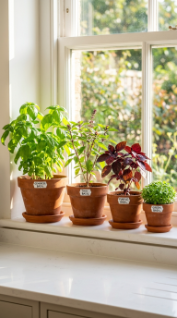
Basil is the most sun-hungry, most warmth-loving, and most kitchen-essential of all indoor herbs — and it is the one herb that rewards a dedicated growing approach most generously. Rather than one basil plant among six other herbs on the windowsill, devote an entire south-facing kitchen window collection to three or four different basil varieties: sweet Genovese basil with its large, glossy, classically flavored leaves; compact Greek basil with its tiny tight mound of small leaves; Thai basil with its distinctive anise fragrance and purple stem tinge; and purple basil with its dramatic dark burgundy leaves that make it simultaneously a culinary herb and an ornamental plant. All four varieties in matching raw terracotta pots, arranged from largest to smallest, with the Genovese at the back getting the most light and the Greek basil compact mound at the front, create a basil collection that is visually extraordinary and practically invaluable through the summer months — enough fresh basil for pasta, pizza, salads, and pesto on daily demand throughout the growing season.
8. Use a Terracotta Herb Planter Trough for a Long Windowsill Display
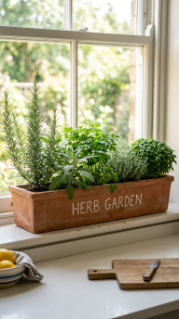
A long terracotta trough planter — a rectangular terracotta container approximately 50 to 80cm long by 15cm wide — is the indoor herb garden solution for the kitchen with a wide, deep windowsill that can accommodate a single large container rather than multiple individual pots. The trough allows up to five or six herb varieties to grow together in the same container, their roots sharing the same growing medium and the long format creating a continuous green band across the full window width that reads as more architecturally complete than individual pots. Plant the trough with a graduated arrangement — the tallest herb at one end, compact trailing herbs at the other, with mid-height herbs filling the center — so the planting creates a natural visual slope from one end to the other. A long raw terracotta trough on a kitchen windowsill, filled with a dense planting of mixed culinary herbs, is one of the most satisfying and most complete kitchen window herb garden presentations possible in a single container.
9. Arrange Terracotta Pots on a Small Tiered Plant Stand at the Window
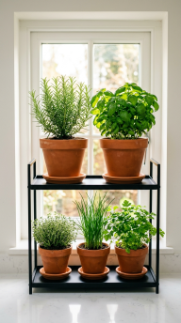
A small two or three-tier plant stand positioned directly in front of or immediately beside the kitchen window — in a slim compact format that fits the kitchen footprint — multiplies the herb growing surface available at the window by using vertical space rather than horizontal window area. Each tier of the stand holds two or three terracotta herb pots, with the lowest tier holding the most sun-tolerant herbs that can grow in indirect lower light, the middle tier holding mid-light herbs, and the top tier positioned closest to the window glass holding the most sun-hungry herbs like basil and rosemary. In a warm black powder-coated metal or natural rattan finish, the slim plant stand reads as a piece of kitchen furniture rather than a utility item, and the terracotta pots cascading up its tiers create a vertical herb garden that is both beautiful and genuinely productive.
10. Style a Complete Kitchen Window Herb Vignette With Terracotta and Linen
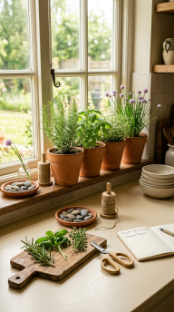
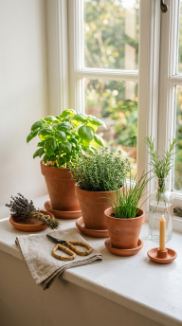
A kitchen window herb garden becomes a complete interior design moment — a genuinely styled vignette rather than a functional plant collection — when the terracotta pots are surrounded by the right supporting objects: a small linen dish cloth folded beside the pots, a pair of herb scissors with a natural bamboo handle resting across a saucer, a small ceramic bowl of dried herbs, a slim beeswax candle in a terracotta holder, and a vintage glass bottle with a single herb stem in water. These companion objects do not distract from the herbs — they frame them, give the windowsill composition a depth and a layering that a row of pots alone cannot achieve, and communicate that the kitchen window is a space that was arranged with genuine care and aesthetic intention. The material palette throughout — raw terracotta, natural linen, warm beeswax, bamboo, vintage glass — sits in the same earthy, natural, honest material family as the terracotta pots themselves, so nothing in the vignette feels out of place or added for effect.
11. Grow Mediterranean Herbs in Terracotta at a South-Facing Kitchen Window
A south-facing kitchen window is the most valuable herb-growing real estate in any home — the full sun it provides through the glass is the exact condition that Mediterranean herbs were designed by millions of years of evolution to thrive in. Rosemary, thyme, sage, oregano, marjoram, and lavender all originate from sun-drenched hillsides and coastal cliffs of southern Europe where they bake in direct summer sun and drain fast in rocky, poor soil — conditions that a terracotta pot on a sunny windowsill replicates almost exactly. Terracotta is specifically the right pot for Mediterranean herbs because its porous clay walls allow moisture to evaporate from the soil between waterings, preventing the root rot that these drought-adapted herbs are prone to in containers that stay consistently moist. Fill each pot with a free-draining compost mixed with perlite or coarse grit for the perfect Mediterranean herb growing medium, place the pots in the sunniest south-facing window you have, and these herbs will grow with a vigor and an aromatic intensity that makes every cooking session genuinely fragrant from across the room.
12. Make a DIY Hanging Terracotta Pot Herb Display in the Kitchen Window
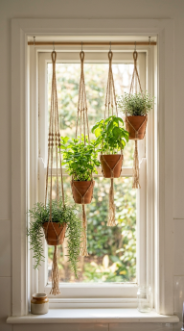
Hanging terracotta pots — suspended on natural jute or macramé cord directly in the kitchen window frame, each pot cradled in a simple knotted rope hanger and hanging at different heights in the window opening — create one of the most beautiful and most genuinely creative indoor herb garden displays possible. The hanging pots make full use of the window’s vertical space, which is typically completely wasted in a standard windowsill arrangement, and they allow each herb to be positioned at precisely the height in the window that gives it the best light access. Small to medium terracotta pots — with drainage holes plugged temporarily for indoor hanging use, or hung over a saucer attached to the cord below — can hold basil, mint, thyme, chives, and trailing rosemary in a series of hanging herb spheres that catch the morning light from different angles, cast beautiful moving shadows on the kitchen wall beside them when the window is open, and create the most Instagram-worthy kitchen corner achievable with nothing more than pots, cord, and herbs.
13. Grow a Mint Collection in Coordinated Terracotta at the Window
Mint is the herb that belongs in terracotta above all others — its enthusiastic spreading habit, its vigorous root system, and its need for contained growing conditions make the individual terracotta pot its natural habitat, and growing three or four distinct mint varieties in a coordinated terracotta collection at the kitchen window produces a display of extraordinary visual variety and aromatic complexity from a single herb genus. Spearmint, peppermint, apple mint with its soft downy leaves, and chocolate mint with its dark stems and chocolate-peppermint fragrance are four distinct plants that look completely different from each other and taste completely different from each other, despite all being varieties of the same herb. In four matching terracotta pots on a sunny windowsill, this mint collection creates a kitchen resource for fresh mint tea, mojitos, mint sauce, dessert garnish, and cooking throughout the growing season — and the four pots together create a windowsill display that is aromatic just from passing by, even without touching a single leaf.
14. Add Terracotta Herb Pots to a Kitchen Window Shelf With Cookbooks
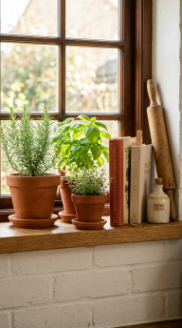
A kitchen window shelf that holds both terracotta herb pots and a curated selection of cookbooks creates one of the most genuinely beautiful and most personality-rich kitchen displays possible — the living herb plants and the books they are used alongside sitting together as a naturally cohesive still life of cooking and growing. A wide floating timber shelf at kitchen window height, holding four or five terracotta herb pots alongside two or three well-used cookbooks with warm fabric or paper covers, a small ceramic oil bottle, and perhaps a vintage rolling pin resting against the window frame, is the kitchen shelf that makes cooking feel like a genuinely pleasurable daily ritual rather than a task. The herbs and the books are companions — the rosemary and the roasting book, the basil and the pasta book, the mint and the cocktail guide — and positioning them together on the same shelf makes that relationship visible and celebrates it.
15. Use Small Terracotta Pots to Grow Microgreens on the Kitchen Windowsill
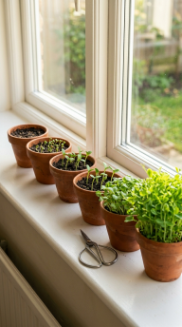
Microgreens — the young seedling stage of herbs and vegetables harvested at 7 to 14 days after germination when the cotyledon leaves have fully opened — are the fastest, most compact, and most nutritionally dense crop that a kitchen windowsill can produce, and small terracotta pots are the ideal container for growing individual microgreen varieties in a rotating succession system. Sow a different small terracotta pot with basil microgreens, pea shoots, sunflower microgreens, coriander microgreens, or radish microgreens every three or four days, and maintain a rolling row of five or six pots at different stages of growth on the kitchen windowsill — one pot ready to harvest today, one ready in two days, one ready in four, and new pots sowing at the other end of the row. The visual result is a windowsill with pots at dramatically different stages of growth simultaneously — from freshly sown pots with just the first seed sprouts visible, to pots with full lush microgreen canopies ready to snip directly over a salad bowl. It is the most productive square foot of growing space in the entire home.
16. Display Terracotta Herb Pots on a Window Ledge With Slate and Stone
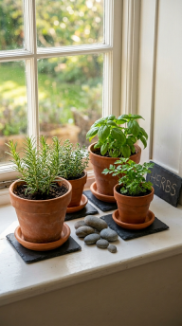
Styling the kitchen window herb garden with slate coasters beneath each terracotta saucer, a small collection of smooth river stones beside the pots, and one or two flat pieces of natural slate as label surfaces creates a kitchen window still life that draws on the same material language as the terracotta pots themselves — earthy, natural, tactile, honest. Placing each terracotta saucer on a small square of dark natural slate rather than directly on the white painted windowsill creates a color contrast that makes both the terracotta and the slate more vivid, and it protects the windowsill from water marks simultaneously. A small group of smooth river stones beside the pots — purely decorative, their smooth rounded forms contrasting with the rough terracotta — adds a grounded, mineral quality to the display that connects the kitchen window herb garden to the broader natural world. The slate and stone additions cost nothing if collected from the garden or a nearby riverbank, and they transform a pot collection into a genuinely composed natural still life.
17. Grow Chillies Alongside Herbs in Terracotta for a Kitchen Window Kitchen Garden
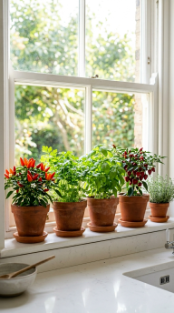
Chilli plants are one of the most visually extraordinary and most unexpectedly beautiful additions to a kitchen window terracotta collection — their small glossy leaves, their white star-shaped flowers, and their vivid fruits in red, orange, yellow, and purple hanging among the foliage turn a herb windowsill into a kitchen garden with a genuinely tropical, market-garden energy that fresh herbs alone cannot create. Small compact chilli varieties — Turkish orange, Prairie Fire, and Demon Red are three that stay genuinely compact enough for a terracotta pot on a kitchen windowsill — grow happily alongside rosemary, basil, and thyme, all sharing the same sunny window preference and similar watering needs. The visual result of one or two chilli plants among the herb terracotta pot collection — vivid fruits hanging among needle leaves and broad basil — is one of the most striking and most photographically compelling kitchen window displays possible, and the harvest is one of the most useful: fresh chillies for cooking, picked directly from the windowsill, in every meal that benefits from heat.
18. Create a Complete Kitchen Window Herb Garden With a Potting and Harvest Corner
The most complete and most fully realized indoor kitchen window herb garden is the one that has not just the herbs themselves — growing well in their terracotta pots in the window — but also the dedicated potting and harvest corner that turns it from a plant collection into a genuine domestic herb garden system. A small corner of the kitchen counter immediately beside the window — kept clear and dedicated to the herb garden’s tools, supplies, and harvesting ritual — with a small cutting board, a pair of herb scissors, a terracotta saucer holding small pebbles for drainage testing, a natural twine ball for tying bundles, a small notebook with growing notes, and a tiny glass vase with a single fresh-cut herb stem in water, creates the complete ecosystem of a kitchen herb garden in a single composed corner. The herbs grow in their terracotta pots in the window. The harvesting tools and the evidence of regular use — the cut stems, the tied bundles, the small notebook — occupy the counter beside them. And the whole arrangement tells the story of a kitchen where cooking and growing happen together as the same daily practice.