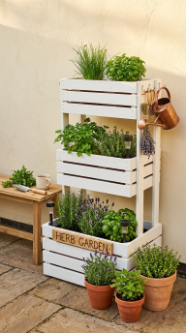
17 Herb Planter Ideas DIY Tiered Wooden Crate Stand
Wooden crates are one of the great underused materials of the DIY garden world. Sturdy, stackable, already slatted for drainage and air circulation, available in multiple sizes from almost every hardware store, craft supplier, or online market for a few dollars each, and visually beautiful in their natural timber state — wooden crates are almost perfectly designed for herb planting before a single modification is made to them. The slat gaps between the crate boards allow water to drain without any drilling. The varying sizes available — small, medium, and large — create immediate tiered height variation when stacked. And the warm timber tone of a natural pine or cedar crate sits beautifully beside any garden planting, on any patio surface, against any wall color, in any outdoor aesthetic from rustic farmhouse through to clean coastal.
The tiered wooden crate herb stand is the DIY herb garden project that genuinely works — not just as a concept but as a practical, productive, beautiful growing system that holds more herbs in less floor space than almost any other arrangement, that can be built in an afternoon with basic tools and no specialist skills, and that looks genuinely designed from the moment the first herbs go in. Stacked in a staircase configuration — the largest crate at the base, medium in the center, smallest at the top — the tiered crate stand creates a herb display with a natural pyramid silhouette that reads as professionally designed without requiring a single power tool beyond a drill and a screwdriver.
In 2026, the tiered wooden crate herb stand has evolved from a simple craft project into a genuinely considered outdoor design object — painted in chalk white, deep sage green, or charcoal, fitted with castors for mobility, lined with custom coco fibre pockets, labeled with hand-burned timber tags, and styled with terracotta pots and companion objects that turn the whole structure into a designed garden feature rather than a DIY project. These 17 ideas cover every approach to building, styling, and using a tiered wooden crate herb stand — from the simplest three-crate stack to the most elaborate multi-crate herb garden installation.
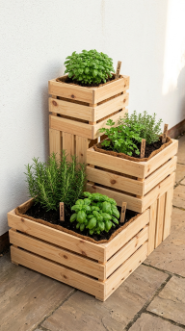
1. Classic Three-Tier Staircase Crate Stack
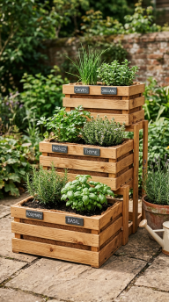
The foundation build of the tiered wooden crate herb stand is the classic three-tier staircase — a large crate at the base, a medium crate centered on top of the right or left half of the large crate, and a small crate centered on top of the medium crate, creating a stepped staircase profile when viewed from the side. Each crate is screwed to the one beneath it with two wood screws through the base of the upper crate into the top edge of the lower crate, making the assembly a single stable unit. Each crate is lined with landscape fabric or a coco fibre insert to retain compost while allowing drainage through the slats, filled with herb potting mix, and planted with one or two herb varieties per crate. The three-tier staircase crate stand in its natural unfinished pine or cedar takes approximately ninety minutes to build, costs less than twenty dollars in materials, and holds six to nine different herb varieties in the floor space of a single large crate.
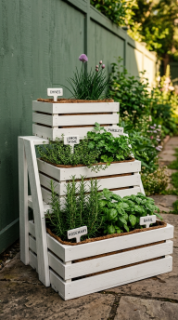
2. Chalk White Painted Tiered Crate Herb Stand
Giving the three-tier crate stand two coats of chalk white exterior paint before assembly — sanding lightly between coats and finishing with a clear outdoor wax — transforms the natural pine crate stand into a clean, design-forward garden feature that sits beautifully in any coastal, Scandi, or modern farmhouse outdoor aesthetic. The chalk white painted crates against a green garden backdrop or a dark painted fence create one of the most visually striking and most photographable herb stand presentations possible — the crisp white timber structure and the vivid green of the growing herbs in pure contrast. Paint all surfaces including the interior crate faces, allow to cure fully before planting, and the finished chalk white tiered crate stand looks as intentional as any purchased planter at a fraction of the cost.
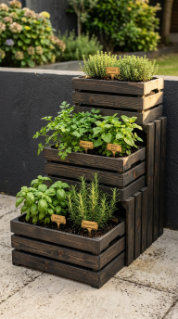
3. Deep Charcoal Stained Tiered Crate Stand
A tiered crate herb stand stained in deep charcoal or ebony exterior wood stain — the dark stain absorbed into the timber grain and giving the pine crates a moody, sophisticated quality that natural or painted crates cannot achieve — is the tiered crate build for patios, balconies, and garden spaces with a dark, modern, or industrial aesthetic where natural pine would look too casual and chalk white would look too rustic. The deep charcoal stained crates make the vivid green of the herb plantings appear extraordinarily vivid by contrast — the same visual effect as dark garden furniture or dark raised beds where the green of the planting becomes the complete visual focus against the dark structural material. The stain also significantly improves the weather resistance of the pine crates, making the charcoal tiered stand a more durable outdoor structure than an untreated natural one.
4. Sage Green Painted Crate Stand for a Farmhouse Patio
A tiered crate herb stand painted in soft sage green exterior chalk paint — a muted, dusty green with grey undertones rather than a vivid or bright green — creates the most naturally beautiful herb stand finish available, because the sage green of the crate timber reads as an extension of the herb garden’s own color palette rather than a contrasting element. Sage green painted crates with growing herbs inside them create a layered green composition where the structural green of the painted crate and the vivid botanical green of the herb plants exist in a harmonious tonal relationship — the painted sage tone being the muted base from which the vivid herb greens emerge. Against a warm cream rendered wall or a warm terracotta brick, the sage green painted tiered crate stand is one of the most beautiful outdoor settings for a herb collection in any farmhouse or cottage garden.
5. Four-Tier Asymmetric Crate Tower
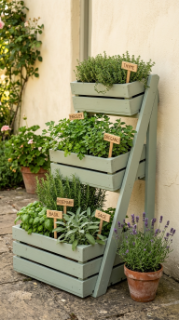
Building the tiered crate stand to four levels — using four crates in graduating sizes and stacking them in an asymmetric offset configuration rather than a centered staircase — creates a taller, more architecturally complex crate herb stand that holds significantly more herbs and creates a more dramatic vertical silhouette in the garden or patio space. The asymmetric offset stacking — each crate positioned slightly to the left or right of center rather than perfectly centered on the one below — gives the four-tier tower a dynamic, almost tumbling quality that looks deliberate and designed rather than simply stacked. At four tiers, the stand reaches approximately 80 to 90cm tall — a genuine vertical herb garden that is visible from across the patio and accessible at multiple heights.
6. Tiered Crate Stand on Castors for Indoor and Outdoor Use
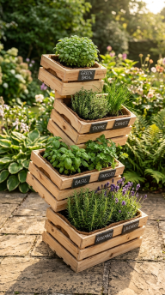
Fitting the tiered crate herb stand with four heavy-duty swivel lockable castors at the base of the largest lower crate — two at the front, two at the back — creates a mobile herb garden that rolls between indoor and outdoor positions as the season, the weather, and the cook’s needs change. The castors allow the whole stand to follow the sun from morning to afternoon, wheel indoors during frost or heavy rain, roll to the kitchen back door for the most convenient harvesting position, or move to a patio corner during a garden party. The visual quality of the castors beneath the tiered crate stand gives the whole structure a slightly industrial, slightly artisan quality — the large castor wheels visible at the base reading as a design detail rather than a purely practical addition.
7. Tiered Crate Stand With Hand-Burned Botanical Labels
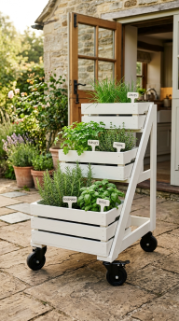
Decorating the front face of each crate in the tiered stand with hand-burned botanical illustrations — a rosemary sprig, a basil leaf, a thyme stem — burned directly into the pine crate timber with a wood burning tool before assembly, creates a tiered crate herb stand that doubles as a piece of botanical folk art. The wood burning illustrations, made before painting or staining so the burned marks are visible through the finish, give the crate stand a personalized, handcrafted quality that no purchased planter can replicate. Each burned illustration on the front face of its crate signals what that crate grows, and the combination of the warm charred botanical marks against the natural or painted pine surface creates a tiered stand with genuine artistic character.
8. Wine Crate Herb Stand — Vintage French Style
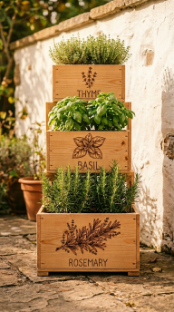
Using genuine vintage wine crates — the slim, precisely made timber boxes with dovetail corner joinery, wine house logos stamped or stenciled on the sides, and the particular aged patina of timber that has been in a wine cellar — as the crates in a tiered herb stand creates a completely different aesthetic from the standard hardware store pine crate. Wine crates in a tiered stack bring French farmhouse character, Provençal kitchen garden warmth, and the suggestion of a life that also involves good wine and good food. The vintage logos on the crate sides become decorative details — they do not need to be hidden or painted over. The dovetail joinery visible at each corner is a sign of quality that adds to the overall aesthetic. Stack three wine crates in a staircase and fill them with herbs appropriate to a Provençal kitchen garden — thyme, rosemary, lavender, sage, and French tarragon — and the tiered wine crate herb stand becomes one of the most evocative and most characterful herb garden features available to a creative DIY gardener.
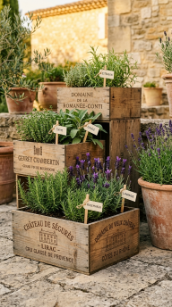
9. Tiered Crate Stand Lined With Coco Fibre for a Finished Look
Lining each crate in the tiered herb stand with a precisely fitted coco fibre liner — the natural brown fibre material that holds soil while allowing drainage, standard in hanging basket planting — gives the tiered crate herb stand the most professional, most finished, and most visually considered interior presentation of any lining option. The coco fibre sits neatly inside each crate as a natural organic basket, its warm brown colour and fibrous texture visible between the crate slat boards on the outside of the crate, creating a layered material effect where the timber slats of the crate exterior and the coco fibre liner visible through the gaps exist in the same warm, natural material family. The coco fibre lined crates also provide significantly better moisture management than bare crates — the fibre wicking and releasing moisture gradually, keeping herb roots consistently hydrated without waterlogging.
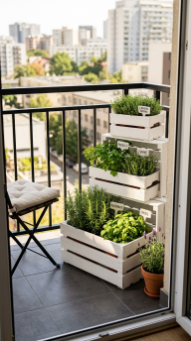
10. Tiered Crate Herb Stand for an Apartment Balcony
The tiered wooden crate herb stand is particularly well suited to the apartment balcony — where floor space is genuinely limited, weight must be kept minimal, and the herb garden needs to function within the constraints of a small railing-enclosed outdoor space that still receives reasonable sunlight for part of the day. Three lightweight pine crates in a staircase configuration, painted in a clean white or warm natural finish, hold six to eight herb varieties in the floor space of a single large crate — and the vertical stepped silhouette of the tiered stand reads as a genuine design feature on the balcony rather than an ad hoc plant collection. Position the stand in the sunniest corner of the balcony, plant sun-loving herbs in the top tier where they receive the most direct light, and shade-tolerant herbs in the lower tiers where the upper plantings may cast partial shade through the day.
11. Tiered Crate Stand With Trailing Herb Cascades
Choosing trailing and cascading herb varieties for the lower tiers of the tiered crate stand — herbs whose stems naturally hang and cascade downward over the crate edge as they grow — creates a tiered herb stand with a lush, waterfall quality where each crate level contributes not just vertical growing height but also downward cascading growth that softens the structural lines of the timber crates. Trailing rosemary, creeping thyme, trailing oregano, and cascading lemon balm are the herbs that, planted in the front of each crate, quickly send stems downward over the crate edge in a natural cascade that within a few weeks covers the front slat boards and creates a tiered stand that looks as though it is overflowing with herb abundance from every direction.
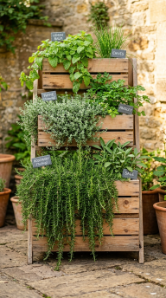
12. Tiered Crate Stand With a Chalkboard Front Panel
Attaching a small piece of chalkboard-painted MDF or genuine slate panel to the front face of each crate in the tiered stand — mounted on two small wood screws through the front slat board — creates a tiered herb stand with a built-in labeling and notes system directly on the crate structure. Each chalkboard panel approximately 25cm wide by 10cm tall replaces one front slat board visually and provides a writable surface for the herb name, sowing date, harvest notes, or a short growing tip written in white chalk. The combination of the natural pine or painted crate body and the flat black chalkboard panel on the front face of each crate creates a visual contrast of material and tone that gives the tiered stand a deliberate, designed quality — every tier labeled, every herb named, every growing note visible directly beside the plant it refers to.
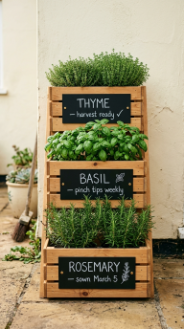
13. Tiered Crate Stand Planted as a Cocktail Herb Garden
A tiered wooden crate stand dedicated entirely to cocktail and drink herbs — the herbs specifically used in fresh cocktails, mocktails, teas, and infused waters — is the most specific and most entertaining themed tiered crate herb garden possible, and it creates a stand that is most usefully positioned near the outdoor bar, the drinks station, or the entertaining area rather than the kitchen. The cocktail herb collection for a three-tier stand might include: base crate with mint in all its varieties — spearmint, peppermint, and apple mint each in a separate section, middle crate with lemon verbena and lemon balm for citrus notes, top crate with lavender and basil for floral and aromatic garnish. A small handmade sign reading “COCKTAIL GARDEN” on the front face of the base crate, and a small set of cocktail equipment — a muddler, a jigger, a citrus juicer — hung from small hooks on the stand side, completes the themed herb station.
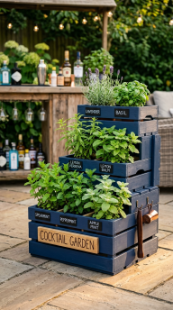
14. Indoor Kitchen Tiered Crate Herb Stand by a Window
A compact two-tier or three-tier wooden crate herb stand — small enough to fit on a wide kitchen countertop or on the floor beside a bright kitchen window — brings the full tiered crate herb stand format indoors and creates a kitchen herb display of genuine character in an indoor setting. The indoor crate stand requires drip trays beneath each crate rather than free drainage, and the crates themselves should be waterproofed on their interior faces with a food-safe exterior sealant before planting. Small to medium crates — 25cm to 35cm long — are the appropriate indoor scale, and the stand benefits from being positioned in the brightest indoor light available — a south-facing window with full morning and afternoon sun being the ideal location for the sun-loving culinary herbs that perform best in an indoor tiered crate collection.
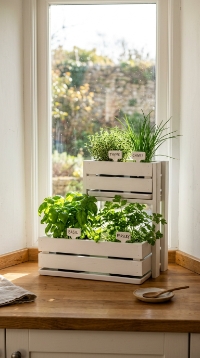
15. Tiered Crate Stand as a Porch or Entryway Feature
A tiered wooden crate herb stand positioned at the front porch or entryway — flanking the front door, positioned beside the steps, or set at the end of the path leading to the front door — creates an arrival moment where the fragrance of fresh herbs is the first sensory experience offered to anyone approaching the house. Rosemary and lavender in the upper tiers of the stand fragrance the air at nose height as visitors approach, thyme and oregano in the middle tier give a more subtle ground-level fragrance, and the visual warmth of the natural timber stand with its vivid green herbs makes the front door approach more welcoming and more beautiful than any standard ornamental planting could achieve. A porch tiered crate herb stand also signals something specific and deliberate about the house it belongs to — that the people inside grow their own herbs and care about the quality of the food and the beauty of the space they inhabit.
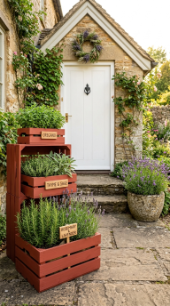
16. Tiered Crate Stand Harvest Display — End of Season
The most beautiful moment in the tiered crate herb garden’s annual cycle is the late summer or early autumn harvest display — when the herbs in all three tiers are at their fullest and most productive, freshly harvested bundles are drying on the side of the stand, the remaining growing herbs are vivid and lush, and the whole structure reads as a genuine working herb garden station in its fullest productive moment. Small hooks on the side of the upper crate hold hanging bundles of freshly cut rosemary and lavender tied with jute twine to dry. The base crate holds the freshly used cutting board and scissors. The herbs in each tier are slightly trimmed from recent harvesting but visibly regrown and ready for the next cut. The end-of-season harvest display is the tiered crate herb stand at its most honest and most photogenic.
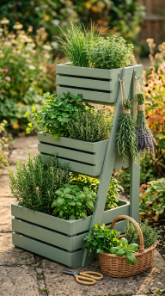
17. Complete Styled Tiered Crate Herb Stand Garden Station
The most fully realized version of the tiered wooden crate herb stand is the complete herb garden station — where the tiered crate stand is the centerpiece of a composed outdoor herb growing zone that includes the stand itself, a small potting bench beside it, companion terracotta pots at the base, a hand-burned timber garden sign, solar lantern lighting for the evening, and the full suite of harvest tools hanging from the stand’s side hooks. This is the tiered crate herb stand not as a single DIY project but as the anchor of a genuinely designed outdoor kitchen garden corner — a space that has been considered from every angle and that works as beautifully in the evening golden hour as it does in the morning harvest light.