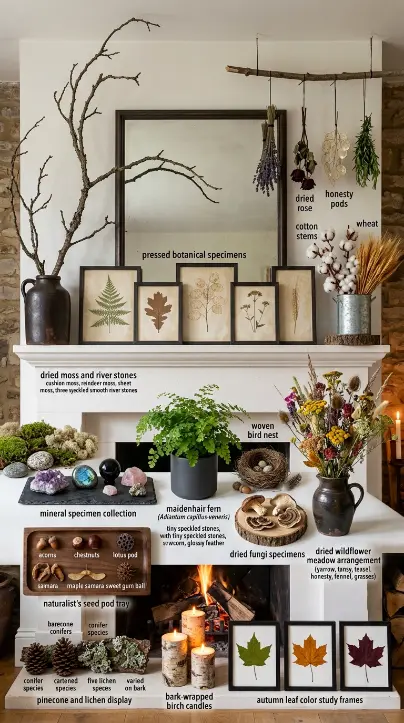
15 Fall Mantel Decor Ideas for a Botanical Nature Inspired Look
The botanical nature inspired fall mantel draws from a specific and deeply satisfying design philosophy — that autumn’s most beautiful decorating materials are not purchased from a seasonal display at a home goods store but gathered, pressed, dried, or foraged from the natural world directly. A mantel that holds a cluster of genuine mineral specimens beside a pressed fern in an aged frame, a nest of dried moss cradling a cluster of acorns, and a branch of bare oak extending across the mirror above is not merely decorated for the season — it is making a genuine argument about where beauty actually lives in October, which is in the specific textures and colors and forms that the autumn natural world produces without any human intervention.
The discipline that separates a botanical nature inspired mantel from a merely rustic one is specificity of material: the difference between a generic dried arrangement and a specifically botanical mantel lies in the identification and deliberate selection of individual natural specimens — a particular mushroom form, a specific type of lichen, a pressed fern frond from a known species — each chosen for its individual form and texture rather than its generic seasonal association.
1. The Pressed Botanical Art Gallery
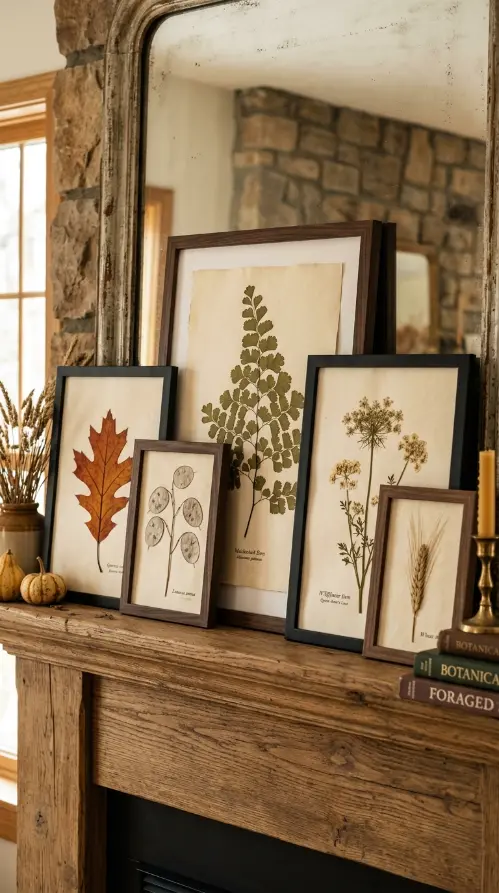
A grouping of three to five framed pressed botanical specimens — individual fern fronds, autumn leaves, seed heads, and wildflower stems pressed flat and mounted on aged cream paper inside dark wood or matte black frames of varied sizes — leaned against the mirror above the mantel in a layered gallery arrangement, each frame displaying one distinct pressed specimen.
2. The Dried Moss and Forest Floor Cluster
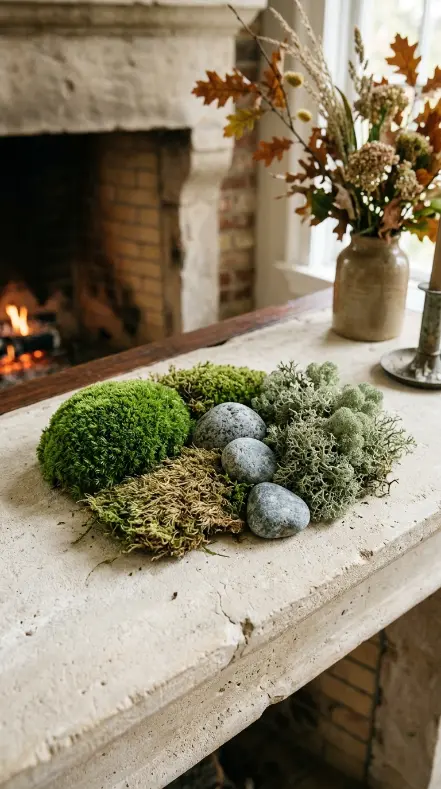
A grouping of varied dried and preserved mosses — cushion moss, sheet moss, reindeer moss in its natural grey-green tone — arranged in a low cluster directly on the mantel surface, with a few small smooth river stones nestled within the moss, creating a miniature forest floor vignette as a low horizontal element within the display.
3. The Bare Branch Architectural Installation
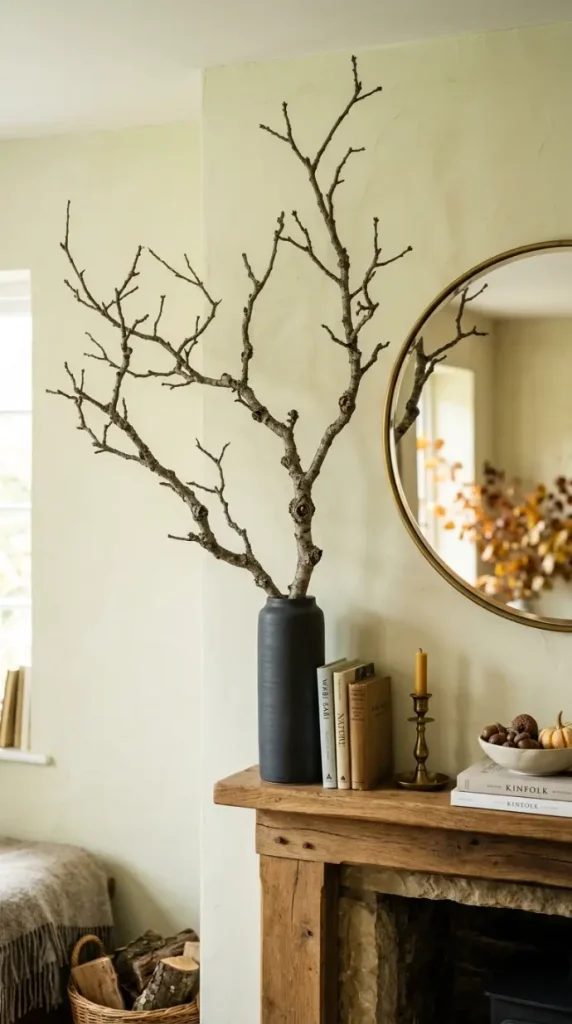
A single striking bare branch — oak, birch, or walnut with naturally sculptural branching form — positioned upright in a tall dark ceramic or stone vessel at one end of the mantel, its bare form extending upward above the mirror line and arching slightly outward, the branch providing the entire display’s vertical architectural backbone.
4. The Mineral and Stone Specimen Collection
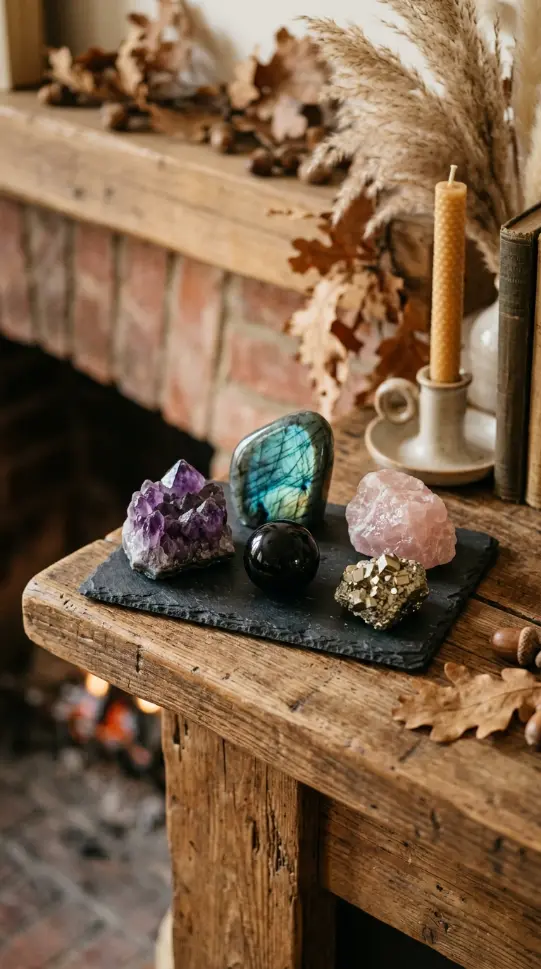
A curated cluster of natural mineral and stone specimens — raw amethyst, a piece of labradorite showing its iridescence, a smooth black obsidian sphere, a chunk of rose quartz, a section of pyrite matrix — arranged on a small piece of natural slate or dark wood as a naturalist’s mineral collection display.
5. The Seed Pod and Acorn Naturalist Tray
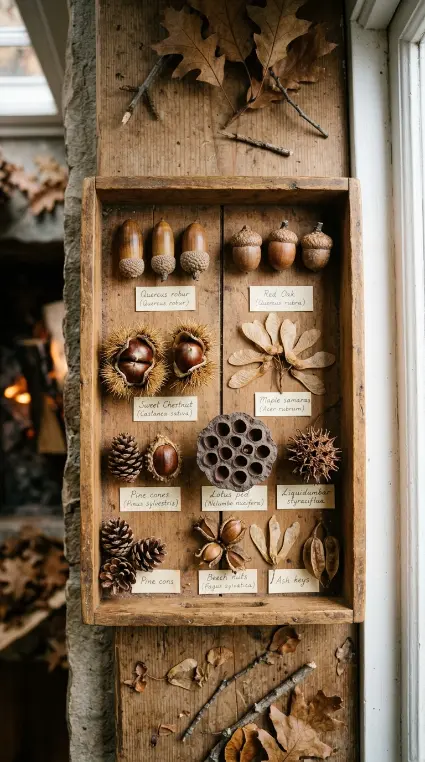
A small vintage or simple wooden tray holding an arranged collection of autumn seed pods, acorns with caps, dried nuts, and small cones — each type grouped or individually placed as if in a naturalist’s specimen tray, with small paper labels identifying each specimen, the tray functioning as a working botanical collection rather than a decorative arrangement.
6. The Living Fern in Dark Ceramic
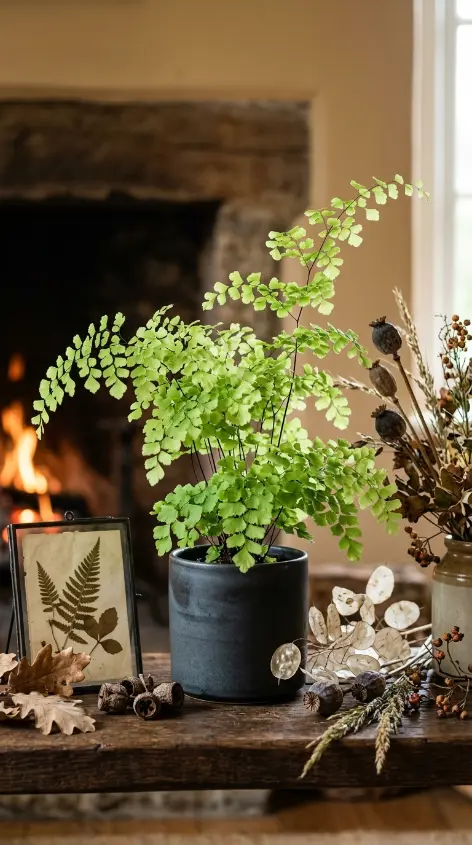
A single living fern — either a Boston fern, maidenhair fern, or autumn fern — in a small matte dark ceramic or stoneware pot positioned on the mantel, its living green fronds providing the display’s only genuinely alive botanical element, the specific contrast between living green and all the surrounding dried and pressed specimens making it the display’s most vital point.
7. The Bird Nest with Foraged Finds
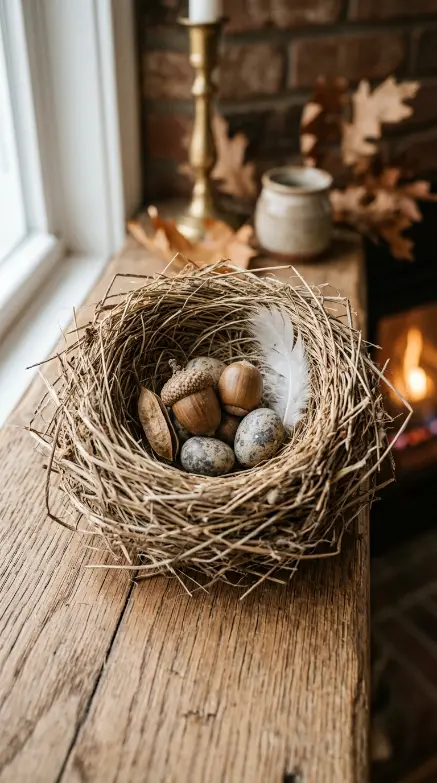
A genuine bird nest — either found after the nesting season or purchased from a natural history supplier — positioned directly on the mantel and filled with a small collection of foraged autumn finds: three small speckled stones, two acorns, a small dried seedpod, and one small white feather, the nest serving as a natural vessel that unifies a collection of small-scale autumn nature finds.
8. The Dried Mushroom and Fungi Specimen Display
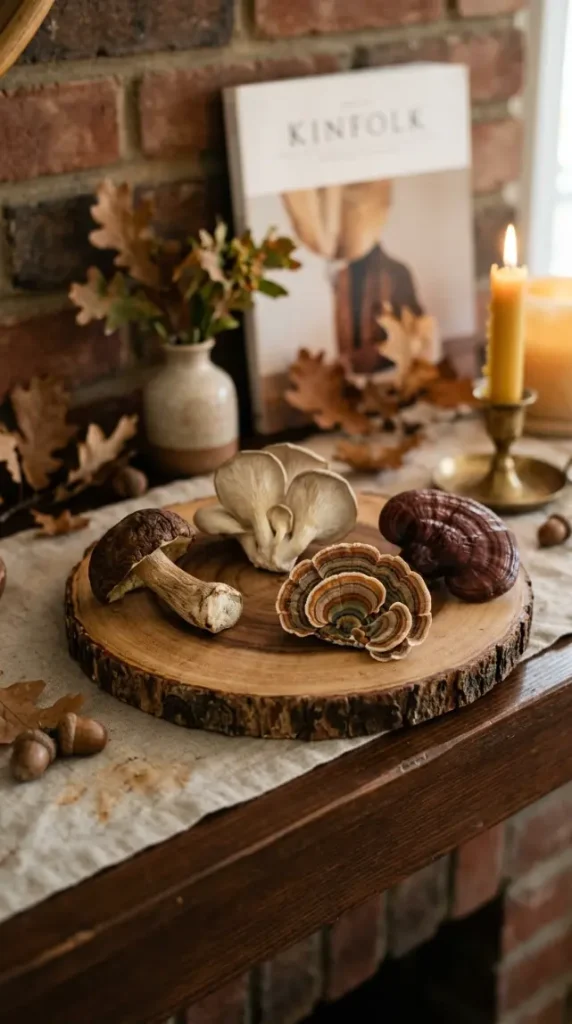
A collection of dried mushroom and fungi specimens — dried porcini, dried oyster mushroom, a dried turkey tail fungi section, and one reishi mushroom — displayed on a small natural wood slice or bark piece on the mantel, each specimen chosen for its specific form and the remarkable variety that fungi take in drying.
9. The Dried Wildflower and Meadow Stem Arrangement
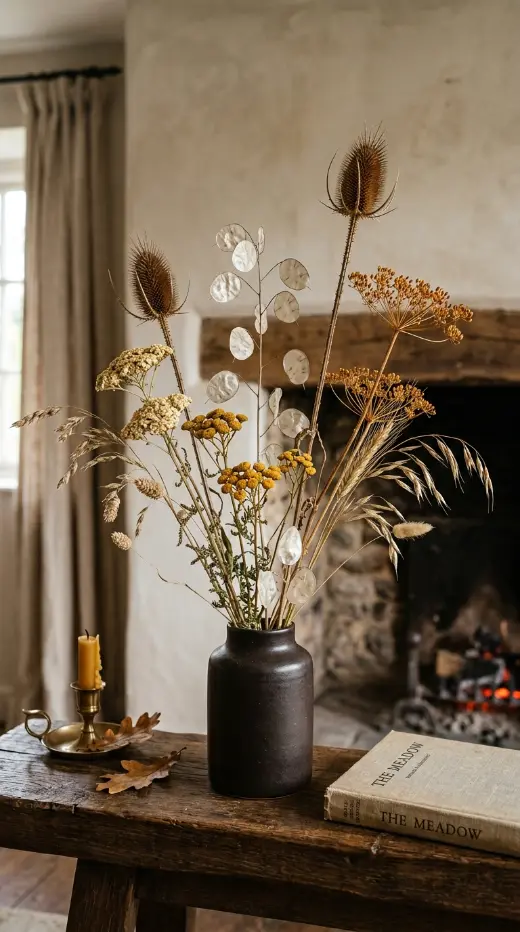
A loose arrangement of dried wildflowers and meadow stems in a simple dark ceramic or glass vessel — dried yarrow in cream and gold, dried tansy buttons, dried honesty pods, dried teasel heads, dried fennel umbels, and dried seed grasses — the arrangement’s specifically unmown-meadow botanical vocabulary distinct from cultivated flower arrangements.
10. The Cotton Stem and Wheat Harvest Vignette
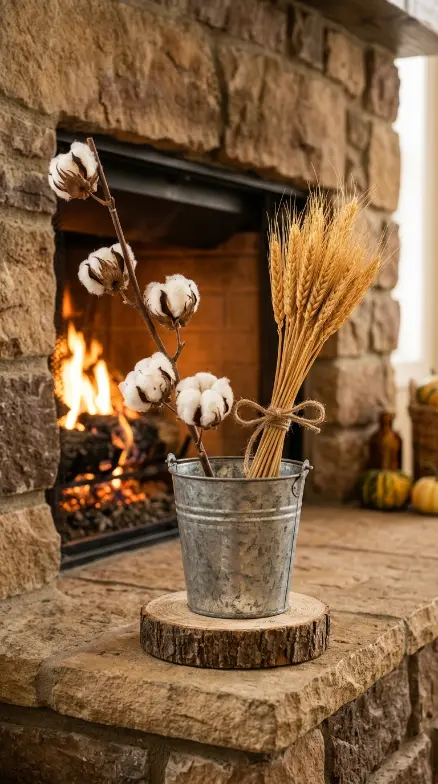
A specific small vignette on one section of the mantel: three cotton stems with open cotton bolls beside a small bundle of dried wheat tied with natural twine, both standing in or beside a small galvanized metal or terracotta container — the cotton and wheat pairing referencing the harvest field specifically rather than a general dried botanical aesthetic.
11. The Pinecone and Lichen Collection on Bark
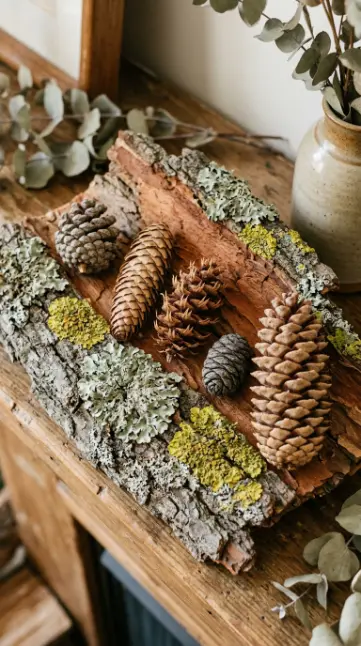
A collection of five or six varied pinecones — from different conifer species showing the remarkable variety of scale arrangement and size — displayed on a section of natural tree bark, each cone accompanied by patches of lichen in their characteristic grey-green and yellow-green tones growing on the bark, creating a forest-floor microcosm.
12. The Bark-Wrapped Candle Cluster
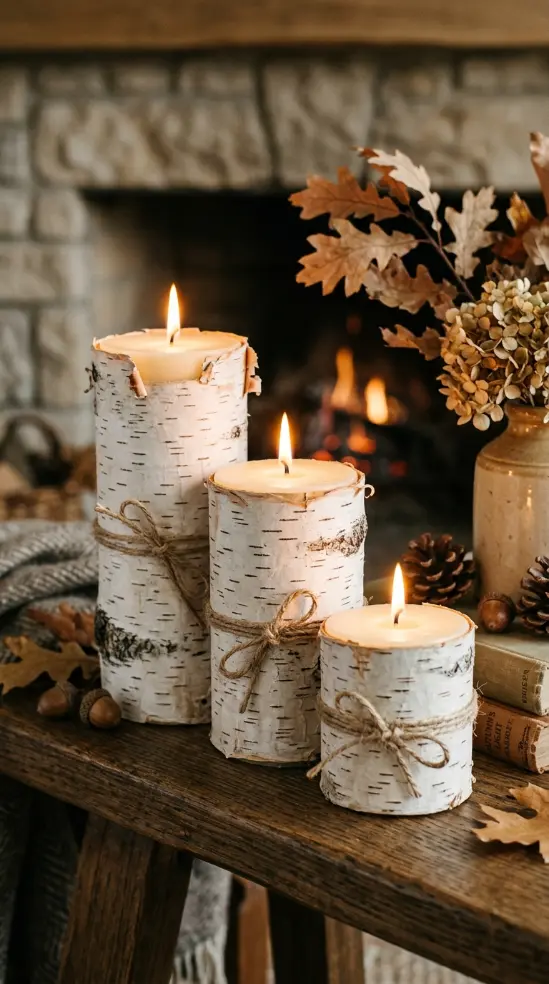
Three pillar candles of varied heights — cream or beeswax yellow — each wrapped around with a section of natural birch bark secured with natural jute twine, transforming standard pillar candles into specifically botanical nature objects that reference the birch tree and create warm amber light from within their natural bark wrapping.
13. The Foraged Branch with Hanging Botanicals
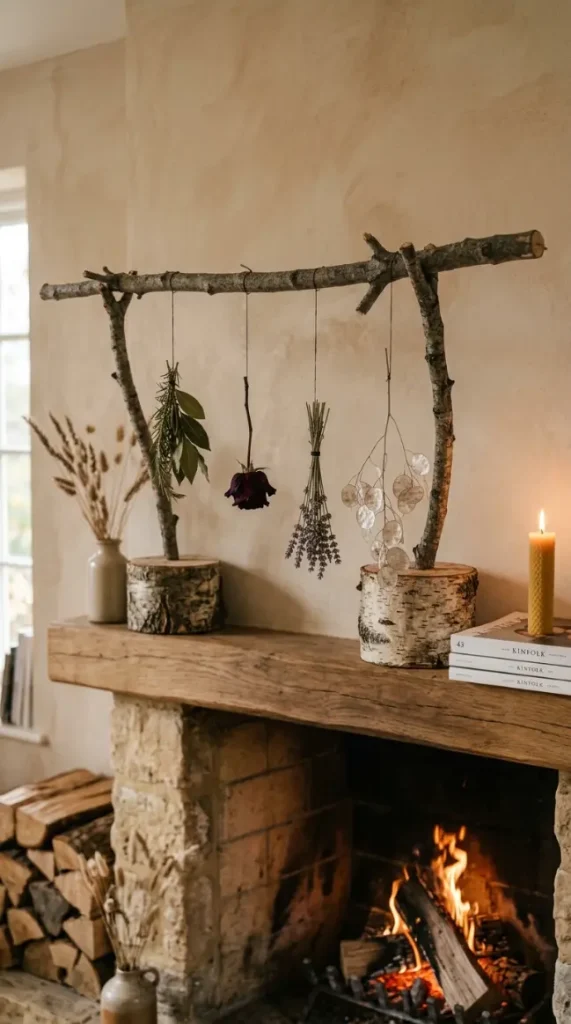
A horizontal branch — approximately 60cm of bare branch in natural brown-grey bark — suspended from the mantel’s front edge by two lengths of natural jute or hung across the mantel surface as a horizontal element, with three or four small dried botanical bundles hanging from it on short lengths of black linen thread at varied heights.
14. The Autumn Leaf Color Study Frames
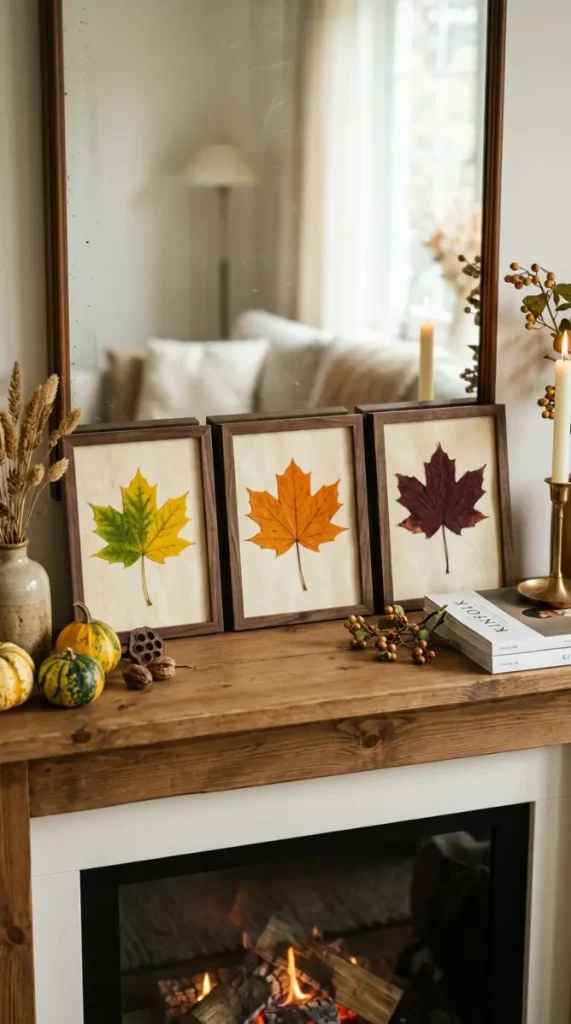
Three matching small frames — each containing a single dried and pressed autumn leaf from the same oak or maple tree, collected at three different stages of the autumn color change: one leaf at early-autumn green beginning to yellow, one at mid-autumn full warm orange, one at late-autumn deep burgundy — displayed together as a sequential botanical color study.
15. The Complete Botanical Nature Inspired Fall Mantel Reveal
Every element together — the pressed botanical art gallery frames leaned against the mirror, the bare oak branch in its tall dark vessel at one end, the moss and river stone forest floor cluster, the mineral specimen collection on dark slate, the naturalist’s seed pod tray, the living maidenhair fern in dark ceramic, the bird nest with foraged finds, the dried fungi specimens on bark wood slice, the dried meadow wildflower arrangement, the cotton and wheat harvest vignette, the pinecone and lichen bark display, the bark-wrapped birch candle cluster, the foraged branch with hanging botanicals, and the three sequential autumn leaf color study frames — creating the complete botanical nature inspired fall mantel.