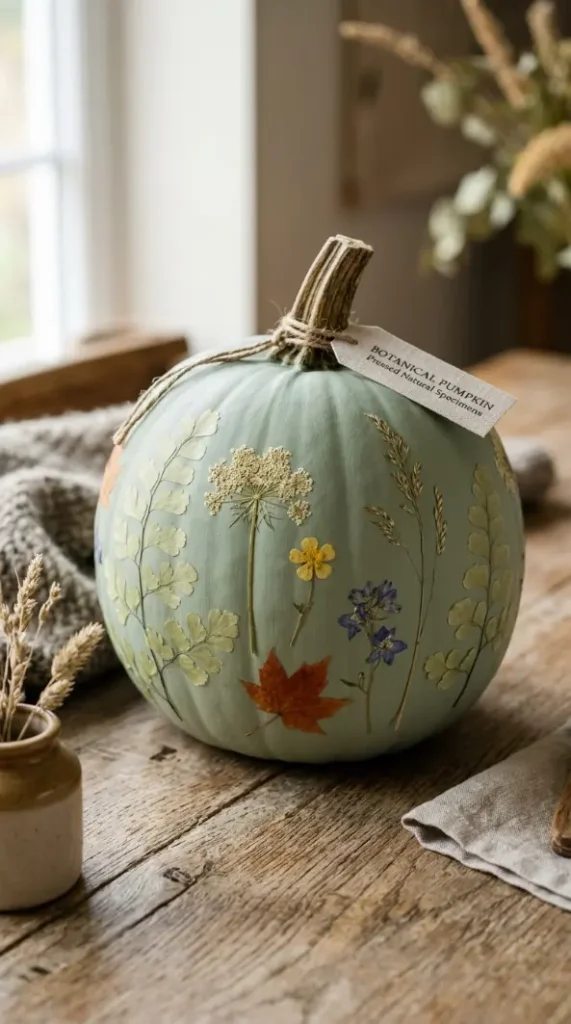
12 DIY Fall Home Decor Projects: Painted Pumpkin Collection
The painted pumpkin collection has become one of fall’s most satisfying DIY decorating projects because it sits at a genuinely productive intersection — the pumpkin’s simple round form is an almost ideal canvas, its smooth or lightly ribbed surface accepting paint willingly, its varied sizes from golf-ball-small to watermelon-large providing a natural range of scales within a single collection. The specific pleasure of a painted pumpkin collection over a standard undecorated pumpkin grouping is the cohesion that a shared color palette or shared design language provides: five pumpkins in varied sizes, each painted in a different technique but all within a cream-sage-black neutral palette, read as a genuinely curated collection rather than a random accumulation.
The distinction between a painted pumpkin that looks genuinely beautiful and one that looks like a craft project is almost entirely a matter of technique and paint quality. Chalk paint on a pumpkin — applied properly in two thin coats with light sanding between and sealed with clear wax — produces a surface indistinguishable from a high-end purchased ceramic. Gold leaf applied over a chalk-painted base produces a genuinely luxurious result. A marble effect executed with a fine brush and good paint produces something that reads as elegant rather than crafty. These 12 projects cover the full range of painted pumpkin techniques, from the simplest single-color chalk paint to the most ambitious free-hand botanical illustration.
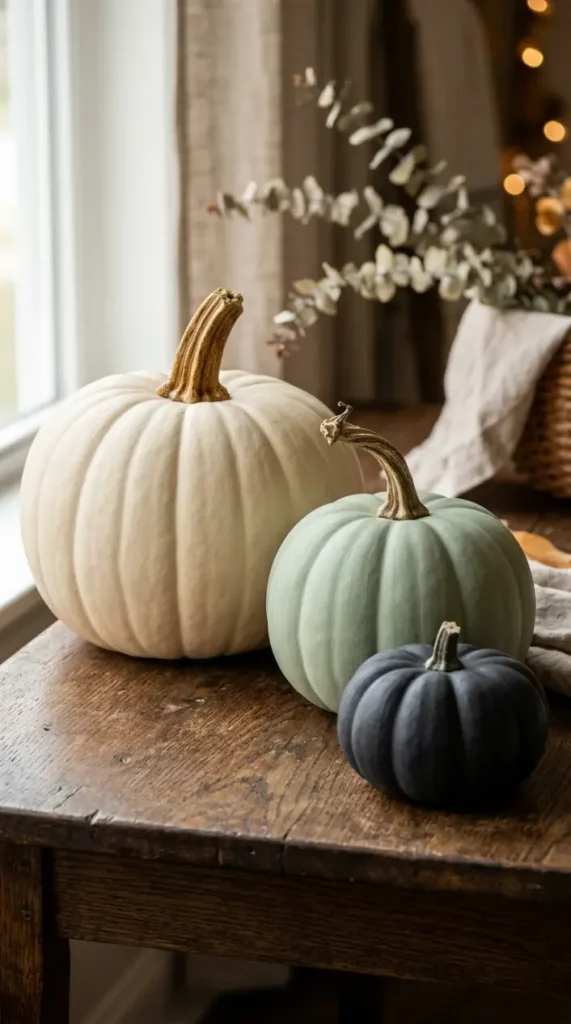
1. The Chalk Paint Matte Solid
The most foundational painted pumpkin technique: two thin coats of chalk paint in a single color — warm white, sage green, or soft black — applied with a flat brush, lightly sanded between coats with 400-grit paper, and finished with clear furniture wax, producing a perfectly matte non-reflective surface that reads as ceramic rather than painted foam or real pumpkin.
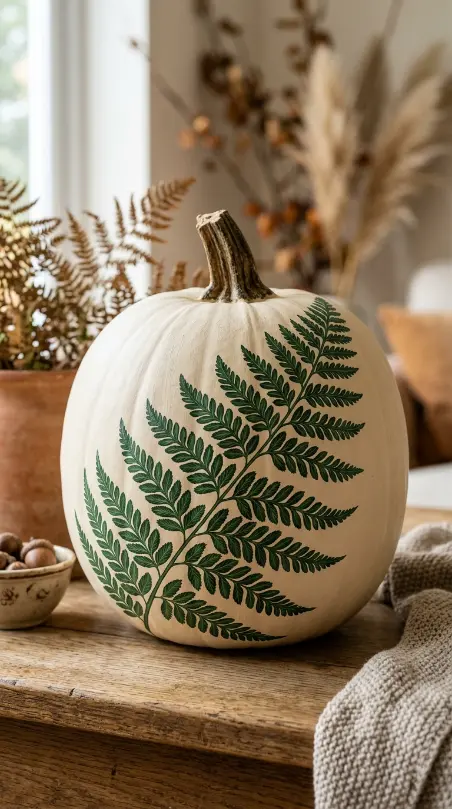
2. The Botanical Fern Motif Hand-Painted
A cream chalk-painted pumpkin used as a canvas for hand-painted botanical illustration — a detailed fern frond with individual leaflets painted in forest green acrylic using a fine detail brush, the painting wrapping slightly around the pumpkin’s curved surface and following the ribs naturally, producing a genuinely illustrative pumpkin that references botanical art tradition.
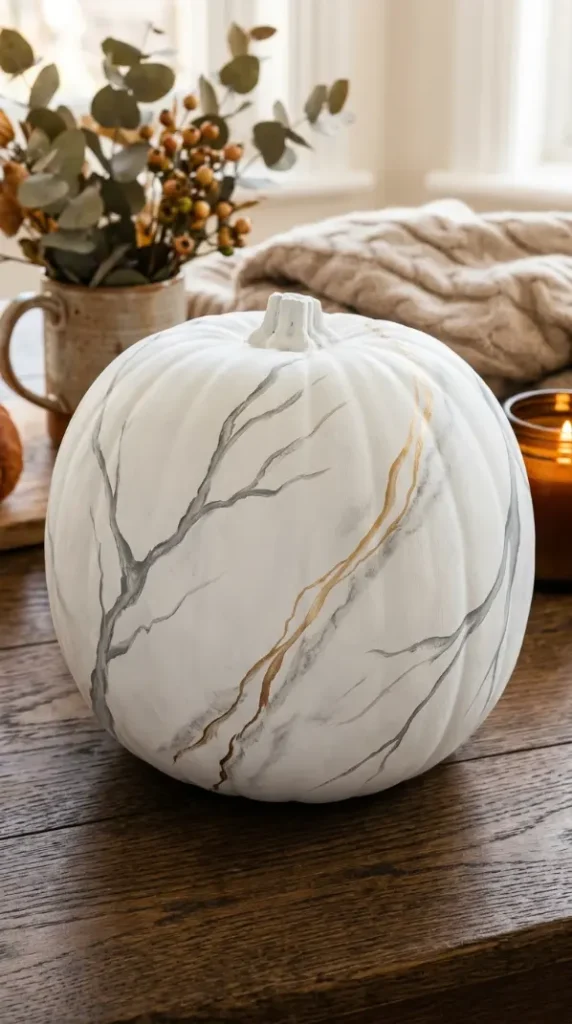
3. The Marble Effect Brushed Technique
A white chalk-painted pumpkin transformed into a marble effect using a fine artist’s brush and thin grey and warm gold paint to create marble veining — the veins applied in irregular branching diagonal lines with varying width, then softened with a dry fan brush while still wet, producing a convincing stone marble appearance.
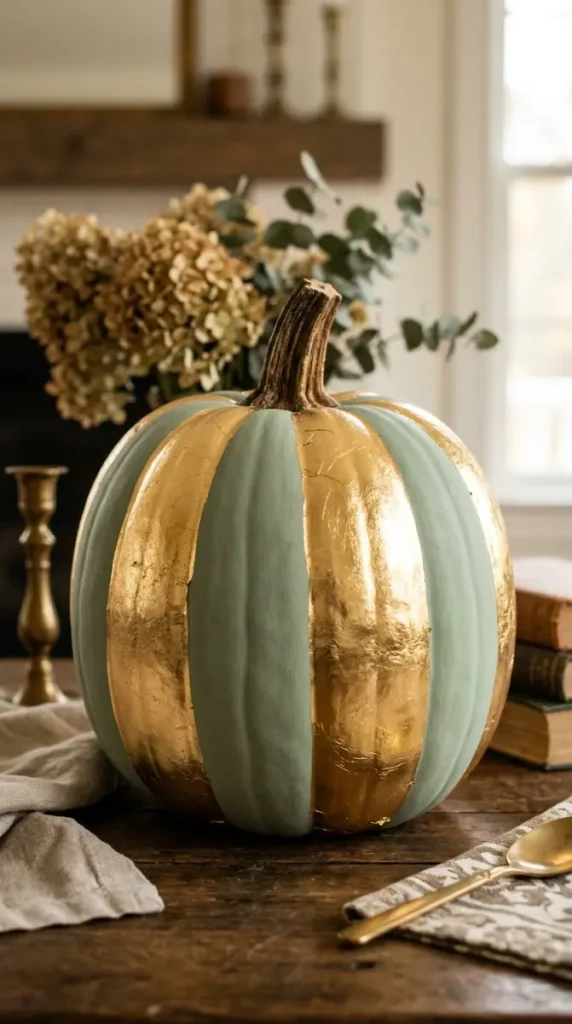
4. The Gold Leaf Accent on Chalk Base
A sage green or black chalk-painted pumpkin with sections of genuine gold leaf applied to alternating ribs — the gold leaf covering every other rib from stem to base, applied over gold leaf adhesive size and burnished smooth, the alternating sage-and-gold or black-and-gold rib pattern producing a richly luxurious result that no paint can replicate.
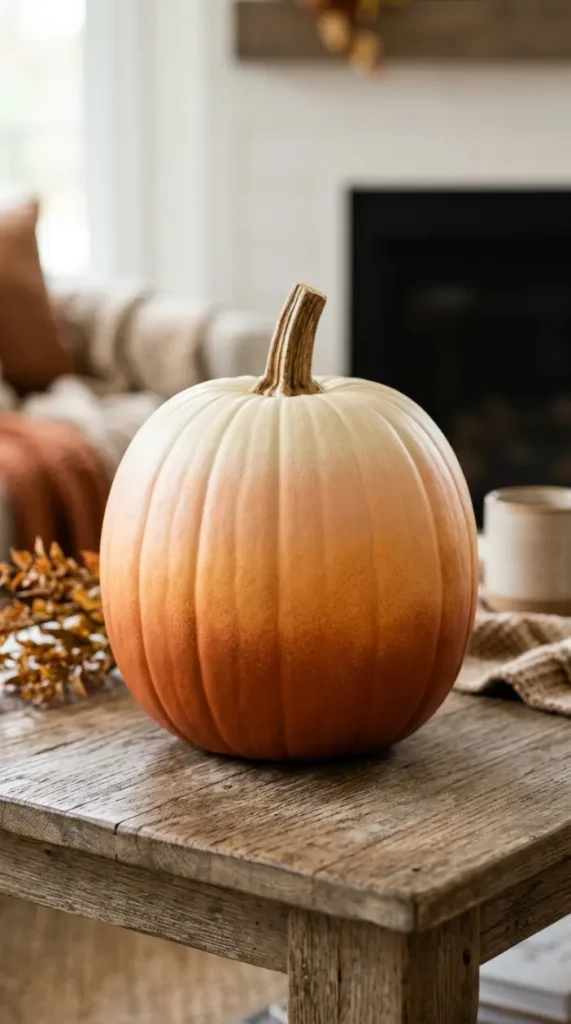
5. The Ombre Gradient Two-Color Blend
A pumpkin painted in a smooth ombre gradient from cream white at the top to deep terracotta at the base — achieved by applying the two colors at the top and base zones then blending them together while wet in the middle transition zone using a damp blending sponge, producing a seamless gradient effect impossible to achieve with a brush alone.
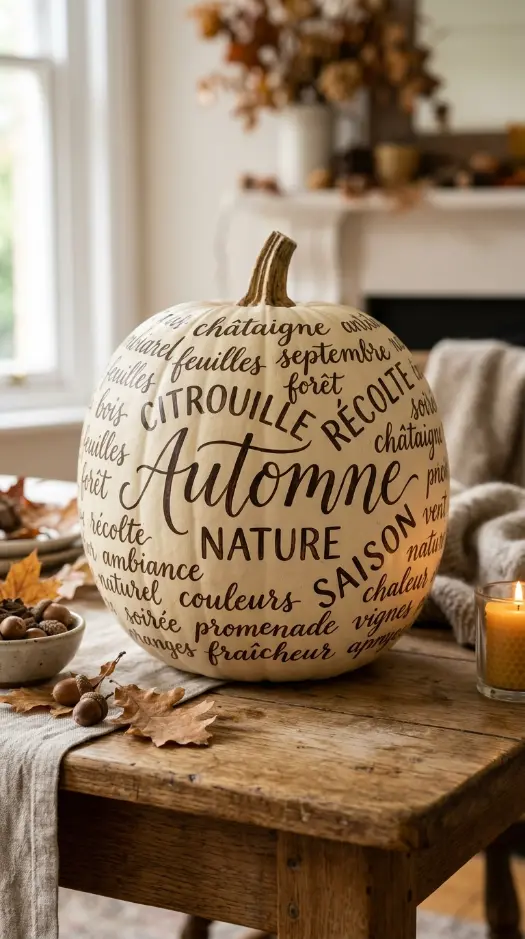
6. The French Script Hand-Lettered Design
A cream chalk-painted pumpkin covered in hand-written French autumn words and phrases — automne, citrouille, récolte, nature, feuilles, saison — in aged dark brown paint using a fine calligraphy brush, the words arranged at varied sizes and directions across the surface, referencing the French country typographic tradition in a specifically fall vocabulary.
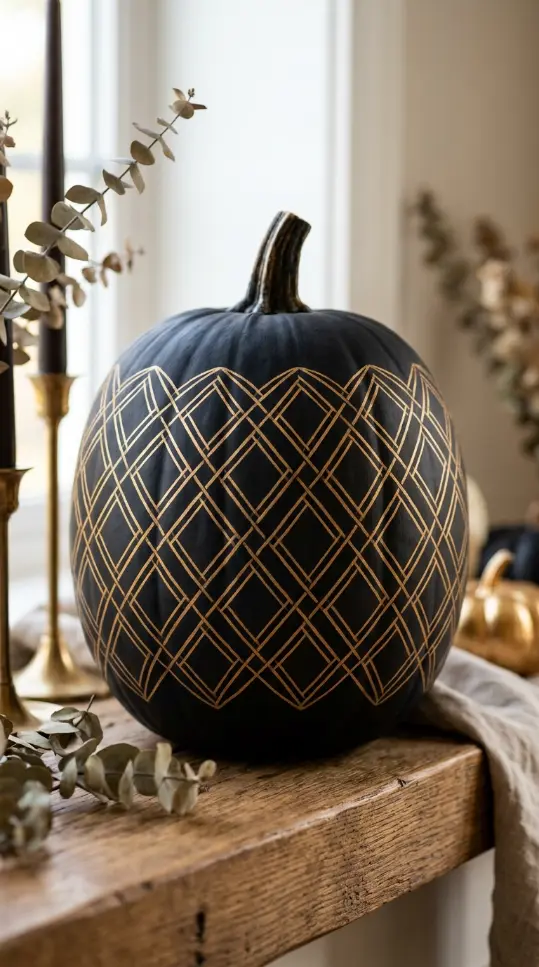
7. The Geometric Stencil Pattern
A black chalk-painted pumpkin with a crisp geometric diamond lattice pattern stenciled in gold metallic paint — applied with a dense sponge dabber held perpendicular to the surface for clean edges — the gold-on-black geometric pattern producing a maximally graphic and sophisticated result that the eye reads as a luxury decorative object.
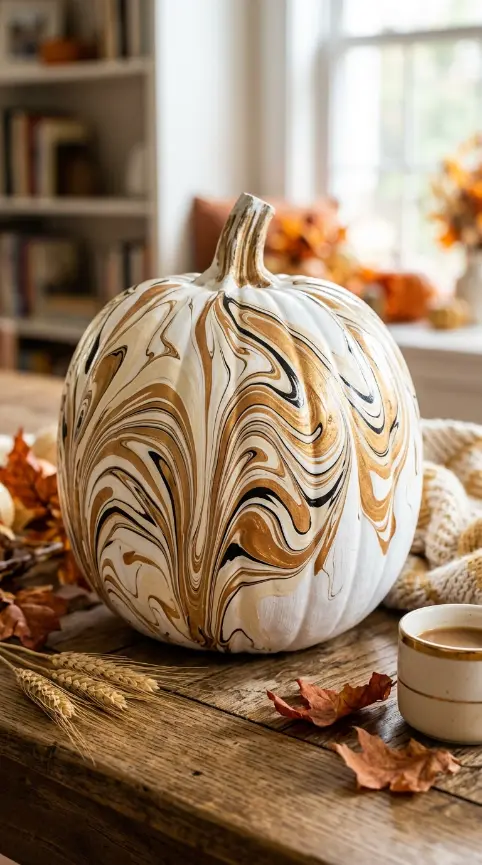
8. The Nail Polish Swirl on Water
A white-painted pumpkin dipped into a container of water with drops of two or three nail polish colors swirled on the surface — the nail polish film transfers to the pumpkin as it is dipped, creating a fluid flowing marble pattern in the nail polish colors that is organically impossible to replicate with any brush technique.
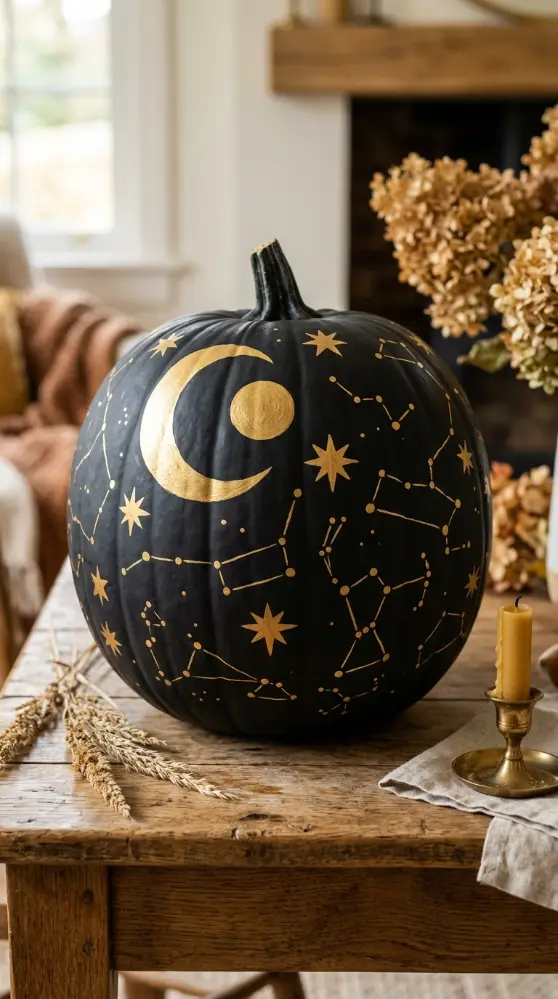
9. The Moon and Star Celestial Design
A black chalk-painted pumpkin with hand-painted gold metallic moon phases, varied stars, and constellation dot patterns across its surface — a large crescent moon, a full circle moon, several five-pointed stars of varied sizes, and small constellation dot-and-line patterns — creating a celestial map on the dark pumpkin surface.
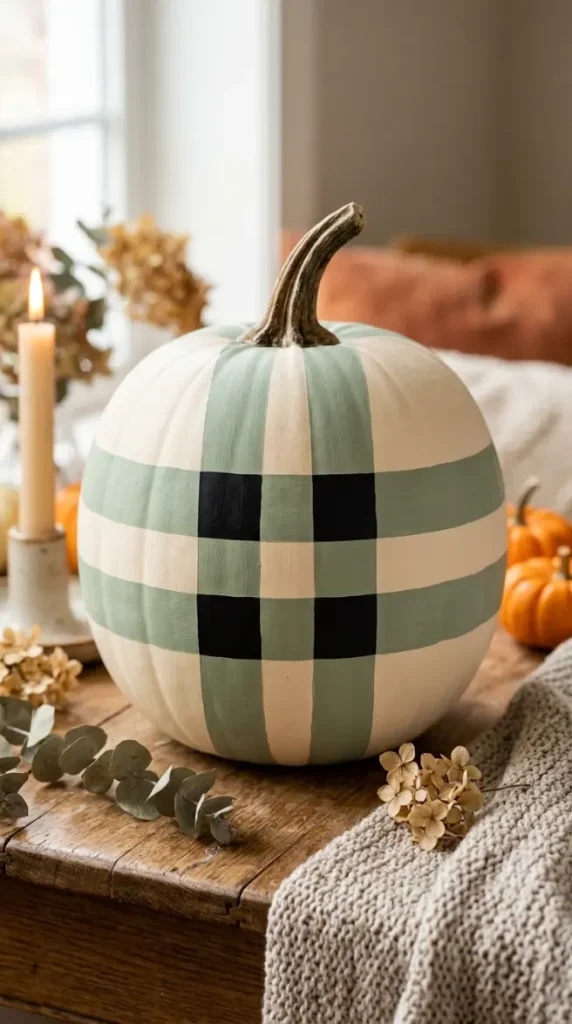
10. The Plaid Pattern Tape-Masked
A cream chalk-painted pumpkin with a hand-painted plaid pattern in sage green and black — using painter’s tape to mask the horizontal and vertical bands cleanly, painting within the tape boundaries, then removing the tape to reveal crisp intersecting bands that form a buffalo plaid pattern on the curved pumpkin surface.
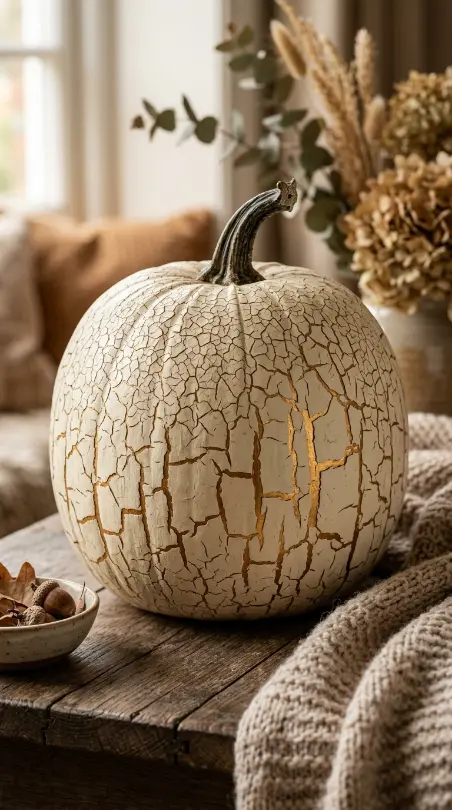
11. The Crackle Finish Aged Antique
A pumpkin painted in a warm gold base coat, coated with crackle medium, then painted over with a cream top coat — the crackle medium causing the top coat to split and crack as it dries, revealing the gold base through the cracks and producing an aged antique-looking surface as if the cream paint has aged and cracked over decades to reveal the gold beneath.
12. The Dried Botanical Decoupage Over Paint
A sage green chalk-painted pumpkin with pressed and dried botanical specimens — small fern leaflets, pressed wildflowers, pressed autumn leaves — decoupaged directly onto the painted surface using matte Mod Podge, then sealed with a clear coat, the pressed botanicals adhering flat to the curved pumpkin surface and transforming it into a botanical specimen display.