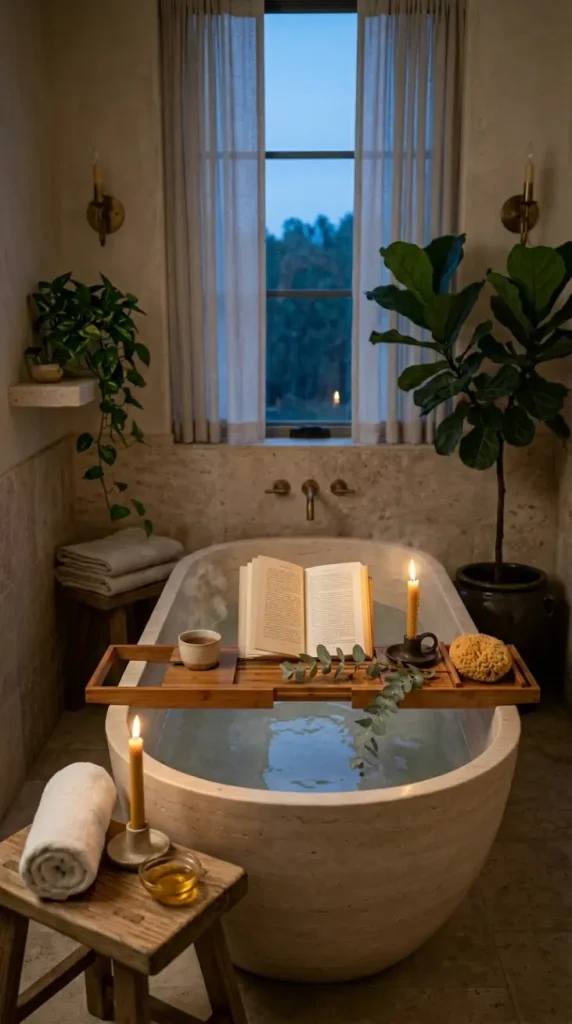
16 Rustic Bathtub Tray Ideas for a Spa Style Bamboo Tub
A bathtub tray is the single object that determines whether a bath is simply a place to get clean or a genuine ritual of restoration, because it is the surface that holds everything the experience actually requires within arm’s reach of someone reclined in water — the book that does not get dropped, the candle that provides the only light, the cup of tea that stays warm, the phone left deliberately in another room. A rustic bamboo tray, spanning the width of the tub on two raised side rails, transforms the bath from an activity performed in isolation from everything else into a small contained world where reading, resting, and soaking happen together.
Bamboo is the material that defines this aesthetic more completely than any other, because it is naturally water-resistant, naturally warm in tone, and naturally textured with the visible nodes and slight color variation of a grass that grew rather than a timber that was milled. A bamboo tray ages beautifully under repeated water exposure, its surface deepening in tone and developing the kind of soft natural patina that synthetic materials can never replicate, and its rustic, slightly irregular grain reads as genuinely organic in a way that perfectly machined acrylic or plastic tray equivalents cannot achieve at any price point.
The spa styling principle that governs every successful bathtub tray composition is sensory layering: something to read, something to smell, something to drink, something to touch, and something to look at, arranged with the same restraint and the same generous spacing that governs any well-styled surface. A tray crowded with objects defeats its own purpose, because the entire point of the bath ritual is to slow down, and a cluttered tray communicates the opposite of slowness. The best bamboo bath tray holds four or five objects maximum, each chosen for a specific sensory role, with the natural bamboo grain itself visible and breathing between them.
These 16 ideas cover every dimension of the rustic bamboo bathtub tray — from the tray form itself to the specific candle, book, plant, and drinkware pairings, the lighting that completes the spa atmosphere, and the complete bath ritual composition where every element from the bamboo grain to the steam rising off a cup of tea works together as one fully realized sensory experience.
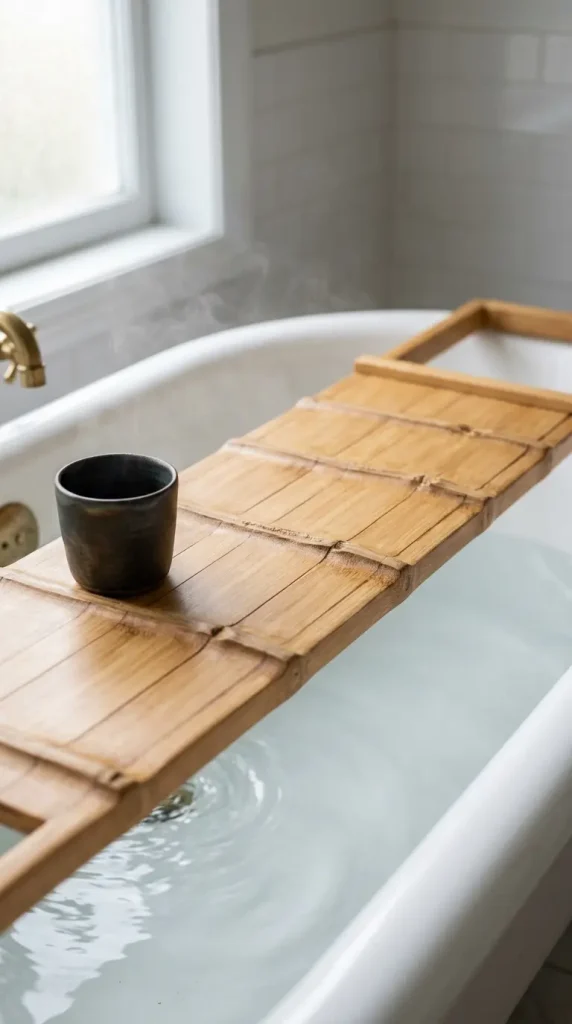
1. The Solid Bamboo Tray With Visible Node Lines
The foundational decision in any rustic bamboo bathtub tray is the bamboo itself, and the most beautiful version uses individual bamboo strips or a single bamboo slab where the natural node lines — the slightly raised horizontal rings that occur at growth intervals along the bamboo stalk — remain visible and untouched by heavy sanding or staining. These node lines are the detail that most immediately signals genuine bamboo rather than a printed or stained imitation, and a tray that preserves three or four visible nodes across its surface, with the natural color shifting subtly lighter and darker around each node, reads as authentically organic in a way that a perfectly uniform surface never will.
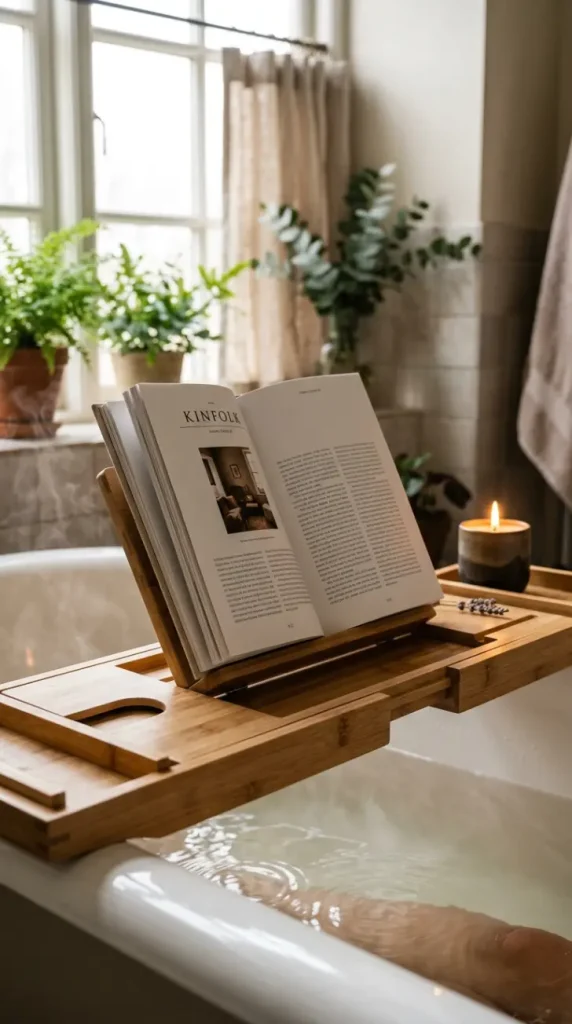
2. Built-In Book Rest at a Reading Angle
A bamboo bath tray reaches its highest functional sophistication when it includes a built-in book rest — a slim raised ledge or a gentle angled groove cut into one end of the tray, positioned to hold a hardcover or paperback book open at an angle of approximately 60 degrees from horizontal, exactly the angle that allows comfortable reading from a reclined position in the tub without requiring a hand to hold the book open. This small built-in feature is the detail that separates a tray designed specifically for the bath reading ritual from a generic flat surface that merely happens to span the tub, and it solves the single most common frustration of bath reading: the book that will not stay open on its own.
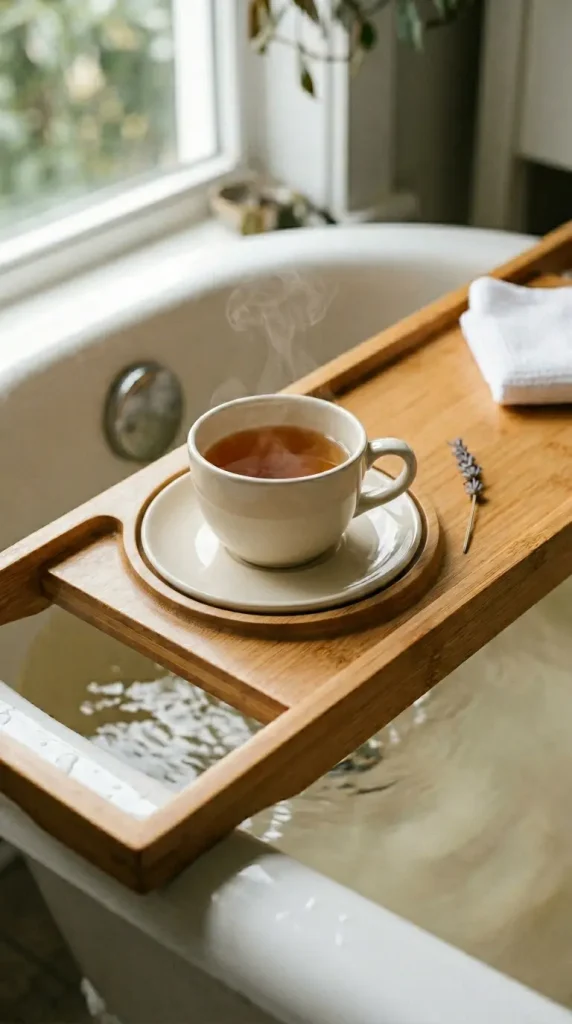
3. Circular Cup Cutout for Secure Drinkware
A circular cutout — a precisely sized hole cut through the tray surface near one end, sized to hold the base of a standard teacup, wine glass, or tumbler securely in place — solves the second most common bath tray frustration after the unsupported book: the drink that tips, slides, or gets knocked over by a shifting elbow or a wave of bathwater. The cup sits with its base passing partway through the cutout and its rim resting against the cutout’s edge, held secure by gravity and friction in a way that a flat tray surface alone cannot achieve, allowing a full cup of tea or a generously poured glass of wine to remain stable throughout an entire soak regardless of movement in the water below.
4. Natural Beeswax Candlelight as the Sole Light Source
The spa bath ritual reaches its most atmospherically complete expression when the bathroom’s electric lighting is turned off entirely and one or two natural beeswax candles on the bamboo tray become the only light source in the room, their warm honey-gold flame reflecting off the water’s surface and casting soft moving shadows across the tile and stone surrounding the tub. Beeswax specifically, rather than paraffin, contributes its own faint natural honey fragrance to the steam rising from the bath water, layering scent into the experience without requiring a separate scented candle or essential oil, and the warm uneven quality of candlelight is the single lighting choice most responsible for making a bath feel like a ritual rather than a routine.
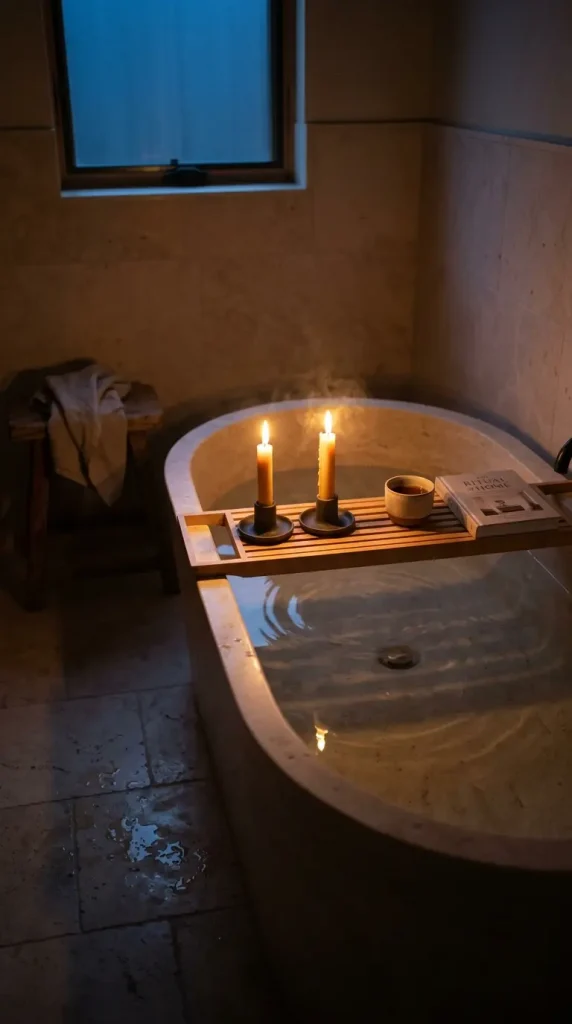
5. Fresh Eucalyptus Sprig Draped Across the Tray
A single fresh eucalyptus sprig, simply laid across one corner of the bamboo tray rather than arranged in any vessel, is the spa styling detail that contributes scent and visual softness to the bath ritual with the least possible effort and the most immediate sensory return. The rising steam and warm humidity of the bath water gently activates the eucalyptus’s natural oils, releasing its characteristic clean, slightly medicinal, deeply calming fragrance into the air throughout the entire soak, while the silvery-green leaves draped loosely across the warm bamboo grain create a small moment of natural color and organic irregularity against the tray’s straight lines.
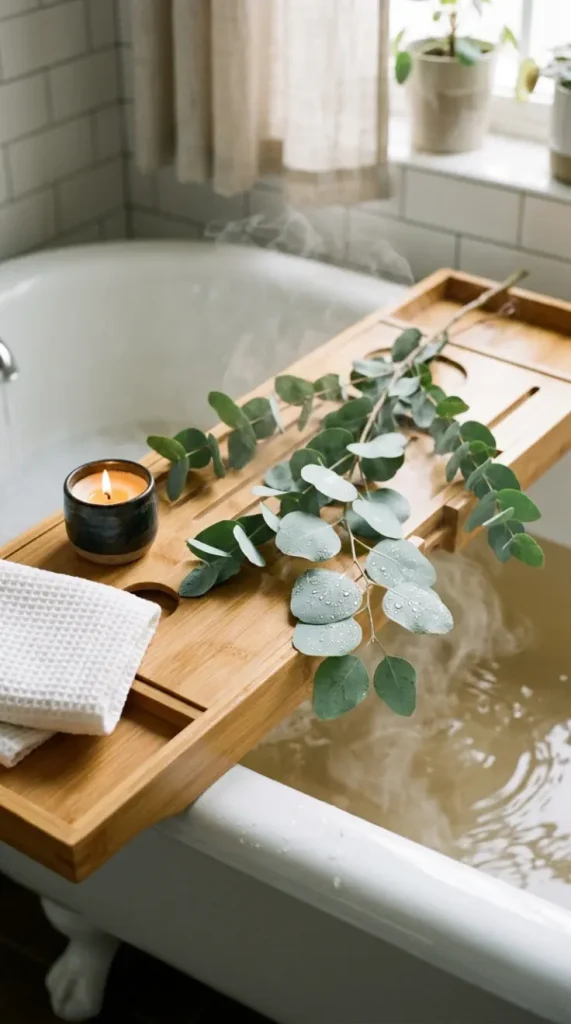
6. Natural Sea Sponge as a Tactile Bath Object
A natural sea sponge — irregular in shape, pale tan to warm grey in color, with the distinctive uneven porous surface that no synthetic bath sponge can replicate — placed on the bamboo tray alongside the other styled objects serves a genuinely functional role in the bath ritual while also contributing a specific tactile and visual texture that softens the tray’s straight bamboo lines with something organically irregular. Unlike a folded washcloth or a synthetic loofah, the natural sea sponge’s uneven surface catches light unpredictably and feels noticeably different in the hand, and its presence on the tray signals a bath ritual built from genuinely natural materials rather than purchased convenience items.
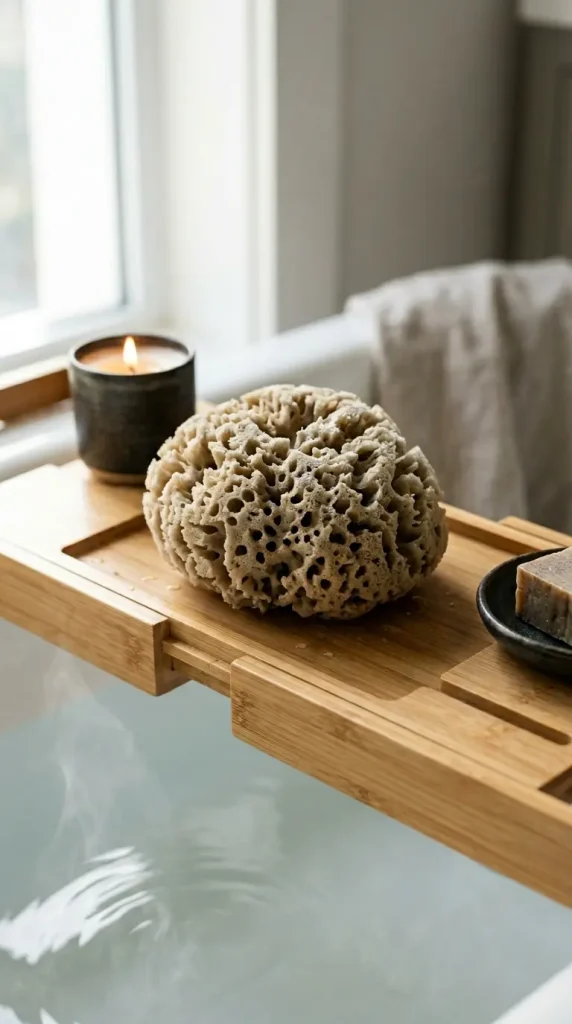
7. Folding Bamboo Tray for Storage Between Uses
A folding bamboo tray — constructed with a hinge mechanism at its center or with side rails that telescope inward — collapses to a fraction of its deployed width when not in use, solving the practical storage problem that a rigid full-width tray creates in a smaller bathroom where leaving the tray permanently spanning an empty tub looks cluttered and takes up visual space even when no bath is in progress. A well-made folding bamboo tray, when collapsed, stores flat against a wall on a small hook or stands upright in a narrow gap beside the tub, and unfolds back to its full spanning width in a single motion when the next bath ritual begins.
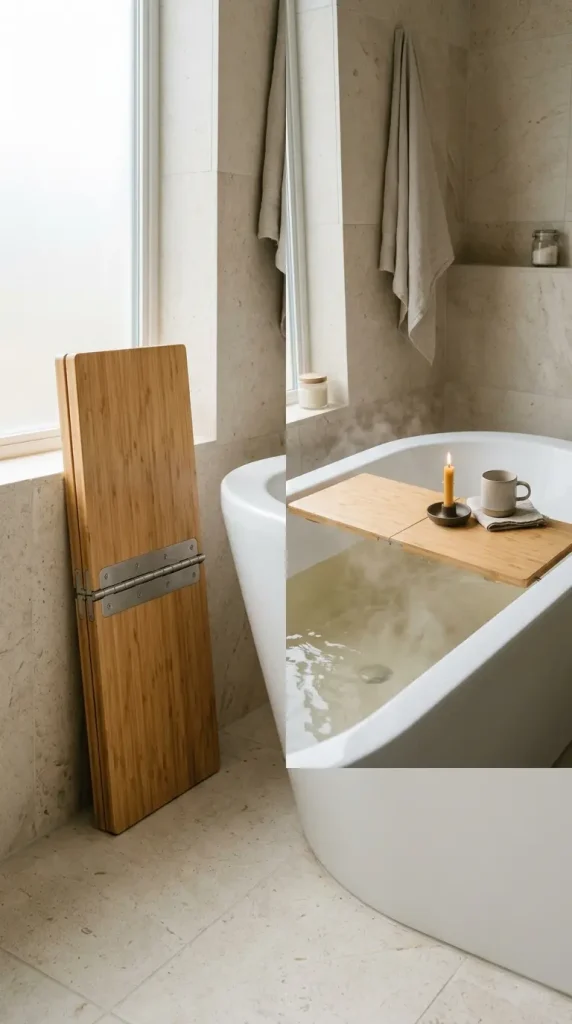
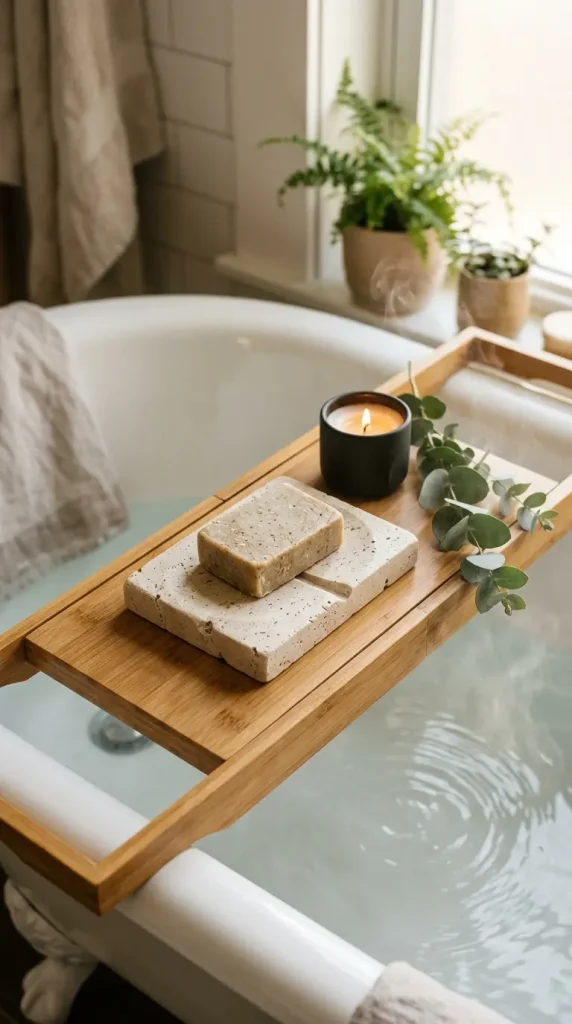
8. Bamboo Tray Paired With a Stone Soap Dish
Pairing the bamboo tray with a small honed stone soap dish — in pale travertine, soft soapstone, or a smooth river-stone form with a natural drainage groove carved into its surface — extends the tray’s natural material palette down to the smaller accessories that sit on or beside it, creating a complete material story built from bamboo, stone, ceramic, and natural fiber rather than any plastic or synthetic equivalent. The stone soap dish’s specific functional advantage is genuine: stone draws moisture away from a bar of soap more effectively than plastic or ceramic, extending the life of the soap and keeping the dish itself free of the soft, dissolving puddle that forms in a non-absorbent dish.
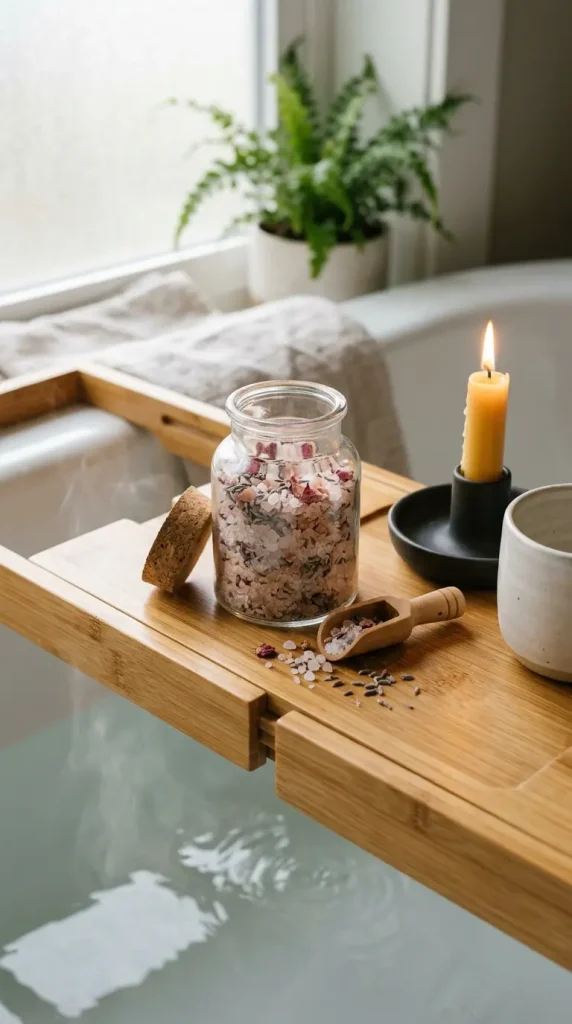
9. Bath Salts and Dried Botanicals in a Small Glass Jar
A small glass jar of bath salts — pale pink Himalayan salt, natural Epsom salt, or a blend flecked with dried lavender buds and dried rose petals — positioned on the bamboo tray alongside a small wooden scoop, contributes both a visual ingredient-jar aesthetic reminiscent of a well-stocked apothecary and a genuinely functional element of the bath ritual itself, since the salts are typically added to the water at the start of the soak. The jar’s glass transparency, like the clear vinyl pocket organizer in a different context, makes its contents visible and identifiable at a glance, and the textural contrast between the coarse salt crystals and the small dried botanical flecks creates a small but genuinely beautiful object even before it is used.
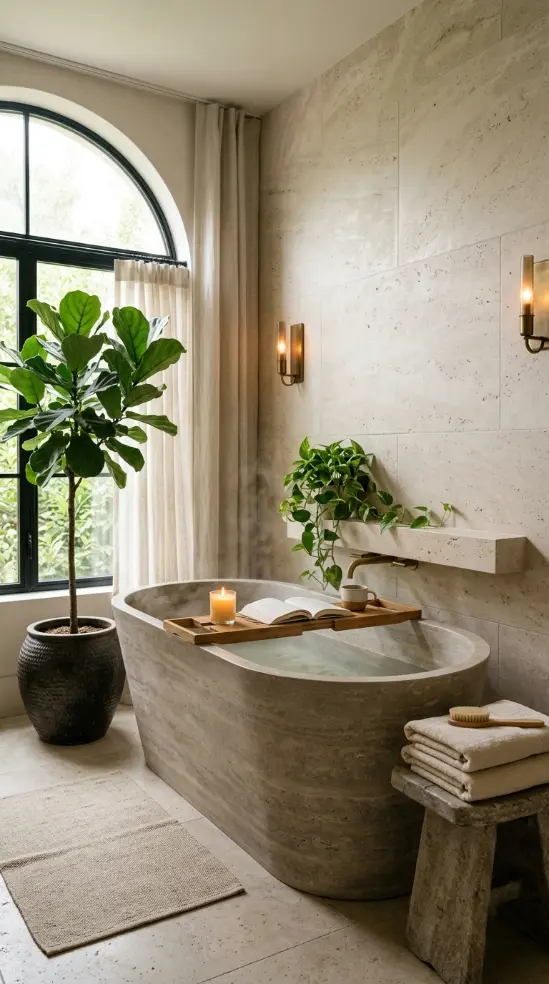
10. Bamboo Tray in a Bathroom With Stone and Plant Styling
The bamboo bathtub tray reaches its most complete spa expression when the surrounding bathroom architecture and styling extend the same natural material language beyond the tray itself — honed stone tile or a stone-clad tub surround, one or two architectural plants in dark ceramic or concrete pots positioned where they can be seen from the water, natural linen towels rather than synthetic ones, and warm dimmable lighting that can be lowered to match the candlelight on the tray. In this fully realized spa bathroom context, the tray is not a single styled object placed in an otherwise ordinary room but the central focus of a bathroom designed entirely around the bath ritual it serves.
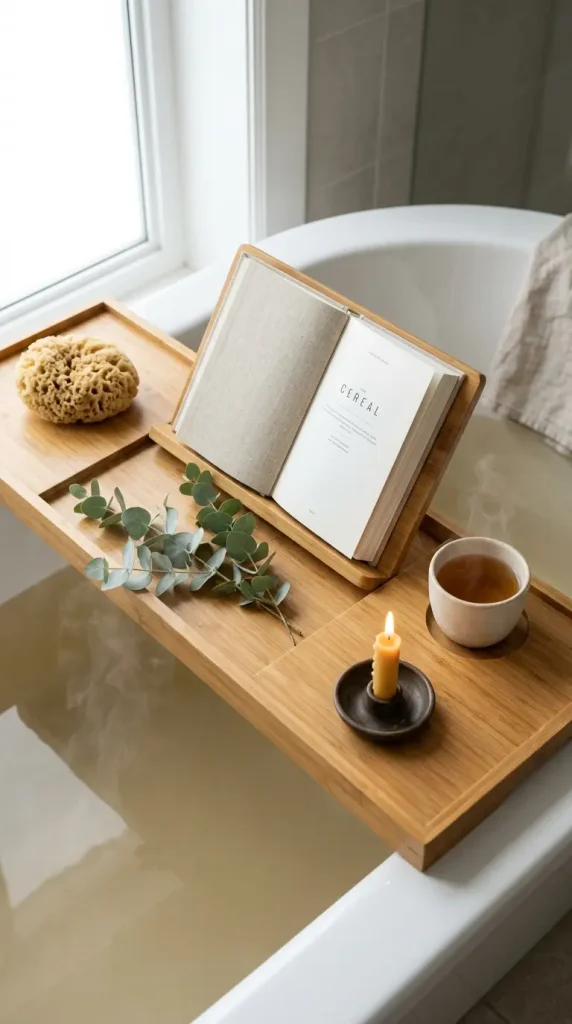
11. The Five-Object Sensory Layering Rule
The spa bath tray reaches maximum sensory effectiveness and maximum visual restraint at exactly the same point, which is no coincidence: a tray styled with five objects, each chosen for a distinct sensory role — something to read, something to smell, something to drink, something to see burning, something to touch — delivers the complete restorative experience without ever crowding the bamboo grain or making the tray feel like a cluttered shelf. Beyond five objects, additional items begin competing for attention rather than contributing a new sense, and the tray starts to resemble storage rather than ritual. This rule of five gives every future styling decision a clear test: does this object serve a sensory role nothing else on the tray already covers, and if not, does it replace rather than join the existing five.
12. Bamboo Tray Styled for Winter — Warm Spice and Citrus
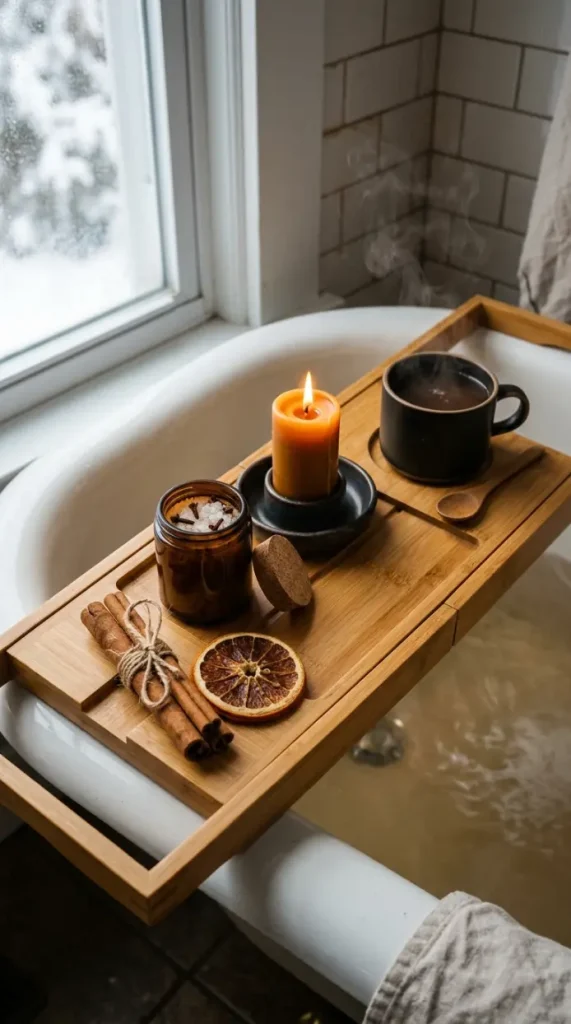
The bamboo tray’s styling can shift seasonally with the same sensory-layering principle applied to ingredients and botanicals suited to the time of year, and a winter version replaces the fresh eucalyptus and pale botanicals of a warmer-season tray with warm spice and citrus elements: a few whole cinnamon sticks and a dried orange slice laid across the bamboo grain, a small jar of bath salts blended with clove and warm amber notes, and a thicker beeswax candle in a deep amber tone whose scent leans toward warm vanilla and woodsmoke rather than the lighter florals of spring. This seasonal styling shift keeps the tray feeling responsive to the year rather than permanently fixed, and the visual warmth of cinnamon and dried citrus against the bamboo grain creates a particularly beautiful cold-weather bath composition.
13. Bamboo Tray With a Small Bud Vase and Single Stem
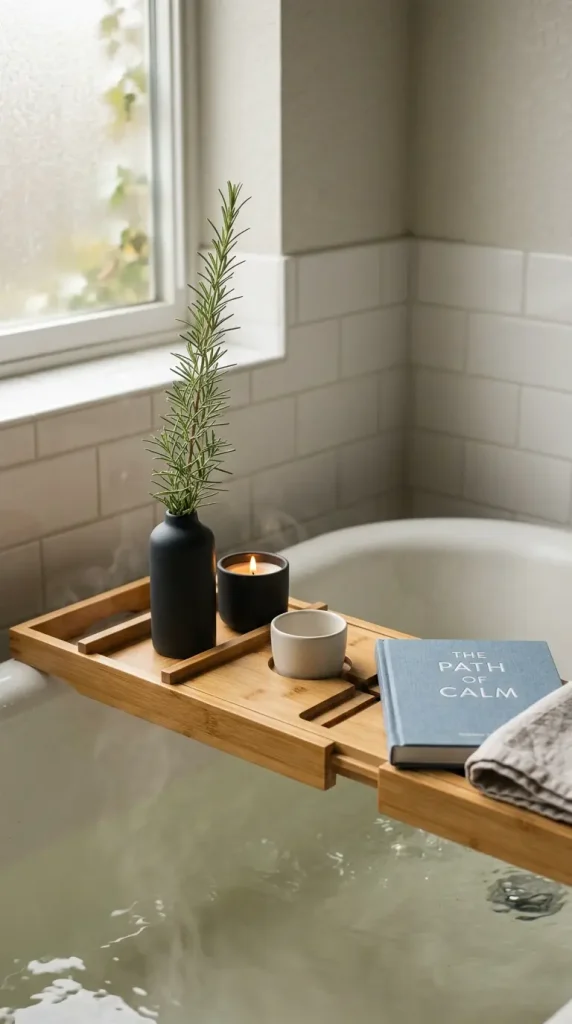
A single stem in a small bamboo or dark ceramic bud vase — one stem of eucalyptus, one dried grass stem, or one fresh sprig of rosemary — placed upright on the tray rather than laid flat across it introduces vertical visual interest to a composition that is otherwise entirely horizontal, since the book, the candle, the cup, and the sponge all sit flat or low against the tray’s surface. The single upright stem draws the eye briefly upward, breaking the horizontal plane in the same way a single tall element breaks the flatness of any well-styled surface, and its minimal footprint means it can be added as a sixth element without violating the five-object restraint principle, since a slim bud vase with one stem occupies barely more visual or physical space than the cup or candle beside it.
14. Bamboo Tray Paired With a Wooden Bath Caddy Stool
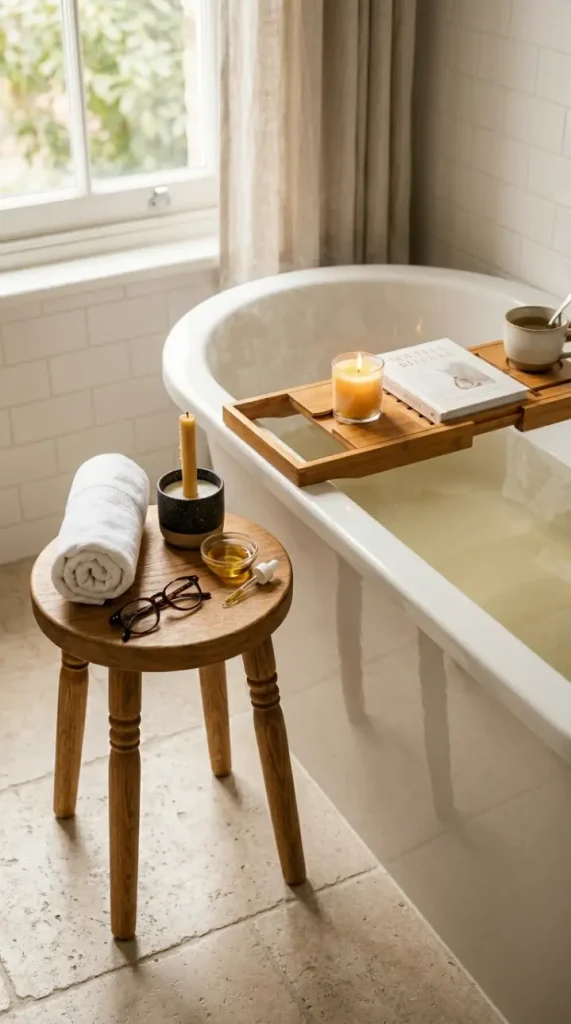
A small wooden stool positioned beside the tub, separate from the tray itself but styled in the same material language, extends the bath ritual’s storage and surface area beyond what the tray alone can hold — a rolled towel ready for after the bath, a second unlit candle as backup, a small dish of bath oil, or simply a flat surface to set down a phone or a pair of glasses before settling into the water. The stool should be low enough to reach easily from a reclined position in the tub, ideally in a natural timber that complements rather than competes with the bamboo tray’s tone, creating two coordinated natural-material surfaces working together rather than one tray attempting to hold everything the ritual requires.
15. Bamboo Tray With an Adjustable Width for Different Tub Sizes
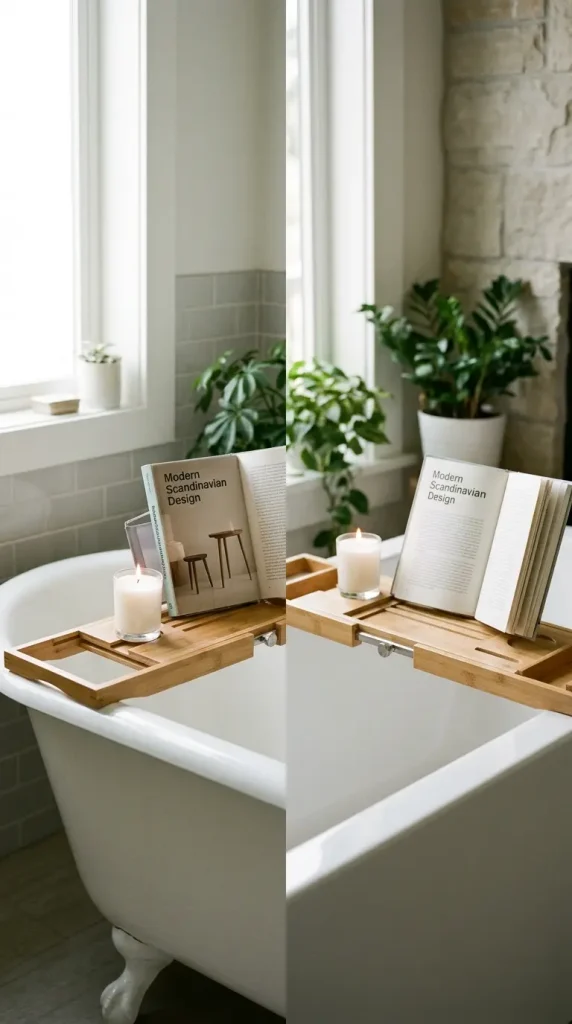
Not every freestanding or built-in tub shares the same width, and a bamboo tray with an adjustable telescoping mechanism — two side rail sections that slide independently along a central bar and lock at the desired width with a simple thumbscrew or clip — solves the practical sizing problem that a fixed-width tray cannot, allowing a single tray to fit tubs ranging from a narrow 65cm clawfoot tub to a wide 90cm modern soaking tub. This adjustability is particularly valuable for anyone choosing a tray before a tub has been finalized, or for a household with more than one bathroom whose tubs differ in width, since one well-made adjustable bamboo tray serves every tub rather than requiring a separate purchase for each.
16. The Complete Rustic Bamboo Spa Bath Ritual
The complete rustic bamboo spa bath ritual is the fully realized version of every principle in this guide working together in a single sustained moment — the tray itself with its visible node lines and built-in book rest and circular cup cutout, styled with exactly five sensory objects spaced generously across the warm grain, lit entirely by natural beeswax candlelight with every electric switch left off, surrounded by a bathroom whose stone and plants and linen extend the same material philosophy beyond the tub’s edge, and accompanied by a small wooden stool holding everything the tray itself cannot. Every element in service of one outcome: twenty minutes that feel unmistakably different from every other twenty minutes in the day.