9 Affordable Farmhouse Flooring Ideas Stained Concrete
Stained concrete is the farmhouse flooring solution that sits at the exact intersection of beautiful and budget-friendly — and in 2026, it has arrived fully in the mainstream of modern farmhouse interior design. Farmhouse styling highlights simplicity and practicality with a definite nod to rustic details, and stained concrete floors deliver exactly that — the rustic charm homeowners love with the durability actually needed for busy kitchens, living rooms, and entryways. The core appeal is straightforward: if your home already has a concrete subfloor beneath old carpet, tile, or linoleum, that slab is already your finished floor — it simply needs color, texture, and sealer applied to become one of the most characterful and durable surfaces in your home.
These 9 ideas cover the most affordable and most beautiful approaches to stained concrete farmhouse flooring, from stain type and color selection to room-specific applications and the specific details that make the finish look genuinely considered.
1. Use Acid Stain for the Most Authentic Farmhouse Mottled Color Effect
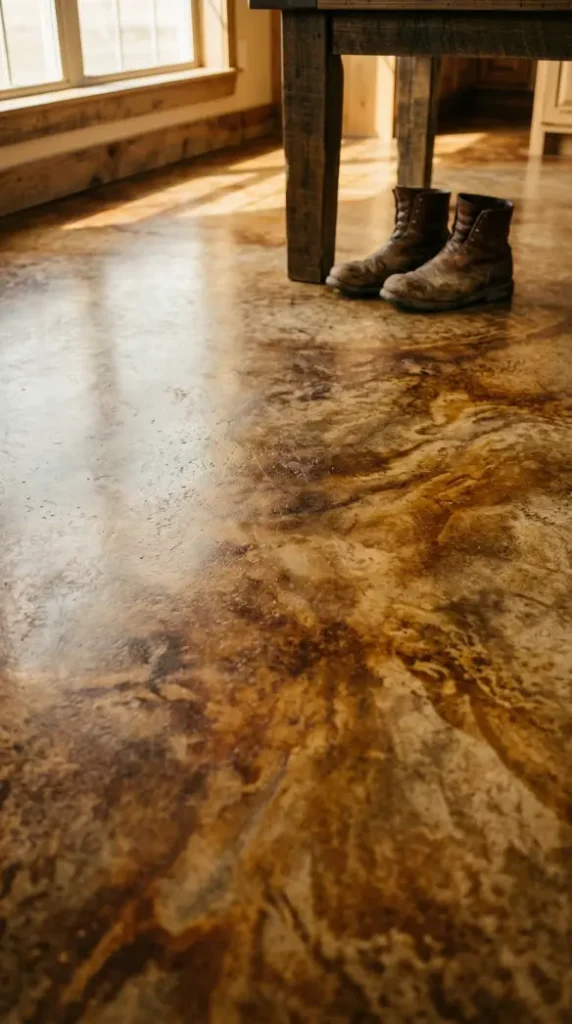
The defining visual quality of a great farmhouse stained concrete floor — the warm, mottled, organic color variation that looks like the floor has been lived in for decades — comes specifically from acid stain, not water-based products, and it is the most important choice in the entire process. Acid stains contain hydrochloric acid and metallic salts that chemically react with the concrete to produce earthy colors — and this chemical reaction creates a marbled or mottled appearance that can even look like wood, with no two floors ever looking identical. The imperfection is the point: every existing crack, aggregate variation, and previous pour line in the concrete slab reacts slightly differently to the acid stain, creating a natural color map of the floor’s history that reads as warmth and character rather than inconsistency. For farmhouse interiors specifically, this organic variation is preferable to the flat, uniform color that water-based stains produce.
2. Choose Warm Walnut or Honey Brown as the Foundation Stain Color
Color selection is the single decision that determines whether a stained concrete floor reads as farmhouse-authentic or simply industrial — and the warm side of the color spectrum is where all the best farmhouse results live. Warm walnut farmhouse-stained concrete floors bring out the richness of exposed wood beams and rustic trim — the deep brown tone adds instant warmth while still keeping the space grounded and simple. Warm walnut, honey amber, and rich tan are the three stain tones that work most universally with the farmhouse color palette: they harmonize with white shiplap walls, natural wood beams, and cream linen furniture without competing, and they warm up the room in the same way that a richly stained hardwood floor would — at a fraction of the cost. Warm earth tones like brown, tan, and sand evoke rustic charm and are the most popular choices for farmhouse-style concrete floors.
3. DIY the Stain Application to Maximize the Affordability
The most powerful cost advantage of stained concrete over any other farmhouse flooring option is the DIY accessibility of the process — because acid stain application does not require a contractor, a professional crew, or specialist tools that most homeowners don’t own. A DIY stained concrete project’s total materials cost runs approximately $100 to $200 for most rooms — covering the stain, sealer, etching solution, sprayer or roller, and safety gear. The process follows a clear sequence: clean and prep the slab thoroughly, apply an etching solution to open the concrete’s pores, apply the acid stain with a sprayer or brush in overlapping strokes, neutralize and rinse, allow to dry completely, then apply two coats of concrete sealer. The result, done carefully and on a well-prepared slab, is indistinguishable in character from a professionally applied finish — and in a farmhouse context where organic variation and imperfection are desirable qualities, a first-time DIY application often produces results that are more characterful than a perfectly uniform professional job.
4. Stamp a Wood Plank Pattern Into the Concrete for an Even More Farmhouse Result
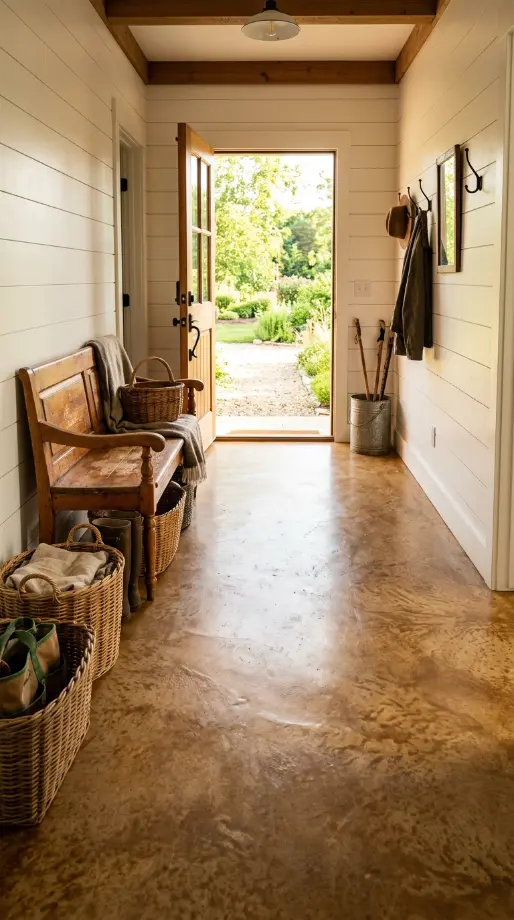
For homeowners who want a stained concrete floor that reads specifically like reclaimed hardwood rather than polished industrial concrete, stamping a wood plank pattern into a concrete overlay before staining produces a result that authentically mimics the look of wide-plank farmhouse wood floors — at a cost that solid hardwood cannot approach. Decorative concrete floors stamped or stenciled in wood plank patterns can create an immediate farmhouse vibe — wider and longer planks in particular produce the kind of visual warmth that is central to both rustic and modern farmhouse aesthetics. The wood plank stamp creates the individual board lines, grain-like texture, and plank width variation that make the finished, stained surface read convincingly as the real thing — particularly when stained in a warm walnut or honey tone that matches the color vocabulary of actual reclaimed wood.
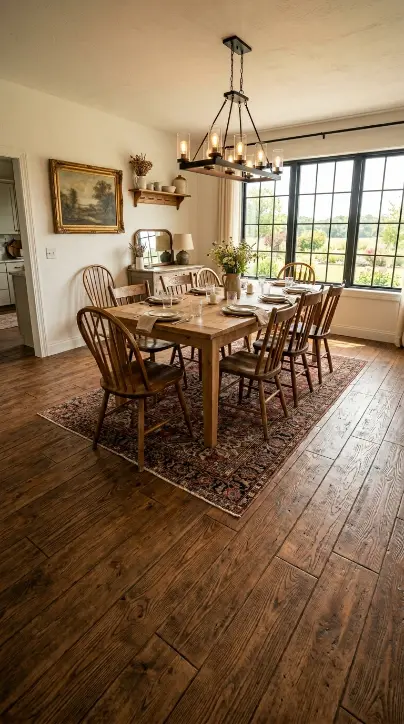
5. Apply Stained Concrete in the Farmhouse Kitchen for the Most Practical Room Choice
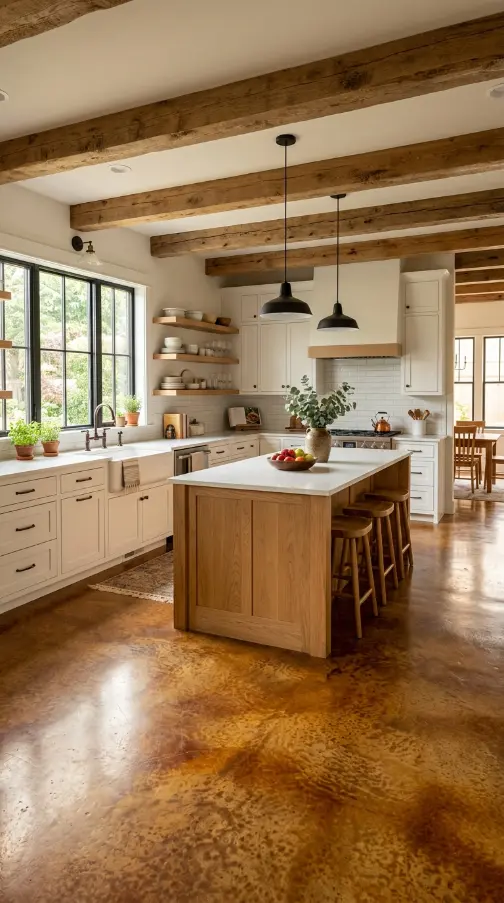
The kitchen is the room where stained concrete delivers its greatest practical advantage over every competing affordable farmhouse flooring option — because the combination of sealed concrete’s near-impervious surface and the warm visual character of the acid stain makes it the ideal kitchen floor in ways that vinyl plank, laminate, and even tile cannot fully match. Farmhouse-stained concrete floors work beautifully in kitchens, living rooms, bedrooms, and even sunrooms — and their long-lasting durability means they can handle heavy foot traffic without showing wear in the way softer flooring options do. In a kitchen specifically, a properly sealed stained concrete floor repels water, resists grease, and cleans with a damp mop — and it does not swell, warp, or delaminate when exposed to the humidity and moisture fluctuations that destroy laminate and engineered wood kitchen floors over time.
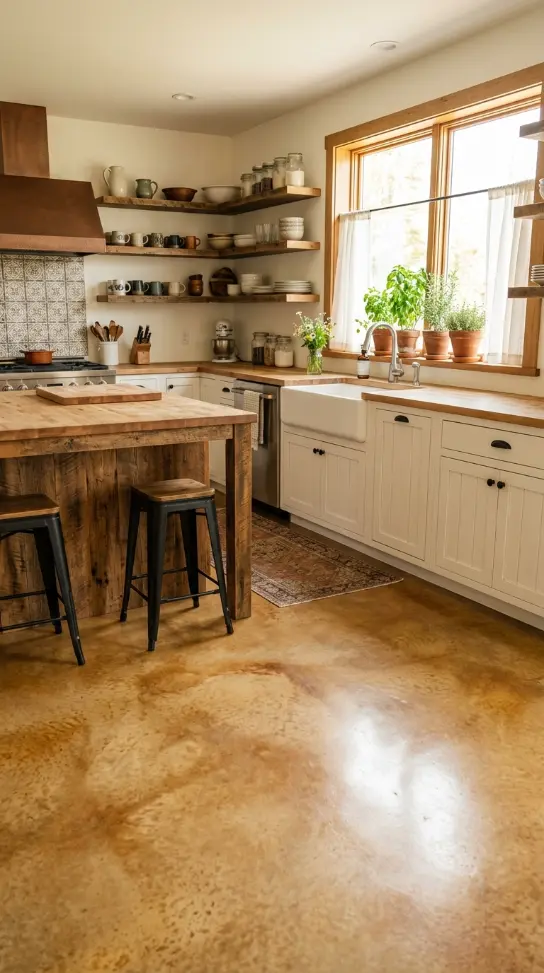
6. Add a Vintage Rug Over the Stained Concrete for the Complete Farmhouse Layer
A stained concrete floor and a vintage or vintage-style wool rug are one of the most considered and most photographed combinations in modern farmhouse interior design — and the reason is architectural: the concrete floor’s hard, cool surface beneath a thick, warm textile creates a material contrast that makes both elements read more richly than either does alone. Design historians note that an antique Turkish or Persian-style rug looks exceptionally chic over a bare or stained concrete floor, creating a cohesive and layered farmhouse aesthetic that references the eclectic, collected quality of genuine farmhouse homes. In practical terms, a vintage wool rug over a sealed stained concrete floor also adds the acoustic softness and foot warmth that concrete alone cannot provide — resolving the one genuine comfort limitation of hard flooring in living spaces and bedrooms.
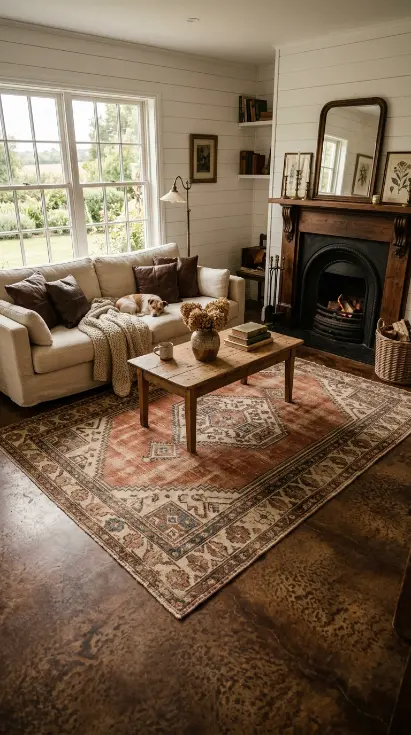
7. Use Water-Based Stain for a More Uniform, Contemporary Farmhouse Tone
For farmhouse interiors leaning toward the modern or transitional end of the aesthetic spectrum — cleaner lines, less rustic variation, more controlled color — water-based concrete stain is the more appropriate and more budget-friendly choice than acid stain. Water-based concrete stain costs approximately $2 per square foot installed — the least expensive staining option available — and produces a more uniform, consistent color compared to the mottled organic variation of acid stain. A water-based stain in a warm greige, soft tan, or pale stone tone applied over a well-prepared concrete slab creates a clean, even farmhouse floor that pairs beautifully with the lighter, airier direction of modern farmhouse design — white oak furniture, linen textiles, and the quieter neutral palette that 2026 farmhouse interiors favor. The uniformity that water-based stain produces, which would be a limitation in a more rustic context, becomes an asset in a modern farmhouse where visual restraint is the defining quality.

8. Seal Correctly — the Step That Determines Whether the Floor Lasts
Every stained concrete floor’s long-term success depends entirely on the sealer applied over it — and in a farmhouse context where the floor will face foot traffic, furniture movement, animal paws, and kitchen spills, choosing and applying the right sealer is as important as the stain choice itself. Concrete is naturally porous, and without proper sealing, stained concrete floors will absorb spills and moisture, creating stains and water marks that are difficult to manage — especially in kitchens and bathrooms. For farmhouse interior floors, a penetrating epoxy or polyurethane sealer applied in two coats after the stain has fully dried and neutralized is the most durable option — creating a hard, impervious surface layer that protects the stain from below while adding either a matte, satin, or gloss sheen depending on the farmhouse aesthetic. Matte sealer is the most farmhouse-appropriate finish, preserving the organic, aged quality of the acid stain without introducing the reflective shine that reads as commercial or industrial.
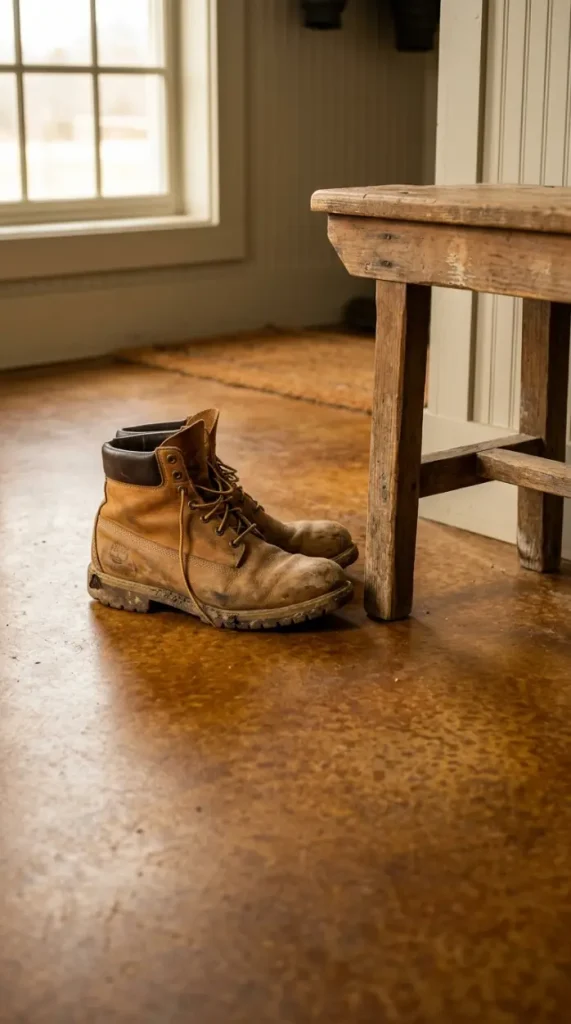
9. The Complete Farmhouse Stained Concrete Floor Room — Every Element Right at Once
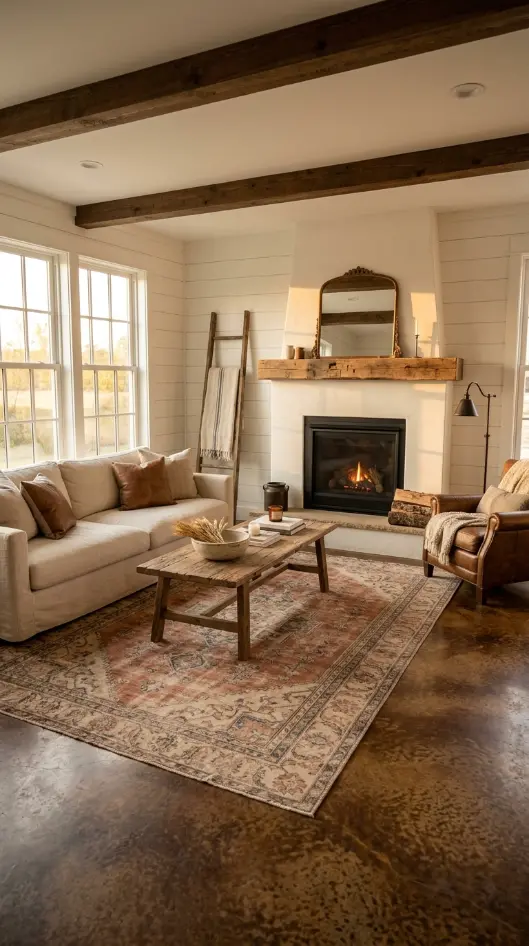
The complete farmhouse stained concrete floor look is every right decision made simultaneously in a single room — the stain color, the finish, the sealer, the rug, the furniture, and the light all working together to produce the farmhouse interior that makes the floor the anchor of the entire space rather than simply its surface. A warm walnut acid-stained concrete floor, matte-sealed and cured, mottled and organic in the afternoon light. A large vintage Turkish wool rug centered over it. A cream linen sofa and a reclaimed wood coffee table above the rug. White shiplap walls. Exposed wooden ceiling beams. A cast iron farmhouse fireplace. Large farmhouse windows with natural light flooding in. The concrete floor visible at every edge of the room, anchoring the entire space in warmth and character that looks like it was always there — because stained concrete, done right, always looks like it has always been exactly this.