13 DIY Breakfast Nook Dark Green Shiplap Moody Corner
Most kitchen corners are accidents. A leftover space between the back door and the cabinet run where someone eventually pushed a small table and two chairs and called it a breakfast nook. The result is a corner that functions but never quite feels like it was meant to be there — a space that is used every morning and appreciated by nobody.
The dark green shiplap breakfast nook is the complete opposite of that. It is a corner that announces itself the moment you walk into the kitchen. It stops you. It makes you want to sit down before you have even decided what you are having. It is moody in the best possible sense — the visual weight of deep forest green on horizontal shiplap creates a room within a room effect that transforms what was previously dead kitchen corner space into the most atmospheric and considered spot in the entire home.
In 2026, the moody corner nook has become one of the most searched and most executed DIY projects in the home improvement space — and for good reason. Shiplap is one of the most achievable wall treatments available to any DIYer with basic tools and a weekend. Dark green paint costs the same as any other paint color. And the combination of the two, done with intention, produces a result that looks significantly more expensive and considered than the sum of its parts. The darkness absorbs light rather than reflecting it, making the corner feel intimate and enclosed. The shiplap adds horizontal rhythm and texture that makes the walls themselves visually interesting rather than simply a backdrop. And the right furniture, lighting, and textile choices within that framework build a space that every person who sits in it immediately wants to stay longer than they planned to.
These ideas will show you exactly how to build it.
1. Clad Both Corner Walls Floor to Ceiling in Horizontal Shiplap
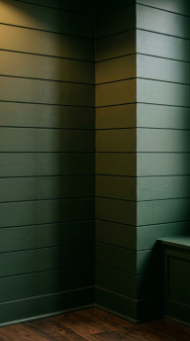
The shiplap is the foundation of the entire moody nook aesthetic — and applying it to both walls of the corner, running floor to ceiling without interruption, is the decision that makes everything else possible. Partial shiplap applications — stopping at chair rail height, covering only one wall, or leaving gaps around window or door frames — dilute the effect and make the corner feel decorated rather than designed. Floor to ceiling on both walls creates the complete immersive envelope that defines the moody corner nook. The horizontal boards — typically 10 to 15 centimetres wide with a 3 to 5mm reveal gap between each board — introduce a horizontal rhythm that makes the corner feel wider and more architectural than plain walls of the same dimensions. For a DIY application, primed MDF shiplap boards offer the cleanest, most paintable surface for a matte painted finish. Real timber shiplap in pine or poplar is slightly more expensive but introduces a very subtle grain texture through the paint that adds depth to the finished wall. Nail or glue the boards horizontally starting from the floor upward, maintaining consistent reveal gaps with spacers, and the result is a wall treatment that looks custom and considered at a cost that makes professional installation unnecessary.
2. Paint Every Surface the Same Deep Forest Green for Full Immersion
The single most important paint decision in a moody dark green shiplap nook is not the color itself — it is the commitment to painting every surface in the nook the same color. The shiplap walls, the built-in bench base, the window frame if there is one, the ceiling of the nook if it is defined — all of it in the same deep forest green matte finish. Stopping the color at the shiplap and leaving the bench painted white, or painting the walls green but leaving the trim in a contrasting color, breaks the immersive quality that makes the dark corner nook so visually powerful. When every surface within the nook envelope is the same deep color, the space stops being a corner with colored walls and becomes a genuinely separate atmospheric zone within the kitchen. The furniture, cushions, and lighting placed within it then float against that dark background with a jewel-box quality that would be impossible to achieve in any lighter treatment. For paint selection in 2026, deep forest green in a flat matte finish delivers the most depth and absorption. Sheen at this color depth reads as plastic. Flat matte reads as architecture.
3. Build a Simple L-Shaped Bench From MDF Box Construction
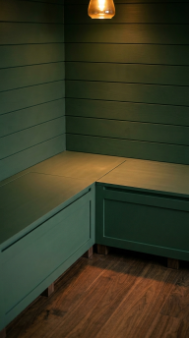
The built-in bench is the structural heart of any breakfast nook — and for a DIY builder, the box construction method is the most achievable, most forgiving, and most professional-looking approach available regardless of skill level. An L-shaped bench built from two simple rectangular MDF boxes — one following each wall of the corner — requires nothing more than a circular saw, a drill, wood screws, wood filler, and primer and paint. Each box is a hollow rectangle of 18mm MDF panels: a front face panel, two side panels, a top panel, and a base panel sitting on small timber feet to lift the bench slightly off the floor. The standard bench height for comfortable seating with a standard 75cm dining table is 45 to 47 centimetres from floor to top panel surface. The standard bench depth is 45 to 50 centimetres — deep enough for genuine comfort, shallow enough that the table can be pulled close. In the context of the dark green shiplap nook, once the bench boxes are primed, painted the same deep forest green as the shiplap walls, and topped with a custom cut foam cushion in a moody dark velvet or olive fabric, the entire corner reads as a single continuous designed element rather than built furniture placed against a wall.
4. Choose a Round Dark Walnut Pedestal Table as the Nook Centerpiece
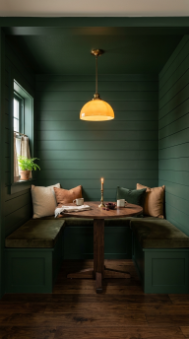
The table is the functional center of the breakfast nook and its form matters as much in a small corner space as any other design decision. A round pedestal table in dark walnut — with a single central pedestal base rather than four legs — is the ideal choice for a corner nook for several interconnected reasons. The round form has no corners to catch hip bones when sliding in and out of the bench seat, no uneven leg placement to navigate, and a softer visual silhouette that responds naturally to the curved and flowing quality of the upholstered cushions around it. The single pedestal base leaves the floor completely clear on all sides, which makes the nook feel larger and more open than a four-legged table of the same diameter ever could. And the dark walnut finish — its rich, warm, deep brown-black grain — sits within the moody dark color palette of the nook without competing with the forest green walls, instead creating a material warmth and depth that the green alone cannot provide. A diameter of 90 to 100 centimetres seats four people comfortably with the L-shaped bench on two sides and two moveable chairs on the remaining arc.
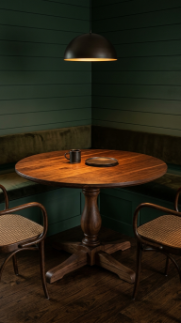
5. Hang a Low Aged Brass Dome Pendant Directly Over the Table
Lighting in a moody corner nook is not ambient — it is targeted. The pendant light hanging directly above the table is the sole light source that makes the whole nook work, and choosing it with the same care as any other element in the space is non-negotiable. An aged brass dome pendant in a generous scale — 40 to 50 centimetres diameter — hung low at approximately 50 to 55 centimetres above the table surface, directs a defined pool of warm amber light downward onto the table and bench seating without flooding the wider kitchen with the same light. The aged brass finish responds beautifully to the deep forest green of the shiplap walls — the warm metallic tone sits against the dark green the way old brass hardware sits against dark library shelves, creating a combination that reads as both classic and completely contemporary. The dome form — concave interior facing downward — concentrates the light into the most focused, dramatic downward pool possible. With a warm 2700K bulb inside, the pool of light on the dark walnut table surface below becomes the most beautiful thing in the kitchen, and the nook around it settles into rich, moody shadow that makes the whole corner feel genuinely private.
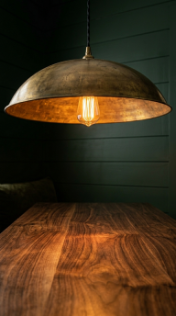
6. Upholster the Bench Cushion in Dark Olive Velvet or Forest Green Linen
The bench cushion is the largest textile surface in the nook and the one that establishes the entire soft furnishing direction of the space. In a dark green shiplap nook, the cushion needs to sit within the dark palette without being identical to the wall color — a slight variation in tone, in texture, or in material finish creates the material layering that distinguishes a considered interior from a one-note one. Dark olive velvet is the most successful choice: its deep yellow-green undertone distinguishes it clearly from the cooler forest green of the shiplap walls while remaining completely within the moody dark palette, and the velvet pile surface introduces a luxurious tactile quality that makes the bench seat feel considerably more comfortable and considered than a flat-weave or cotton alternative. The cushion should be custom cut to fit the full L-shaped bench top precisely — no gaps between bench surface and cushion edge, no overhang. A deep foam base of at least 8 to 10 centimetres ensures genuine seating comfort. Piped edges in a contrasting aged copper or warm bronze thread finish the cushion with a detail that responds to the brass pendant above and creates a subtle metallic accent running along every edge of the bench seating.
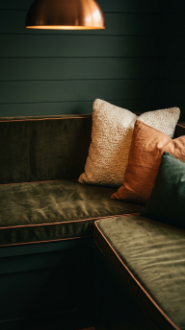
7. Add Open Shelving on the Shiplap Wall Above the Bench Back
The shiplap wall above the bench back — between the top of the cushion and the ceiling — is one of the most valuable and most commonly underused surfaces in a breakfast nook design. A single run of open floating shelves in dark walnut or blackened steel, mounted at two heights on this wall section, turns it into a display and storage surface that contributes both functional value and visual richness to the nook without requiring any cabinet doors or complex joinery. Keep the shelving minimal: two shelves, each holding no more than four to five objects, with generous spacing between items. Dark ceramic mugs stacked in a loose cluster, one small trailing plant in a dark pot, two recipe books with cloth spines lying horizontally, one small vintage brass object found at a market — these are the objects that belong on the nook shelf. The dark background of the shiplap wall makes every object placed against it read with a clarity and presence that a white or neutral wall cannot provide, turning even modest objects into considered display pieces simply by virtue of the backdrop they sit against.
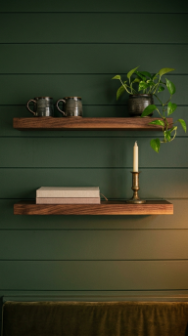
8. Install a Small Window in the Shiplap Wall and Paint the Frame the Same Green
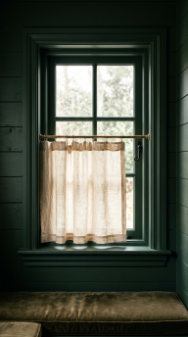
If the corner allows for a window — or if a small window already exists on one of the nook walls — painting the entire window frame and architrave the same deep forest green as the shiplap is the detail that completes the immersive envelope most convincingly. A white window frame on a dark green shiplap wall is a visual interruption that pulls the eye immediately and reminds you that you are looking at a decorated surface rather than an architectural one. The same deep green on the frame makes the window read as a deliberate opening in the dark envelope — a portal rather than a punctuation mark. With a simple dark steel or blackened iron window latch hardware as the only metal accent at the window, and a single linen cafe curtain hung on a slim brass rod at the lower half of the window for privacy without blocking the upper daylight, the window becomes the nook’s one connection to the outside world — framed in the same dark green that makes the whole corner so compelling.
9. Introduce Rattan Dining Chairs With Dark Stained Frames for Material Contrast
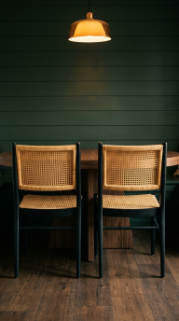
The two moveable dining chairs that face the built-in bench across the round table are the one opportunity in the moody dark green nook to introduce a natural material contrast that prevents the space from feeling heavy or one-dimensional. Rattan dining chairs — with a woven rattan seat and back panel, a dark stained timber frame in deep walnut or blackened oak, and a simple clean silhouette without excessive decorative detail — bring natural warmth, organic texture, and a material lightness into the nook that balances the visual weight of the dark green walls and dark walnut table. The rattan weave catches and holds light differently from every other surface in the nook — its warm golden-tan tones glow against the dark background in a way that makes each chair feel almost luminous by comparison. The dark stained frame connects the chairs visually to the dark walnut table and floor while the rattan panel keeps them distinct and organic. Two chairs, identical in form, positioned at the open arc of the round table — the repetition of the same piece read twice creates a visual rhythm that anchors the open side of the nook without crowding it.
10. Finish the Nook Floor in Wide Plank Dark Walnut Stained Timber
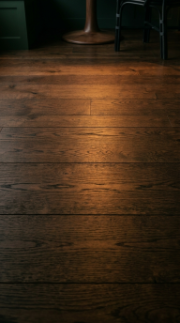
The floor is the final surface of the moody nook envelope — and it deserves the same considered material decision as every wall above it. Wide plank timber flooring in a deep dark walnut stain, running through the nook zone, contributes a warmth and depth at the base of the space that connects the floor visually to the dark walnut table and the dark green walls above it. The wide plank format — boards of 15 to 20 centimetres width — reduces the number of visible join lines across the floor surface, making the floor read as a calmer, more continuous surface than narrow strip flooring. The deep walnut stain is not black — it is a rich, warm brown-black that retains the natural grain and depth of the timber while reading as definitively dark. In the context of the green shiplap nook, the dark walnut floor creates a complete dark envelope from floor to ceiling that makes the warm amber light of the pendant and the warm rattan of the dining chairs read with extraordinary clarity and warmth by contrast. For a DIY approach, pre-finished wide plank engineered timber in a dark walnut stain is available at accessible price points and installs as a floating floor without adhesive or specialist fitting, making it a genuinely achievable weekend project.
11. Style the Table With Three Considered Objects Only
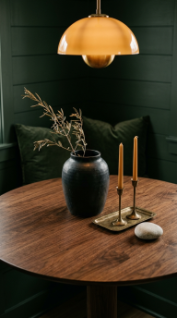
The round dark walnut table in the moody nook is the most beautiful surface in the space — and the temptation to style it with a full table arrangement of vases, candles, books, and seasonal objects should be resisted completely. Three objects maximum, each chosen for their material quality and their response to the dark palette surrounding them: one dark ceramic vessel of generous scale holding a single dried stem or branch at the center, one small aged brass tray at one side holding two unlit beeswax taper candles in slim brass candleholders, and one small round river stone of warm grey sitting naturally at the edge of the tray. The dark ceramic against the dark walnut table surface creates a tone-on-tone depth that draws the eye downward. The aged brass tray and candleholders introduce the second warm metallic note that responds to the dome pendant above. And the single river stone is the object that has no explanation — it is simply there because it is beautiful, and in a room this considered, that is reason enough.
12. Add a Small Trailing Plant in a Dark Ceramic Pot to the Bench Corner
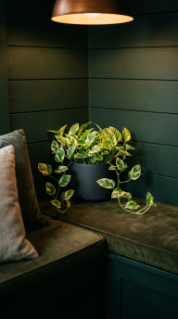
Every dark, enclosed space — no matter how beautifully designed — benefits from one element that is genuinely alive. In the moody dark green shiplap nook, a small trailing plant in a dark ceramic pot placed at the inside corner of the L-shaped bench, where the two bench arms meet, introduces the only organic living material in an otherwise entirely constructed environment. A trailing pothos in a dark matte charcoal or deep forest green ceramic pot — the pot tone close enough to the bench and wall color to almost disappear against them — allows the bright green trailing foliage to read as a living extension of the deep green palette around it rather than a contrasting accent. The trailing stems growing outward from the corner over time create a soft organic movement at the bench corner that makes the whole nook feel increasingly lived in and genuinely inhabited the longer the plant is there. Pothos requires almost no light — it will thrive in the low ambient light of a moody enclosed nook corner without complaint, which makes it the single most practical plant choice for this specific environment.
13. Mount a Narrow Floating Shelf Above the Bench for Mugs and Morning Objects
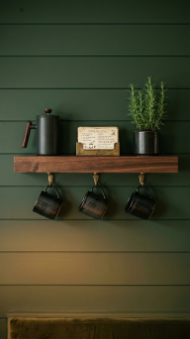
A narrow floating shelf mounted directly on the shiplap wall at approximately 170 to 180 centimetres height — just above seated eye level and well above the back of any scatter cushion — creates a practical morning station that keeps the table surface clear and adds a considered display element to the upper shiplap wall without requiring additional furniture. In the moody nook context, this shelf holds the objects of the morning ritual: two or three dark ceramic mugs hung on small brass hooks fixed to the shelf underside, a small dark glass French press on the shelf surface, one compact recipe card holder in aged brass, and a small dark ceramic pot with fresh herbs. These are not decorative objects — they are the tools of a specific daily practice, displayed because their material quality earns them the right to be visible. The combination of the narrow dark walnut shelf floating against the deep forest green shiplap, the dark ceramic mugs hanging below it, and the warm brass hardware details creates a functional still life that makes the whole wall above the bench feel complete and genuinely useful.