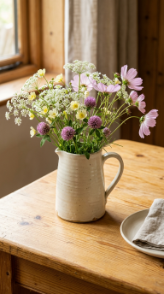
14 DIY Breakfast Nook Farmhouse Wainscoting Storage Bench
There is a reason the farmhouse kitchen has remained one of the most enduringly popular interior directions across every design cycle for the past two decades — and it has nothing to do with trend cycles or Pinterest algorithms. It has to do with how a well-made farmhouse kitchen feels. Warm without trying. Functional without apology. The kind of space where someone is always in the middle of something — baking, reading, helping with homework, having a conversation that started over coffee and has not found a reason to end yet.
The DIY farmhouse breakfast nook with wainscoting and a built-in storage bench is the concentrated expression of everything that makes the farmhouse kitchen work. It takes a corner — typically the least useful square footage in any kitchen layout — and transforms it into the most used, most loved spot in the entire home. The wainscoting gives the walls a sense of architectural history and permanence that flat-painted drywall never achieves. The built-in bench reads as furniture that belongs to the house rather than furniture that was placed against it. The hidden storage beneath the lift-top seat solves the perpetual farmhouse kitchen problem of where to put the linen placemats, the extra throw pillows, the board games, and the seasonal kitchen items that have no permanent home. And the whole assembly — white painted millwork, ticking stripe cushions, natural timber table, basket pendant above — creates a corner that every person who enters the kitchen gravitates toward without being invited.
The DIY execution of this project is genuinely achievable over a single long weekend for anyone with basic carpentry tools, a willingness to follow a cut list carefully, and the patience to prime and paint properly. The results look significantly more expensive and considered than the actual material costs, which is the most honest test of any home improvement project.
These ideas will show you exactly how to build and style it.
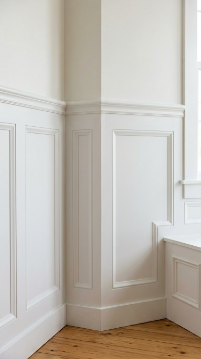
1. Frame the Nook Walls With Classic Raised Panel Wainscoting
Wainscoting is the detail that transforms a farmhouse breakfast nook from a bench-and-table combination into something that reads as genuinely architectural — a space that feels as though it was designed into the house rather than added to it. Classic raised panel wainscoting on the two nook walls, running from the floor to a traditional chair rail height of approximately 90 to 95 centimetres, establishes the entire millwork language of the corner and sets the visual tone for every element that follows. The raised panel profile — a flat recessed center panel surrounded by a raised frame of stiles and rails — is the most traditional and most versatile wainscoting style for a farmhouse application, reading as classic without veering into formal or stuffy. For a DIY application, pre-made MDF raised panel wainscoting sheets are available at most home improvement retailers, requiring only horizontal cutting to the correct height, vertical scribing to the wall where necessary, and a chair rail cap installed along the top edge. Prime with a high-build primer, sand back, and finish with two coats of semi-gloss white paint — the semi-gloss finish on the wainscoting versus flat paint on the walls above creates a subtle sheen differential that makes the millwork feel properly professional.
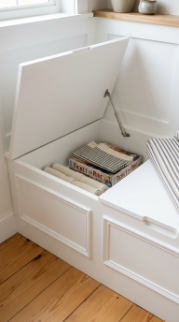
2. Build the Storage Bench With Lift-Top Seat Panels for Hidden Storage
The storage bench is the functional heart of the farmhouse nook build — and the lift-top mechanism is the detail that makes it genuinely useful rather than simply a place to sit. Each section of the L-shaped bench top is built as a separate hinged panel — lifted from the front edge using a simple finger pull routed into the front face, rising on a continuous piano hinge along the back edge to reveal the full depth of the hollow bench box below. The storage cavity — approximately 40 centimetres deep, the full internal width and length of each bench section — provides generous, accessible storage that accommodates flat items like placemats and linen napkins, bulkier items like board games and seasonal kitchen textiles, and the miscellaneous overflow of any actively used family kitchen. The bench construction follows the same box-frame MDF approach as any built-in bench build, with the addition of the piano hinge and a soft-close lid support on each section to prevent the lid from falling back and pinching fingers. A simple routed finger pull on the front of each lid section — an oval recess approximately 5 centimetres wide — requires no hardware and keeps the front panel face clean and millwork-appropriate.
3. Match the Bench Front Panels to the Wall Wainscoting Detail Exactly
The visual quality that distinguishes a truly professional-looking built-in nook from a competent DIY bench that has been placed against a wainscoted wall is the continuity between the bench front panels and the wall wainscoting behind it. When the raised panel profile, the stile and rail proportions, the chair rail height, and the paint color of the bench front panels precisely match the wall wainscoting on both sides, the bench reads as designed into the room rather than installed against it. The bench appears to grow from the floor as a natural extension of the architectural language of the walls — a piece of millwork that belongs to the house. Achieving this continuity requires nothing more than using the same MDF wainscoting sheet material for both the wall panels and the bench front panels, cutting the bench panel sections to match the wall panel module width exactly, and maintaining the same chair rail height at the bench top edge as on the walls. The result is a corner where the transition from wall to bench and back to wall is invisible — a continuous millwork envelope that makes the whole nook feel like a single designed element.
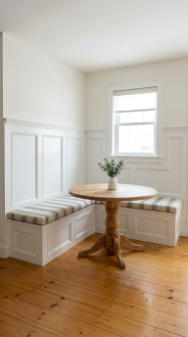
4. Cover the Bench Cushion in Classic Ticking Stripe Fabric
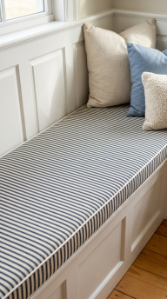
The bench cushion fabric is the single strongest signal of the farmhouse direction in the nook — and classic ticking stripe is the fabric that has defined the farmhouse cushion since before the term farmhouse decor existed. A narrow ticking stripe in navy and cream, or warm red and cream, running horizontally across the full L-shaped bench length communicates the whole farmhouse aesthetic in the most direct, immediate, and unpretentious way possible. The ticking weave is a dense, tightly woven cotton that is both durable enough for daily meal seating and visually strong enough to hold its own against the white painted millwork on all sides. A custom-cut bench cushion in ticking stripe, made from a minimum 8cm thick high-density foam base wrapped in a removable machine-washable ticking cover with a simple zipper along the back edge, will outlast and outperform any decorative cushion that was not designed for the purpose it is being asked to serve. The horizontal stripe direction on the cushion creates a visual width effect that makes the bench seat appear longer and more generous than its actual dimensions — a welcome perceptual bonus in any corner that is trying to feel spacious.
5. Hang a Woven Rattan Pendant Light Low Above the Farmhouse Table
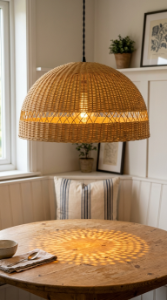
The pendant light in a farmhouse breakfast nook should feel like it belongs to the same visual family as the wicker baskets, the linen cushions, and the natural timber — something handmade, organic, and warmly imperfect rather than manufactured and precise. A woven rattan or basket-weave pendant in a large dome or bell shape, hung at approximately 55 to 60 centimetres above the table surface, gives the nook a central overhead element that is simultaneously warm, textural, and completely consistent with the farmhouse material palette. The rattan weave casts dappled light patterns on the surfaces below — the table, the bench cushion, the chair backs — through the gaps in its weave structure, creating a warm patterned light play that shifts slightly as the pendant moves in the air currents of an occupied room. Choose a pendant with a simple exposed Edison bulb on a standard fitting inside the basket form — the warm filament glow visible through the rattan weave adds an additional layer of warmth and depth to the pendant as a night-time light source that a concealed bulb inside an opaque shade cannot provide.
6. Install a Row of Black Iron Coat Hooks on the Wainscoting Wall
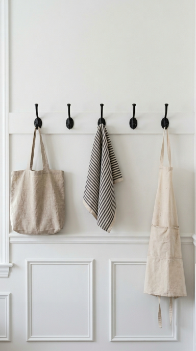
A farmhouse nook that is only used for eating is a nook that is only doing half its job. In a real family kitchen, the breakfast nook corner accumulates the small daily objects of inhabited life — a tote bag from the farmer’s market, a linen apron, a child’s school bag dropped on arrival, a striped kitchen towel that was set down and not yet returned to the drawer. A row of three to five simple black iron coat hooks mounted on the wainscoting wall at one end of the bench — at approximately 150 to 160 centimetres height, above the chair rail but low enough to be easily accessible — gives all of these objects a permanent, considered home within the nook rather than allowing them to accumulate on the bench seat or the table surface. The black iron hooks are the right farmhouse hardware choice: their simple cast form, matte black finish, and modest scale are completely at home against white painted wainscoting without introducing any decorative elaboration. Three hooks in a row with 20 centimetres between each, mounted with a single screw through the wainscoting into the wall behind, take five minutes to install and make the whole nook feel finished in the most practical and unpretentious way.
7. Choose a Round Pedestal Pine Table With Classic Farmhouse Proportions
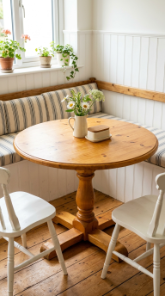
The farmhouse breakfast nook table is not the same object as a farmhouse dining table — it operates at a different scale, in a tighter space, and with a different social function. A round pedestal table in natural pine or lightly washed oak at approximately 90 to 100 centimetres diameter is the farmhouse table that fits the nook corner correctly: small enough to leave adequate bench access on both sides, large enough to seat four people comfortably with the bench on two arcs and two moveable chairs on the remaining arc, and round enough that everyone at it is equidistant from the center and equally part of the conversation. The turned pedestal base — a classic farmhouse lathe-turned post with a simple four-footed base — is the leg design that gives the pine table its farmhouse proportions and keeps the floor beneath it completely open. Choose a pine finish that is lightly waxed or oiled rather than heavily varnished — the natural grain of pine develops a warm honey-gold tone over years of use that no synthetic finish can replicate, and the surface marks and minor dents that accumulate in a pine top over a family’s daily use add character rather than damage.
8. Add a Simple Beadboard Ceiling Panel in the Nook Zone
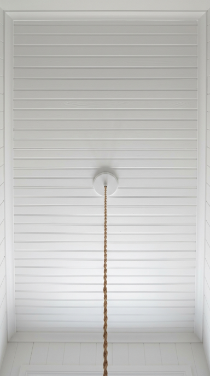
A beadboard ceiling panel fitted within the defined footprint of the nook zone — dropping slightly below the main kitchen ceiling on a simple timber frame, or simply applied directly to the existing ceiling surface within the nook boundary — is the millwork detail that makes the nook feel like a completely separate architectural zone rather than a corner of the kitchen that has been styled as a nook. Beadboard on the nook ceiling is the vertical extension of the wainscoting vocabulary — the same white painted millwork material, the same grooved profile, now running horizontally across the overhead plane of the nook. It creates a sense of enclosure from above that is completely different in character from a flat painted ceiling — more intimate, more considered, and more unmistakably farmhouse. The standard beadboard ceiling application uses the same tongue-and-groove beadboard panels as the wall application, installed perpendicular to the main ceiling joists, painted the same white as the wall wainscoting, and finished with a simple timber moulding around the perimeter where the beadboard meets the main kitchen ceiling or the wall.
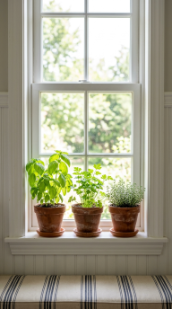
9. Style a Small Windowsill Within the Nook as a Herb Garden
If the nook wall includes a window — or if a small window can be added as part of the build — the windowsill becomes one of the most valuable and most charming small surfaces in the entire farmhouse kitchen. A row of three small terracotta pots on the nook windowsill, each holding a different kitchen herb — fresh basil, flat parsley, thyme — kept to the scale of the windowsill so they do not obstruct light or crowd the view, transforms the window from a functional opening into a living detail that makes the whole nook feel genuinely inhabited and cared for. The warm orange-red of raw terracotta against white painted window frame on a white wainscoting wall is a color combination of complete farmhouse reliability. The herbs growing toward the light change and develop week by week, making the windowsill a detail that is never quite the same twice. And having fresh herbs growing directly within reach of the breakfast table — a sprig of basil for eggs, a few thyme leaves for a morning omelette — is the kind of practical beauty that the farmhouse aesthetic is built around.
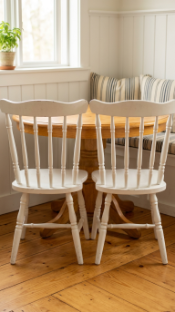
10. Finish the Nook With White Painted Spindle-Back Chairs for Open Seating
The two moveable chairs that complete the farmhouse breakfast nook seating arrangement — facing the built-in bench across the round pedestal table — are the piece that closes the farmhouse millwork circle most naturally. White painted spindle-back chairs — with a classic turned spindle back, a simple saddle seat in natural pine or painted white, and four slightly tapered legs — are the farmhouse dining chair that has never not worked and shows no sign of being displaced. The white paint connects them directly to the wainscoting and the bench construction, making the chairs read as part of the same millwork family rather than furniture that has been placed beside a built installation. The spindle-back profile is visually light enough that two of them facing the bench do not crowd the tight nook space, and their classic proportions respond to the turned pedestal base of the table in a way that more contemporary chair forms simply do not. For a DIY project, plain wooden spindle-back chairs purchased from a basic furniture supplier and painted with two coats of white semi-gloss paint to match the wainscoting exactly is the most budget-friendly and visually successful approach available.
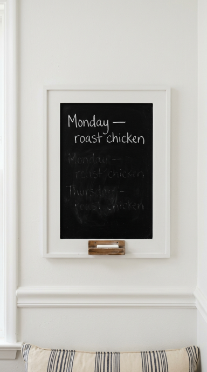
11. Add a Small Chalkboard Panel Above the Chair Rail for Notes and Menus
A small chalkboard panel fitted into the wall above the chair rail at one end of the nook — sized to match one complete raised panel module, approximately 35 by 50 centimetres — is the farmhouse detail that makes the nook genuinely interactive and alive rather than simply beautiful. In a family kitchen, a nook chalkboard becomes the household communication center: the week’s dinner menu written in chalk on a Sunday evening, a grocery list that gets added to by everyone who passes through the kitchen, a child’s drawing that stays up until someone needs the space for something more urgent. The panel can be created simply by painting a section of the wall above the chair rail with several coats of chalkboard paint — available in matte black or dark green — applied within a timber frame moulding that matches the wainscoting profile and contains the chalkboard area within a clean architectural boundary. The result is a functional detail that has the visual quality of a considered design choice and the practical value of a household tool that gets used every single day.
12. Install Under-Bench Drawers as an Alternative to Lift-Top Storage
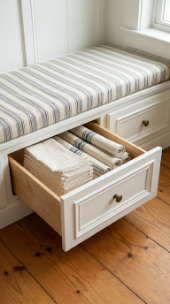
For a breakfast nook where the bench will be used primarily by adults — or where the lift-top storage mechanism feels mechanically complex for a first-time builder — under-bench drawers offer an alternative storage solution that is equally functional, slightly more accessible for frequently used items, and visually very clean in the finished appearance. Two wide shallow drawers fitted into the front panel of each bench arm — each drawer approximately 60 centimetres wide by 8 centimetres tall by 40 centimetres deep — operate on simple wooden runners or low-cost undermount drawer slides and are finished on the front face with the same raised panel wainscoting profile as the surrounding bench panels. A simple round brass knob centered on each drawer front face provides the pull hardware. The shallow drawer depth accommodates linen napkins, placemats, small kitchen textiles, and flat serving utensils — the items that are reached for most frequently at the breakfast table — while the deeper bench box above the drawer remains a full hollow volume accessible through the lift-top lid, giving the bench dual storage zones at two different depths and access methods.
13. Lay Wide Plank Warm Pine Flooring Through the Nook Zone
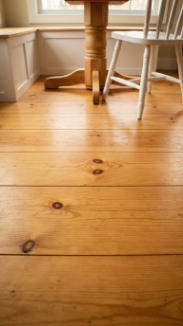
The floor beneath the farmhouse breakfast nook is doing quiet but important work — and wide plank warm pine in a natural lightly waxed finish is the material that serves the farmhouse nook floor most honestly and most beautifully. Pine is the historic farmhouse floor material above all others: its warm honey-gold tone, its naturally soft surface that dents and marks slightly with use, and the characteristic knotting pattern that runs through every pine plank at irregular intervals all communicate the same warmth, age, and authenticity that the wainscoting and the built bench aspire to. Wide plank format — 15 to 20 centimetre board widths — gives the floor a slower, more generous rhythm than narrow strip flooring and makes the nook feel more spacious by reducing the number of visual lines underfoot. For a DIY installation, pre-finished wide plank engineered pine in a natural wax finish floats without adhesive on a simple underlay, requires no specialist tools beyond a pull saw and a rubber mallet, and can be installed over an existing floor surface without removal. The warm honey-gold tone of natural pine responds to the cream and navy of the ticking stripe cushion, the warm rattan of the pendant above, and the white painted millwork on all sides in a way that creates a complete and coherent farmhouse material palette from floor to ceiling.
14. Accessorize the Table With a Simple Ceramic Jug and Fresh Wildflowers
The farmhouse breakfast nook table wants one thing at its center — and it is never a curated five-object styled vignette. It is a simple ceramic jug with a handful of whatever is growing in the garden or available at the farmer’s market that week: a loose bunch of wildflowers in late spring, a few stems of dried lavender in summer, a small cluster of rosehips in autumn, a single branch of forced forsythia in late winter. The jug itself should be a simple, slightly imperfect handmade or farmhouse ceramic in a warm cream, raw clay, or soft grey glaze — the kind of everyday object that a farmhouse kitchen has always had on the table because it is useful and beautiful in the same uncomplicated way. This is not a styled centerpiece — it is the evidence of a kitchen that is connected to the seasons and brings that connection to the table every week without ceremony or deliberation. The simplicity of one jug and a few seasonal stems is the farmhouse table styling approach that never requires updating, never goes out of season, and never looks like it was done on purpose.