16 Dorm Bedding Ideas Pastel Aesthetic Girls Twin XL
Twin XL is the specific and slightly unusual mattress size that defines nearly every dorm bed in the country, five inches longer than a standard twin but no wider, and the bedding market built around it is its own small universe of products designed to actually fit a frame most people will only ever sleep on for the four years they spend at school. Getting the Twin XL sizing right is the unglamorous first decision that makes every other styling choice that follows actually work, because a standard twin sheet pulled over a Twin XL mattress will not stay tucked, will not sit flat, and will undo the visual effect of even the most carefully chosen pastel palette.
The pastel aesthetic itself draws its emotional register from softness in every sense simultaneously: soft colors, soft textures, soft light, and the soft, slightly hazy, dreamlike quality that comes from a palette built entirely from desaturated, low-contrast hues rather than anything saturated or bold. Lavender, blush pink, sage green, baby blue, and butter yellow are the core pastel family, and the aesthetic succeeds when two or three of these tones are layered together with enough textural variation between them that the bed reads as soft and rich rather than flat and one-dimensional.
The layering principle that makes a pastel Twin XL bed look fully styled rather than simply made is the same principle that governs any well-dressed bed regardless of color: a fitted sheet and flat sheet in a base tone, a duvet or comforter in a complementary pastel, three to five pillows in varying sizes and textures, one folded throw or blanket, and one or two small decorative cushions in an accent shape like a round bolster or a small lumbar pillow. Each layer should differ slightly in texture — a smooth cotton sheet, a slightly textured waffle-weave throw, a plush velvet accent pillow — so that even within a tightly controlled pastel palette, the bed has genuine visual and tactile depth.
These 24 ideas cover every dimension of the pastel Twin XL dorm bed — from the foundational sheet and duvet pairing to the specific pillow arrangements, accent textures, canopy and bed-curtain options, and the complete styled bed where every layer from the fitted sheet to the topmost decorative cushion works together as one fully realized, soft, and completely personal sleep sanctuary.
1. Getting the Twin XL Sizing Right Before Anything Else
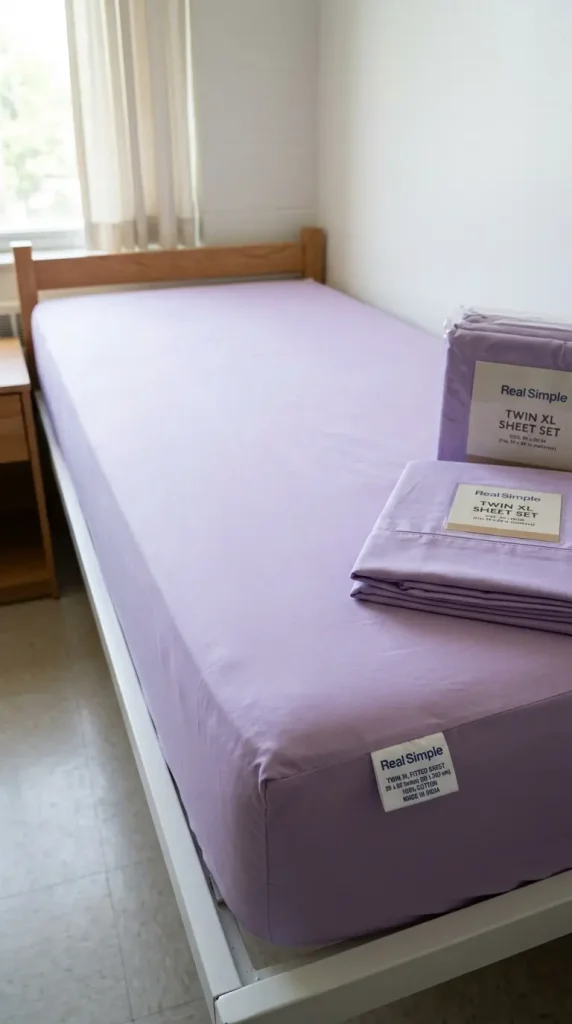
The single most important and least glamorous decision in any dorm bedding setup is confirming every sheet, mattress pad, and fitted layer is genuinely sized for Twin XL rather than standard Twin, because the five extra inches of length mean a standard twin fitted sheet will pop off the mattress corners within the first night and a standard flat sheet will leave the foot of the bed under-covered. Checking the package labeling specifically for “Twin XL” or the dimension “39 by 80 inches” before purchasing, rather than assuming “Twin” covers both, is the step that determines whether every subsequent layer of pastel styling actually sits flat and stays in place for the full school year.
2. Lavender and Blush Pink as the Foundational Pastel Pairing
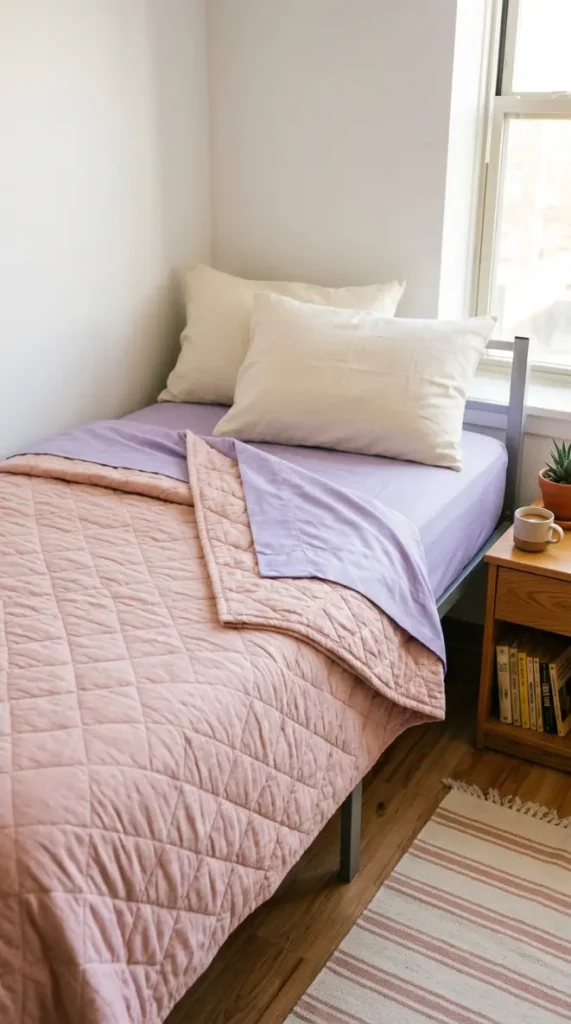
Lavender and blush pink share enough warmth and enough tonal closeness that they sit beside each other on a bed without competing, making this pairing the most reliable starting point for a pastel Twin XL bedding scheme. A lavender fitted and flat sheet beneath a blush pink duvet, or the reverse arrangement with blush sheets and a lavender duvet, creates a base layer with just enough contrast to register as two distinct colors rather than one indistinct pink-purple wash, and both tones photograph and read beautifully under the warm light most dorm rooms favor.
3. Sage Green as a Grounding Pastel Accent
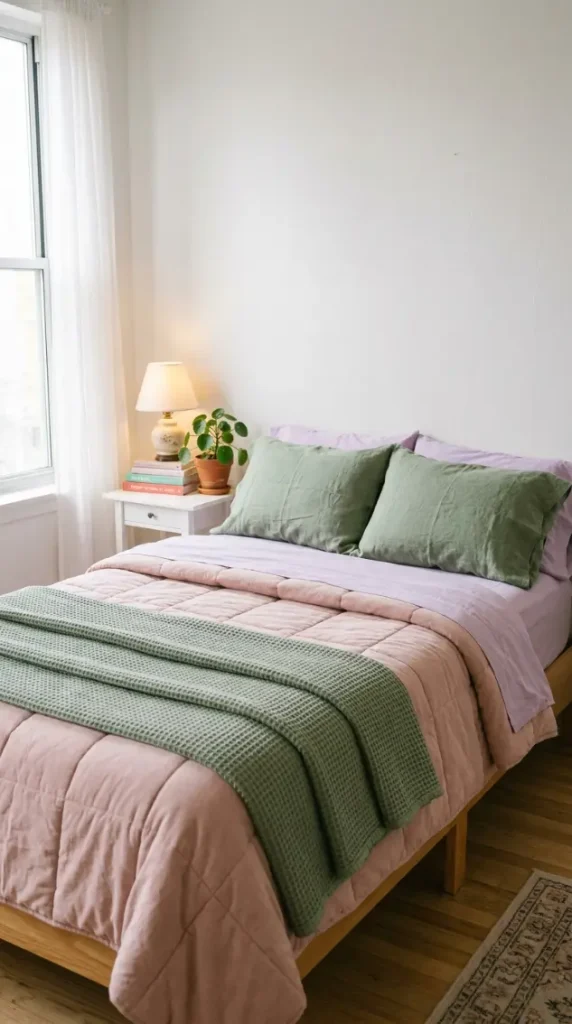
Where lavender and blush pink lean warm and soft, a sage green accent layer — in one or two pillow cases, a folded throw, or a single decorative cushion — introduces a cooler, more grounded note that keeps an otherwise entirely pink-and-purple palette from feeling overly sweet or one-dimensional. Sage functions on a pastel bed the way a single neutral functions in any color scheme: it gives the eye a place to rest between the more saturated pastels, and it pairs particularly well with natural textures like linen or waffle-weave cotton, reinforcing the sense that the bedding palette was considered rather than simply matched from a single boxed set.
4. Velvet Lumbar Pillow for Tactile Richness
A single small lumbar or square accent pillow in velvet — in baby blue, dusty rose, or pale lilac — introduces the one fabric texture a pastel bed most benefits from and most often lacks: a soft, light-catching pile that behaves completely differently under changing light than the flat cotton and linen surfaces surrounding it. Velvet’s particular quality of appearing slightly darker or lighter depending on the direction its pile is brushed gives this single small pillow a subtle dimensional shimmer that no other pastel textile on the bed can replicate, making it the pillow most likely to draw the eye first despite being the smallest object in the entire arrangement.

5. Round Bolster Pillow to Break the Rectangular Monotony
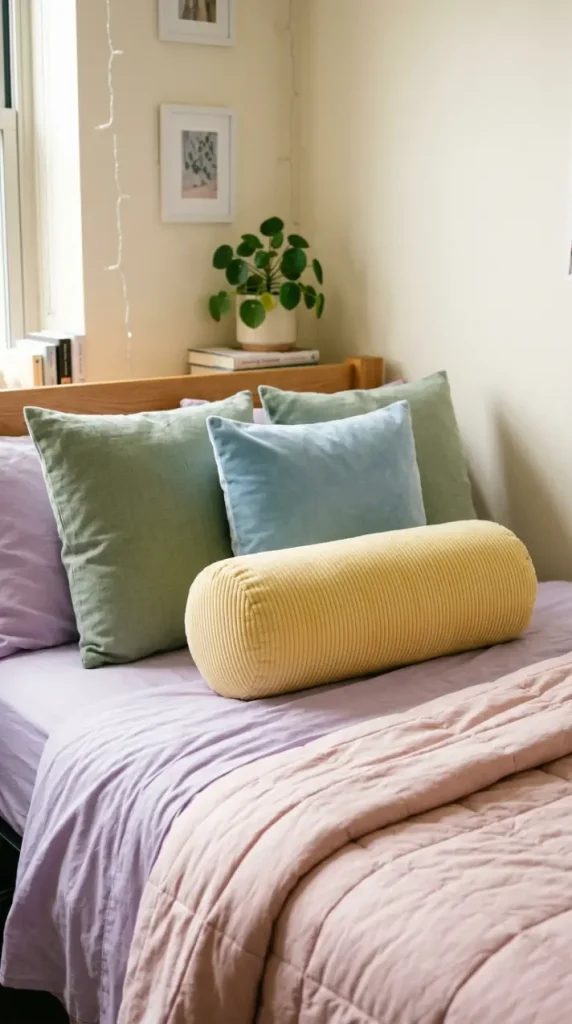
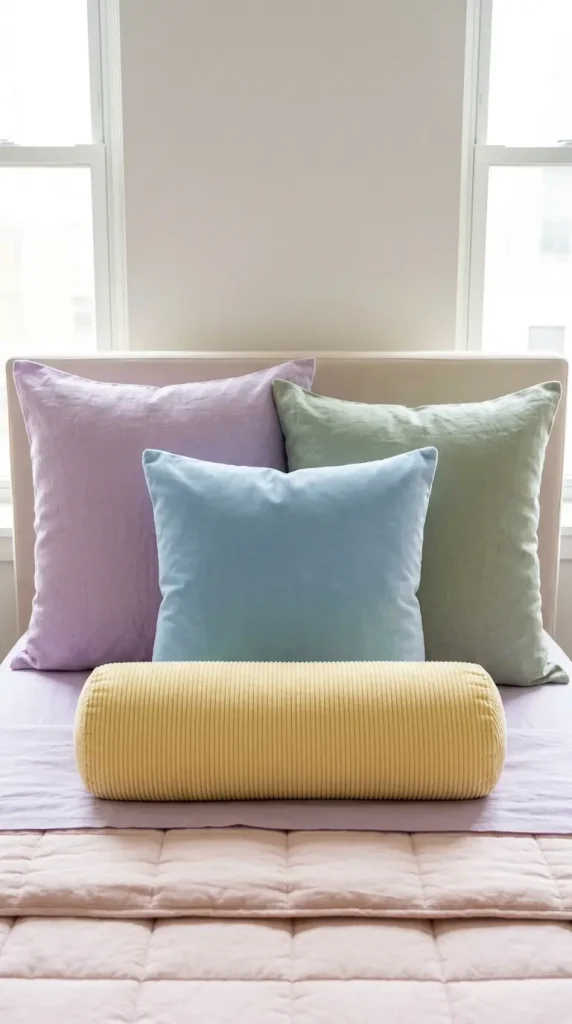
Every other pillow and cushion on a standard dorm bed is rectangular or square, and a single round bolster pillow — in butter yellow corduroy, dusty pink velvet, or a soft sage knit — placed in front of the standing pillows introduces the one curved form in an otherwise entirely angular arrangement. This shape contrast does the same visual work that a curved console leg does in a living room context: it softens the overall composition and prevents the eye from reading the pillow arrangement as a flat, repetitive row of identical rectangles, while the bolster’s cylindrical form also provides genuinely useful lower back support for anyone sitting up in bed to study or read.
6. Sheer Pastel Bed Canopy for a Dreamy Frame
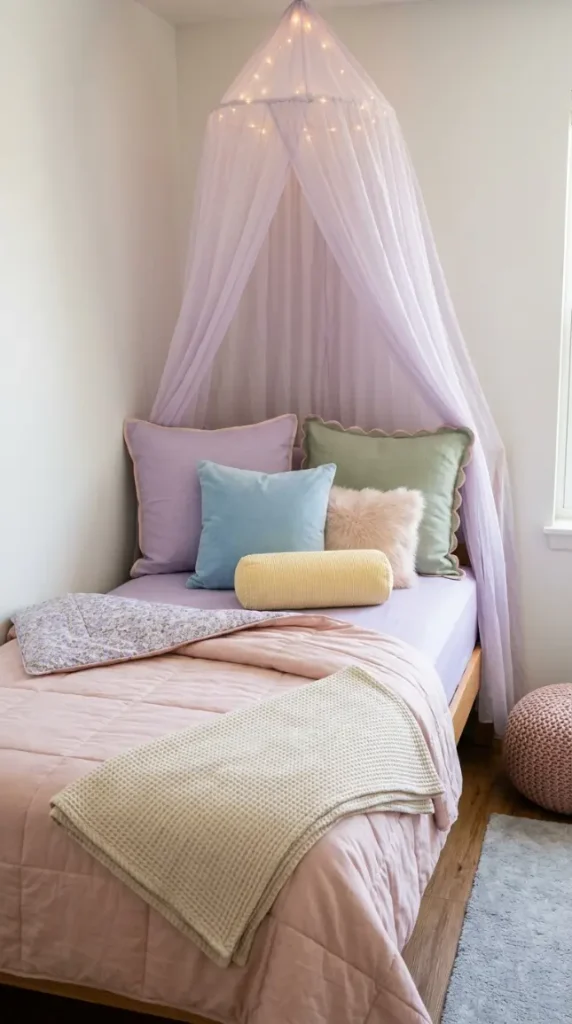
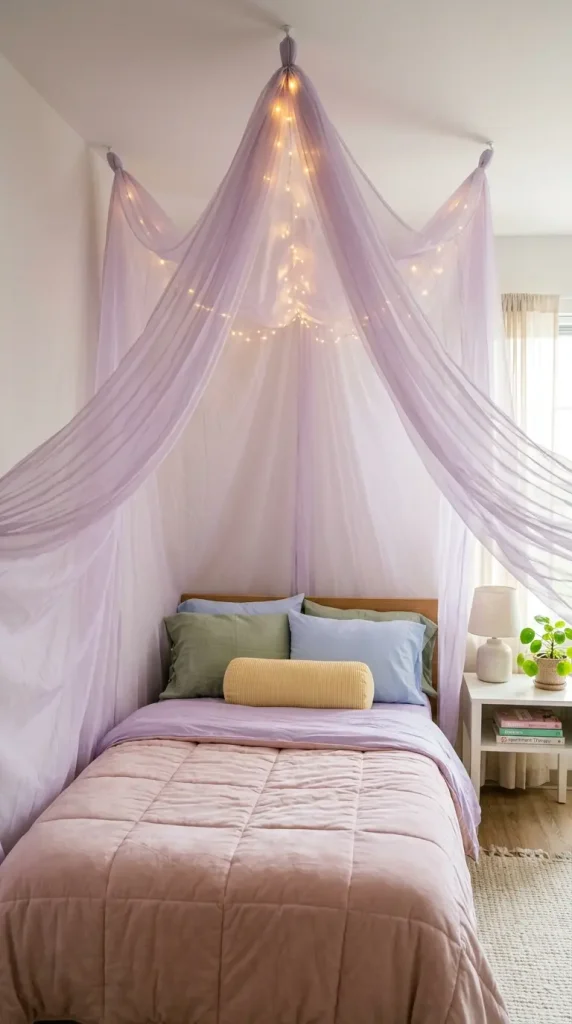
A sheer fabric canopy — in pale lavender, blush, or white, gathered at two points above the headboard and draped softly down each side — frames the bed within its own soft architectural moment, distinguishing it visually from the rest of the room even in the absence of any actual structural separation. Mounted from the ceiling with a simple hook and ring system or from a slim canopy frame that clips onto the bed frame itself, the sheer canopy catches and diffuses whatever light source is nearby, fairy lights especially, through its translucent fabric, adding a soft hazy quality to the light immediately surrounding the bed that reinforces the dreamy quality central to the entire pastel aesthetic.
7. Baby Blue as the Cooling Counterpoint Pastel
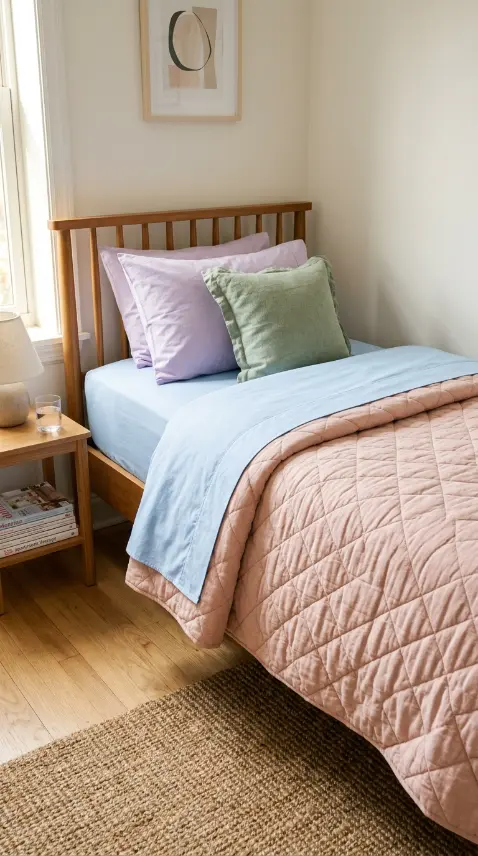
Baby blue performs a specific role in a pastel Twin XL palette that neither lavender nor blush can achieve on their own: it introduces genuine coolness without the grounding heaviness that sage brings, keeping the bed feeling airy and fresh rather than entirely saturated in warm pink-purple tones. A baby blue flat sheet folded back over a blush duvet, or a single baby blue accent pillow nested among warmer pastels, gives the eye a small visual breath of sky-toned calm, and the pairing of baby blue with butter yellow specifically creates a soft, nostalgic, almost vintage-nursery quality that reads as gentle rather than juvenile when balanced against the more sophisticated lavender and sage already established on the bed.
8. Butter Yellow as the Sunlit Accent Note
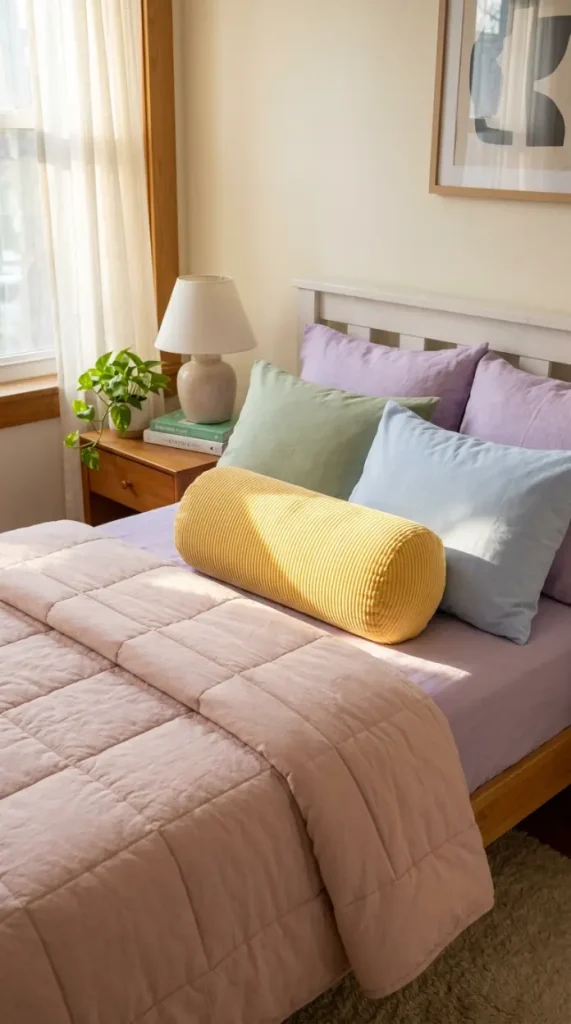
Butter yellow is the pastel most capable of reading as genuinely cheerful rather than simply soft, and used sparingly — in one bolster pillow, one small folded throw, or piping along the edge of a duvet cover — it introduces a note of warmth and brightness that prevents an all-lavender-blush-sage palette from drifting toward melancholy or excessive coolness. Because butter yellow carries more visual energy than the other pastels in this palette, it works best in the smallest quantity on the bed: one object rather than two, positioned where morning light will catch it directly, so that it functions as a single bright accent rather than competing for dominance with the bed’s primary lavender and blush tones.
9. Waffle-Weave Throw for Textural Contrast
A waffle-weave cotton throw blanket, folded in thirds and draped across the foot of the bed or diagonally across one corner, introduces a specific grid-textured surface that behaves differently under light than any smooth sheet or quilted duvet on the bed, its small raised squares catching shadow in a way that creates visible texture even from across the room. Because waffle-weave is typically sold in simple, slightly muted tones — oatmeal, soft grey, pale sage — it also functions as a gentle neutral pause between more saturated pastel layers, giving the eye a textured but visually quiet moment before returning to the lavender, blush, or butter yellow surrounding it.
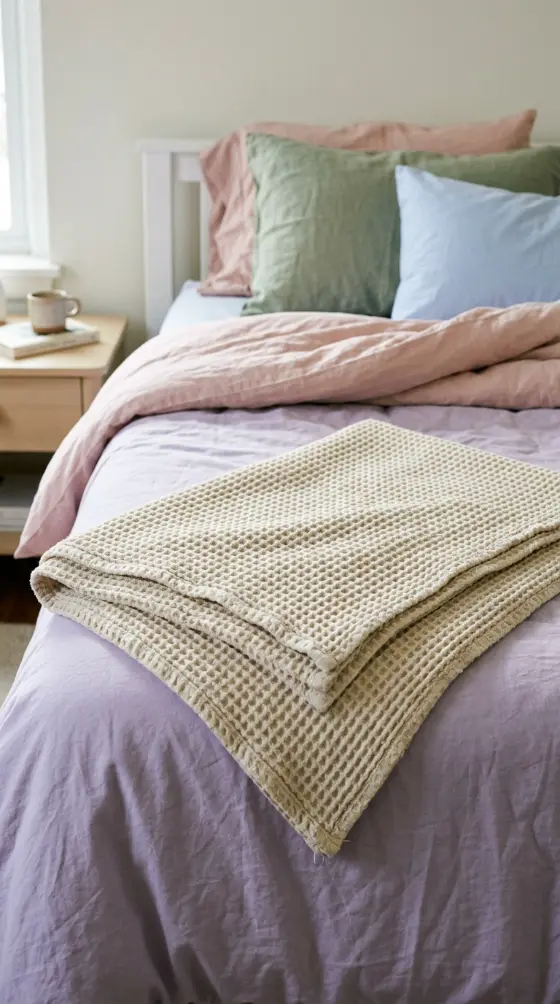
10. Scalloped or Ruffle-Edge Pillowcases for a Soft Detail
A pillowcase finished with a scalloped edge or a small ruffled trim, rather than a plain hem, introduces a delicate decorative detail that reinforces the pastel aesthetic’s overall softness at the smallest possible scale, the edge of a single pillow. This detail works best in restraint — one or two pillowcases with the trim, rather than every textile on the bed, so the ruffle or scallop functions as a discovered detail rewarding closer attention rather than a dominant pattern repeated across every surface, and it pairs particularly well with a solid lavender or blush base fabric where the trim’s dimensional edge is the only departure from an otherwise completely smooth surface.
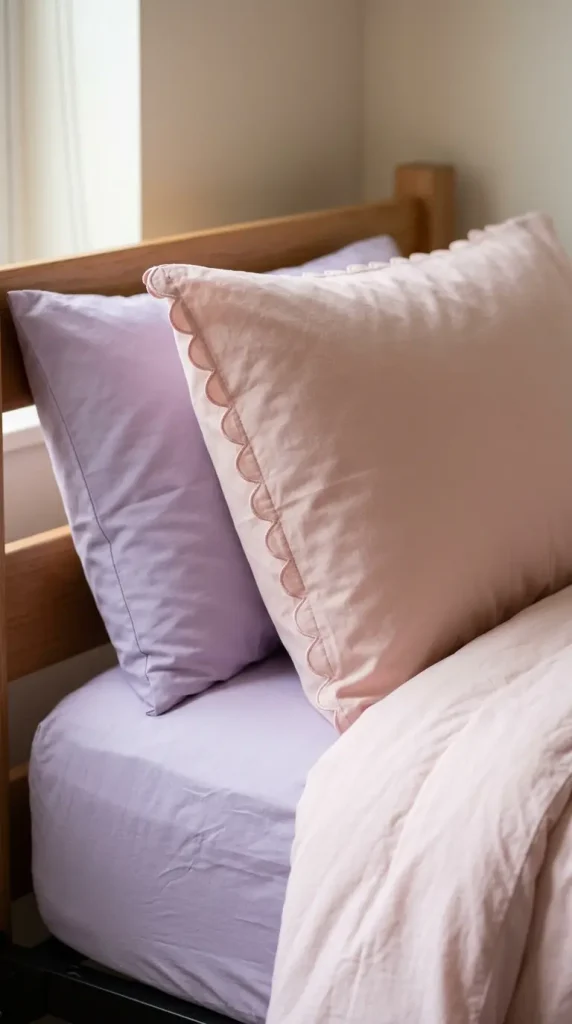
11. Matching Pastel Sheets With a Contrasting Piped Edge
A subtle piped edge — a thin contrasting cord sewn into the seam of a pillowcase, duvet cover, or flat sheet hem — in a different pastel from the main fabric adds definition and a small graphic line to an otherwise solid-color textile without introducing an entirely new pattern. A lavender pillowcase piped in blush, or a blush duvet cover piped in sage, creates a thin outline that makes the textile’s edges and seams more visually deliberate, giving each piece of the bedding set a tailored, finished quality that a plain unpiped hem cannot achieve, while still keeping the overall palette controlled to the same small family of pastels already established.
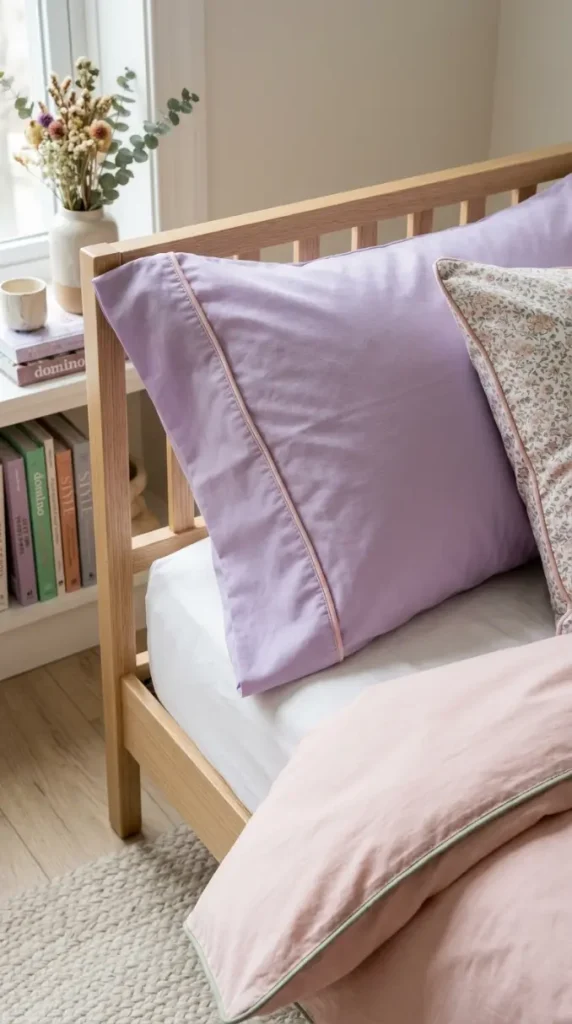
12. Pastel Bedding Paired With a Plush Faux Fur Accent
A single faux fur throw or accent pillow, in a pale blush or cream tone, introduces the one fabric on the entire bed with genuine dimensional pile depth, its individual fibers catching and scattering light in a way that creates a soft halo effect along its edges quite unlike the flatter pile of velvet or the grid texture of waffle-weave. Used sparingly, typically as a single small throw folded at the foot of the bed or one accent pillow nestled among the others, faux fur contributes an immediate sense of plush, cocooning comfort that reinforces the pastel aesthetic’s core emotional promise of softness, while its long pile catches dust easily enough that it works best as an accent rather than a primary, frequently-laundered layer.

13. Pastel Bedding With a Subtle Floral Print Accent Sheet
Introducing one small-scale floral print, confined to a single flat sheet or a single pillowcase rather than spread across the entire bed, gives the otherwise solid-color pastel palette a moment of pattern without overwhelming the careful color balance already established. The print works best when its own colors are drawn directly from the existing palette — tiny lavender and sage blossoms on a cream ground, for instance, rather than introducing any new hue — so the patterned piece reads as an extension of the established scheme rather than a competing decorative idea, and its presence on just one textile, glimpsed at the edge of a folded-back duvet, gives the bed a sense of having been built up gradually rather than purchased as a single matching set.
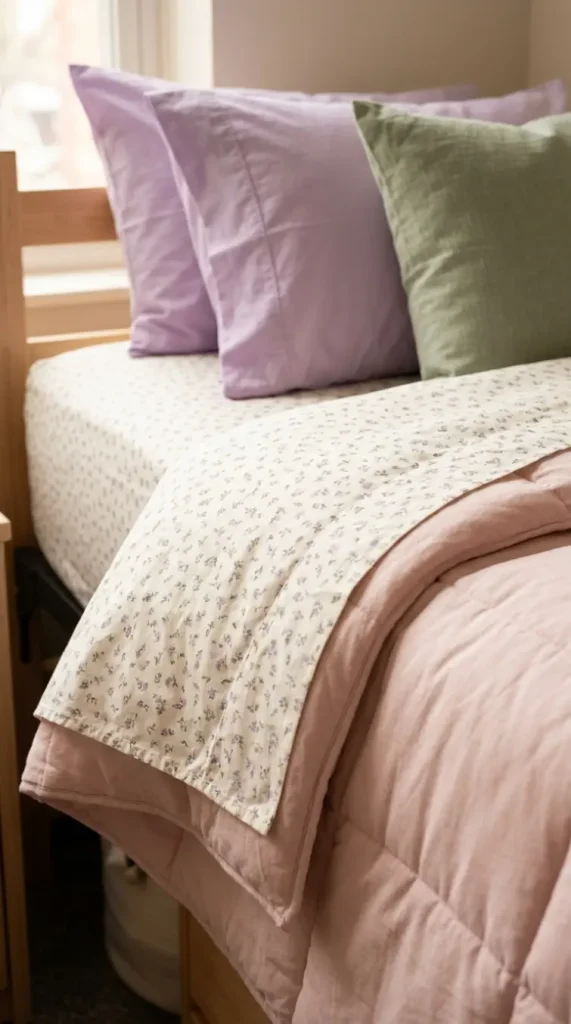
14. Layered Pillow Heights for Dimensional Depth
Arranging pillows in a deliberate height progression — two large standard pillows standing tallest at the very back against the headboard, one slightly smaller square pillow in front of them, and one round bolster lying lowest at the front — creates a stepped, dimensional arrangement that reads as considerably more intentional than a flat row of identically sized pillows lined up side by side. This height progression also serves the practical function of making every pillow’s pattern, color, and texture simultaneously visible from the front of the bed, since each shorter pillow in front reveals rather than obscures the pillow standing behind it, a small arrangement principle borrowed directly from professional bed-styling practice in interior photography.
15. Pastel Bedding Paired With a Loft Bed or Bunk Configuration
Many dorm rooms place the Twin XL bed on a lofted frame, raised well above desk or dresser height to free floor space beneath it, and styling a pastel bed in this elevated configuration requires a few specific adjustments: a slim guardrail along the open side can be wrapped in a soft fabric or ribbon in a matching pastel tone for both safety and visual cohesion, a small battery-powered lantern or clip light replaces a traditional nightstand lamp since reaching a wall outlet from a lofted bed is impractical, and the underside of the bed becomes the ceiling of the room below it, making a simple pastel fabric panel or a few strings of fairy lights stapled to the bed’s underside a worthwhile addition that benefits the desk and seating area beneath rather than the bed itself.

16. The Complete Pastel Twin XL Bed — Every Layer Together
The complete pastel Twin XL bed is the fully realized version of every principle in this guide working together on one frame: correctly sized lavender sheets as the base, a blush quilted duvet folded back to reveal a small floral print sheet beneath, a stepped pillow arrangement running from tall sage linen pillows at the back through a baby blue velvet square and a blush faux fur accent to a butter yellow corduroy bolster lying lowest at the front, a folded oatmeal waffle-weave throw draped diagonally across the foot, a sheer lavender canopy gathered above the headboard with fairy lights woven through it, and a small dusty pink floor pouf beside the bed. Every pastel tone considered in relation to every other, every texture distinct from its neighbor, every layer visible rather than hidden — the bed that makes the rest of the dorm room feel like it was built around this one corner rather than the other way around.