
28 Wall Decor Ideas That Transform Every Blank Surface
A blank wall is not a problem. It is an invitation. Every bare surface in your home is waiting to become something — a gallery, a garden, a statement, a memory, a mood. The reason most walls stay blank is not lack of taste or imagination. It is the paralysis that comes from too many options and not enough of a clear starting point. What goes here? How big? How high? What style? And the wall stays bare for another six months while the answer never quite arrives.
This guide is the answer. Not in a vague, inspirational way — but in a specific, practical, room-by-room way that shows you exactly what to put on every blank wall in your home, how to install it, and what it will look like when it is done.
From a single large-scale statement piece that commands an entire room, to a carefully layered gallery wall that tells the story of a life, to textured panels that make a wall feel like architecture rather than decoration — these 28 ideas cover every wall, every room, every budget, and every aesthetic. Find your wall. Find your idea. Put something beautiful on it.
1. The Classic Gallery Wall — Curated Personal Collection
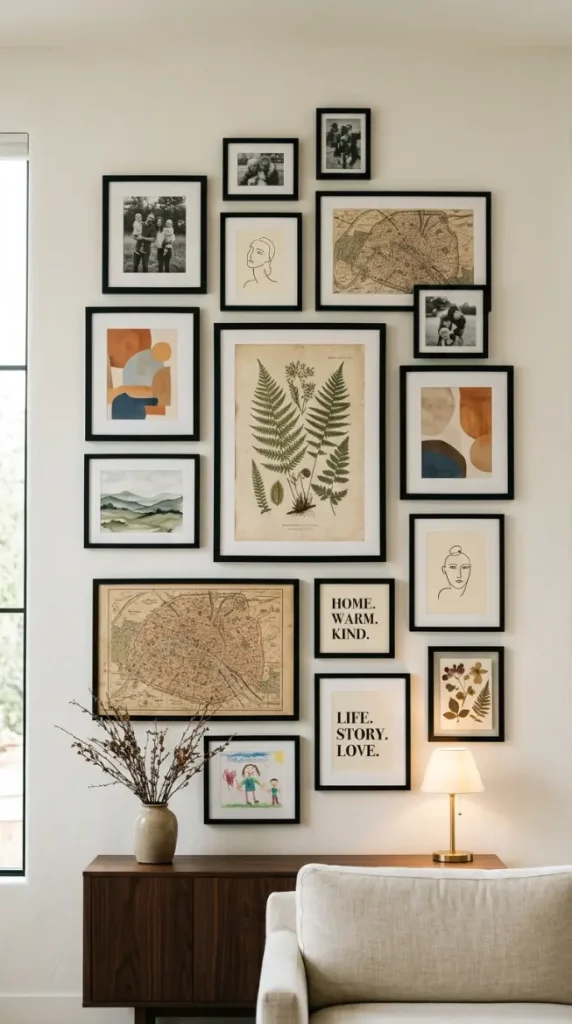
The gallery wall is the most personal and most powerful wall decor statement available — a curated collection of framed photographs, prints, and art arranged in an organic cluster that tells the story of who lives in the room. The formula for a gallery wall that looks curated rather than chaotic: choose a frame family — all black, all white, all natural wood, or all aged brass — and stick to it regardless of what is inside. Mix content freely within that frame family — photographs, prints, postcards, children’s drawings, pressed botanicals — but keep the frames unified. Arrange on the floor first before hanging anything. Start from the centre piece and work outward. Leave 5 to 8 centimeters between frames throughout.
2. Large Scale Statement Art — One Bold Piece
The single most impactful wall decor decision you can make is choosing one large-scale piece of art — genuinely large, not modestly sized — and hanging it alone on a wall with generous space around it. The mistake most people make with statement art is buying something too small for the wall, which makes the piece feel timid and the wall feel emptier than before. The rule: the art should fill at least two thirds of the wall width it is hanging on. Choose a piece with a strong visual presence — a bold abstract, a large-scale landscape, a dramatic portrait — in a frame that suits the room. Hang it at eye level, centered, with nothing else on the wall.

3. Textured Limewash or Plaster Wall Finish
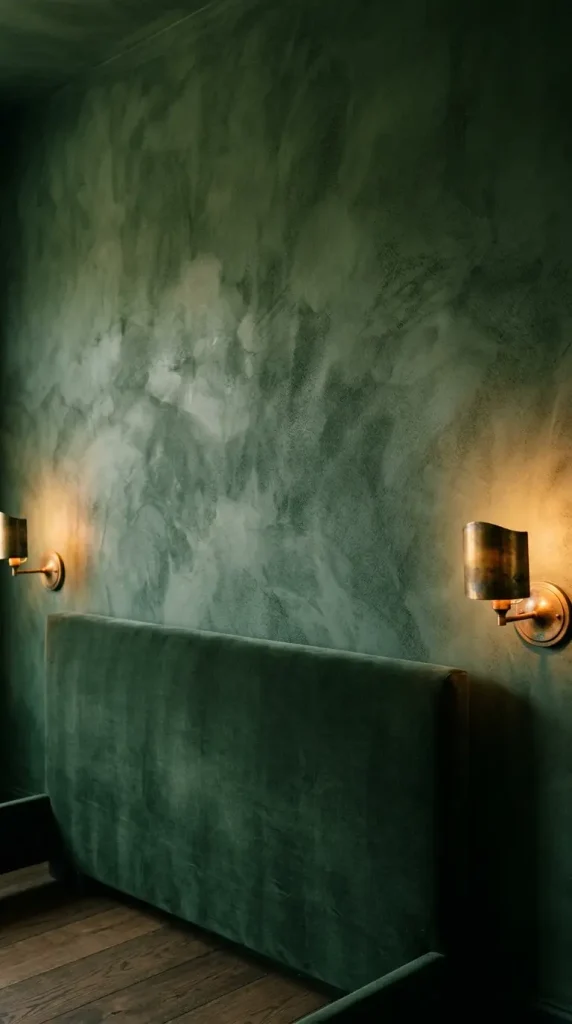
A textured wall finish — limewash paint, Venetian plaster, or tadelakt — transforms a flat painted wall into a surface with genuine depth, movement, and light interaction that makes it decorative in its own right without any art or decor applied to it. Limewash in particular has a quality that changes with every hour of the day — darker in flat light, lighter when light rakes across it, creating soft cloudy variations of tone across the surface that make the wall feel genuinely alive. Apply it to one feature wall — the wall behind the bed, behind the sofa, or at the end of a hallway — and let the texture itself be the decoration.
4. Floating Shelves as Wall Decor — The Styled Shelf Vignette
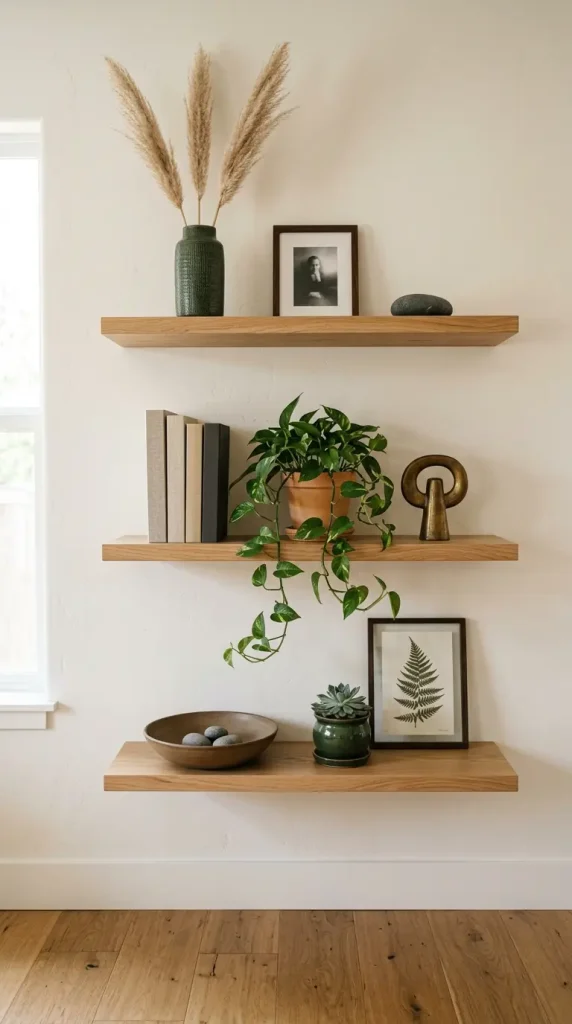
Floating shelves on a wall serve simultaneously as storage, display, and decoration — and when styled correctly, a wall of floating shelves becomes one of the most considered and personal wall decor statements in the home. The formula for a styled shelf: follow the rule of three — group objects in odd numbers, vary heights within each group, include one organic element, one reflective element, and one book or framed piece in every vignette. Use three shelves at varying heights on one wall. The gap between the shelves is as important as what is on them — too many shelves close together creates visual clutter, while appropriately spaced shelves create breathing room that lets each vignette be appreciated individually.
5. Woven Wall Hanging or Macramé Tapestry
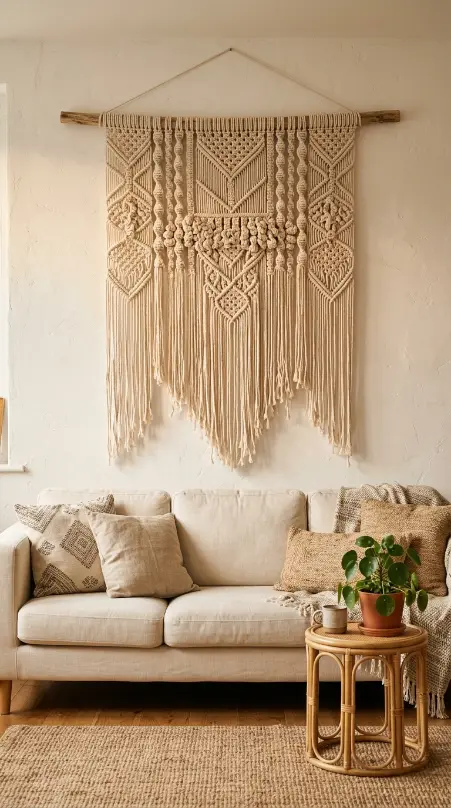
A large woven wall hanging or macramé tapestry — in natural cotton, wool, or jute — brings texture, warmth, and a handmade quality to a wall that no framed print can replicate. The tactile dimension of a woven wall hanging — the way it interacts with light differently at different times of day, the slight movement it has in air currents, the depth of the fiber layers — makes it fundamentally more alive than any flat wall decor. Choose a piece that is appropriately scaled for the wall — for a sofa wall, the hanging should be at least as wide as the sofa. Mount on a simple natural wood dowel or a copper rod. Let the bottom fringe fall naturally without trimming.
6. Wallpaper Feature Wall — Bold Pattern Statement
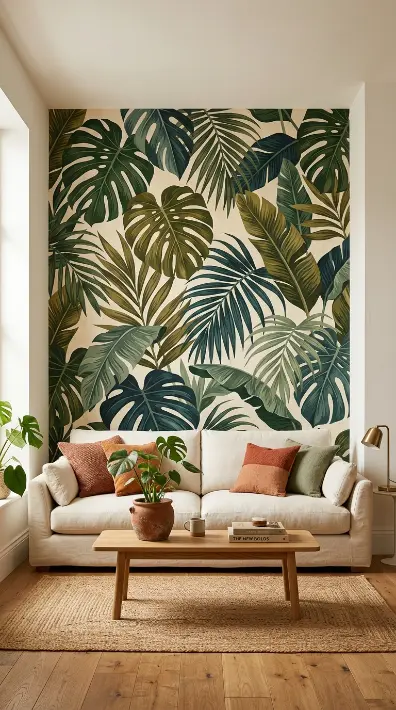
A single feature wall covered in wallpaper — while the other three walls remain plain — creates the most dramatic and most immediately transformative wall decor statement available at any budget. The key is choosing a wallpaper pattern with genuine boldness and confidence: a large-scale tropical leaf print, a dramatic floral, a bold geometric, an abstract watercolor print. The feature wall should be the first thing seen when entering the room — the wall directly opposite the door, or the wall behind the primary furniture piece. One bold wallpaper feature wall does more for a room than any gallery wall, any paint color, or any collection of art.
7. Neon Sign Wall Art
A custom neon sign — or a high-quality LED neon sign in a warm tone — on a bedroom, living room, or dining room wall creates a contemporary wall decor statement that is simultaneously functional as lighting and impactful as art. Choose a word, phrase, or simple shape that is personally meaningful: a name, a location, a favourite phrase, a simple heart or moon shape. Choose warm white, blush pink, or soft amber for bedroom use — never cold blue-white neon in a residential context. Mount the neon sign on a dark painted wall or a natural brick wall for maximum contrast impact. The warm glow of the neon creates a light pool on the wall behind it that becomes part of the overall decorative effect.

8. Oversized Botanical or Nature Print
A single oversized botanical or nature print — genuinely large, printed at poster or fine art print scale — framed simply and hung on a wall creates a wall decor statement that is simultaneously modern and timeless. The key is scale: the print should be large enough to read as architectural rather than decorative — at least 90 to 120 centimeters at its largest dimension. Choose a print with genuine visual detail and complexity: a highly detailed vintage botanical illustration of a single plant specimen, a large-scale fern or monstera leaf study, a scientific illustration of coral or shells. The more intricate the detail, the more the large scale rewards close looking and the more presence the piece has at distance.

9. Shiplap or Timber Panel Feature Wall
Installing horizontal shiplap timber boards — or vertical timber paneling — on one wall of a room creates an architectural wall treatment that is simultaneously wall decor, texture, and material statement. The wall becomes its own decoration without any art or accessories applied to it. Paint the shiplap in a bold color — deep navy, forest green, or warm terracotta — for maximum impact, or leave it in a natural whitewash finish for a coastal or Scandi aesthetic. The horizontal lines of shiplap boards extend the visual width of a room, making it feel larger. Install on the wall behind the bed, the sofa, or in a hallway entrance for the most impactful placement.

10. Framed Textile or Fabric Art
A beautiful piece of fabric — a vintage textile, a section of hand-woven cloth, an antique sari panel, a printed batik, a hand-embroidered piece — stretched over a simple canvas stretcher frame or mounted in a deep shadow box frame becomes wall art of extraordinary texture and richness. Textile art brings a warmth and depth to a wall that no printed or painted piece can replicate — the dimensional quality of threads, the slight sheen of silk or metallic thread, the visible weave structure of a hand-woven cloth. Choose a textile with genuine visual complexity and mount it simply so the textile itself is the complete story.

11. Preserved Moss Wall Panel
A preserved moss wall panel — either a single large square or rectangular panel, or a cluster of smaller panels arranged in a composition — brings a living, organic quality to a wall without requiring any watering, sunlight, or maintenance. Preserved moss retains its vivid green color and soft texture indefinitely without any care. Install a large preserved moss panel on a bathroom wall, a hallway wall, or a home office wall. The dimensional, three-dimensional quality of the moss surface — the way it absorbs and reflects light, the genuine natural texture — creates a wall feature that is simultaneously artwork and nature installation.

12. Arch Mirror as Statement Wall Decor
A large arch-shaped mirror — either free-standing leaned against the wall or wall-mounted — is one of the most versatile and most impactful wall decor statements available. The arch shape references architecture — doorways, windows, cathedrals — in a way that a standard rectangular mirror does not, giving it a sculptural quality beyond its functional purpose. Choose a mirror in an aged brass, warm bronze, or simple natural wood frame for maximum warmth. The arch mirror doubles the light in any room, creates the illusion of architectural depth, reflects the room’s best elements back into the space, and photographs extraordinarily well in every room context.

13. Wall Mural — Hand-Painted or Peel-and-Stick
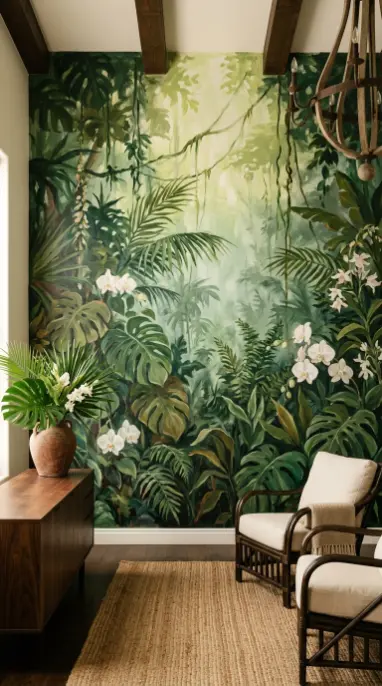
A wall mural — either commissioned hand-painted by a local artist or installed as a high-quality peel-and-stick mural print — transforms an entire wall into an immersive visual environment that is the most dramatic single wall decor statement possible. Choose a subject with personal meaning and genuine visual impact: a floor-to-ceiling jungle scene, an abstract landscape, a celestial star map, a city skyline at sunset, or a large-scale floral botanical garden. A mural says something about who lives in the room that no collection of framed art can — it is the room’s most personal and most committed design decision.
14. Pegboard or Slatwall Functional Wall Display
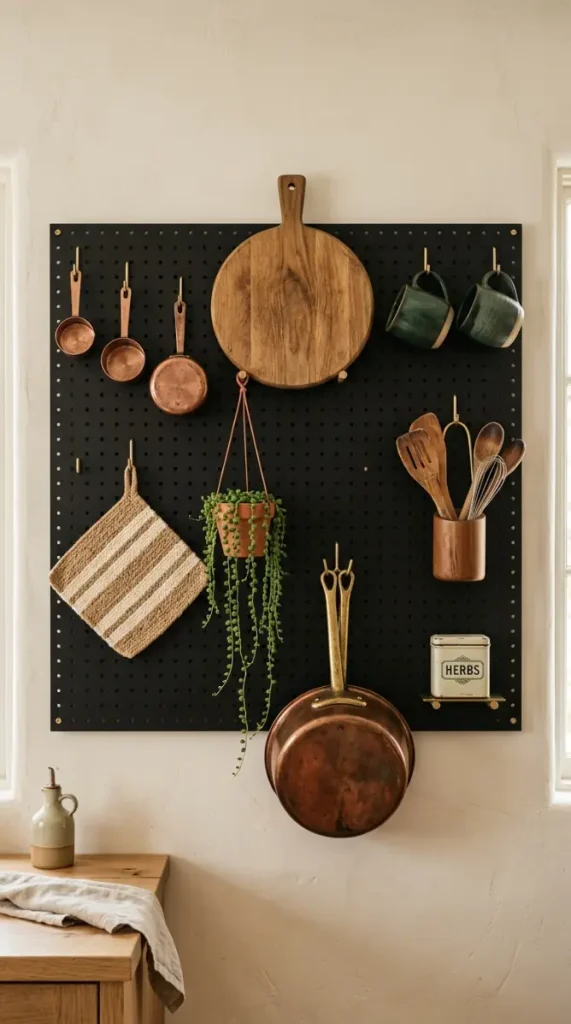
A pegboard or slatwall panel — painted in a bold color, matte black, or the room’s wall color so it disappears — mounted on a kitchen, home office, or craft room wall becomes a functional wall display system that is simultaneously organized storage and visual wall decor. The key to making a pegboard beautiful rather than utilitarian is the curation of what hangs on it: a kitchen pegboard displays beautiful ceramic utensils, copper pots, hand-woven trivets, a small plant in a hanging pot, vintage tin containers for spices. The objects on the board become the art — the board itself simply the system that makes them displayable.
15. Staircase Wall Gallery — The Ascending Collection
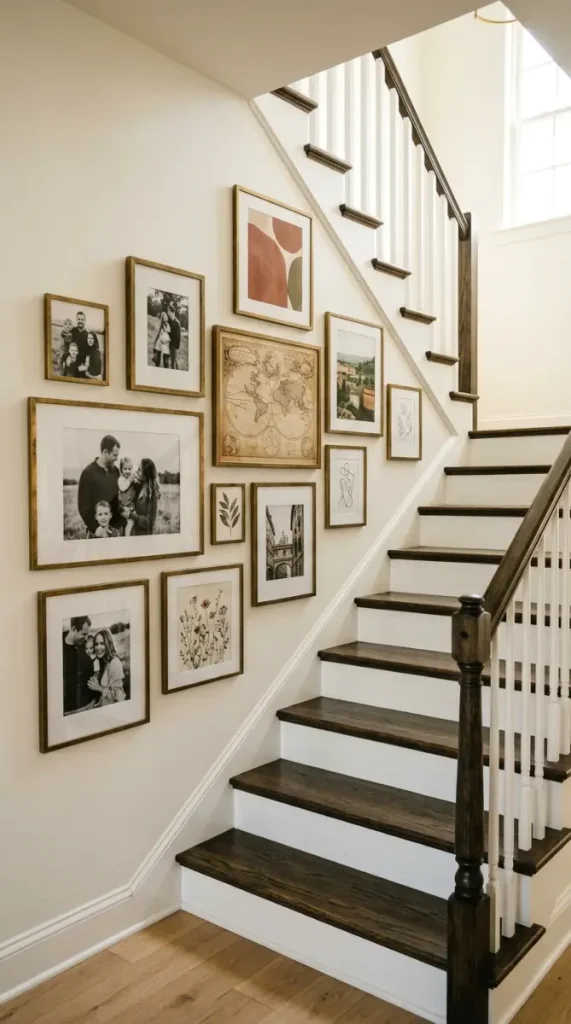
The staircase wall is the most overlooked and most underutilized wall in any home — a long, ascending diagonal surface that offers more linear hanging space than most other walls combined, and a built-in viewing angle that changes at every step. The formula for a staircase gallery: hang frames in a diagonal line that follows the staircase angle — ascending as the stairs ascend, maintaining a consistent distance between the stair nosing and the bottom frame edge at every step. Mix frame sizes but maintain one frame family. Include a mix of family photographs, art prints, travel photographs, and meaningful objects.
16. Dried Flower Wall Installation
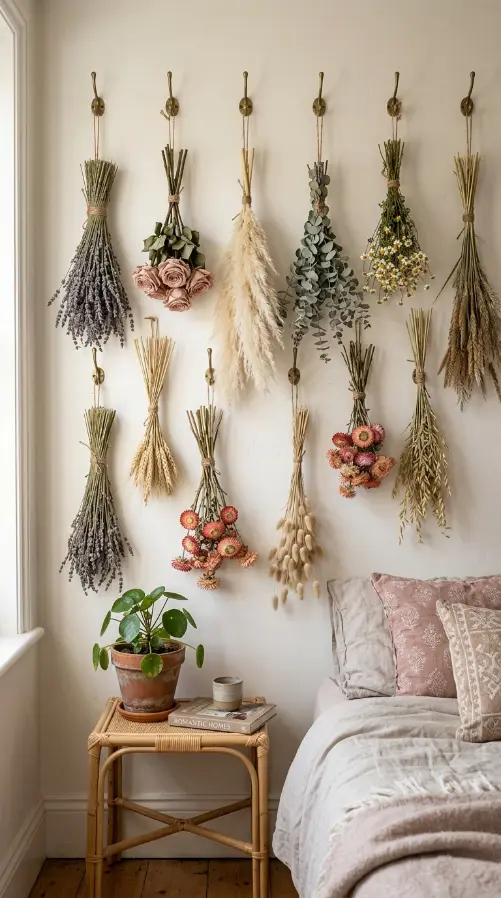
A wall installation made entirely from dried and preserved flowers — bunches of dried lavender, dried roses, dried pampas grass, dried eucalyptus, dried chamomile — hung directly on the wall in an organized or organic arrangement creates a wall feature of extraordinary natural beauty and fragrance. Install individual bunches using simple brass hooks or natural twine from ceiling-mounted hooks. Vary heights so the bunches create a layered, dimensional installation across the wall surface. The dried flower wall works beautifully in a bedroom, a bathroom, or a dining room — anywhere that benefits from fragrance as well as visual beauty.
17. Vintage Mirror Collection Gallery
Instead of a gallery of framed artwork, hang a collection of vintage mirrors — all different shapes, sizes, and frame styles, but all in the same warm metal family — in an organic cluster on one wall. The result is a mirror gallery that multiplies light, creates visual depth through reflection, and brings a collected, eclectic quality to the wall that no single large mirror achieves. Mix round mirrors, arched mirrors, small rectangular mirrors, sunburst mirrors — all in aged gold, bronze, or aged brass finishes. Arrange them in an organic, overlapping cluster. The combination of reflective surfaces in a gallery arrangement creates a wall that is constantly changing with the light.

18. Children’s Artwork Gallery — Framed and Celebrated
Children’s artwork — framed properly, hung at a considered height, curated with the same care as any other gallery — becomes some of the most personal and most beautiful wall decor a home can have. The formula: choose a consistent frame style — all identical simple frames in white or natural wood for a clean look, or all matching clip frames for a more casual approach. Frame the pieces that genuinely move you — not every drawing, but the ones that reveal something about the child who made them. Hang them at the child’s eye level rather than adult eye level on a hallway wall or playroom wall. Add a small label below each piece with the child’s name and age — the date makes it time specific and therefore precious.

19. Rattan or Woven Wall Panels
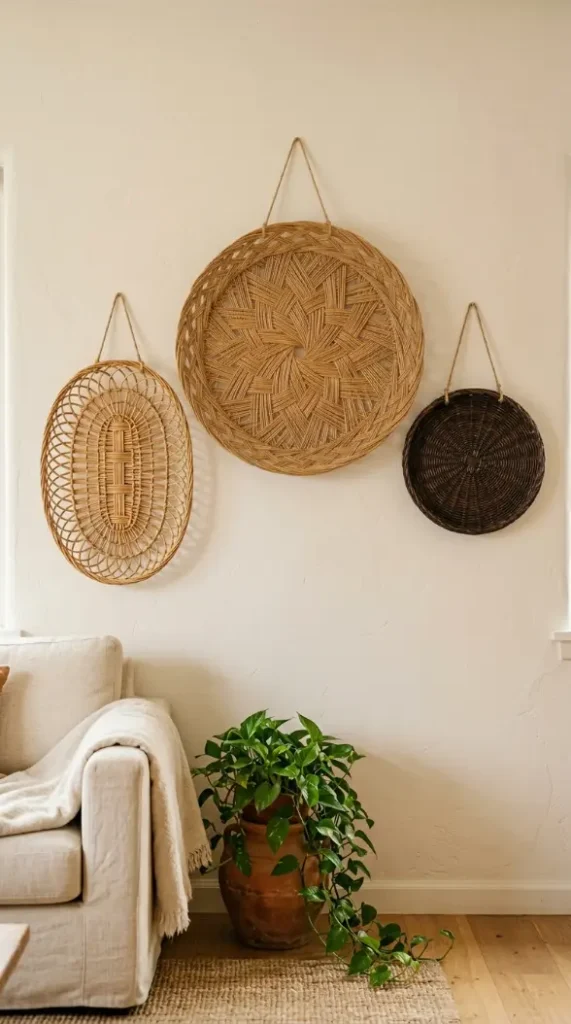
Large round or rectangular rattan or woven wall panels — hung individually or in a grouped arrangement — bring a warm, organic, artisanal quality to a wall that is completely distinct from any framed artwork or painted surface. The natural material, the handwoven structure visible across the panel surface, and the slight dimensional quality of the woven pattern make rattan wall panels function as both texture and art simultaneously. Hang one large round rattan panel as a standalone statement, or group three panels of varying sizes in a loose cluster for more visual impact.
20. Built-In Bookshelf as Feature Wall
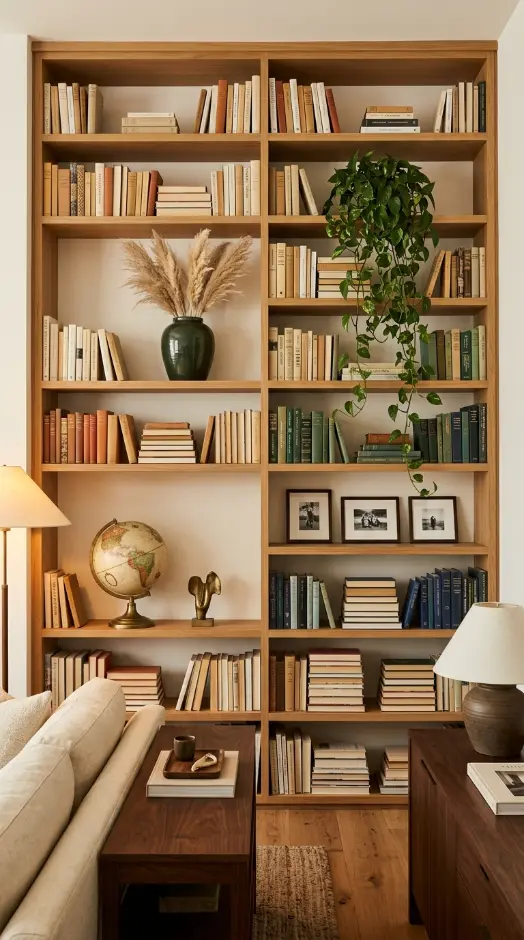
A built-in bookshelf covering an entire wall — floor to ceiling, wall to wall — is the most architectural and the most personal wall decor statement a room can have. The books themselves are the decoration — their spines creating a color and texture composition that changes every time a book is added or removed. Style the shelves beyond books alone: intersperse plants, ceramic objects, framed photographs, small sculptures, and candles throughout the book sections. The built-in bookshelf feature wall says more about the person who lives in the room than any purchased art could — it is a library and a portrait simultaneously.
21. Vertical Indoor Plant Wall — Living Green Wall
A living green wall — real plants growing in individual pocket planters mounted directly on a wall, or in a modular frame system — creates the most dramatic and the most genuinely alive wall decor statement available. Choose trailing plants for lower sections — pothos, string of pearls, tradescantia — and more upright plants for upper sections — ferns, peace lilies, snake plants. Install a simple modular planter frame system in white or natural wood on the wall, or use individual wall-mounted ceramic pocket planters in a grid or organic arrangement. The green wall transforms any plain wall into a living installation that improves air quality, reduces stress, and makes the room feel like an indoor garden.

22. Shadow Box Collection Wall
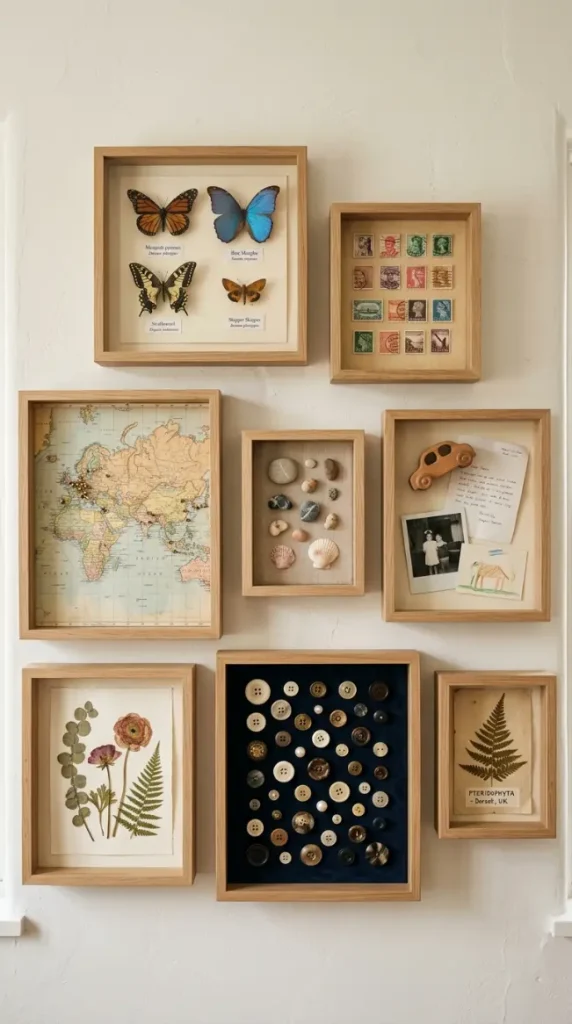
A collection of shadow box frames — deep-profile frames with a recessed interior that allows three-dimensional objects to be displayed within a flat frame — creates a wall display of genuine curiosity and personal history. Fill shadow boxes with meaningful collected objects: a section of a vintage map with small pins marking traveled places, a butterfly or insect specimen in a scientific display style, a collection of vintage stamps or coins arranged on felt, childhood memorabilia, shells and beach stones from meaningful places, vintage buttons, dried pressed flowers. Each shadow box is a small world — and a wall of them together is an autobiography displayed in three dimensions.
23. String Light Wall — Warm Fairy Light Backdrop
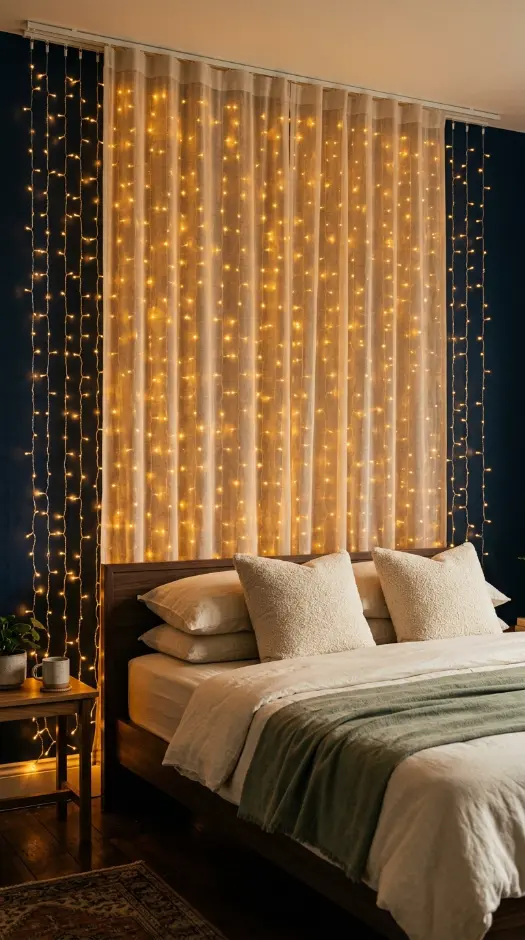
A wall covered in warm white or amber string fairy lights — hung from ceiling to floor in a dense curtain, or arranged in a specific shape or pattern against a dark painted wall — creates an atmospheric, romantic, and genuinely magical wall decor statement that costs very little and installs in under an hour. Use warm amber or warm white LED fairy lights — never cool blue-white. Install on a dark wall for maximum impact: the lights against deep navy, forest green, or charcoal grey create a starfield effect. String lights behind a sheer linen or voile panel hung slightly in front of the wall creates a diffused, glowing light curtain effect. Use in a bedroom, a dining room corner, or a living room alcove.
24. Plate Wall — Vintage or Decorative Ceramics
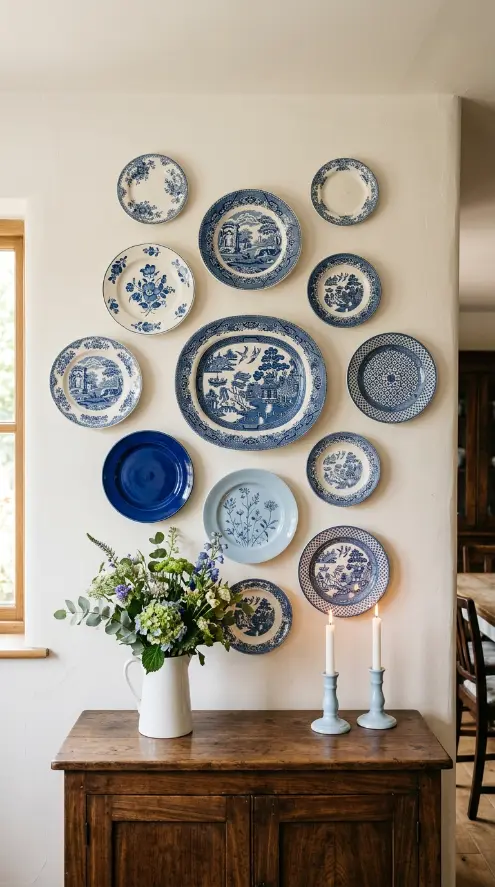
A collection of decorative plates — vintage, hand-painted, or artisan ceramics — hung in an organic cluster on a kitchen or dining room wall creates one of the most traditionally beautiful and personally curated wall decor statements available. The formula: choose plates that share either a color family or a style family — all blue and white, all hand-painted floral, all vintage transferware, all contemporary studio ceramics — and mix freely within that family. Hang with dedicated plate hanging hardware and arrange in an organic cluster rather than a perfect grid. The variety of plate sizes, shapes, and patterns within a unified color or style family creates visual richness without visual chaos.
25. Abstract Painted Wall Panel — DIY Art
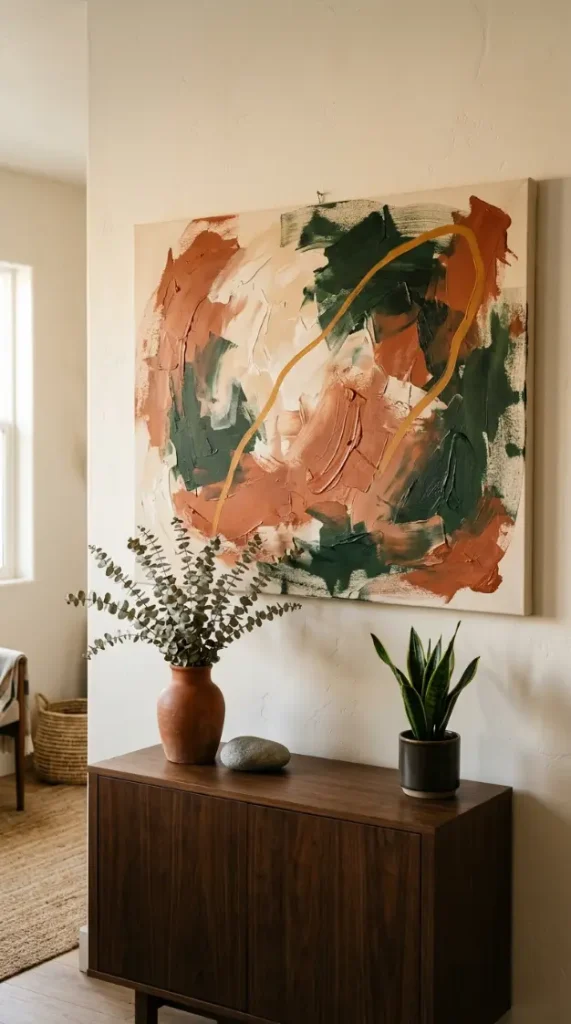
Painting your own large-scale abstract canvas — even with no formal painting training — and hanging it on the wall creates a piece of art that is genuinely original, genuinely personal, and often more beautiful and more appropriate for the room than anything purchased. The formula for a beautiful DIY abstract: choose two to three colors from your room’s existing palette. Apply paint in broad, gestural strokes using a large brush, a palette knife, and your hands. Do not try to make it look like something. Work quickly so the paint stays wet and the colors blend. Add one final unexpected color at the end. Frame it simply or hang it unframed. The result is always better than expected.
26. Bathroom Wall Decor — Framed Art in an Unexpected Space
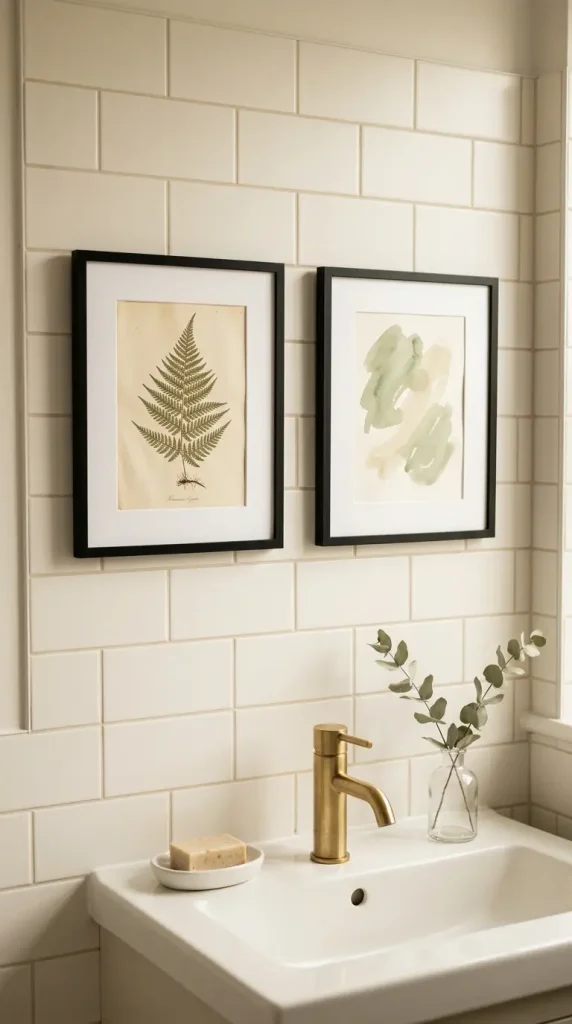
The bathroom is the most overlooked room for wall decor — and it is also one of the rooms where a single beautiful piece of art or a small collection of framed pieces creates the most unexpected and most welcome surprise. The formula: treat the bathroom wall like any other room. Choose one or two framed pieces appropriate to the bathroom context — a vintage botanical illustration, a simple abstract in the bathroom’s color palette, a small watercolor landscape, a beautiful typographic print. Frame in glass to protect from humidity. Hang at eye level when standing. The art in a bathroom makes the act of washing and preparing feel like something more considered and more beautiful than it usually does.
27. The Hallway Statement — Full-Length Mirror with Sconces
A long, narrow hallway is one of the most challenging spaces in any home to decorate — and one mirror and two sconces can transform it completely. Install a tall, narrow mirror — ideally arched or with an interesting frame — on one wall of the hallway. Mount one aged brass or antique bronze wall sconce on either side of the mirror at a symmetrical distance. The sconces provide warm light, the mirror doubles the visual width of the hallway, and the three pieces together — mirror and two flanking sconces — create a symmetrical, architectural statement that makes a plain hallway feel like the most considered transition space in the house.

28. The Blank Wall Transformation System — Before and After Formula
The final idea is the most practical: a complete step-by-step system for transforming any blank wall in any room, regardless of budget, style, or experience. Step one — measure the wall and identify the primary furniture piece in front of it. Step two — choose a scale: the decor should fill at least two thirds of the wall width above the furniture. Step three — choose a style: single statement, gallery cluster, or textured treatment. Step four — choose a frame family or material palette and commit to it. Step five — arrange on the floor before hanging anything. Step six — hang the center piece first and work outward. The system works for every wall, every room, every budget.


