22 DIY Outside Play Area for Kids Water Wall Splash Zone
Somewhere between the third time a child drags a garden hose to the back step and the first time they flood the kitchen trying to recreate the experience indoors, most parents arrive at the same conclusion: they need a water wall. The DIY backyard water wall and splash zone is one of those rare outdoor projects that delivers an almost unfair ratio of joy to effort — a Saturday afternoon of drilling, connecting, and painting produces something that children will return to every warm day for years, inventing new games, running new experiments, and discovering that water always finds its own way down regardless of what you put in its path.
The best DIY water walls are not designed from a plan. They are assembled from the best ideas available — a funnel from the hardware store, a spinning wheel from the garden center, a length of painted guttering from the recycling pile, a plastic cup on a nail that tips when full and sends water somewhere unexpected. The unpredictability is the point. A water wall that always behaves the same way is a water wall that children will lose interest in by August. A water wall with enough moving parts, tipping elements, and adjustable connections that the outcome changes every time is a water wall that earns its place in the garden for the entire childhood.
These twenty-two ideas give every element of the DIY water wall and splash zone its own moment — from the wall itself to the floor below it to the storage beside it.
1. PVC Pipe Rain Curtain Wall Panel
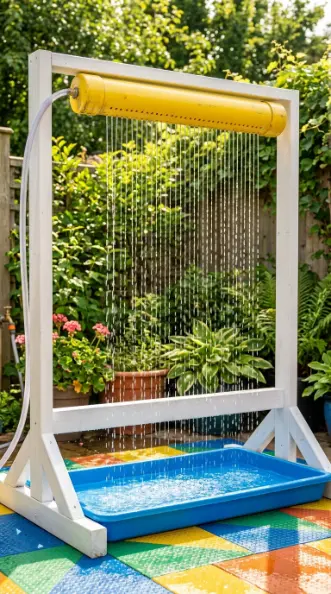
Drill a series of evenly spaced small holes along the length of a capped PVC pipe — mount it horizontally at the top of the water wall frame and connect it to a hose or pump supply so that water simultaneously emerges from every hole and falls as a curtain of parallel water threads down the full width of the panel. A PVC pipe rain curtain is the simplest possible water wall element and one of the most visually satisfying — children can run their hands through the falling threads, hold cups beneath individual streams, and watch how the rain curtain changes when they cover some holes with their fingers. Paint the PVC pipe in a bright color for visual appeal.
2. Tipping Cup Chain Reaction Water Element
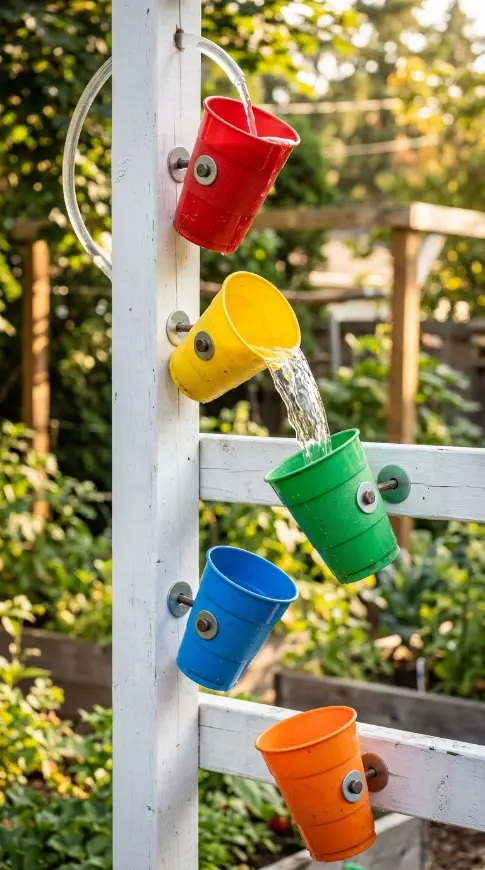
Mount a series of four to six plastic cups on rotating nail-and-washer pivot mounts arranged in a staggered cascade down the water wall frame — each cup balanced to tip when filled to a certain weight, pouring its water into the next cup below, which fills and tips into the next, creating a chain reaction cascade of tipping cups from top to bottom. The tipping cup chain reaction is the most scientifically educational water wall element available for children — it demonstrates balance, gravity, cause and effect, and fluid dynamics in a format that requires no explanation because the water teaches all of it directly.
3. Spinning Water Wheel Element
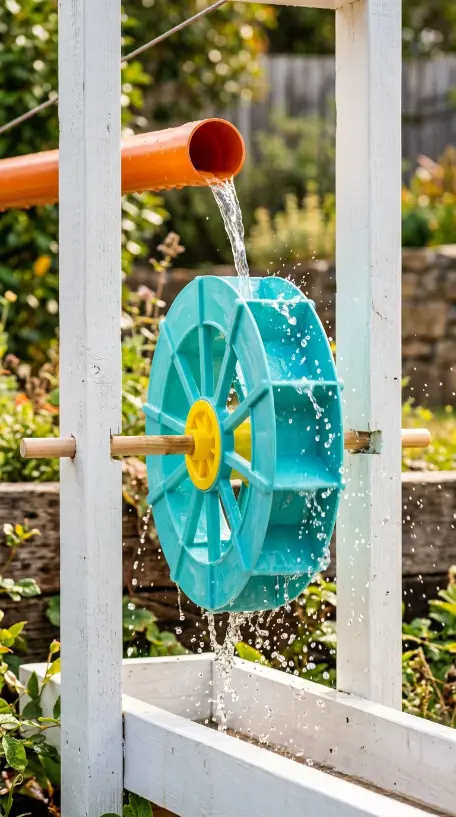
Mount a large plastic or lightweight timber water wheel — a wheel with paddle sections around its circumference — on a horizontal axle fixed to the water wall frame so that water directed from a pipe or tube above falls onto the paddle sections and spins the wheel. A spinning water wheel on a DIY water wall gives children a visible mechanical response to water flow — the wheel turns faster with more water, slower with less, stops when the water stops — and provides the most direct possible demonstration of how water energy creates movement. Use a brightly colored plastic water wheel from a garden or toy store, or cut paddle sections from plastic milk bottles and attach them to a wooden dowel wheel.
4. Painted Gutter Channel Water Slide Elements
Fix several lengths of standard plastic guttering to the water wall frame at varying diagonal angles — connecting each length end-to-end with small gaps or pour-overs between them — so that water poured at the top travels along each gutter channel, reaches the end, drops to the next lower channel, travels along that channel, and continues cascading down to the splash tray at the base. Paint each gutter channel section in a different bright color before mounting. Plastic guttering repurposed as water wall channels is one of the most practically genius DIY water wall ideas available — it is cheap, available at any hardware store, easy to cut and fix to a timber frame, and the slight flex and adjustability of guttering channels means children can reposition them to change the water flow path.
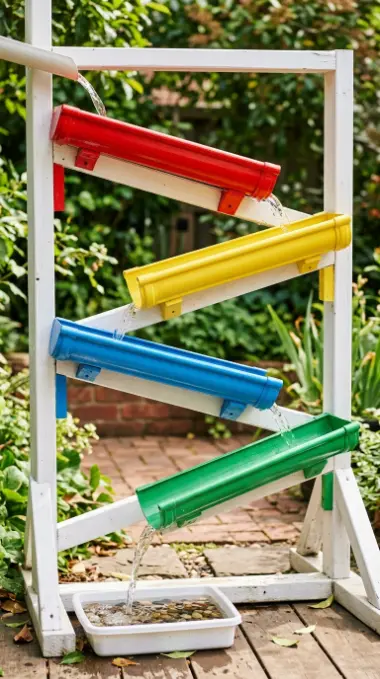
5. Sensory Splash Tray Base Station
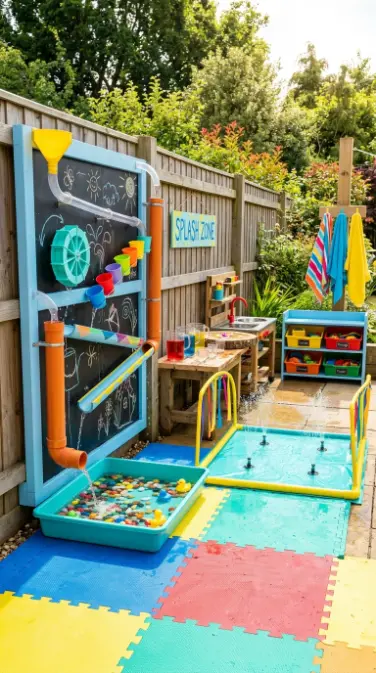
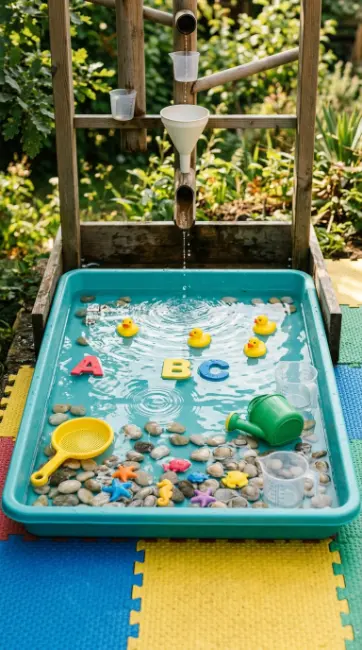
Install a wide shallow sensory water tray at the base of the water wall — a large plastic storage tray, a repurposed sand tray, or a purpose-built shallow timber-framed liner tray — that collects all the water flowing down from the wall elements above and provides a shallow sensory water play area at ground level. Fill the sensory tray with a shallow layer of water and add natural sensory elements: smooth river pebbles in varied sizes, small rubber ducks, floating foam letters, measuring cups, funnels, sieves, and small plastic sea creatures. The sensory splash tray turns the base of the water wall into a destination in itself — children stand at the tray, manipulate the objects, pour and measure, and discover the properties of water at a calm, exploratory level rather than the active, kinetic level of the wall elements above.
6. Repurposed Pallet Water Wall Frame
Use two or three wooden pallets — cleaned, sanded, and painted in a bright color or left in natural weathered timber — stacked and fixed together as the base frame structure for the water wall, mounting all the pipe, tubing, and water elements directly onto the pallet slats and structural members. A repurposed pallet water wall is the most genuinely zero-cost DIY option — pallets are available free from hardware stores, garden centers, and online marketplace listings, they are structurally robust enough to support all the water wall elements securely, and the horizontal slat structure provides natural mounting points at regular intervals without any additional framework construction.

7. DIY Splash Pad Ground Zone With Garden Hose Sprinklers
Create a ground-level splash pad zone beside the water wall by laying a large waterproof tarpaulin or purpose-bought outdoor splash mat on a flat section of grass or paving, connecting a garden hose splitter to send water simultaneously to the water wall and to a series of simple hose sprinkler heads laid flat on the splash mat surface — so that water sprays upward from the mat while children run and jump across it. Add a simple DIY sprinkler arch made from bent PVC pipe with drilled holes mounted over the splash mat area for children to run through. The ground-level splash zone makes the splash area genuinely full-body play rather than only hands-on water wall activity.

8. Magnetic Fishing and Water Play Station
Set up a dedicated water play station beside the main water wall — a wide plastic tub or galvanized metal trough at children’s waist height on a simple timber stand, filled with water and small colorful magnetic fish toys — children using small magnetic fishing rods with string and magnet tips to catch the floating fish from the water surface. Decorate the trough exterior with waterproof outdoor paint in fish, wave, and sea creature patterns. Add a small pump that recirculates water through a simple pipe fountain in the center of the trough to add gentle movement to the water surface. The magnetic fishing station gives younger children a calm, focused water play activity beside the more physically active water wall.

9. Foam Noodle Water Wall Obstacle Elements
Thread sections of foam pool noodles — cut to varied lengths — over PVC pipe sections or timber dowels mounted horizontally across the water wall frame to create bumper and deflector elements that interrupt and redirect the water flow as it passes them, causing water to splash, divert, and spray in unexpected directions as it hits the foam noodle barriers. Use foam noodles in multiple bright colors — one red noodle section, one yellow, one blue — mounted at varied heights and angles so the water flow encounters different colored obstacles at each level. Foam pool noodle elements are free or almost free, completely safe for children, and their softness means they can be repositioned regularly to change the water flow behavior of the wall.

10. Plastic Bottle Upcycle Water Wall Elements
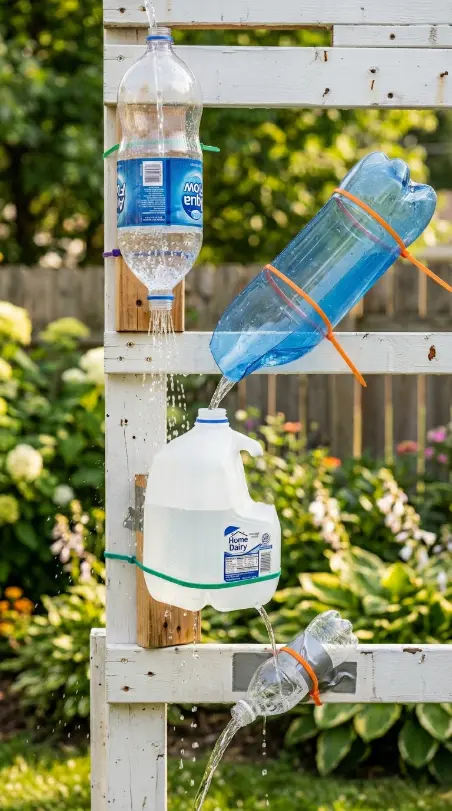
Collect a series of large clear or colored plastic bottles — 2-liter soda bottles, large water bottles, and plastic milk jugs — cut and repurposed as water wall channel elements: bottles cut lengthwise to create curved channel sections, bottles with holes drilled in the base for rain shower effects, bottles mounted at angles as directional spouts, and whole intact bottles used as transparent water storage reservoirs that children can see filling and emptying. Upcycled plastic bottle water wall elements are the most environmentally conscientious and genuinely creative DIY water wall component — every bottle was destined for a bin or recycling center, and instead becomes a functional element of a water system that children interact with daily.
11. Water Xylophone Pipe Musical Element
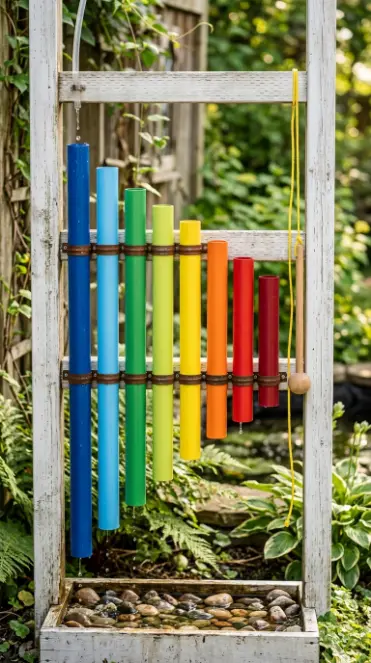
Hang a series of PVC pipes of different lengths — each cut to a different length so that they produce different notes when water flows through them or drips on them — mounted vertically or at angles on the water wall frame beside the other elements, with a wooden mallet hanging on a string beside them so children can tap the pipes as well as direct water through them. Painted in bright colors. A water xylophone element adds a musical and sensory dimension to the water wall that transforms it from a purely visual and tactile experience into an auditory one — the combination of water sounds and tapped pipe notes creates an outdoor instrument as well as a water feature.
12. Chalkboard Paint Water Wall Backdrop
Paint the timber fence or pallet frame behind the water wall elements with chalkboard paint — so that the backdrop of the water wall becomes a giant drawing surface that children can draw on with wet chalk or regular chalk beside and around the water elements. Draw wave patterns, fish, sea creatures, and water flow arrows in chalk on the chalkboard backdrop, and provide a bucket of colored chalk beside the water wall so children can add their own drawings. The chalkboard paint backdrop transforms the water wall from a purely mechanical play feature into a creative canvas — combining water play with chalk drawing in a way that extends the range of activities the water wall area supports.

13. Natural Timber Slice Water Table
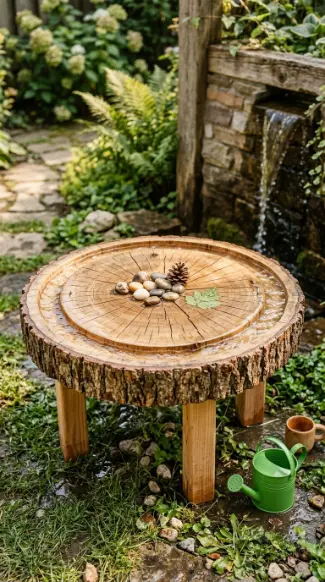
Build a DIY water table using a large round timber slice — a cross-section disc cut from a large log, approximately 60-70cm diameter and 5cm thick — as the tabletop, mounted on four short timber post legs at children’s waist height, with a routed or carved channel around the perimeter of the disc creating a circular water channel that a small pump circulates water around. Seal the timber with waterproof outdoor timber sealer. The natural timber slice water table brings a beautiful natural material into the splash zone as an alternative to all-plastic water play furniture — the wood grain of the disc, the bark edge, and the warm natural tone of the timber creates a sensory and aesthetic experience that plastic cannot match.
14. Colour-Mixing Water Station
Set up a dedicated color-mixing water station beside the water wall — several clear plastic jugs each pre-filled with water tinted a different primary color using food coloring: one jug bright red water, one yellow water, one blue water — plus a collection of empty clear plastic cups, measuring spoons, and mixing sticks so children can pour, measure, mix, and discover color mixing through water play. Mount a short display board beside the station showing simple color-mixing results: red and yellow make orange, yellow and blue make green, red and blue make purple. The color-mixing station turns water play into a genuine chemistry and art activity — children become experimenters rather than simply players.

15. Mud Kitchen Water Integration
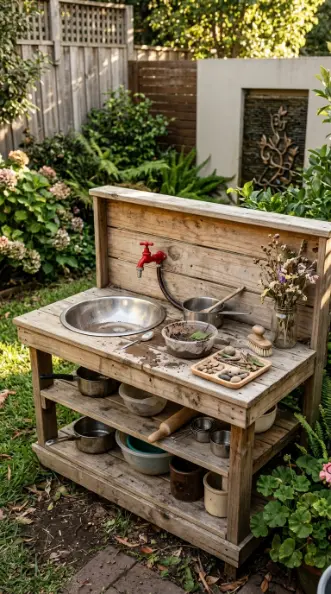
Connect the water wall to a dedicated outdoor mud kitchen — a simple freestanding timber kitchen unit with a stone or timber worktop, an undermount metal mixing bowl as the sink, and a garden hose tap connection — so that water flows on demand from the mud kitchen tap for mixing, pouring, and sensory mud and water play simultaneously. The water-connected mud kitchen beside the water wall creates the most complete outdoor play kitchen experience possible: children have running water on tap, a mixing bowl for combining water with soil, sand, and natural materials, and the full context of a kitchen structure to support imaginative cooking and restaurant play.
16. Water Wall Night Lighting With Solar Fairy Lights
Thread solar-powered outdoor fairy lights through and around the water wall frame — along the timber uprights, woven through the pipe and tubing elements, draped across the overhead frame — so that the water wall glows with warm amber fairy light at dusk and after dark, transforming it from a daytime play feature into an evening garden decoration that remains beautiful when not in active water play use. Use waterproof solar fairy lights rated for outdoor use. The fairy-lit water wall at dusk creates a moment of genuine garden magic — the water flowing through the elements catching the warm fairy light glow, the timber frame illuminated from within, the whole structure glowing softly as the evening light fades.

17. Sprinkler Wand Arch for Run-Through Fun
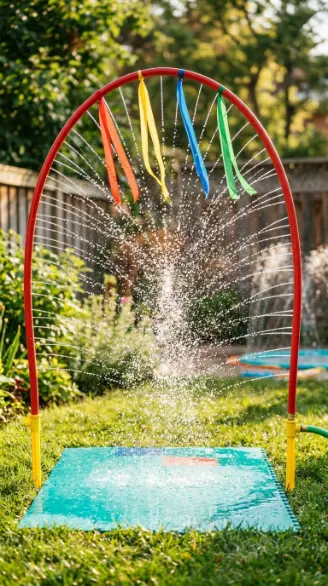
Bend a long single length of CPVC or flexible garden hose into a wide arch shape — approximately 100cm wide and 100cm tall — and fix both ends into the ground or into ground stakes beside the splash zone. Drill small holes at regular intervals along the arch pipe and connect one end to the garden hose supply — so that water simultaneously sprays outward from every hole along the full arch length, creating a tunnel of water spray that children run through repeatedly. Paint the arch pipe in a bright color and add colored ribbon streamers to the top of the arch for visual decoration. A simple water arch run-through is one of the most repeatable, highest-joy water play elements possible for children — running through a curtain of water spray in both directions is an activity that generates genuine shrieking delight every single time.
18. Outdoor Towel and Dry-Off Station
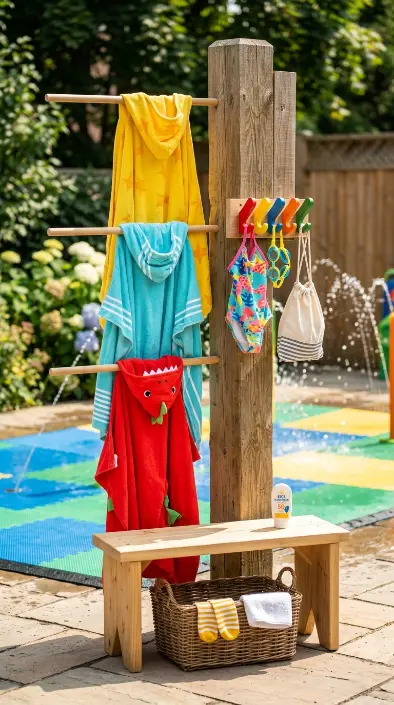
Build a dedicated dry-off station beside the splash zone — a simple timber post with horizontal timber dowels as towel rails, with bright colored children’s towels hung ready for use, a small timber bench beside for sitting to take off wet shoes, a wicker basket below the bench holding spare dry socks, and a small hook board on the post for hanging swimwear and wet items. The dry-off station beside the water wall is the detail that makes outdoor water play genuinely parent-friendly — towels immediately available, a place to sit, and wet items somewhere to go means the transition from splash zone to dry indoor living happens with minimal chaos and no trail of wet footprints through the kitchen.
19. Water Wall Storage and Organisation Station
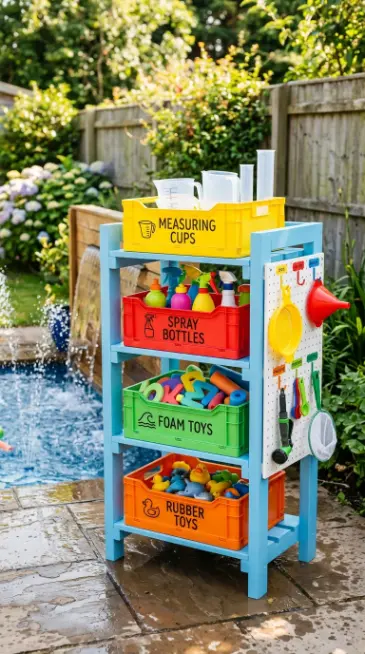
Mount a dedicated water wall storage and organisation station directly beside the splash zone — a painted timber storage unit with labeled open bins or crates for water play equipment: one bin for measuring cups and jugs, one for water balloons, one for foam toys, one for rubber bath toys, one for spray bottles — plus a pegboard panel beside it for hanging water play tools: sieves, funnels, and measuring spoons on large hooks. Label each bin with a simple handwritten or painted label and a matching illustrated icon. An organized water play storage station beside the splash zone teaches children where things belong, makes equipment genuinely accessible without adult help, and reduces the end-of-summer chaos of water toys scattered across the garden.
20. Flower Press and Nature Water Table
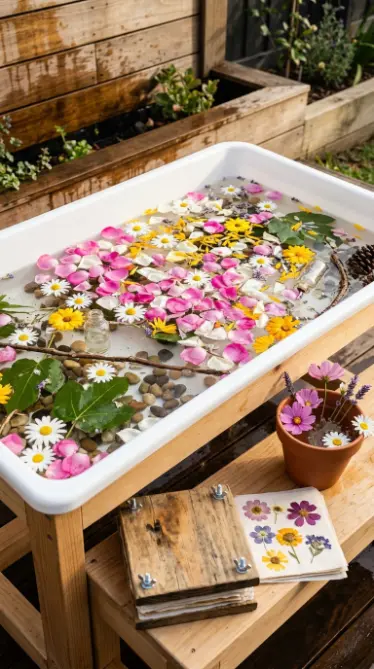
Set up a nature-themed water table beside the main splash zone — a wide shallow tray filled with water and a collection of natural materials for nature-based water play: fresh flower petals floating on the surface, leaves and small twigs, smooth pebbles, and small natural items from the garden — alongside a simple DIY flower press on the table beside it so children can press and dry the flowers they collect during water play. The nature water table combines sensory water play with botanical observation — children handle real flowers and leaves in the water, observe how they float, sink, or change when wet, and then press their favorites to dry and keep.
21. Water Balloon Fill Station
Mount a dedicated water balloon filling station beside the splash zone — a garden hose splitter connected to a short hose with a small nozzle sized to fit into water balloon necks, with a bucket of unfilled balloons beside it and a crate for filled balloons nearby. Decorate the station with a handpainted sign reading “WATER BALLOON STATION” with illustrated water drops and balloon shapes. Add a small painted target board — circles painted in concentric rings in bright colors on a timber board — mounted on the fence 3-4 metres away for children to aim at. The water balloon fill and throw station adds a competitive, aiming, and gross motor element to the splash zone that pure water wall play does not provide.

22. The Complete DIY Splash Zone — All Together
Bring every element of the DIY water wall and splash zone together into a single complete backyard play area — water wall frame with all elements running simultaneously, sensory base tray below, splash pad mat beside it, mud kitchen with tap connection, color-mixing station on a small table, sprinkler arch overhead, dry-off towel station adjacent, and organized storage unit nearby — creating a complete outdoor water play environment that covers every kind of water play from fine motor pouring to full-body splash to imaginative mud kitchen cooking, all contained within one well-organized, beautifully considered backyard zone.