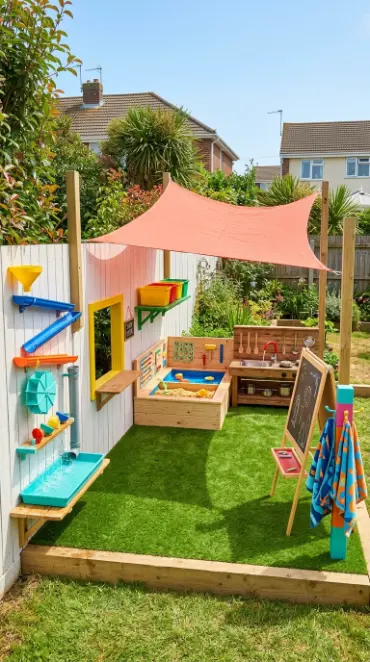
22 DIY Kids Playground Sandbox and Water Table for Small Yards
A small backyard is not a problem to be solved. It is a constraint to be designed around — and constraints, when taken seriously, almost always produce better outcomes than unlimited space. The DIY kids playground that fits a small yard must be efficient in a way that large-yard play areas never have to be: every element must earn its footprint, every piece of equipment must do more than one thing, and the overall layout must leave enough breathing room that the yard still feels like a yard rather than a storage facility for plastic equipment.
The sandbox and water table combination is the single most space-efficient investment in outdoor play available — two of the most absorbing, developmentally rich forms of outdoor play for young children, combined into one compact unit that fits against a fence, in a corner, or on a small patio without dominating the space around it. Sand play builds fine motor skills, spatial reasoning, and imaginative capacity. Water play develops scientific thinking, sensory awareness, and cause-and-effect understanding. Together, they cover more developmental ground than almost any other outdoor play provision, and they do it in a footprint that leaves room for the rest of childhood to happen around them.
These twenty-two ideas give every aspect of the small-yard DIY sandbox and water table playground its own full consideration.
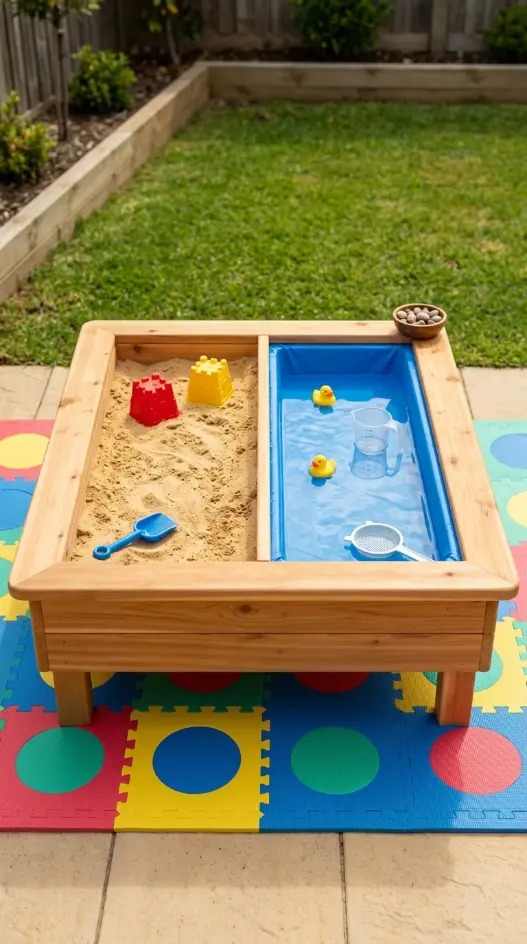
1. Two-In-One Raised Combo Sandbox and Water Table Unit
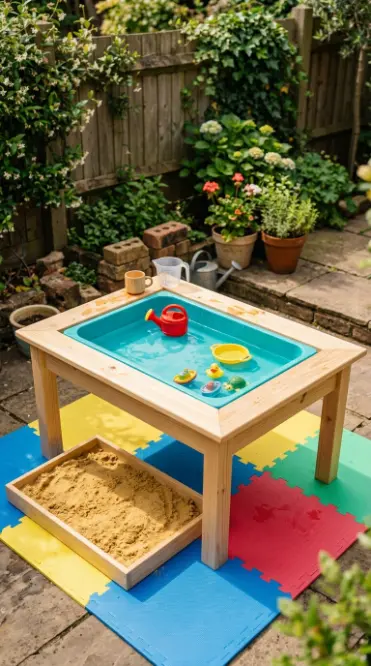
Build a single raised timber unit divided down the center — one half sand, one half water table — so that both play surfaces are available simultaneously within the same compact footprint. Use smooth sanded pine or cedar planks for the frame, fit a waterproof liner in the water half, and finish the surrounding frame edge as a wide flat ledge that children can use as a play and mould surface. Seal all timber with child-safe outdoor timber sealer. A two-in-one combo unit is the most space-efficient possible DIY solution for a small yard — two complete play stations in one footprint, accessible from all four sides, and easily covered with a fitted timber lid when not in use to protect both sand and water from weather and wildlife.
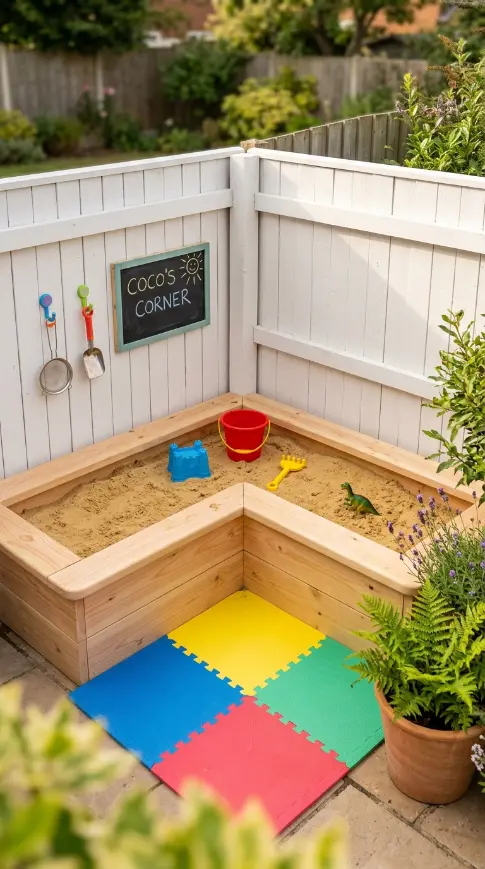
2. Corner-Fit L-Shaped Sandbox for Small Yards
Design the sandbox as an L-shaped unit that fits snugly into a corner of the yard — the two arms of the L running along each fence line, with the open corner facing into the yard as the play access point. Use timber planks to build the L-shaped frame, fill with clean play sand, and use the corner fence panels as a natural backdrop to attach storage hooks, a small chalkboard, and hanging play accessories. An L-shaped corner sandbox uses the most wasted space in a small yard — the corner — while leaving the center and open areas of the yard free for other activities. The corner fence provides natural shelter from wind on two sides, creating a more comfortable enclosed play area.
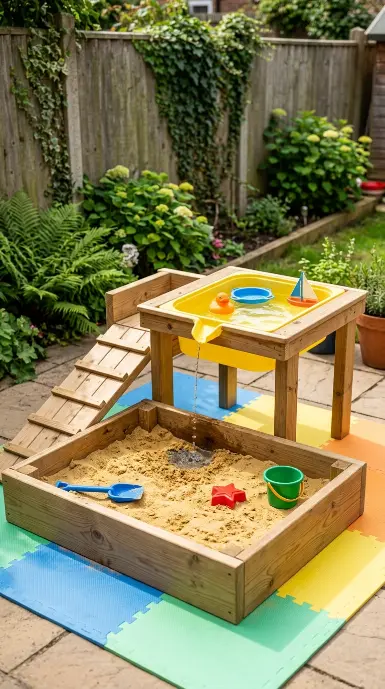
3. Tiered Sandbox and Water Table on Different Levels
Build a tiered play unit with the sandbox on the lower level and a small water table on a raised timber platform above and behind — the two levels connected by a short timber ramp or steps, creating a play landscape with elevation change even in a tiny footprint. The raised water table at the back overhanging slightly above the lower sandbox level allows water to drip or be poured from the water table into the sandbox below, enabling combined sand and water play that children discover and explore naturally. The different heights create a more spatially interesting play environment than a single flat unit.
4. Hexagonal Sandbox With Central Water Basin
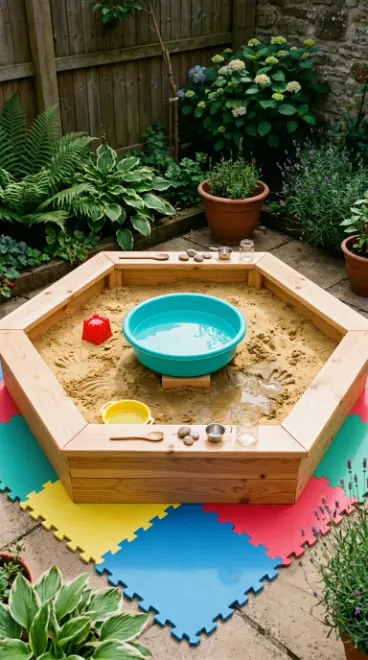
Build a hexagonal sandbox frame from six equal timber planks joined at 120-degree angles — a wider than standard hexagonal shape approximately 120cm across — and mount a small round water basin or large plastic bowl in the center of the sandbox, slightly raised on a short timber support post, so that children can play sand around the outside of the central water feature simultaneously. Sand surrounds the water basin on all six sides, and children naturally use both materials together — pouring water from the basin into the sand, making wet sand structures, and moving between wet and dry areas of the sandbox. The hexagonal shape looks more design-considered than a rectangle and fits into small spaces with less wasted corner space.
5. Lidded Sandbox With Bench Seat Lid
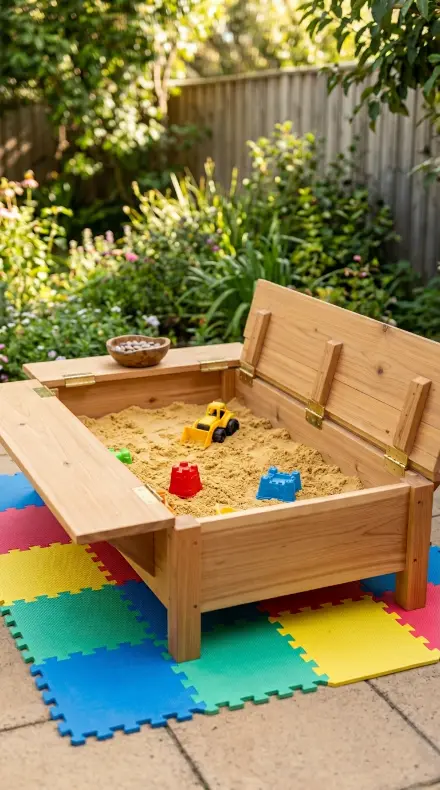
Build a rectangular sandbox with a hinged timber lid that folds back to reveal the sand — the lid designed as two hinged bench seat sections so that when folded back, the lid halves rest against the sandbox sides as bench seats for adults or older siblings to sit on while younger children play in the sand. When the sandbox is not in use, the lid closes to protect the sand from cats, rain, and debris. A bench-seat lid sandbox maximizes the furniture function of the play unit — it is a sandbox, a bench seat, and a covered storage unit in the same small footprint, genuinely serving multiple purposes without requiring any additional yard space.
6. Vertical Water Wall Mounted on Fence — No Floor Space Required
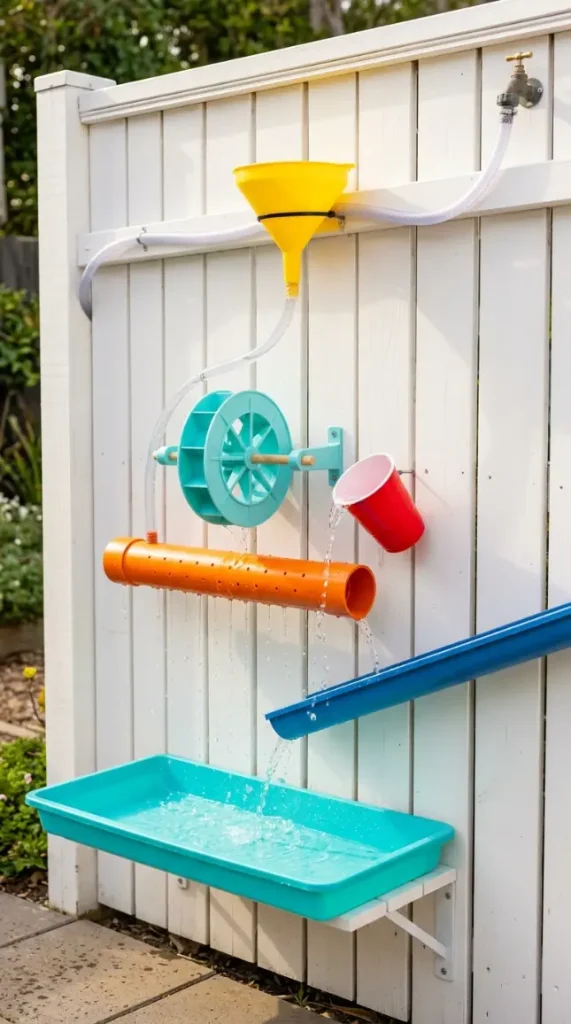
Mount the entire water wall directly onto the yard fence — all water elements attached to the fence boards or a timber panel fixed to the fence — so that the water wall uses zero floor space and the entire yard footprint remains available for other play. Position the sensory splash tray on the fence-mounted bracket shelf immediately below the water wall elements to catch all falling water. A fence-mounted water wall is the definitive small-yard water play solution: the fence already exists, the mounting requires only screws and brackets, and the completed installation adds a full water play feature to the yard without reducing the available play area by a single square centimetre.
7. Raised Planter Box Doubled as Sandbox
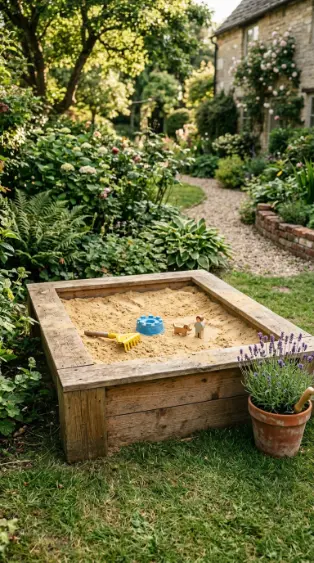
Repurpose or build a wide raised garden planter box — the same timber frame construction used for vegetable gardens — as a sandbox by lining the base with weed matting for drainage and filling with clean play sand instead of soil. A standard raised garden planter box converted to a sandbox is approximately the same footprint as a purpose-built sandbox but with the additional visual quality of a garden feature — it looks intentional and designed rather than temporary, it fits naturally into a small garden aesthetic, and the same structure can be returned to garden use when the sandbox phase of childhood is finished.
8. Under-Deck Sandbox Space Utilization
Build the sandbox in the otherwise wasted space directly beneath an existing deck or elevated timber platform — using the deck underside as natural shelter and the deck supports as partial frame elements. The under-deck sandbox turns dead space into the most sheltered possible play area — shaded from direct sun, protected from light rain, and completely out of the yard’s open footprint. Add a section of lattice or planting to enclose the under-deck area on the open sides, creating a sense of enclosure that young children find appealing as a semi-hidden play den.

9. Convertible Sand and Water Table With Removable Liner
Build a single timber table unit at children’s waist height with a removable waterproof liner — when the liner is in and filled with water, it functions as a water table; when the liner is removed, the same timber frame fills with sand as a sandbox. The liner sits inside the timber frame precisely fitted so it can be lifted out and stored when not needed as a water table. A convertible single unit allows parents to switch between sand and water play modes seasonally or daily without any construction changes — sand play in spring and autumn, water play in summer heat, and the same timber footprint serves both purposes across the year.
10. Nature-Integrated Sandbox With Real Planting Around
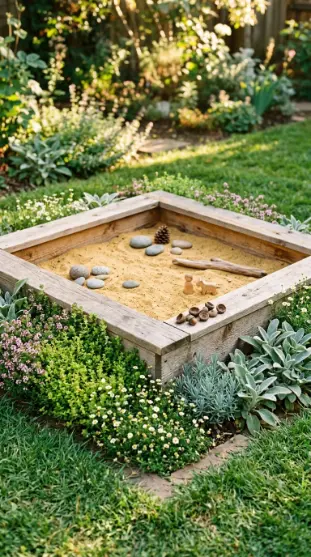
Build the sandbox with deliberately planted borders around the outside — low growing herbs, hardy ground cover plants, or decorative grasses planted in the garden immediately surrounding the sandbox frame — so that the sandbox appears to be a natural clearing within the garden planting rather than a plastic or timber insert into a bare paved area. Plant thyme, chamomile, or creeping plants against the sandbox outer edges. Place small natural stones, pinecones, and driftwood pieces within the sandbox for nature-based play alongside the sand. The nature-integrated sandbox blurs the boundary between play area and garden in a way that feels considered and beautiful rather than utilitarian.
11. Small Yard Mud Kitchen Integrated With Sandbox
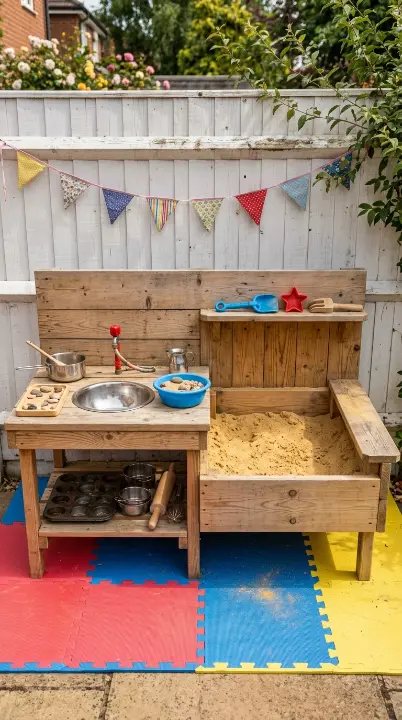
Build the mud kitchen as a directly adjacent unit to the sandbox — the two units positioned side by side against the fence, sharing one common wall, so the total combined footprint is no larger than a single standard sandbox. Children move naturally between the sandbox sand supply and the mud kitchen mixing station, using sand as an ingredient in the mud kitchen cooking alongside water from the mud kitchen tap. The adjacency of mud kitchen and sandbox creates the most complete sensory and imaginative outdoor play environment possible in the smallest possible space — everything needed for outdoor kitchen and construction play within arm’s reach.
12. Painted and Decorated Sandbox Frame as Garden Feature
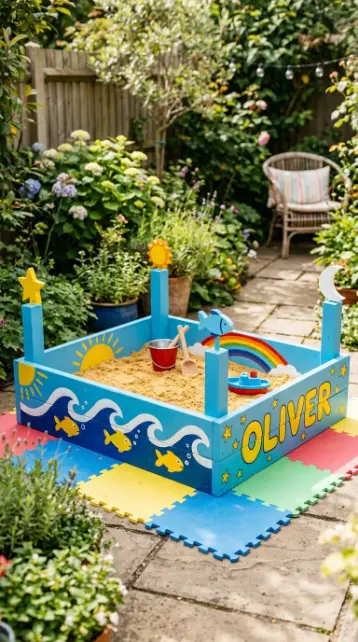
Paint the sandbox timber frame in a bold bright color — sky blue, sunshine yellow, grass green, or fire engine red — and add painted decorations directly to the outer timber sides: hand-painted waves, fish, flowers, or the children’s names in large cheerful lettering. Add painted timber cutout shapes — a sun, a star, a rainbow — fixed to the sandbox corner posts above the frame as decorative finials. A painted and decorated sandbox frame becomes a deliberate garden decoration as well as a functional play piece — it contributes to the visual quality of the small yard rather than being a practical intrusion into it, and it changes the small yard from a space that contains a sandbox to a space that is more beautiful because the sandbox is there.
13. Shaded Sandbox Canopy for Hot Climates
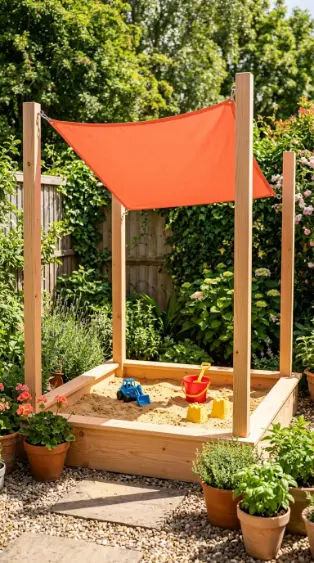
Add a simple timber or PVC pipe frame overhead structure above the sandbox — four corner posts rising approximately 150cm above the sandbox frame supporting a simple shade sail, canvas canopy, or stretched shade cloth — to provide UV protection and temperature reduction for children playing in the sandbox during hot weather. The shaded sandbox canopy transforms the sandbox from a hot-weather challenge into a hot-weather destination, keeping both the sand temperature and the children cool enough for comfortable extended play. Choose a bright colored shade sail in UV-rated fabric and secure it to the corner posts with snap hooks.
14. Lockable Sand Cover System With Weighted Corners
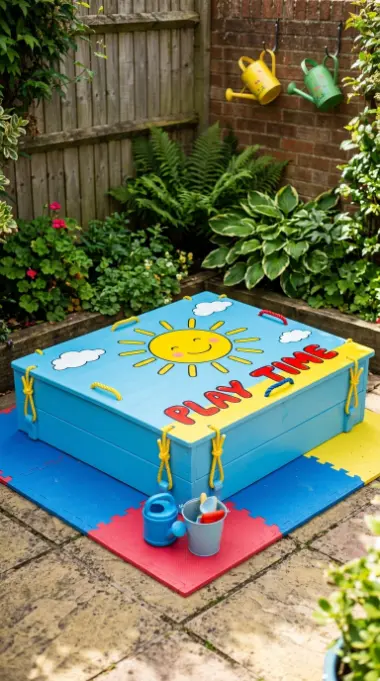
Build a fitted timber sandbox cover — a slightly crowned or flat rectangular timber panel the exact dimensions of the sandbox opening — that sits on top of the sandbox to protect sand when not in use, with four corner tie-down points using bungee cords or rope loops over corner cleats to keep the cover secure in wind. Paint the top of the cover in a bright design so that it doubles as a decorative surface when the sandbox is closed. Add four small rope handles, one on each side, for easy lifting. A properly fitted weighted-corner sandbox cover is the single most practical sandbox upgrade available — it prevents the sandbox from becoming a neighborhood cat latrine overnight and keeps the sand clean and dry between play sessions.
15. Painted Number and Letter Learning Games on Sandbox Ledge
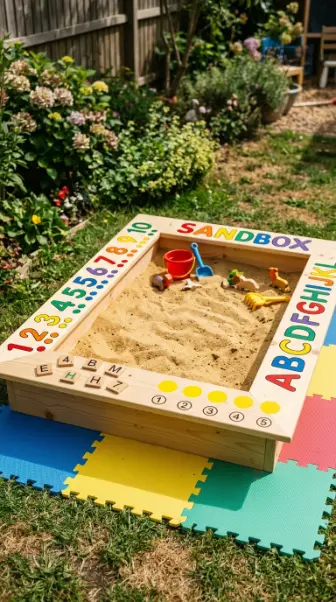
Paint educational games directly onto the wide flat timber ledge surrounding the sandbox frame — a number line along one long side with numbers 1-10 painted in bright colors, a simple alphabet strip along the other long side, and a counting dots game on one short end. Add small raised number and letter timber tiles along the ledge that children can pick up, arrange, and use in the sand alongside the painted guide. The learning game ledge turns the sandbox frame into an educational tool rather than purely a containment structure — children trace letters in the sand, count sand castle moulds against the number line, and play alphabet and counting games spontaneously during sand play without any adult prompting.
16. Small Yard Play Zone With Artificial Grass Surround
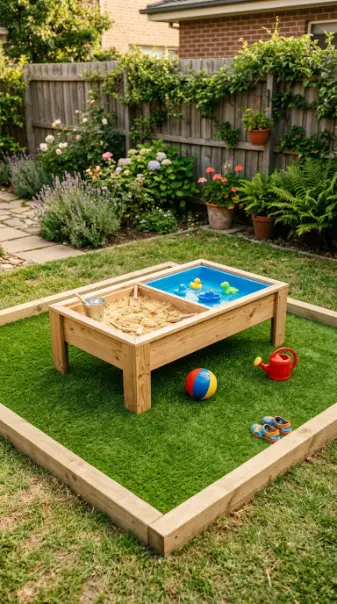
Lay a section of quality artificial grass — approximately 2m x 2m — around the sandbox and water table play unit as the play zone floor surface instead of paving or real lawn, creating a soft, clean, always-green play surface that stays dry faster after water play, is comfortable for barefoot play, and requires no mowing or maintenance. Edge the artificial grass with simple timber sleeper border sections to contain it neatly. The artificial grass play zone surround gives the small yard play area a visual quality and softness that rubber tiles or paving cannot achieve — it looks like a proper garden feature rather than an improvised outdoor play station.
17. Floating Shelf Sand Toy Storage Above Sandbox
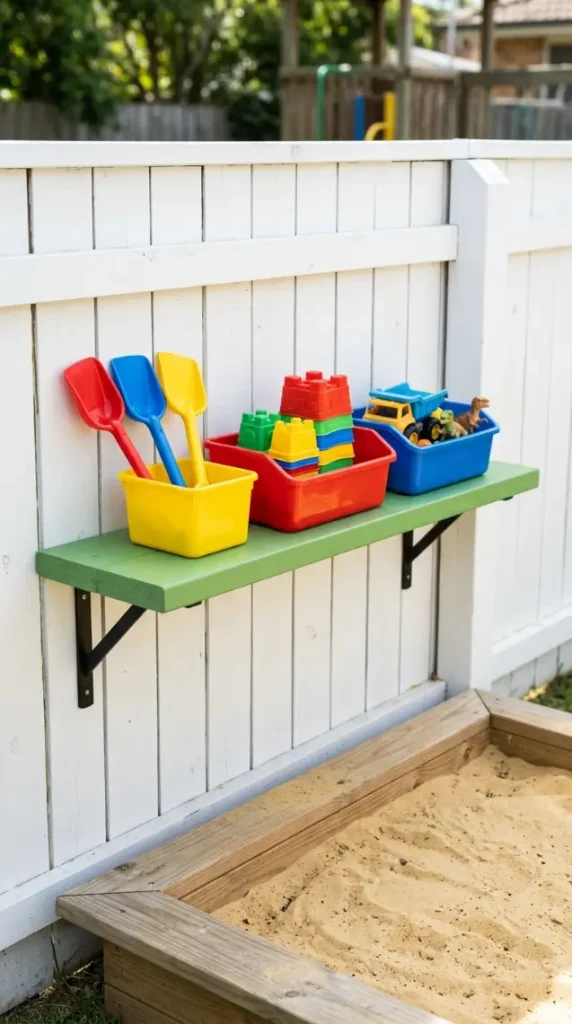
Mount a simple timber floating shelf directly on the fence or wall above the sandbox — positioned at children’s easy reach height approximately 60-70cm above the sandbox frame top — providing dedicated sand and water toy storage immediately beside the play area without using any additional floor space. Paint the shelf in a bright color and use small open timber boxes or bright plastic containers on the shelf to organize sand tools by type: one container for shovels and rakes, one for moulds, one for small figures and vehicles. The above-sandbox shelf storage turns the fence into a functional play storage wall and keeps all equipment organized and accessible without any additional floor footprint.
18. DIY Outdoor Easel Beside the Play Zone
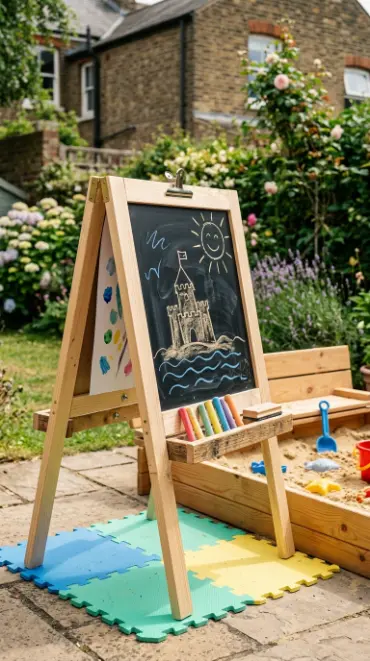
Add a simple DIY outdoor easel beside the sandbox and water table play unit — a lightweight A-frame easel made from two hinged timber panels with a horizontal crossbar, holding a small chalkboard panel on one face and a clip for paper or canvas on the other — so that art making is available immediately beside the sand and water play without requiring any additional permanent floor space when the easel is folded. A folding outdoor easel beside the sandbox play area gives children a creative outlet that connects naturally to sand and water play — wet hands naturally experiment with watercolor on the easel paper, chalk drawings of sand castles appear on the chalkboard, and the easel becomes the drawing table for the outdoor sandbox studio.
19. Rope and Timber Swing Integrated Into Sandbox Frame
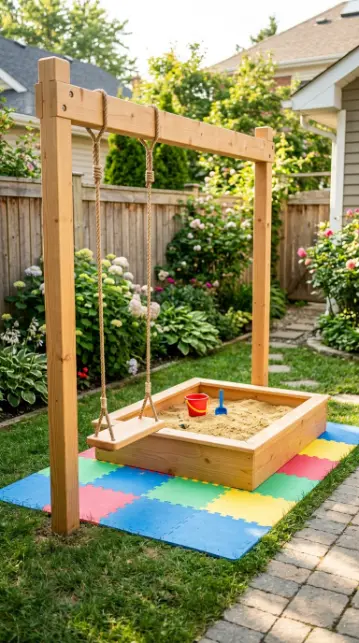
Extend two of the sandbox corner posts significantly above the sandbox frame — to approximately 150cm above the ground — and connect them at the top with a sturdy horizontal timber beam, from which a simple rope and timber seat swing hangs above and just to one side of the sandbox. The sandbox-integrated swing frame uses the same structural foundation as the sandbox for the swing posts, eliminating the need for a separate swing set footprint in the small yard. The swing hangs just to one side of the sandbox — close enough that children naturally move between swinging and sandbox play, far enough that the swing arc is clear of the sandbox frame.
20. Seasonal Transformation: Sandbox to Winter Sensory Table
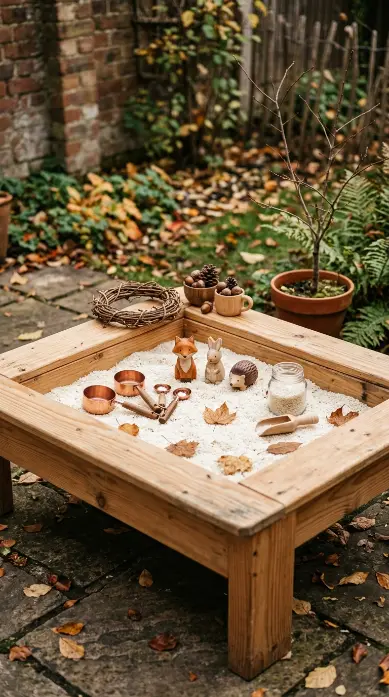
Design the sandbox with a modular interior liner system that allows it to be transformed between seasons — fine play sand in summer, and in winter months a different sensory fill: dried rice, dried pasta, kinetic sand, or foam balls — so the sandbox unit continues to be used year-round as a sensory play table rather than standing empty and covered through winter. Store the summer sand in a sealed bin beside the unit and swap the interior fill as needed. The year-round sensory play table extends the useful life and justification of the play unit’s permanent backyard footprint from a seasonal summer feature to a twelve-month play resource.
21. DIY Play Kitchen Window in Fence Above Sandbox
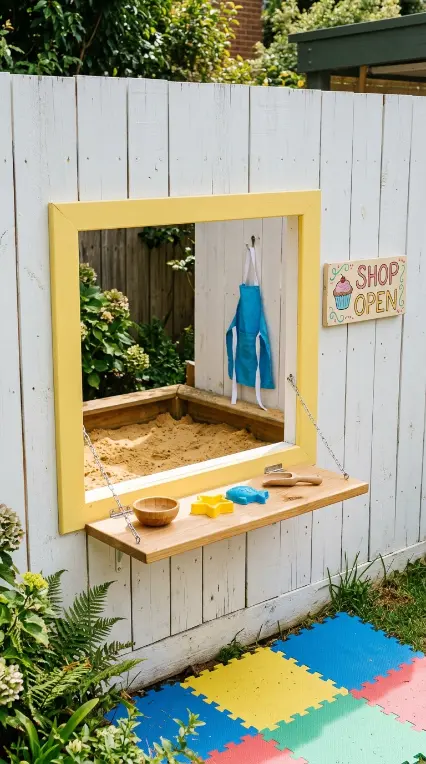
Cut a play shop or kitchen window opening into the backyard fence directly above or beside the sandbox — a simple rectangular opening approximately 50cm x 35cm cut into a fence panel, framed with a smooth painted timber frame and fitted with a fold-down timber shelf on the outside as a counter — creating a play shop or kitchen window through which children serve sand food from the sandbox or water table. The fence play window transforms the fence itself into a play feature and creates a natural role play and dramatic play context that children self-generate without prompting — one child serves from inside, another receives from outside.
22. The Complete Small Yard DIY Play Zone — All Together
Bring every element of the small yard DIY playground together into one complete, considered, space-efficient outdoor play environment — the two-in-one combination sandbox and water table unit at the center, a fence-mounted water wall on one fence panel, the mud kitchen adjacent to the sandbox sharing one wall, a painted sandbox cover, a floating shelf above for storage, a DIY A-frame easel beside the unit, a play shop window cut into the fence above, a shade sail overhead, and a complete artificial grass or foam tile mat play floor — all arranged to leave the maximum possible open yard space while delivering the maximum possible play variety.