20 Quirky Home Decor Ideas That Break Every Design Rule
Design rules exist for a reason. They create balance, proportion, harmony, and visual calm in a room. They are also, when followed too religiously and with too little personality, the fastest route to a home that looks like it was styled by a committee and lived in by nobody.
The most interesting, most talked-about, and most genuinely alive homes of 2026 are not the ones that followed every rule. Creative interior design is breaking its own rules — the most compelling interiors of 2026 abandon the traditional relationship between objects and space, treating rooms as unified forms and blurring the boundaries between architecture and art. The irregularity, the unexpected combination, the object that has absolutely no business being where it is and yet somehow makes the whole room work better for being there — these are the details that separate a home with personality from a home that simply has furniture in it.
A well-loved home with a dash of personality will always be more appealing than a perfectly staged but impersonal one. Hang the quirky painting you love even if it does not match the sofa. Paint the ceiling a color nobody told you was allowed. Mix metals that are not supposed to go together and watch them go together beautifully. The rules were written by people who had good taste and no particular sense of humor about it, and there is enormous joy in proving them wrong.
People are more willing than ever to invest in pieces that have a story behind them — leaning into the fact that a home has a story, as opposed to looking perfectly styled. These 20 quirky home decor ideas are the story your home has been waiting to tell.
1. Paint the Ceiling a Bold Unexpected Color and Leave the Walls White
The ceiling is the one surface in any room that every design rule agrees should be white — and that unanimous agreement is precisely why painting it something completely unexpected is so effective. A deep forest green ceiling in a white living room. A warm terracotta ceiling in a bright kitchen. An inky navy ceiling in a white bedroom. The room immediately becomes something else entirely. The dark color on the ceiling creates the sensation of a lower, more intimate sky above you — the room feels like a den, a cabin, a place you would choose to be rather than simply end up in. The white walls below make the colored ceiling float rather than close in. It costs one pot of paint and takes an afternoon, and people will talk about it for years.

2. Hang Art Lower Than Every Rule Says You Should
Every interior design guideline on the planet states that artwork should be hung at eye level — approximately 145 to 150cm from the floor to the center of the work. It is a good rule. It is also a completely arbitrary rule that, when broken deliberately and consistently, creates one of the most interesting and most personal gallery wall effects possible. Hanging artwork low — with the bottom edge of the frame sitting 20 to 30cm above the floor, or resting directly on a shelf, leaning against the wall, or placed on the floor itself — creates a relationship between the artwork and the furniture and the floor that feels collected, relaxed, and genuinely like a home rather than a gallery. Multiple frames leaning at varying heights against a wall, from floor level upward, looks like a living, changing collection. It also looks like someone who knows exactly what they are doing chose this deliberately — which they did.

3. Mix Every Metal Finish in One Room and Make It Work
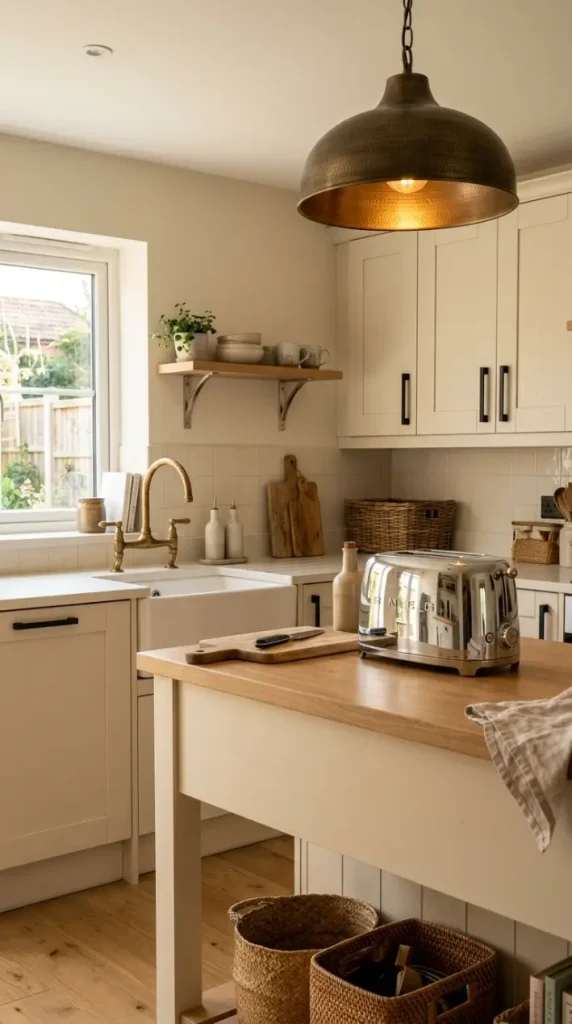
The rule says pick one metal and stick to it. Brass or chrome. Gold or black. Never all of them together. The rule is wrong — or at least, it is a guideline for people who do not trust themselves to mix metals with intention, and the homes that break it most confidently are also the ones that photograph most beautifully. Aged brass lamp, matte black door handles, polished chrome tap, antique bronze picture frame, brushed nickel cabinet hardware — in a room with warm neutrals and natural materials as the foundation, multiple metal finishes create a collected, lived-in quality that a single uniform metal can never replicate. The trick is intention: every metal should earn its place by belonging to the specific object it finishes, not by matching everything around it.
4. Use Wallpaper on the Ceiling Instead of the Walls
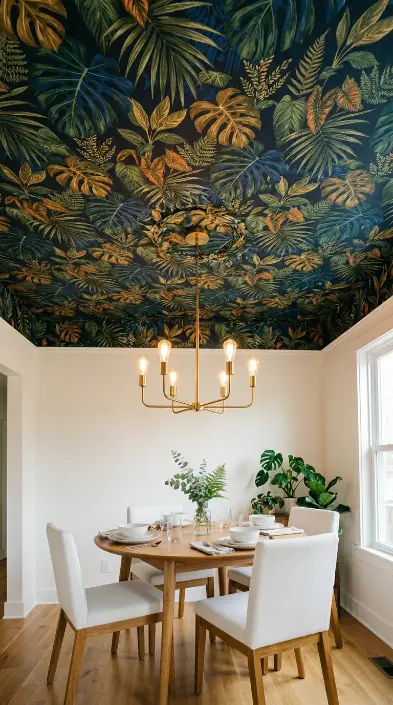
Wallpaper on the ceiling is the design move that breaks every wallpaper rule simultaneously — and it is one of the most spectacular and most discussed interior decisions possible. A bold botanical, a graphic geometric, a maximalist floral, or a starry sky paper applied to the ceiling rather than the walls transforms the most ignored surface in any room into its most dramatic one. Below it, the walls can be plain painted — let the ceiling be the statement and let the walls simply hold the room together. Looking up into a boldly wallpapered ceiling is a completely different experience from looking at a wallpapered wall, because the ceiling wraps around you rather than standing in front of you, creating an immersive quality that makes the whole room feel like the inside of something beautiful.
5. Display Books With the Spines Facing In and Pages Facing Out
Every bookshelf rule says display books with spines out so the titles are readable. Turning all the books around — spines in, cream and white page edges facing the room — is the bookshelf move that makes designers uncomfortable and makes rooms look extraordinarily beautiful. A full bookshelf of books displayed pages-out creates a texture of warm cream and white paper edges that reads as a single continuous organic surface — the slight variations in page color and paper tone creating a depth and richness that no painted shelf back or arranged objects can replicate. It also creates a display that is about the books as objects and materials rather than the books as titles — a different and entirely more honest relationship with what is actually on the shelf.

6. Put a Chandelier in the Bathroom
The bathroom chandelier breaks every practical rule — bathrooms are not supposed to have chandeliers, chandeliers are supposed to be in dining rooms and entryways, and nobody needs a chandelier above a bathtub. Except that a chandelier above a bathtub is one of the most spectacular and most joyfully excessive things a bathroom can have, and the rooms that have one are precisely the rooms that people talk about, photograph, and remember forever. A simple chandelier — a small aged brass candelabra form or a delicate crystal or glass piece — hung above a freestanding bathtub in an otherwise calm, neutral bathroom creates a lighting focal point that transforms the act of having a bath from a practical daily activity into something that feels genuinely luxurious and slightly theatrical. Install it on a dimmer, and the bathroom becomes the best room in the house at nine in the evening.

7. Stack Rugs on Top of Each Other Instead of Using One
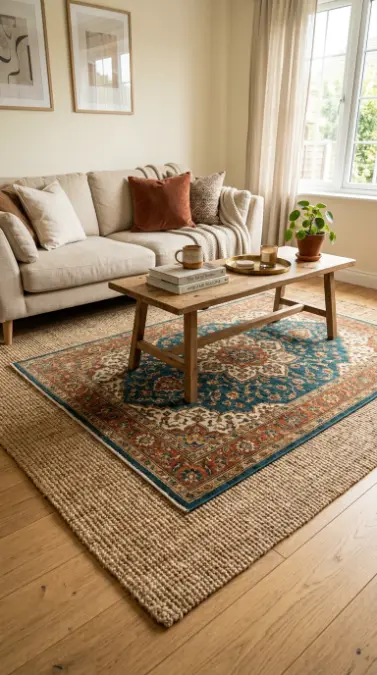
The one-rug-per-room rule is sensible, logical, and completely missing the point of what a rug can do when given a companion. Layering two rugs — a large neutral jute or sisal base rug extending beyond the furniture, with a smaller, more colorful or patterned rug placed on top of it in front of the sofa or below the coffee table — creates a floor composition with depth, visual layering, and a collected, eclectic quality that a single rug cannot achieve. The base rug anchors the room and provides texture at the floor level, and the top rug brings the color, pattern, or personality. A natural sisal base with a small vintage Persian on top. A plain cream wool base with a bold geometric on top. A jute base with a colorful kilim centered on it. The layered rug is not a budget compromise — it is a deliberate design choice that makes the room look significantly more considered than a single rug ever could.
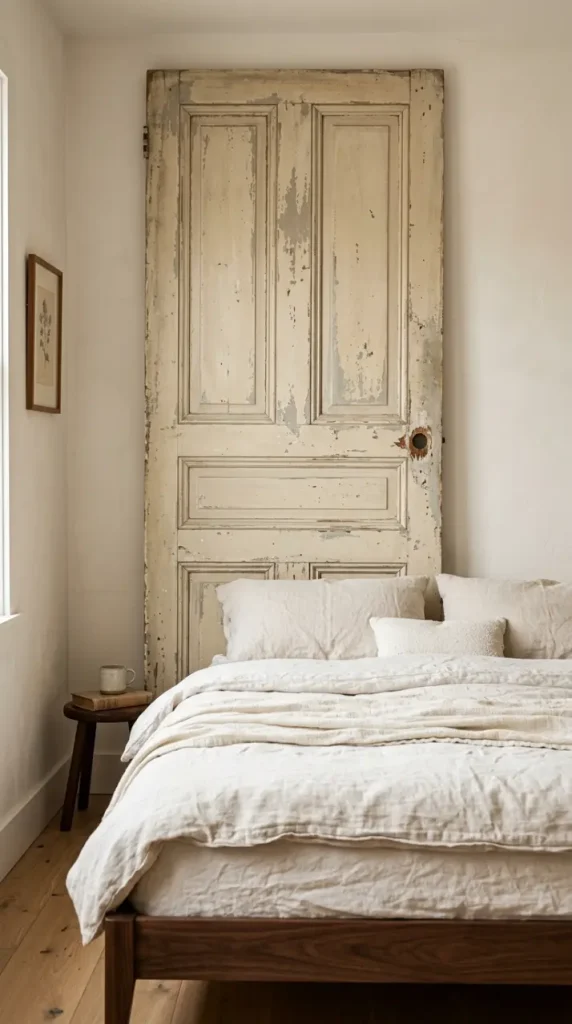
8. Use a Door as a Headboard
A salvaged door — painted or left in its original finish, complete with its original panels, moldings, door knob hole, and sometimes even the knocker — mounted horizontally or vertically behind a bed as a headboard is one of the most gloriously quirky home decor ideas in existence. An old paneled door in a peeling paint finish leaned against the wall behind a bed immediately gives the room an architectural presence that no purchased headboard could replicate, and the story it carries — the door that once led somewhere — makes the bedroom feel like it has a history worth discovering. Salvaged from a reclamation yard, an estate sale, or a renovated house, the door headboard is the design detail that costs almost nothing and looks like it was conceived by someone with an exceptionally good eye.
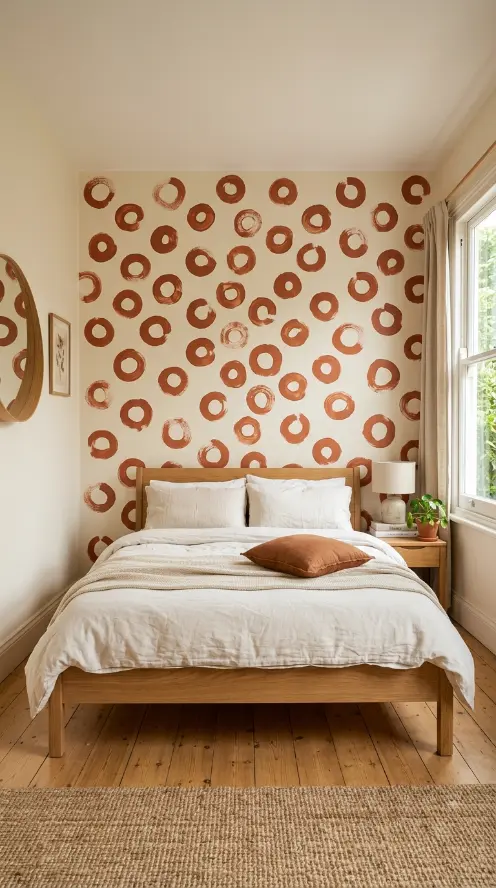
9. Paint One Wall in a Pattern Instead of a Solid Color
A hand-painted pattern directly on a wall — without wallpaper, without stencils, just a brush, paint, and the willingness to make marks on the wall — is one of the most personal and most impactful quirky home decor decisions possible. Freehand artistry is all about freedom, with surfaces showcasing brushwork as fluid as handwriting — walls sport hand-painted motifs with big, loose strokes where you can tell exactly how the brush moved. Wide, loose brushstrokes of a contrasting color across a bedroom wall. A hand-painted simple grid of squares in alternating tones. Organic circular blob shapes in warm terracotta on a cream wall. Wavy horizontal lines in deep sage on a white wall. The imperfection is the entire point — the visible human hand in the marks is what makes the wall feel like it belongs to the person who lives in the room rather than to any paint company or designer.
10. Fill an Entire Corner Floor to Ceiling With Plants
The rule says add a few plants for life and greenery. The quirky home says ignore that entirely and fill one corner from floor to ceiling with so many plants of so many species and sizes that the corner becomes an indoor jungle that has its own microclimate. A tall fiddle leaf fig in a large terracotta pot at the back. A trailing pothos on a high shelf. A monstera at mid-height. Small succulents on a low stool. A hanging string of pearls from a ceiling hook above. Snake plants at the base. The corner disappears entirely behind the greenery and what remains is the most alive, most oxygen-rich, most visually extraordinary corner in any home. It breaks every minimalism rule, every proportion rule, and every principle of negative space — and it is completely, unreservedly wonderful.

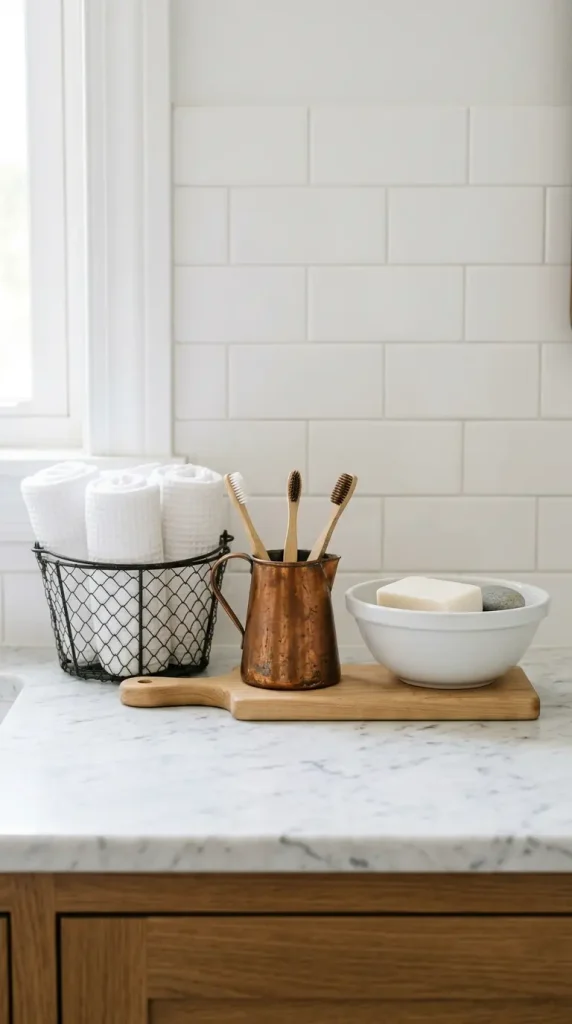
11. Use Kitchen Items as Bathroom Decor
The rule says bathroom accessories go in the bathroom and kitchen items stay in the kitchen. The quirky home says that an antique French bread board leaned against the bathroom wall makes a better decorative object than any purpose-made bathroom accessory ever could. A vintage copper jug repurposed as a toothbrush holder. A ceramic mixing bowl used as a soap dish. A small wire vegetable basket holding rolled hand towels. A wooden bread board as a tray beneath the soap and lotion. Kitchen objects in a bathroom create a warmth, a domesticity, and an unexpected charm that every bathroom-specific accessory in every homeware store is entirely incapable of replicating, and the juxtaposition of the functional and the unexpected is precisely what makes the room feel genuinely personal.
12. Hang a Rug on the Wall as Art
A beautiful rug — a vintage kilim, a hand-knotted Persian, a Moroccan Beni Ourain, or a bold contemporary geometric — hung on a wall rather than placed on the floor is one of the oldest and most underused decorative ideas in home design, and in 2026 it is one of the most talked-about. A rug on a wall behaves entirely differently from a rug on a floor — its pattern and texture are presented at eye level and at a reading distance that the floor never provides, its tactile quality is immediately apparent, and its scale gives a wall a visual presence that framed art rarely achieves at the same price point. Mounted on a slim timber rod with natural jute or leather loops, a large vintage rug hanging on a plain wall becomes the room’s most compelling piece of textile art — which is, of course, exactly what it always was.

13. Style a Staircase With Potted Plants on Every Step
A staircase with one potted plant placed on every step — the pots varying in size to complement each step’s width, the plants varying in species to create a botanical collection — is one of the most joyfully excessive and most visually spectacular quirky home decor ideas possible for any home with stairs. The staircase transforms from a functional connecting structure into a vertical garden, a botanical procession, a living installation that changes through the seasons as the plants grow, bloom, and respond to the light available on each level. The rule says stairs are for walking up. The quirky home says stairs are also for growing things on, and the two purposes coexist perfectly with nothing more than careful placement and a watering schedule.

14. Display Collections in Unexpected Places
The rule says display collections — vintage cameras, ceramic figurines, old clocks, found stones, antique bottles — on shelves and side tables. The quirky home puts its collections in places that make no design sense and perfect personal sense simultaneously: a collection of vintage clocks mounted on the bathroom wall at various angles, their ticking filling the small room. A cluster of antique bottles arranged on the kitchen windowsill where the light passes through them and throws colored shadows. Smooth river stones lined up along the top of a door frame. A collection of found shells arranged in a geometric grid on the staircase wall. The unexpected placement is the entire point — it communicates a home where the rules of where things are supposed to go were read, considered, and deliberately ignored in favor of where they are actually most interesting.

15. Paint the Inside of a Wardrobe in a Bold Color
The inside of a wardrobe or closet is the most ignored paintable surface in any home, and painting it a bold, unexpected color — deep forest green, vivid cobalt blue, warm terracotta, or rich burgundy — creates a private daily surprise that no guest will ever see but the person who lives there will experience every single morning when they open the doors. The bold painted wardrobe interior turns the practical act of choosing clothes into something that feels more considered and more pleasurable, and when the wardrobe doors are open during the day, the glimpse of vivid color through the opening becomes an unexpected flash of personality in the room. It costs the contents of one paint sample pot and transforms the most private decorating decision in the home into a genuinely joyful one.

16. Put a Sofa in the Kitchen
The kitchen is for cooking and eating. The sofa is for the living room. These are two rules that, when broken together, create the most comfortable and most genuinely lived-in room in any home. A small two-seater sofa — or a low upholstered bench — placed against the kitchen wall opposite the cooking zone, beside or beneath the kitchen shelves, transforms the kitchen into a room where people actually want to stay rather than a room they pass through. It creates a place to sit while someone else cooks, a place to have coffee in the morning before the day begins properly, a place for children to do homework while dinner is made, and a quality of warmth and informality that the most beautifully designed kitchen can rarely achieve through any other single piece of furniture.

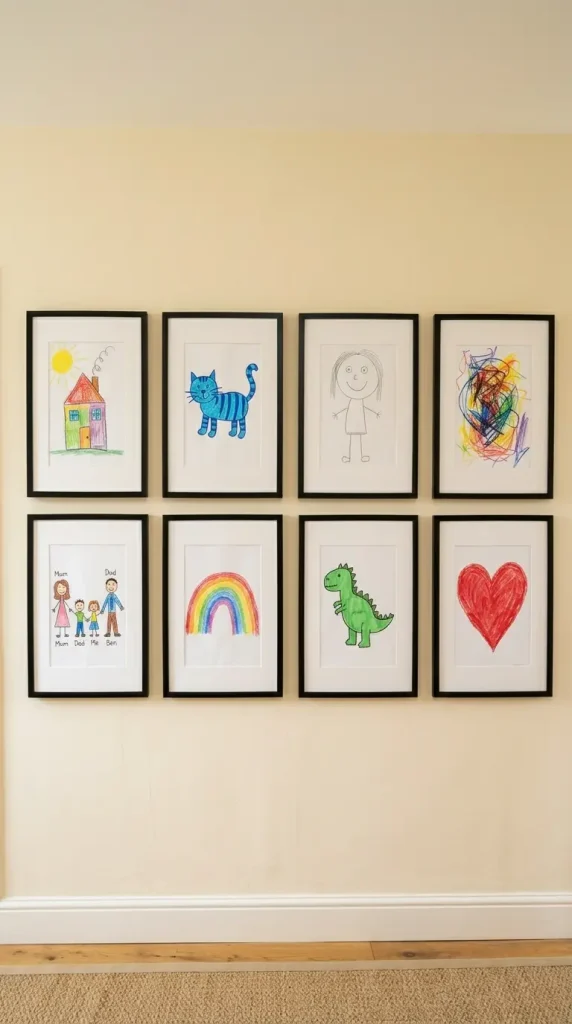
17. Frame and Display Children’s Drawings as Fine Art
Children’s drawings — crayon on A4 paper, felt-tip on the back of an envelope, pencil on a napkin — placed in proper gallery-quality frames and hung on a wall with the same spacing, the same intentionality, and the same respect given to any other art collection in the home become something completely extraordinary. The juxtaposition of the child’s unself-conscious mark-making in a serious art frame on a proper gallery wall is one of the most genuinely moving and most visually surprising things a home can do, and it communicates something true about what the home values and who lives in it that no purchased artwork could. The children’s drawings do not need to be good by any conventional standard. They need to be true — and they always are.
18. Use a Ladder as a Room Divider
A tall wooden ladder — a vintage orchard ladder, a painted wooden step ladder, or a slim bamboo pole ladder — placed vertically in the middle of a room as a partial room divider is one of the most unexpected and most effective quirky home decor moves in a studio apartment or open-plan living space. The ladder does not fully divide the space — it is transparent, skeletal, and completely permeable — but it creates a visual boundary and a structural presence in the open plan that a bookshelf, a curtain, or a plant arrangement cannot replicate. Hung with plants trailing from the higher rungs, with linen throws and blankets draped across the lower rungs, and with small objects placed on a few rungs as impromptu shelves, the ladder room divider becomes the most characterful object in the room.

19. Create a Gallery Wall in the Kitchen
The kitchen is supposed to be functional. The gallery wall is supposed to be in the living room or hallway. Breaking both rules simultaneously — creating a proper, considered gallery wall of framed prints, vintage food illustrations, botanical kitchen prints, and personal photographs on the kitchen wall beside the stove or above the counter — turns the most functional room in the home into one of its most personal and most visually interesting. The kitchen gallery wall makes cooking feel different. Looking at a collection of things you genuinely love while you wait for water to boil is a small daily pleasure that costs nothing and means everything, and it is the kind of detail that makes people stand in your kitchen with a glass of wine and not want to go to the living room.

20. Tile Only One Half of a Wall and Paint the Other Half
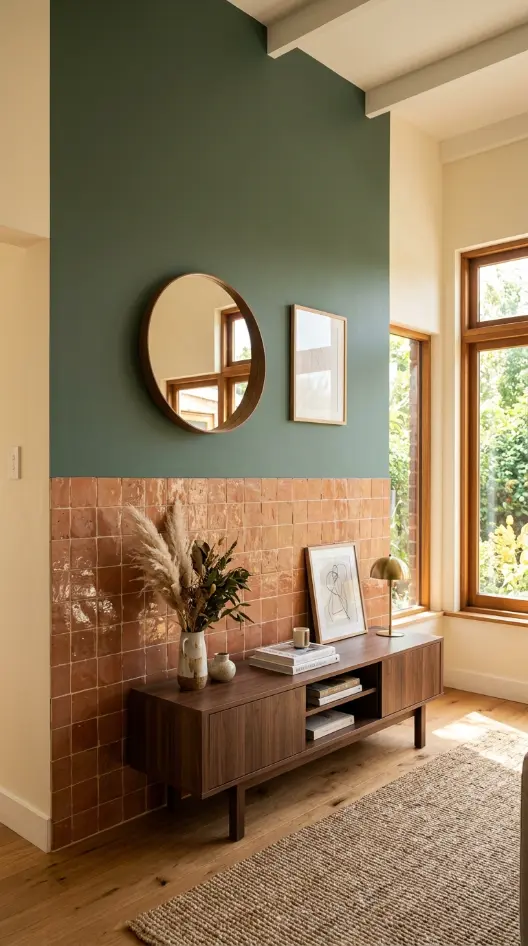
Half-tiling a wall — where tiles run from the floor to approximately halfway up and paint takes over for the upper half — is a classic bathroom and kitchen technique. Taking it into the living room or bedroom, or using it in an unexpected color and tile combination, breaks the rule that tiling belongs only in wet rooms. A living room feature wall tiled on the lower half in a bold zellige tile in warm terracotta, with the upper half painted in a complementary deep sage green, creates a wall with two completely different material personalities that somehow belong together in a way that neither would achieve alone. The grout line where tile meets paint becomes the most interesting horizontal in the room, and the contrast of the glossy irregular tile surface against the flat matte paint creates a material depth that a single treatment can never replicate.