
22 DIY Jungle Gym Castle Tower With Turrets Rope Bridge
There is a particular kind of backyard that children never want to leave. It usually has a tower. It almost always has something to climb. And when it has a rope bridge connecting one high platform to another, with battlements running along the top and a slide dropping from the main tower, the backyard stops being where the children play and becomes where the children live — returning indoors only when called, and sometimes not even then.
The DIY castle jungle gym is the most ambitious and most rewarding outdoor build a family can undertake. It is ambitious because it requires real construction skills, solid timber, properly set posts, and enough planning to ensure that every element is safe for the children who will inevitably test every part of it at maximum effort. It is rewarding because the finished structure is not just play equipment but a genuine piece of outdoor architecture — something that earns its place in the yard through sheer visual presence and that delivers imaginative play returns every single day of the childhood it presides over.
These twenty-two ideas cover every element of the DIY castle jungle gym castle tower with turrets and rope bridge — from the structural core to the finishing decorative details that transform a timber climbing frame into a genuine castle.
1. Four-Post Main Castle Tower Platform
A DIY jungle gym castle tower begins with one thing: a solid raised platform. Set four 100x100mm treated pine posts into concrete footings — two posts at 2.4m above ground, two at 2.7m to create the pitched roof line — and frame a decked platform at 1.2m to 1.5m height. The platform deck in 90x19mm treated pine decking boards gives the main tower its floor, and the additional post height above the platform provides the structural anchor for everything that follows: battlements, a roof, rope bridge attachment points, and slide mounting. Get this right and everything else follows. Compromise the footing depth or post dimensions and nothing else matters.

2. Crenellated Timber Battlement Walls
Castle battlements — the alternating raised merlons and lowered crenels running along the top of a castle wall — are the single design element that most immediately transforms a timber play platform into a castle. Cut a series of 200mm x 400mm rectangular timber blocks from 90x19mm pine boards and fix them upright along the top perimeter rail of the platform at regular intervals, leaving 150mm gaps between each block. Paint the full battlement in grey stone-effect paint or whitewash. The crenellated silhouette against the sky is instantly recognizable and gives the castle jungle gym its defining visual profile from every angle of the backyard.

3. Corner Turret Tower Construction
A castle without turrets is just a platform. Build one or two corner turrets by extending a pair of corner posts above the main platform battlement level by an additional 600-800mm, connecting them at the top with a smaller square platform approximately 600x600mm, and running a second mini-battlement line around the turret top. The turret platform sits higher than the main tower, creating an elevated lookout point accessible from the main platform via a short timber step or hatch opening. Even a single corner turret changes the entire visual profile of the castle from above-eye-level, creating the layered height and silhouette complexity that makes a castle read as a castle from a distance.

4. DIY Rope Bridge Between Two Towers
A rope bridge connecting two raised platforms is the single most exciting structural element a DIY castle jungle gym can include. Build a second smaller platform — a secondary tower at 1.0-1.2m height — positioned 1.5-2.0m from the main castle tower, and connect the two platforms with a DIY rope bridge: two parallel structural ropes or timber rails running the span between platforms as the handrails, with equally spaced timber slat treads — 90x19mm pine boards — tied or bolted to the structural ropes at 150mm intervals as the walking surface. The rope bridge spans between the two platforms, hanging slightly lower at the center than at the fixed ends, creating the authentic suspension bridge movement that makes crossing it exciting at every age.

5. Castle Tower Slide Exit
Every castle tower needs an exit that is more exciting than stairs. A timber or plastic tube slide mounted from the main platform deck — the slide exit point at one corner of the platform deck, the slide body running diagonally down to the ground at a comfortable gradient — gives the castle its primary descent route and its most used play feature. Mount a straight open timber slide channel if building entirely from scratch: two 140x19mm pine side rails with a smooth plywood base panel running between them, sanded and sealed until completely smooth. Alternatively, purchase a commercial plastic tube or wave slide rated to the platform height and bolt it to the platform frame corner. Position the slide exit on the side of the platform opposite the rope bridge, so movement flow around the structure is circular rather than doubling back.

6. Climbing Wall Panel on Castle Tower
Fix a DIY climbing wall panel to one vertical outer face of the main castle tower — a sheet of 17mm structural plywood approximately 1.2m wide and 1.5m tall, fixed flush to the outer platform post faces, with a series of commercial climbing holds in varied shapes and colors bolted through the plywood panel in a pattern that creates a progressively challenging climbing route from the ground up to the platform level. This gives the castle an additional entry point beyond the main stair access — a more challenging physical route for older children while younger children use the stairs. Position the climbing wall panel on the opposite face from the slide.

7. Castle Drawbridge Entry
Build a functional drawbridge as the primary entry feature to the ground level of the castle — a hinged timber panel approximately 800mm wide and 600mm tall, mounted on heavy brass or galvanized hinges at the base of the tower entry opening, with a length of thick natural rope attached to the top of the drawbridge panel and running up through a pulley wheel mounted above the entry opening, allowing children to raise and lower the drawbridge by pulling or releasing the rope. When raised, the drawbridge panel lies flat against the entry opening as a gate; when lowered, it drops forward to form a bridge ramp into the tower. The drawbridge is one of those castle elements that children interact with ceremonially rather than functionally — it gets raised and lowered as part of the game rather than as a practical gate.

8. Castle Tower Conical Roof
Add a conical timber-framed roof to the main castle tower — a simple four-sided pyramid or circular cone roof structure built from four rafter members meeting at a ridge point above the platform, clad in coloured exterior ply or cedar shingles and finished with a painted flag or weather vane at the apex. The conical or pyramid roof completes the tower silhouette and provides genuine weather protection for the platform deck below, extending the usable season of the castle play structure. A flag at the apex — hand-painted on a timber stake, featuring the family crest or the children’s chosen castle symbol — adds the final authentic medieval detail.

9. Timber Stair Tower Entry
Build a proper enclosed staircase tower as the primary entry to the castle platform — a small secondary structure adjacent to the main tower with three or four timber treads at a comfortable child rise-and-run, enclosed on both sides with solid timber side panels and a handrail running the full stair length. The stair tower gives the castle a secondary architectural element beside the main platform — creating the multi-part silhouette of a real castle rather than a single platform box. Clad the stair tower sides in the same stone-effect painted timber as the main castle and add mini-battlements along the stair tower top rails to continue the castle wall language across the full structure.

10. Castle Stone-Effect Paint Technique
The visual transformation from a timber play structure to a stone castle happens almost entirely through paint. Apply a two-stage stone-effect paint technique: first coat — a mid-grey exterior masonry or timber paint base coat applied to all external timber surfaces. Second coat — a darker charcoal grey dry-brush technique using a wide stiff brush with a small amount of dark grey paint worked quickly across the surface, catching the brush on raised grain and edges while leaving the base coat visible in recessed areas — creating the visual impression of stone mortar joints and block variation without any physical texture. Add hand-painted mortar lines in thin pale grey with a small brush to suggest individual stone block coursing. The result reads unmistakably as cut stone from three metres away.

11. Fireman’s Pole Beside the Main Tower
Mount a galvanized steel fireman’s pole — 50mm diameter schedule 40 steel pipe — from the platform deck level to the ground beside the main castle tower, providing a fast vertical descent alternative to the slide and stairs. Set the pole base in concrete and bolt the top to the platform framing with a heavy galvanized pipe flange. The fireman’s pole requires almost no additional space, installs quickly as a single steel pipe, and is one of the most repeatably exciting descent elements any play structure can include. Children return to it independently of other play as a skill-building challenge and master it faster than any other climbing element.

12. Castle Window Openings With Timber Arched Frames
Cut openings in the solid side panels or walls of the castle platform enclosure and frame them with painted timber arch surrounds — simple semicircular arch frames built from two curved timber pieces meeting at the top, surrounding a 400mm x 500mm opening in the panel. The arched window openings give the castle an additional visual layer — both from the outside where they read as genuine castle windows and from the inside where children use them as lookout points, porthole windows to shout through, and prop passes for castle play games. Position two or three window openings on the non-entry, non-slide, non-bridge faces of the castle platform enclosure.

13. Underground Castle Dungeon Den
Build a simple ground-level enclosed play den beneath the raised castle platform — using the space between the four main posts and below the platform deck as a naturally sheltered den space. Enclose three sides with solid timber panel walls leaving one side open as the den entry, and line the interior with rubber tile flooring. Hang a dark fabric curtain or add a small timber door at the entry point. Paint the interior walls in dark grey or near-black to suggest dungeon stone. The underground den beneath the platform transforms the dead space below the castle into a second distinct play zone — the tower above for heroic castle play, the dungeon below for the characters who find themselves on the wrong side of the drawbridge.
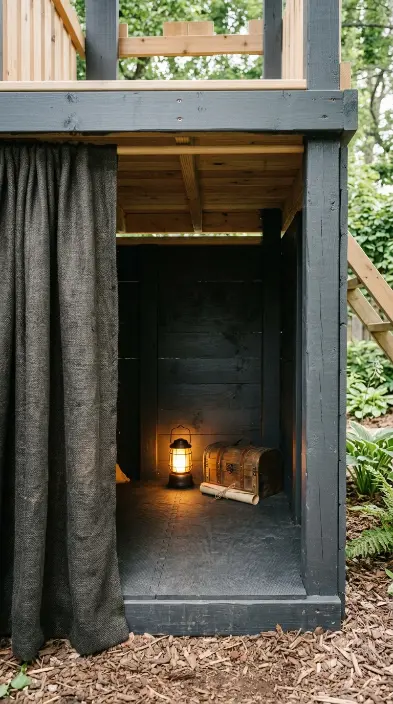
14. Castle Perimeter Fence With Gatehouse Entry
Extend the castle theme beyond the main tower by building a low perimeter castle wall — 400-500mm tall, constructed from the same stone-effect painted timber boards — running from the castle tower base outward to enclose a courtyard area around the play structure. Add a simple timber gatehouse arch at one point in the perimeter wall as the formal entry to the castle courtyard. The perimeter wall encloses a defined play zone around the castle structure itself, separating the castle courtyard from the rest of the backyard and reinforcing the territorial logic of the play — inside the wall is castle territory, outside is the realm beyond.

15. Knotted Cargo Net Climbing Element
Mount a heavy-duty knotted cargo net — a 1.5m x 1.5m net in 20mm diameter natural manila or black polyester rope with 150mm square mesh — suspended at a diagonal angle between a ground anchor point and the castle platform edge, providing an angled cargo net climbing surface as an alternative entry to the castle platform. The cargo net should be rated and constructed for play equipment use — each junction knotted and secured. Mount the top edge of the cargo net to the platform framing with galvanized bolts through the net border rope, and anchor the lower corners to ground-level posts or the perimeter wall. The knotted cargo net adds a texture, movement, and physical challenge completely different from the climbing wall holds or the rope bridge.

16. Castle Themed Swing Set Attached to Main Structure
Extend two beams outward from one side of the main castle tower posts — two 100x100mm timber beams projecting approximately 800mm from the castle post faces — and connect them at their outer ends with a horizontal 100x100mm overhead swing beam, creating a two-swing bay hanging directly from the castle structure extension. Two commercial swing seats hanging from galvanized swing hangers on the overhead beam give the castle its own integrated swing set without requiring a separate swing set structure and footprint. The castle-integrated swing bay reads as a courtyard feature of the castle rather than a separate piece of equipment.
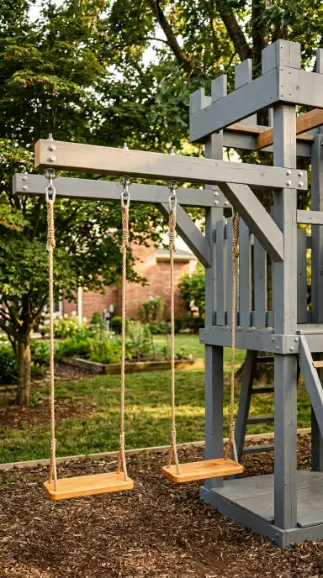
17. Castle Night Lighting With String Lights and Lanterns
Install warm amber LED string lights along the battlement top rail — wound through the merlon uprights along all battlement perimeter edges — and hang two or three small black iron or dark bronze outdoor lanterns from the overhead structural beams or castle corner posts, so that the castle glows warmly at dusk and in the early evening hours. A solar LED strip along the rope bridge handrail ropes provides a gentle path of warm light across the bridge span. Castle night lighting transforms the structure from a daytime play feature into a year-round garden illumination element — beautiful and atmospheric even when not in use as a play structure.

18. Castle Themed Sandpit Courtyard Below
Fill the enclosed courtyard area within the perimeter castle wall — the ground-level zone between the perimeter wall and the main castle tower base — with clean play sand, creating a courtyard sandpit that children access from the ground level as a sand play area in the context of the castle architecture around them. Edge the sandpit with low timber sleeper sections to contain the sand at the courtyard perimeter wall base. The castle courtyard sandpit turns the ground-level courtyard from an empty transition space into a dedicated sand play area — giving the youngest children in the family their own castle play zone at ground level while older children use the elevated platform and rope bridge above.

19. Safety Railing System on All Platform Edges
Install a proper safety railing system on all open platform edges not occupied by battlements, the slide exit, or the rope bridge connection — vertical 40x40mm timber balusters at maximum 100mm spacing, fixed between a bottom rail and a top rail running between the platform posts, the full railing height meeting minimum play equipment fall protection standards of 900mm above the deck surface. Paint the safety railing in the same stone-effect grey as the castle. A properly installed safety railing is the non-negotiable structural investment in any raised platform play structure — it must be built to proper specifications and must be checked and maintained at the start of every play season.
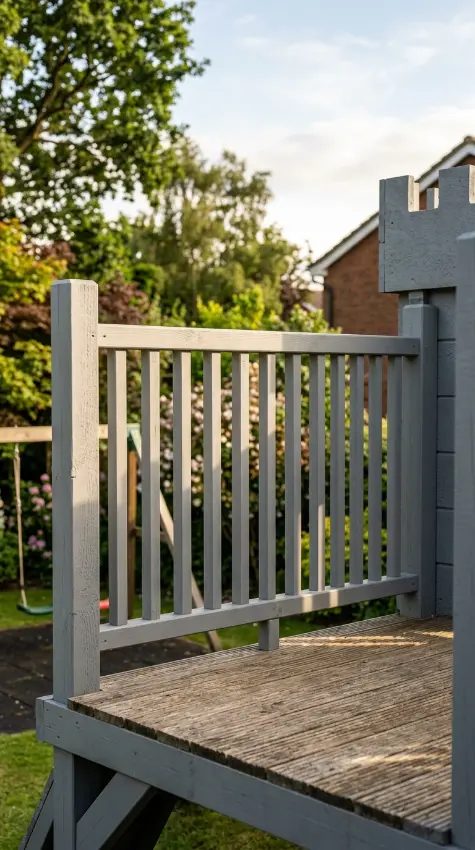
20. Castle Play Kit Accessory Box
Build a dedicated timber accessory box — a simple hinged-lid timber chest approximately 60cm long, 35cm wide and 35cm tall — mounted on a bracket shelf on the outer castle wall or positioned within the courtyard, painted in stone-effect grey to match the castle, and filled with a curated set of castle-themed outdoor play props: felt knight and princess crowns, foam swords, a rolled paper treasure map with burned edges, wooden coins in a small cloth bag, a small wooden shield, a plastic goblet. The castle accessory box makes the imaginative play context of the castle physically available at all times — children can open the box, outfit themselves for castle play, and return everything at the end of the session.
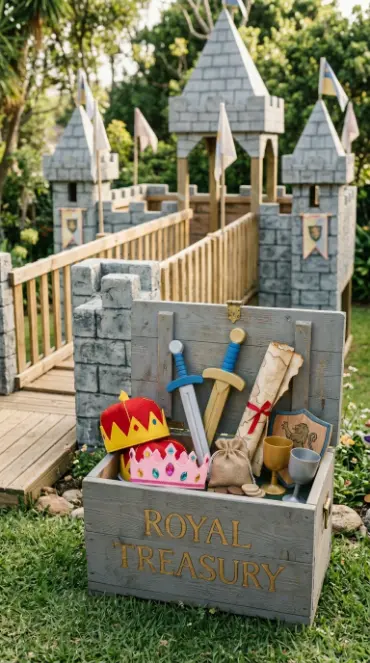
21. Seasonal Castle Weather Protection
Install a simple DIY clear polycarbonate roof panel over the main platform deck — lightweight twin-wall polycarbonate sheet approximately 1.4m x 1.2m, fixed to the roof rafter structure — to provide rain protection for the platform play area without blocking natural light. Seal the platform deck gaps with non-toxic flexible waterproof sealant. Add a simple side panel on the prevailing weather side using the same polycarbonate sheeting mounted to two additional roof frame uprights — creating a partially enclosed weather-protected play cabin at the castle platform level that extends the usable season of the structure into autumn and mild winter.

22. The Complete DIY Castle Jungle Gym — All Together
The finished DIY jungle gym castle tower — all twenty-one elements resolved into a single complete structure. The main platform tower with conical green roof and flag, corner turrets with mini-battlements, full crenellated battlement perimeter, stone-effect grey paint technique on all surfaces, rope bridge connecting to the secondary tower, timber slide exiting through a battlement gap, fireman’s pole beside the main tower, knotted cargo net climbing element, climbing wall panel, enclosed stair tower entry, functional drawbridge, perimeter castle wall with gatehouse arch enclosing the courtyard sandpit, castle swing bay, castle accessory chest beside the entry, arched window openings, underground dungeon den below the platform, warm string light and lantern night lighting, and weather-protected platform deck — the complete castle sitting in the backyard in golden afternoon light, the flag at the apex just visible against the sky.


