22 Minimalist Living Room Decor Ideas Sculptural Plaster
Minimalism is not emptiness. That is the misconception that makes people afraid of it — the idea that choosing minimalism means choosing a room that feels cold, clinical, and devoid of personality. The minimalism worth living in is something different entirely. It is the room where every surface has been chosen with such genuine care that nothing is superfluous and nothing is missing. Where the wall texture itself is the decoration. Where one sculptural object does the work that twenty lesser objects could never do. Where the quality of the light at different times of day is the most important element in the room.
Sculptural plaster is the material that makes this kind of minimalism achievable and genuinely beautiful. Not painted plaster. Not plain smooth plaster. Sculptural plaster — in its many forms, from the ancient chalky depth of limewash to the hand-applied dimensional quality of Venetian plaster to the raw architectural presence of exposed tadelakt — creates surfaces with genuine visual interest that require nothing else to be applied to them. A living room wall finished in deep limewash does not need art. A sculptural plaster vessel on a low shelf does not need companions. An arched plaster niche does not need filling. The material itself is doing the work that other materials require decoration to achieve.
These 22 ideas cover every way that sculptural plaster can enter and transform a minimalist living room — from the largest architectural decisions about walls and ceilings down to the smallest decorative objects and the particular quality of light that plaster surfaces create when a single lamp rakes across them at the right angle.
1. Limewash Plaster Feature Wall — The Wall as the Art
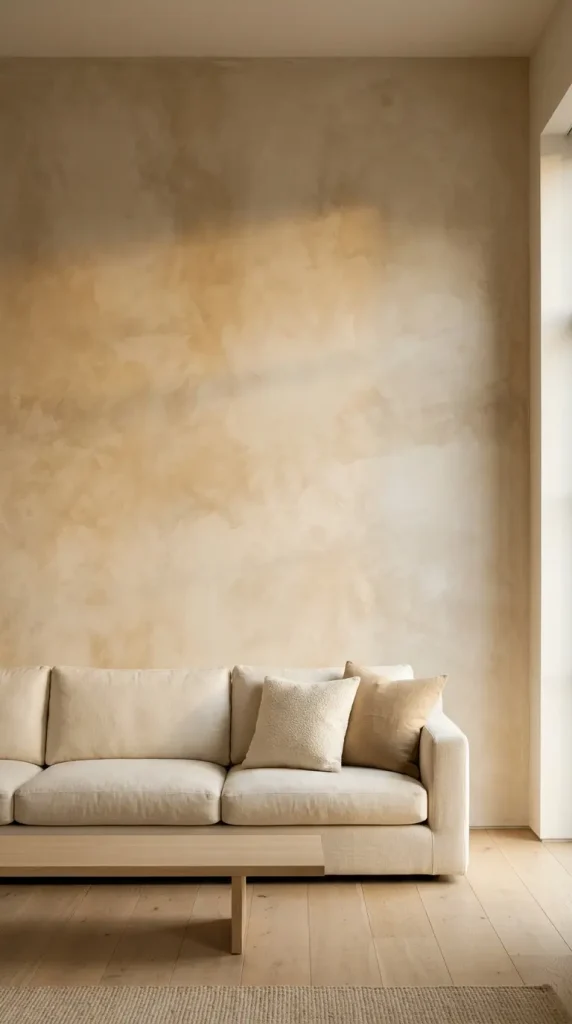
A full feature wall finished in limewash plaster is the single most impactful minimalist living room decision available. Limewash is not paint — it is a lime-based finish applied in multiple thin layers that creates natural variation in tone and surface from every application, making every wall genuinely unique and genuinely impossible to replicate. The chalky, slightly cloudy quality of the dried limewash surface interacts with changing light throughout the day — appearing darker in flat morning light, lighter and more textured when afternoon sun rakes across it, warmer in evening lamp light. Apply it to the wall directly behind the sofa — the wall that is most looked at, most photographed, and most deserving of the material’s extraordinary depth. No art is needed on a limewash wall. The surface is the art.
2. Sculptural Plaster Vessels as Living Room Centerpieces
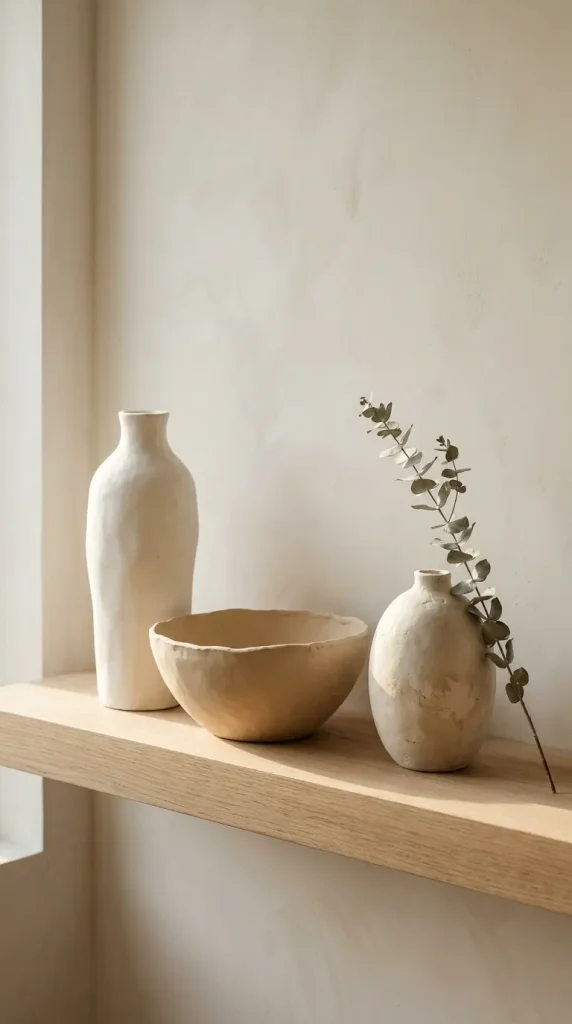
Hand-formed plaster vessels — not identical factory-produced items but genuinely sculptural forms where the human hand is visible in the slight asymmetry and surface variation — are the definitive minimalist decorative object. A single large plaster vessel on a low shelf, a plaster sculpture on a coffee table, or a grouping of three plaster vessels in varying heights on a console creates a visual centerpiece of extraordinary restraint and beauty. The matte white or warm sand plaster surface catches light differently at different times of day. The slight imperfections of hand-forming — a ridge where fingers pressed into the clay form, a slight lean that was preserved in the casting, a surface variation where the plaster dried differently — make each piece genuinely unique and genuinely worth looking at.
3. Arched Plaster Niche — Architecture as Decoration
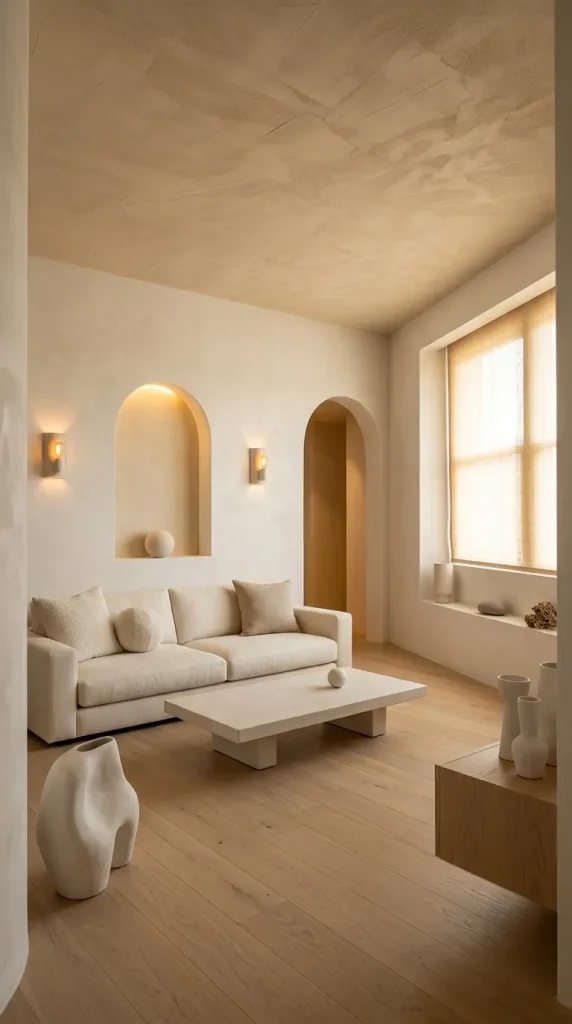
A built-in arched plaster niche — a recessed arch cut into or built out from a living room wall, finished in smooth Venetian plaster or limewash — turns a plain wall into an architectural feature that is simultaneously decorative and functional. The arch form itself is the decoration — no object needs to be placed inside it to make the niche beautiful, though the shallow recessed space creates a natural context for a single sculptural object that appears as if framed. Build the arched niche from plaster over a timber or metal frame and finish with multiple thin coats of smooth Venetian plaster in a warm sand or pale stone tone. The depth of the niche — typically 15 to 20cm — creates shadow that changes throughout the day as the light angle shifts.
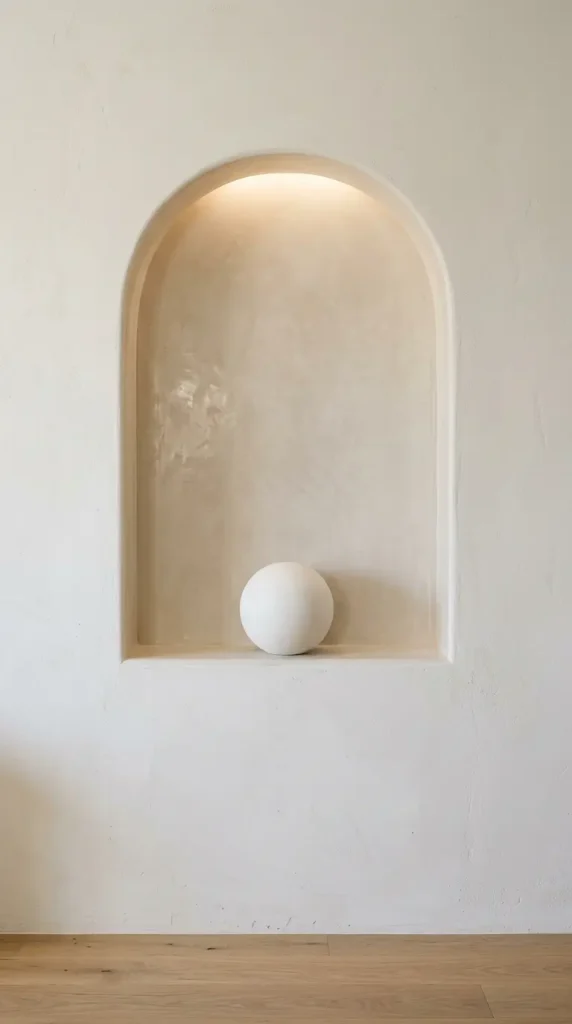
4. Tonal Minimalist Living Room — All White and Sand Plaster Palette
A tonal minimalist living room built entirely within a palette of white, warm sand, cream, and natural plaster tones — where every surface and every object exists within the same narrow tonal range — creates a room of extraordinary visual cohesion and quiet intensity. The power of a tonal minimalist interior comes from texture rather than color: the same warm sand tone in the limewash wall, the smooth plaster coffee table, the cream linen sofa, the sand boucle pillow, and the natural oak floor all reading as one family of warmth where the visual interest is created entirely by the different ways each material catches and reflects the light. No contrasting color is required or wanted. The restraint itself is the statement.
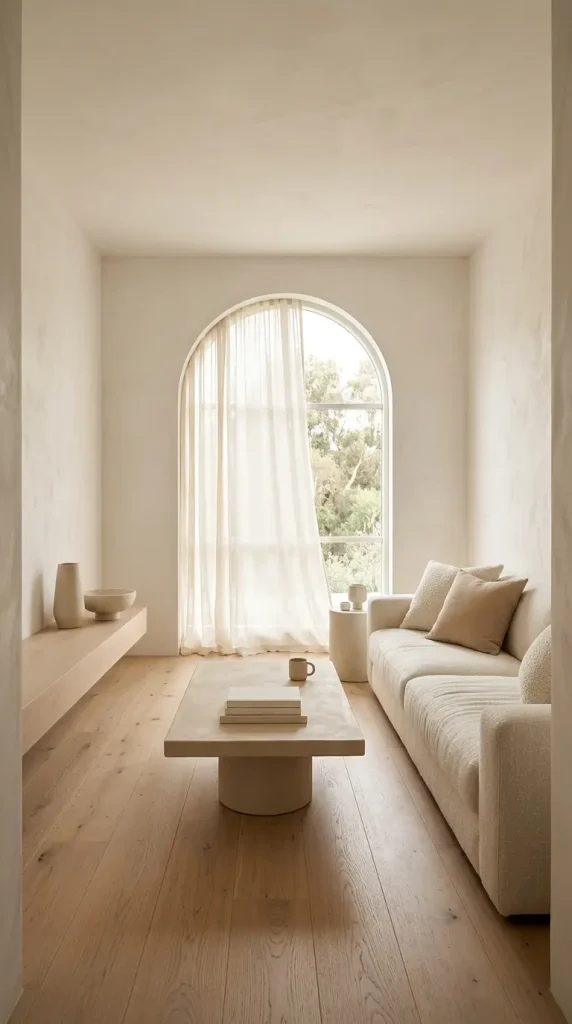
5. Plaster Coffee Table — Sculptural Furniture as Decor
A hand-formed or cast plaster coffee table — where the table itself is a sculptural object rather than conventional furniture — is the most powerful single piece in a minimalist living room where decoration is replaced by extraordinary furniture choices. A plaster coffee table typically takes one of two forms: a thick horizontal slab of plaster on a simple geometric base, or a fully molded sculptural form where the top, base, and legs are one continuous plaster body. The matte plaster surface requires no treatment or sealing for indoor use. Its weight keeps it stable despite its material simplicity. Scuff marks and patina that develop over time only add to its beauty rather than diminishing it.
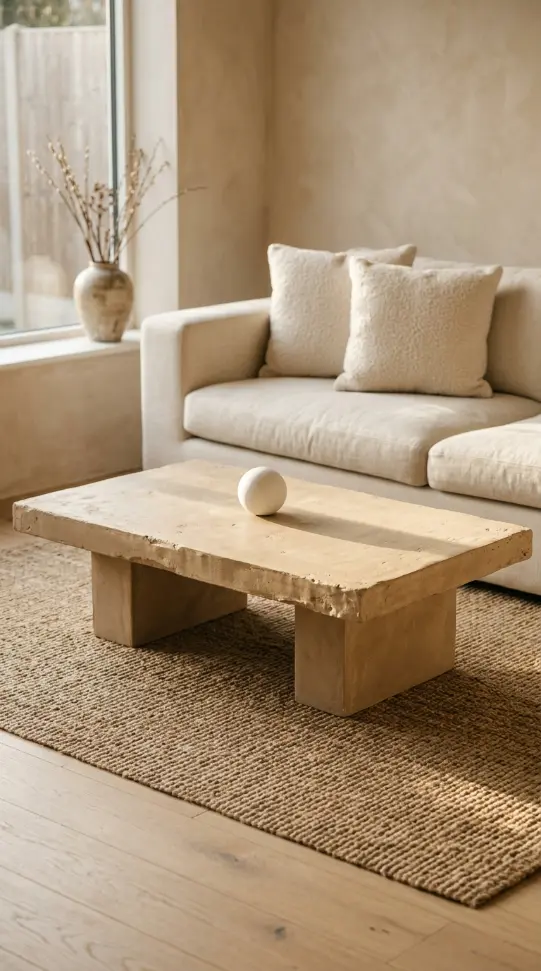
6. Venetian Plaster Accent Panel — Polished Depth on One Wall Section
Applying Venetian plaster — a gypsum and marble-dust plaster polished with a steel trowel to a semi-reflective surface — to a single panel section of a living room wall creates an extraordinary material accent that is different in character from limewash and different from paint. Venetian plaster has a depth and slight luminosity that comes from the polishing process — the surface appears to have layers visible within it, catching light with a subtle reflective quality that changes with viewing angle. Apply it to a single recessed panel section on the feature wall or to the full wall behind the television or fireplace. The reflective quality of Venetian plaster makes the living room feel larger and more luminous without adding a single additional light source.
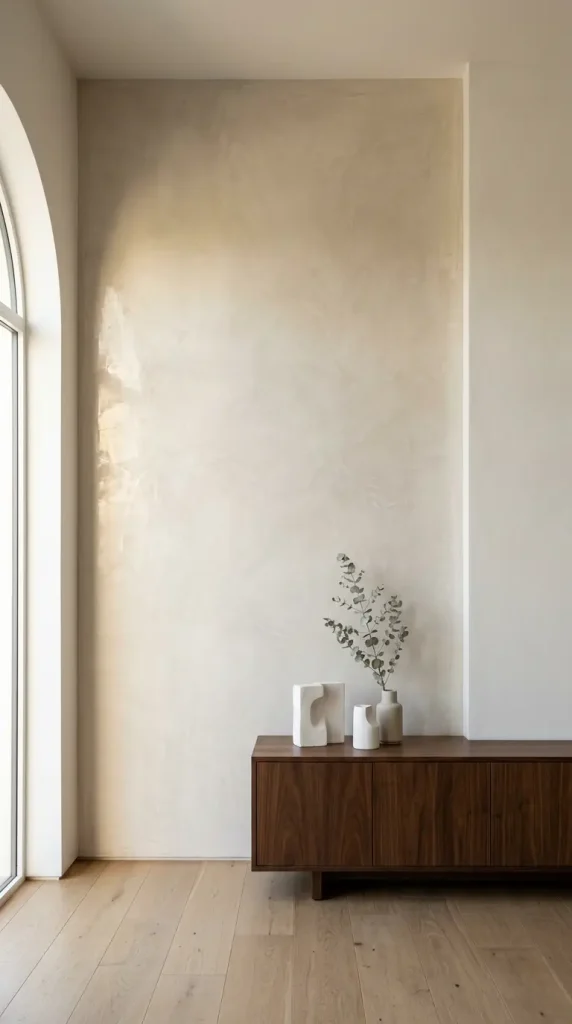
7. Minimalist Plaster Wall Sconces — Light and Shadow as Decoration
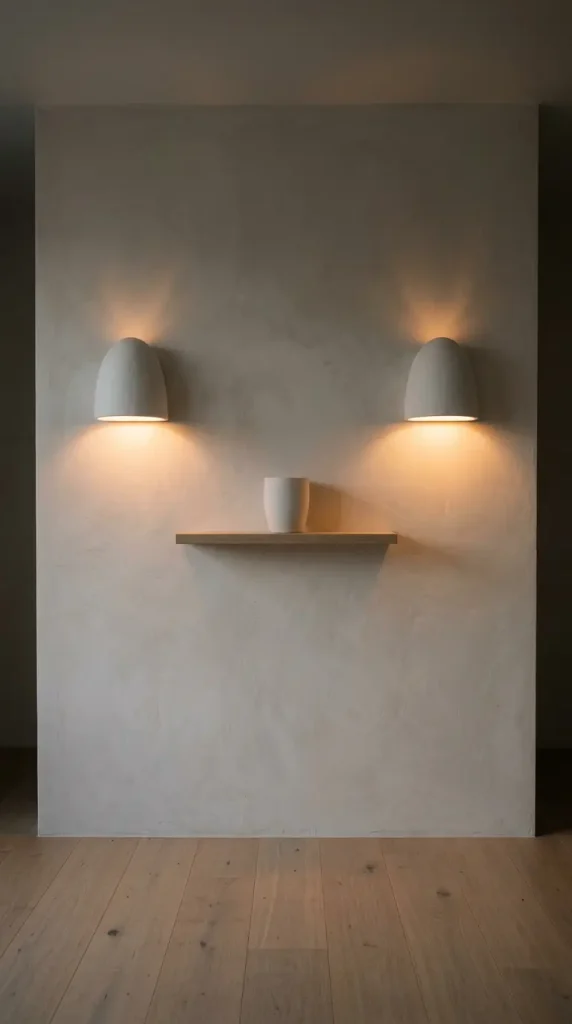
Wall-mounted plaster sconces — either solid plaster forms with a light source recessed within them, or smooth plaster shades over a simple bulb — create both warm ambient lighting and a sculptural wall detail simultaneously. The plaster sconce is the most minimal possible light fixture — no visible hardware, no metal frame, no cable — just a matte plaster form emerging from the wall surface, glowing warmly from within. Mount two matching plaster sconces on either side of the feature wall at eye height. The warm light they cast on the limewash or Venetian plaster wall behind them creates soft circular light pools that themselves become a decoration — the plaster sconce and the light pool it creates together making one complete wall moment.
8. Single Large-Scale Plaster Wall Relief Panel
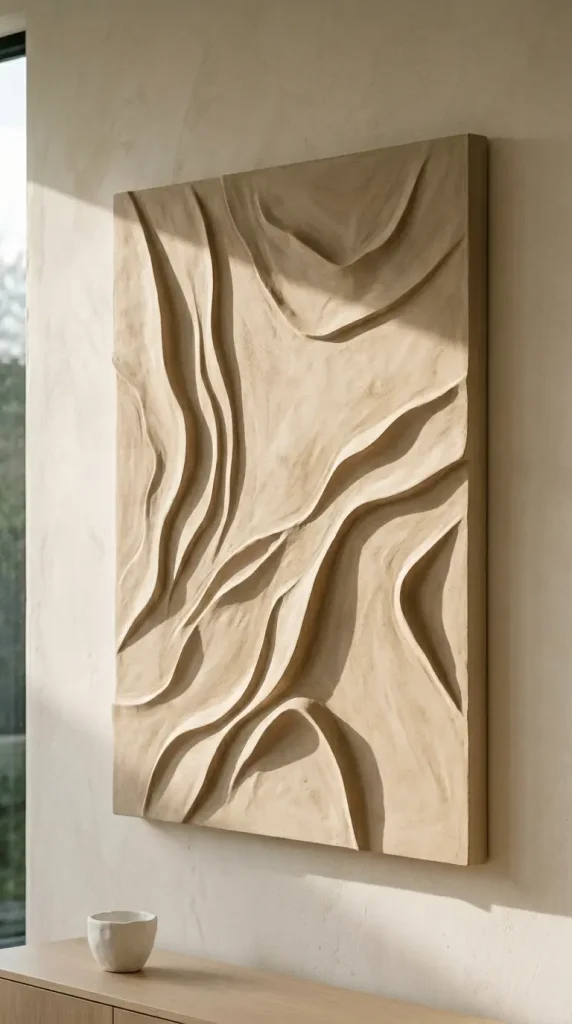
A single large-scale plaster relief panel — hand-formed with abstract, botanical, or purely geometric surface relief — mounted on the living room wall as the room’s sole artwork creates a wall moment of extraordinary presence that no framed print or canvas could replicate. The relief surface is the key difference: where a painting or print is flat, a plaster relief panel has depth — raised elements casting their own shadows on the panel surface as the light changes throughout the day, making the artwork dynamically different at every hour. A plaster wall relief approximately 80cm by 100cm — with abstract organic relief forms raised 5 to 20mm from the panel surface — creates a wall piece that is simultaneously minimal in color and maximally interesting in texture.
9. Plastered Fireplace Surround — Architecture and Material Combined
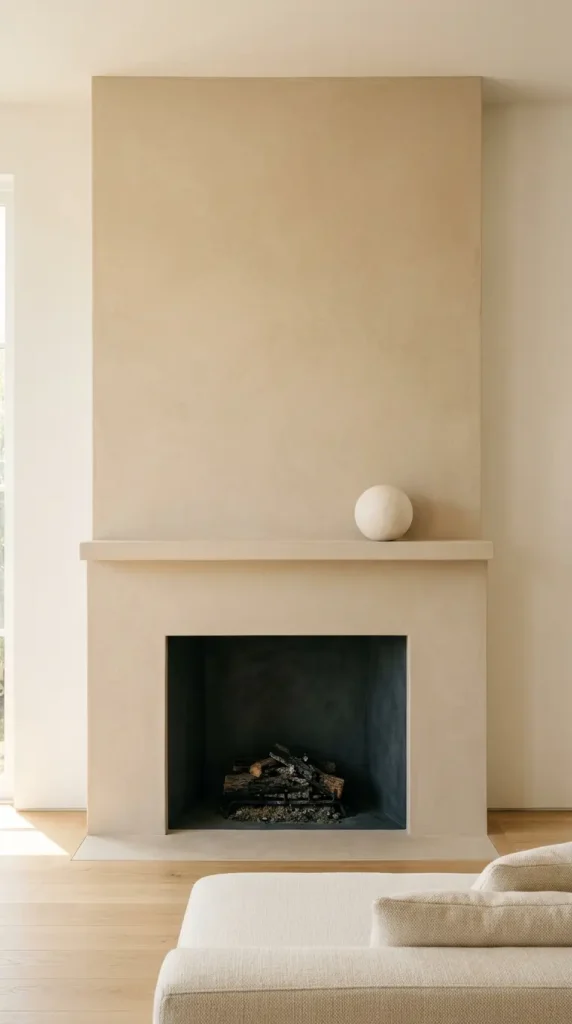
A fireplace surround finished entirely in smooth plaster — from the mantle shelf to the surround frame to the firebox interior — creates the most powerful architectural focal point available in a minimalist living room. The plaster surround should be seamless — the entire fireplace surround in one continuous material application with no visible joints, no tile, no stone, just the pure uninterrupted surface of matte plaster from floor to mantle height and from wall edge to wall edge. On the mantle: one object only — a single sculptural plaster vessel, a smooth plaster sphere, or nothing at all. The plastered fireplace surround is the room’s architectural centerpiece, requiring no decoration because it is itself the most beautiful architectural detail in the space.
10. Minimalist Plaster and Linen Living Room — Two Material Story
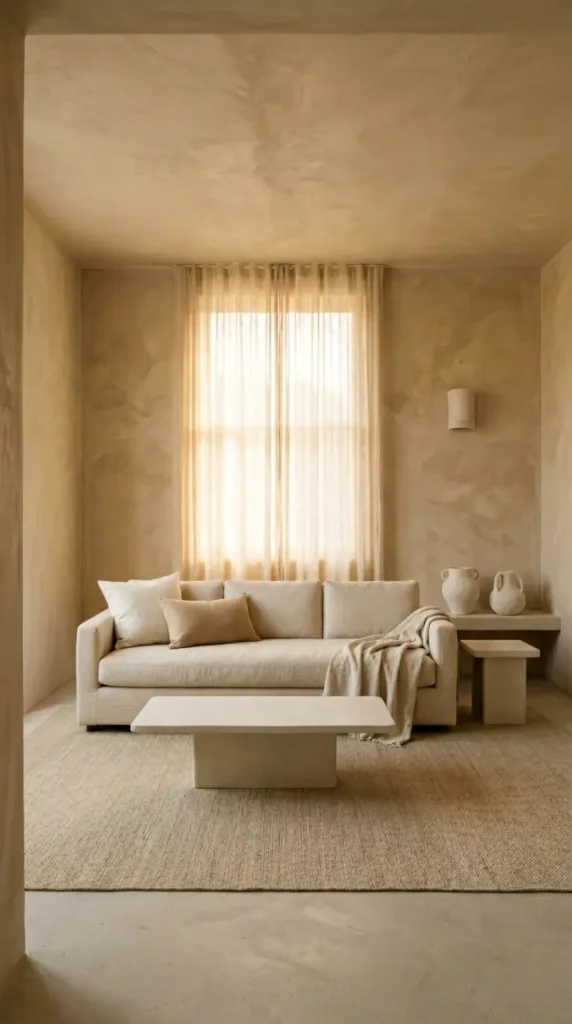
A living room built from exactly two primary materials — warm plaster and natural linen — creates a material palette of extraordinary restraint and extraordinary richness simultaneously. The plaster is on every wall surface, in the sculptural objects, and in the furniture forms. The linen is on the sofa, the cushions, the window treatment, and one throw. Nothing else is introduced — no wood, no metal, no glass, no ceramic, no textile beyond linen. The discipline of maintaining exactly two materials throughout the entire room creates a visual coherence so complete it feels like the room was designed by one mind with one intention from the beginning.
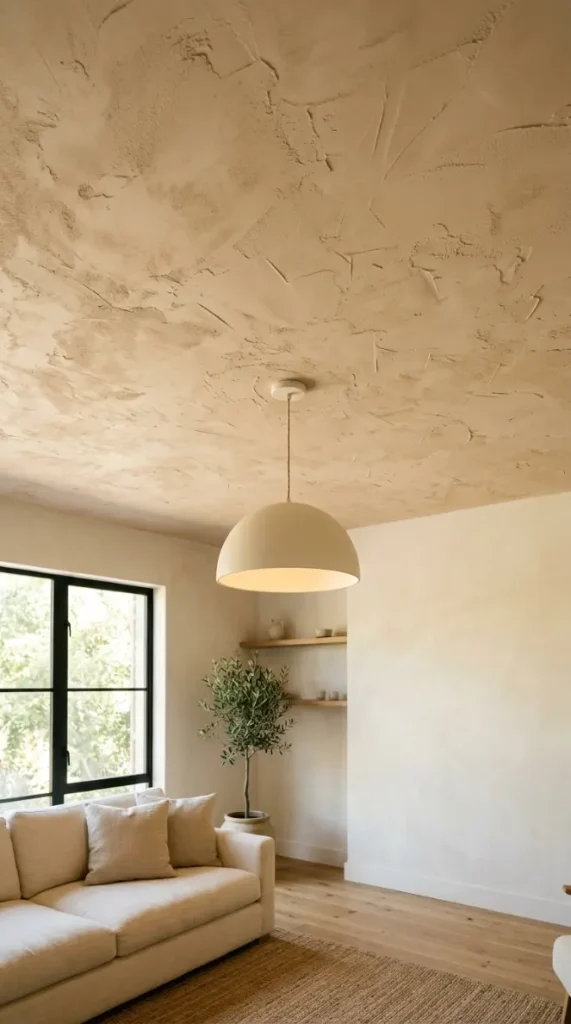
11. Textured Plaster Ceiling — The Overlooked Surface
The ceiling is the most overlooked surface in any living room — and a textured plaster ceiling treatment transforms it from a blank overhead plane into an architectural feature of genuine beauty. Apply a rough-trowel textured plaster finish to the ceiling in a warm sand tone — the same family as the walls but slightly lighter to maintain the sense of height. The trowel marks create a consistent but subtly organic texture across the full ceiling surface that catches the warm ambient light and creates a soft shadow play that makes the ceiling feel dimensional rather than flat. In a minimalist living room where the walls are already in limewash, a textured plaster ceiling creates a room that is wrapped in thoughtful material on every surface.
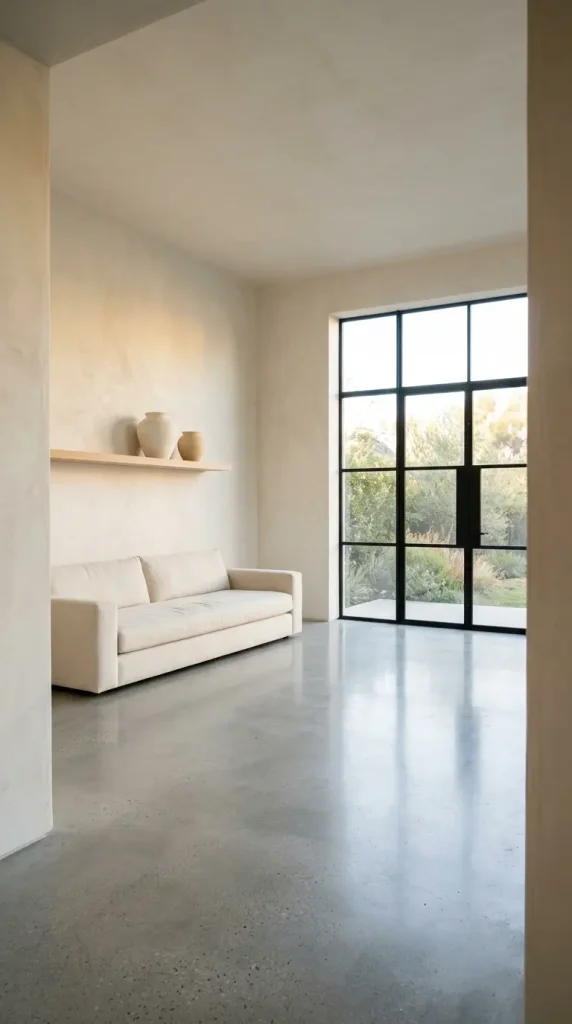
12. Plaster and Concrete Minimalist Living Room
Pairing warm plaster walls with exposed or polished concrete floors creates a minimalist living room material combination of extraordinary architectural beauty. The warm, slightly cloudy, organic quality of the limewash plaster walls and the cool, smooth, industrial quality of the polished concrete floor exist in a productive material tension — warm against cool, soft against hard, organic against geometric. The combination asks for minimal furniture and minimal objects — the material conversation between the plaster and the concrete is the entire design.
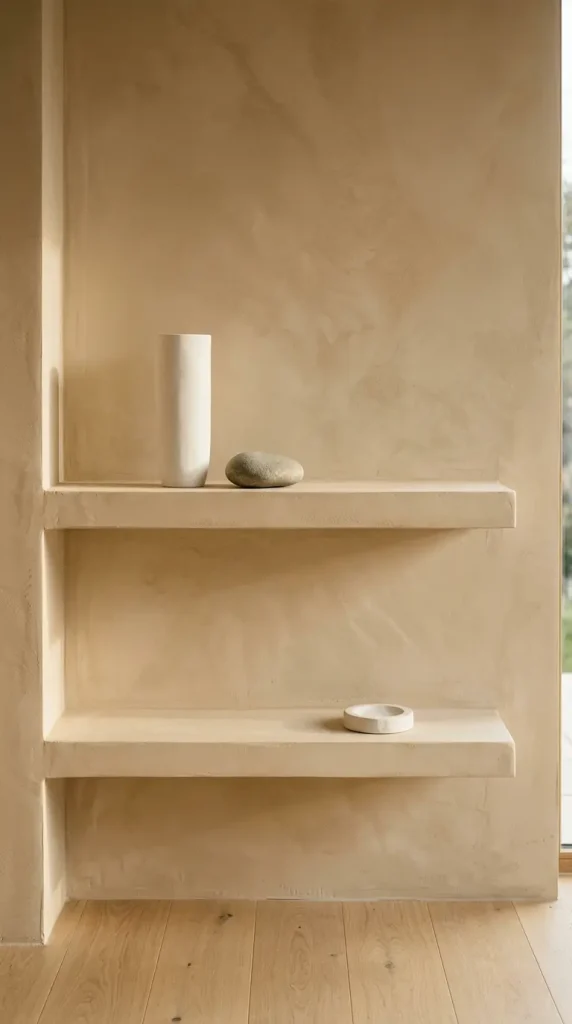
13. Plaster Wall with Integrated Floating Shelves — Seamless Architecture
Floating shelves built from the same plaster as the wall — rather than mounted timber or metal shelves — create a seamless architectural feature where the shelf and the wall appear to be one continuous material. Build the shelf from a timber core finished with the same plaster as the wall, applying the plaster continuously from the wall surface onto and around the shelf form so the shelf appears to grow directly from the wall rather than being attached to it. The seamless plaster shelf is minimal to the point of being invisible from a distance — the eye reads only the objects on it, with the shelf itself appearing as part of the wall. Place one plaster vessel, one smooth stone, and one dried stem on the seamless plaster shelf — three objects, no more.
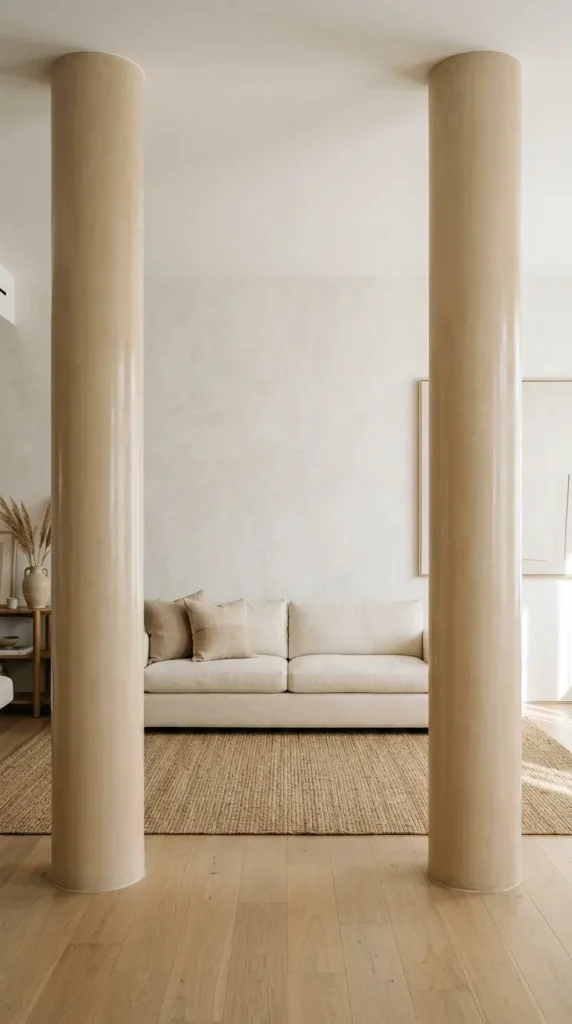
14. Floor-to-Ceiling Plaster Columns — Structural Art
Adding floor-to-ceiling plaster columns — either genuine structural columns finished in smooth plaster or decorative plaster columns applied to room corners — creates an architectural framework within the living room that references ancient building traditions while achieving a completely contemporary minimalist quality. Smooth plaster columns at the room corners, finished in the same warm plaster family as the walls, create a visual rhythm that makes the room feel both more structured and more spacious. The column form in plaster — round, square, or faceted — is itself sculptural, and its vertical emphasis draws the eye upward to the ceiling height.
15. Minimalist Living Room with Single Plaster Sculpture
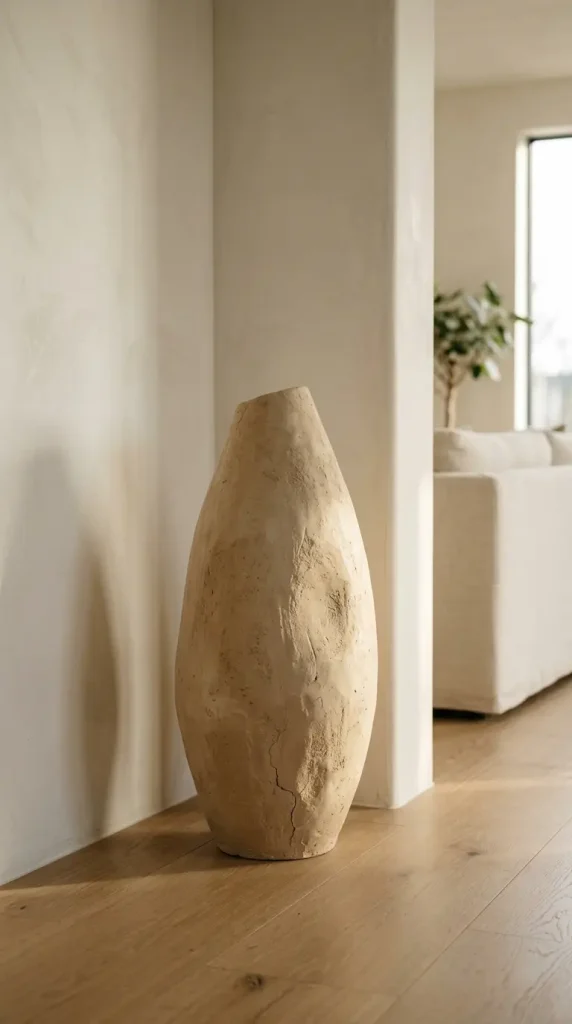
One large sculptural plaster object — genuinely large, approximately 50 to 70cm tall — placed on the living room floor in a corner or beside the sofa as the room’s sole decorative statement makes a more powerful design decision than any number of smaller objects arranged together. The single large plaster sculpture brings the room’s decorative intention into complete focus — everything in the room exists to support the space around this one object, and the object exists to justify the emptiness around it. Choose a form that is abstract and organic — not a figurative statue, not a geometric solid, but something between the two that suggests natural forms without depicting them.
16. Plaster Wall Arch Doorway — Framing the Room
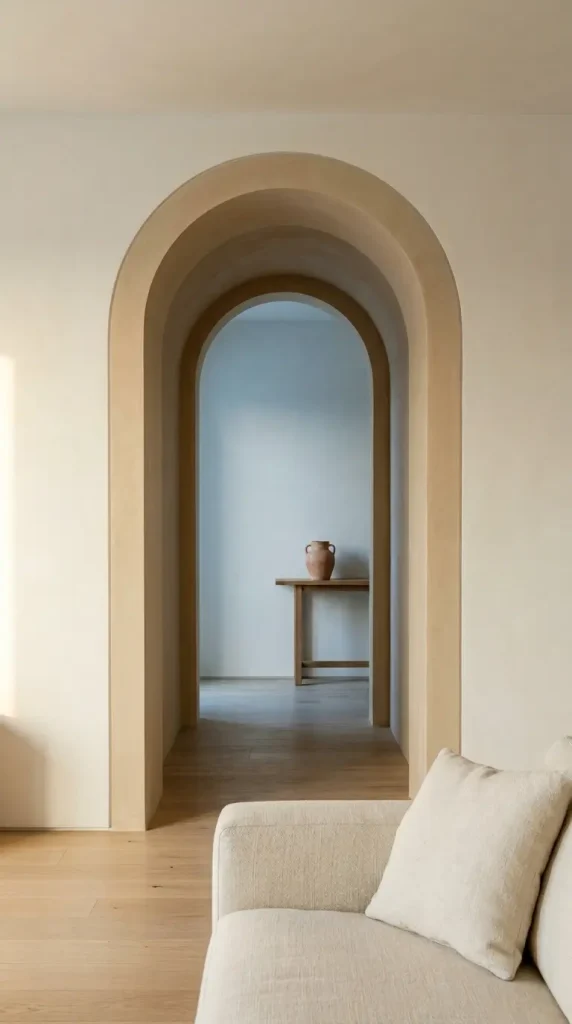
A plaster-finished arched doorway — where the door opening has been plastered in a smooth warm finish rather than left with painted timber architraves — frames every view through it like a painting and creates a sense of architectural intention that carries through every room connected by the arch. In the living room context, one arched doorway visible from the main seating position creates a secondary view — the arch framing whatever room or hallway lies beyond — that adds depth and visual complexity to the room without adding a single decorative object. Plaster the arch in the same material as the feature wall for seamless material continuity.
17. Tadelakt Wet Room Inspired Plaster Wall — Waterproof Luxury
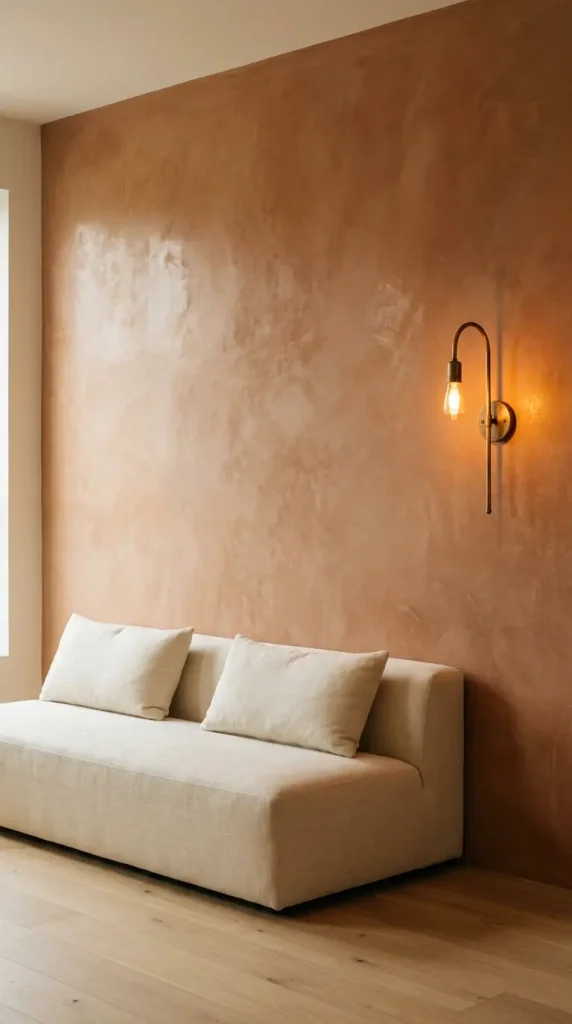
Tadelakt — a traditional Moroccan waterproof plaster made from lime and polished with river stones and finished with black soap — creates the most luxurious and most deeply beautiful plaster wall surface available. Originally used in hammam bathing rooms for its waterproof properties, tadelakt’s polished surface has a warmth and depth that exceeds even Venetian plaster — the repeated stone-polishing creates a surface that appears to glow from within. In a living room context, a single tadelakt feature wall or fireplace surround creates a material focal point of the most extraordinary quality. Tadelakt is typically applied in warm terracotta, pale sand, warm ochre, or deep charcoal tones.
18. Minimalist Plaster Living Room with Dark Accents
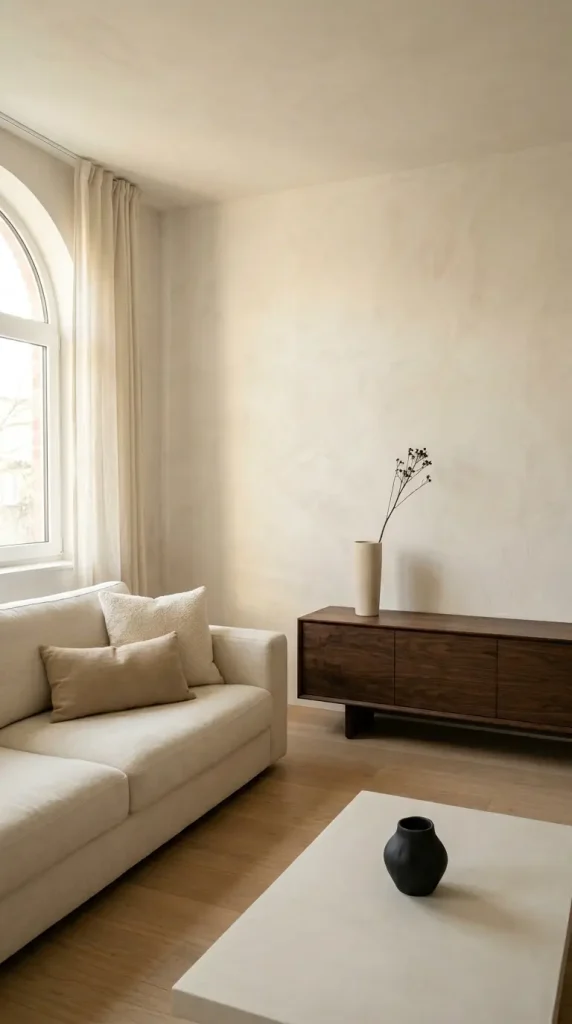
The most refined version of the sculptural plaster minimalist living room introduces a single dark accent — one piece of deeply stained walnut furniture, one matte black sculptural object, one very dark dried botanical — into an otherwise entirely pale plaster and cream room. The single dark accent does not break the minimalist palette — it deepens it. It creates the contrast that allows the pale plaster surfaces to read as pale, that gives the cream linen its warmth, that makes the room feel considered rather than unfinished. One dark walnut low sideboard against the pale limewash wall. One matte black sculptural plaster form on the coffee table. That is all the darkness the room needs.
19. Plaster Wall with Recessed Ledge — Invisible Shelf
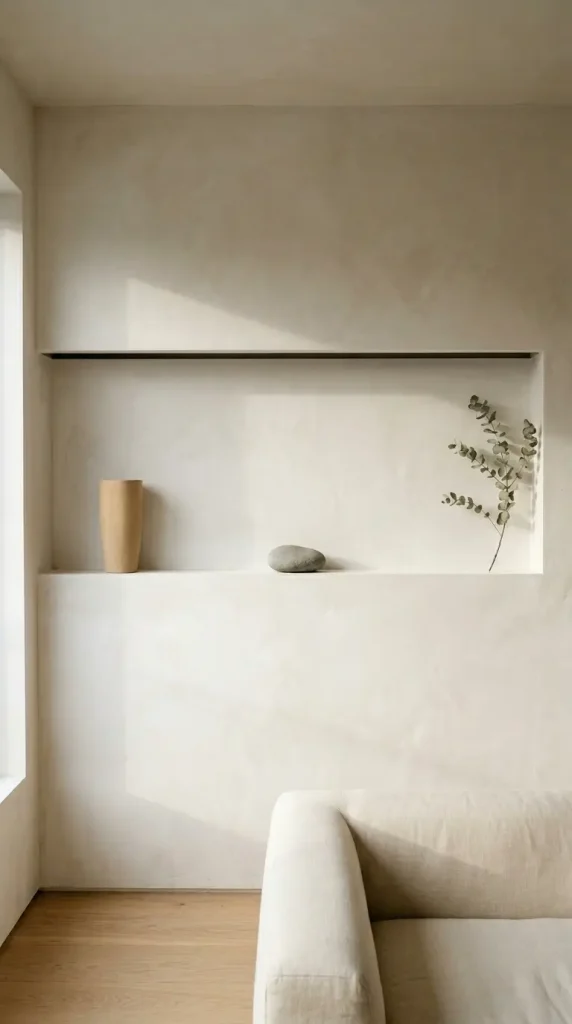
A plaster recessed ledge — a horizontal channel cut into the wall at a specific height, approximately 5 to 8cm deep and 8 to 10cm tall, finished in the same plaster as the wall — creates a display shelf that appears to be part of the wall architecture rather than something applied to it. Objects placed on the recessed ledge appear to float in the wall rather than sit on a shelf. The ledge runs the full width of the wall — approximately 3 meters — allowing objects to be spaced with extreme intentionality. One sculptural plaster vessel at the left end. One smooth stone at the center. One dried stem at the right. Three objects across three meters of recessed wall ledge, each given maximum breathing room.
20. Plaster Living Room at Night — Candlelight and Shadow
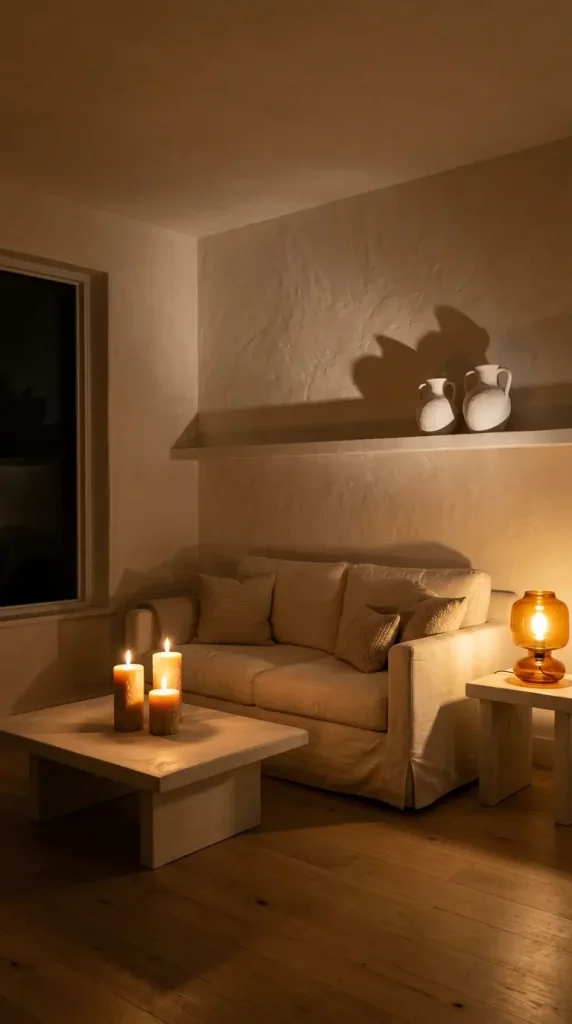
The sculptural plaster minimalist living room at night — with all natural daylight gone and the room lit entirely by candles and warm low lamps — becomes a completely different and entirely more atmospheric space than its daytime self. The limewash walls that appeared pale and airy in morning light become rich and deep in candlelight, with the natural tonal variation appearing more dramatic and more alive. The sculptural plaster objects cast their own small shadows on the warm wall surfaces. The room becomes its most beautiful self after dark.
21. Plaster and Raw Linen Blinds — Window as Minimalist Art
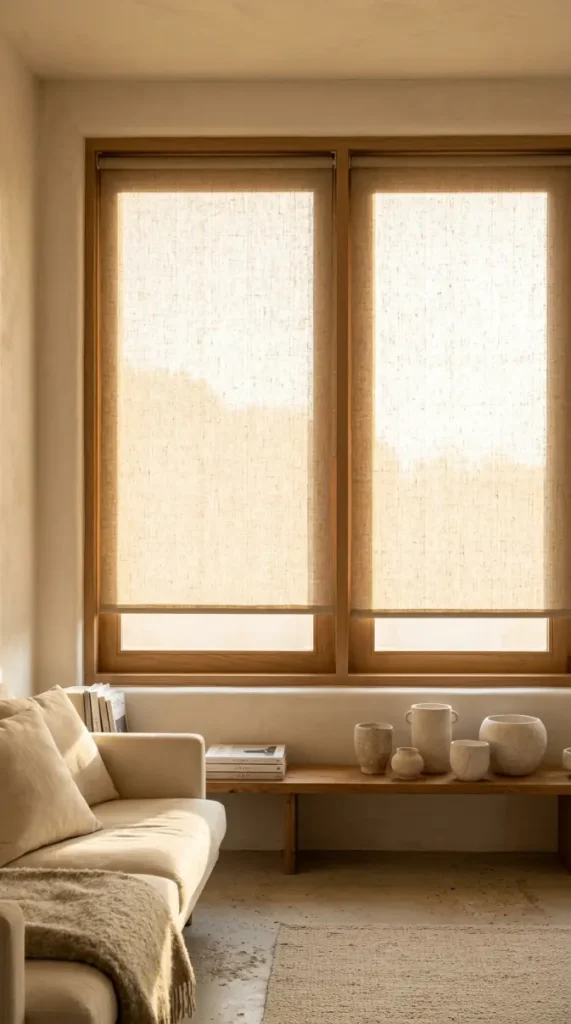
Replacing conventional window treatments with raw, unlined linen roller blinds — the kind that allow warm diffused light to glow through the fabric when lowered, creating a warm luminous panel of light in the minimalist room — turns the window wall into a light installation rather than simply a window. The raw linen blind, when backlit by morning sun, creates a warm amber-cream glowing panel that is one of the most beautiful natural light effects available in any interior. Combined with the plaster walls and sculptural objects, the glowing backlit linen blind at morning light is itself a minimalist work of art.
22. The Complete Minimalist Sculptural Plaster Living Room — Everything Together
The final idea is the complete vision — a fully realized minimalist living room where every element from the floor to the ceiling to the single sculptural object has been chosen with the kind of genuine care that makes a room not just beautiful but genuinely restorative. Warm sand limewash plaster walls with natural tonal variation. Smooth Venetian plaster arched niche with one plaster sphere inside. Seamless plaster arched doorway leading to a glimpsed adjacent space. Plaster recessed wall ledge with three spaced objects. Textured plaster ceiling in the same sand family. Plaster slab coffee table. Wide cream linen sofa. Light oak floor. Two plaster sconces. One large raw linen backlit window blind. The room is a complete material argument for the proposition that the most beautiful spaces contain the least — and mean the most.