14 Budget-Friendly Home Gym Designs Outdoor Backyard Turf
Building a home gym does not have to mean converting a spare bedroom, installing expensive flooring, or spending thousands on commercial-grade equipment. In 2026, one of the smartest and most rewarding fitness moves a homeowner can make is taking the gym outside — onto the backyard turf — and building a setup that costs a fraction of what any indoor gym would, while delivering a training experience that no four walls could ever replicate.
Outdoor backyard gym setups on artificial or natural turf have exploded in popularity for one simple reason: the turf does all the heavy lifting for you. It absorbs impact, cushions barefoot movement, handles sled pushes and battle rope slams without complaint, and makes even a modest outdoor space look intentional and designed. Add a few smart, budget-friendly equipment choices and a handful of deliberate styling decisions, and what you have is not a makeshift workout corner — it is a proper training environment that happens to be in your backyard.
The outdoor gym is also the most honest gym you will ever build. No mirrors to impress anyone. No membership fees. No waiting for equipment. Just open air, natural light, real ground beneath your feet, and the kind of focused training environment that expensive facilities spend millions trying to manufacture artificially.
Whether you are working with a ten-foot strip of grass beside the garage or a full backyard acre waiting to be used properly — these ideas will show you exactly how to build a budget-friendly outdoor turf gym that looks far more expensive than it cost.
1. Lay Artificial Turf as Your Training Surface Foundation
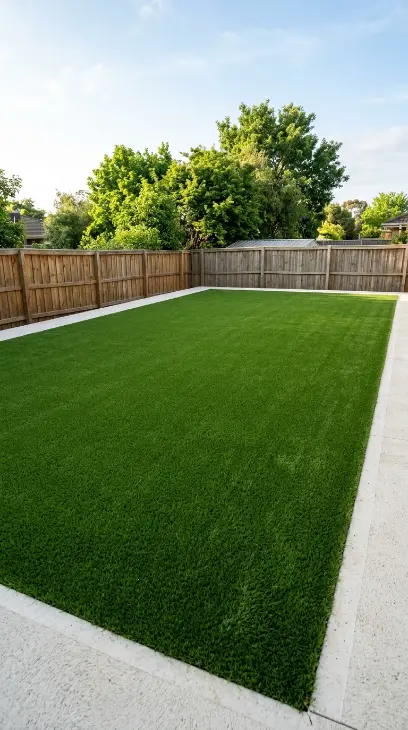
Before a single piece of equipment is purchased, the most important decision in your outdoor gym build is the ground surface — and artificial turf is the answer that makes everything else possible. A roll of quality artificial turf in a deep natural green, laid directly over a compacted gravel base or existing concrete, instantly transforms any outdoor area into a dedicated training zone that reads as intentional and designed rather than improvised. The turf provides enough cushioning for bodyweight work, box jumps, and dynamic movements while remaining firm enough for heavy lifts and loaded carries. It defines the boundary of your gym visually and practically — the moment you step onto it, your mind shifts into training mode. Budget tip: mid-pile turf at 35 to 40mm depth offers the best performance-to-cost ratio for training use, and many suppliers sell offcuts and remnant rolls at significantly reduced prices for smaller gym footprint builds.
2. Build a Budget Power Rack From Galvanized Steel Pipe
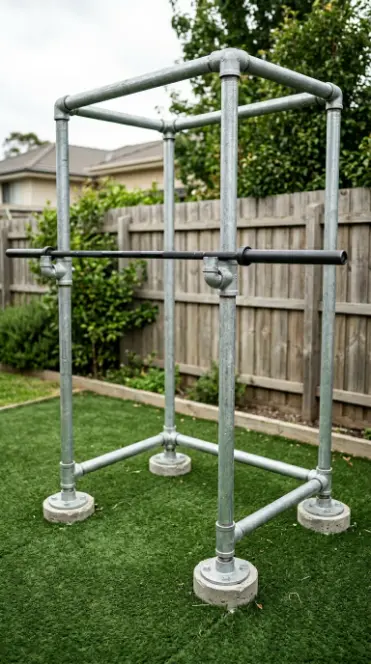
A power rack is the backbone of any serious gym build — and it does not need to carry a four-figure price tag to be genuinely functional and visually impressive. A DIY power rack built from heavy-gauge galvanized steel pipe, pipe flanges, and pipe fittings, assembled using basic hand tools over a single weekend, delivers the structural integrity needed for squats, bench press, and pull-up work at a fraction of the cost of a commercial rack. The galvanized steel develops a warm, slightly industrial patina over time outdoors that looks considerably better than it has any right to for the price paid. Seal the pipe joints with weatherproof thread sealant, anchor the base flanges into a concrete footing pad at each corner, and the finished rack is both visually striking against a green turf backdrop and structurally sound for years of outdoor use.
3. Use Rubber Hex Dumbbells Stored on a Wall-Mounted Timber Rack
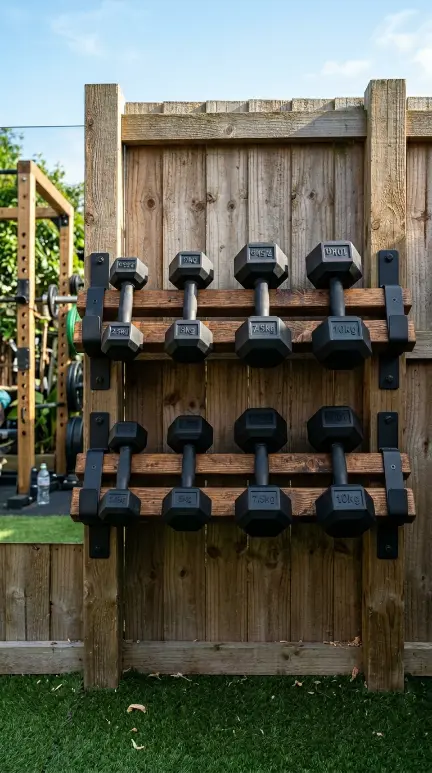
In a budget outdoor gym, the dumbbell set is often the single most-used piece of equipment — and how it is stored makes the entire setup look either considered or chaotic. A simple wall-mounted dumbbell rack built from two horizontal lengths of rough-sawn timber, mounted on a timber fence post or an exterior wall at chest height, keeps your full dumbbell set organized, off the turf, and on display as a visual design feature of the space. Rubber hex dumbbells in a matching matte black finish stored in ascending order by weight on the timber rack create a clean, editorial gym wall look that costs almost nothing in timber and hardware to build while making the entire outdoor setup photograph like a professionally designed training space.
4. Install a Freestanding Pull-Up Bar With Dip Handles
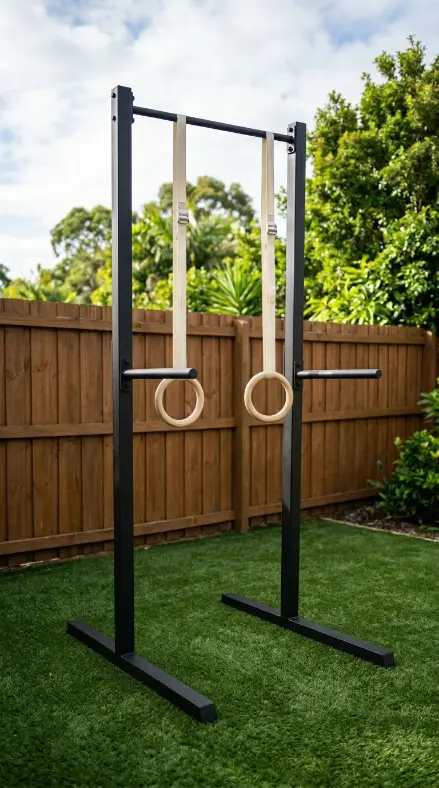
A freestanding pull-up and dip station is one of the highest-value pieces of equipment in any budget gym build — it delivers the full range of upper body pulling and pressing work with zero wall anchoring, zero structural modification, and a purchase price that represents a fraction of what a wall-mounted alternative with proper installation would cost. Choose a freestanding model with a matte black powder-coated steel frame, straight pull-up bar at the top, and parallel dip handles at mid-height. Positioned at the edge of the turf area near the fence line, it reads as a clean vertical sculptural presence in the outdoor gym space. Add a set of gymnastic rings hung from the top bar on adjustable nylon straps and the same piece of equipment now handles pull-ups, dips, ring rows, push-ups, and basic gymnastics work — an enormous range of training stimulus from a single affordable structure.
5. Create a Dedicated Sled Push Lane Down the Turf Length
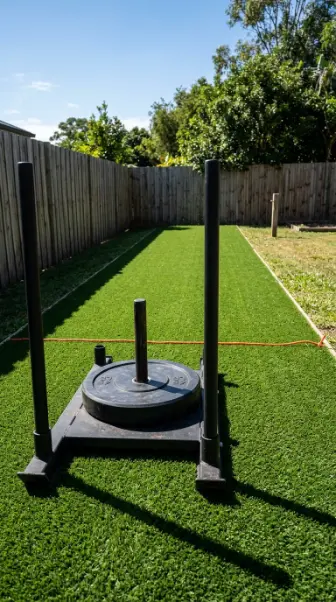
One of the most underrated advantages of an outdoor turf gym over any indoor setup is the ability to do loaded sled pushes and pulls — one of the most effective and brutally honest conditioning tools in all of training — without any special flooring, acoustics considerations, or neighbor complaints. Designate the full length of your turf strip as a sled lane and mark the halfway point and end points with two short lengths of bright rope or chalk line pressed into the turf edge. A basic steel push sled — welded from heavy box section steel with two upright push handles and a flat load platform — can be built for under fifty dollars in steel and basic welding, or purchased as a simple budget model for under a hundred. Load it with a single rubber bumper plate and the entire outdoor gym dynamic changes the moment you start pushing.
6. Hang Battle Ropes From a Timber Post Anchor
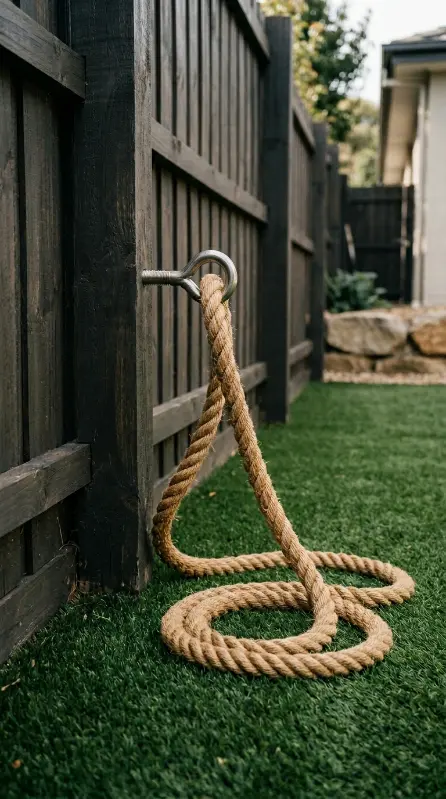
Battle ropes are one of the most effective full-body conditioning tools available — and one of the most budget-friendly, given that a single rope delivers an enormous range of training options from the same anchor point. Mount a heavy steel eye bolt through a treated timber post at the edge of the turf area at approximately hip height, thread the center of your battle rope through the eye, and both rope ends are ready for wave work, slams, alternating pulls, and rotational movements across the full width of the turf. The rope lying coiled on the turf when not in use also serves as a visual gym prop that communicates the seriousness and completeness of the outdoor setup to anyone who sees it. A 15-meter, 38mm diameter manila or poly battle rope costs very little and lasts years of outdoor use with minimal maintenance beyond keeping it coiled and dry between sessions.
7. Build a Plyo Box Set From Exterior Grade Plywood
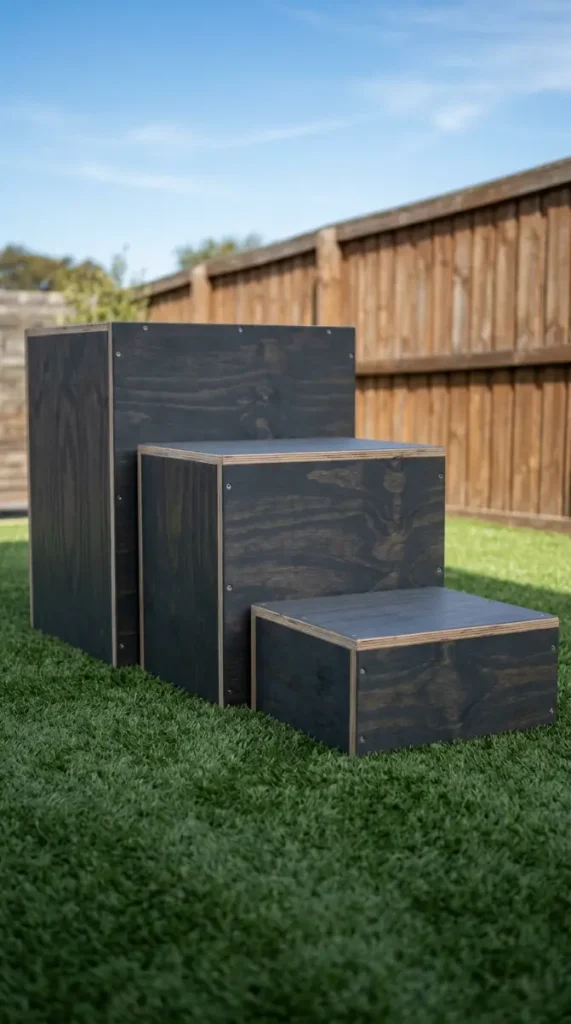
Plyometric training — box jumps, step-ups, depth drops, box squats — is one of the cornerstones of athletic conditioning, and a DIY plyo box set costs almost nothing to build from exterior grade plywood and basic woodworking tools. A standard three-box set in heights of 20cm, 40cm, and 60cm can be cut from a single full sheet of 18mm exterior grade plywood with minimal waste, assembled with wood screws and exterior wood glue, and finished with two coats of dark exterior deck stain for weatherproofing and visual cohesion with the rest of the outdoor gym. Grouped together at one edge of the turf, the three boxes in ascending height look deliberately styled — a clean, sculptural grouping that serves as both functional equipment and a visual focal point for the gym space.
8. Set Up a Kettlebell Station on a Timber Storage Platform
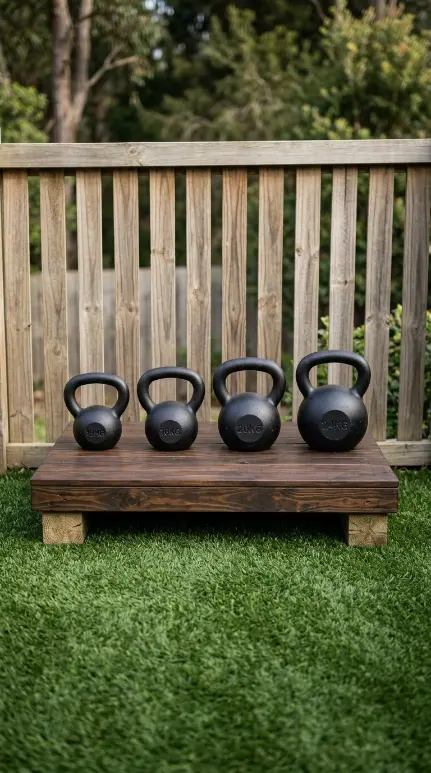
Kettlebells on grass or turf roll, sink, and generally find every inconvenient resting position available to them unless they are stored on a solid surface. A simple raised timber storage platform — a flat deck of exterior grade timber boards, approximately 80cm by 60cm, raised 5cm off the turf on treated timber sleepers — gives your kettlebell set a permanent home at the edge of the gym space, keeps them stable and off the turf surface, and creates a clean visual station that makes the whole outdoor gym look thought-through and organized. Four kettlebells in a matching matte black cast iron finish, arranged in ascending weight on the platform, look like a deliberate design element rather than equipment that was simply left somewhere.
9. Add a Timber Pergola or Shade Sail for Overhead Cover
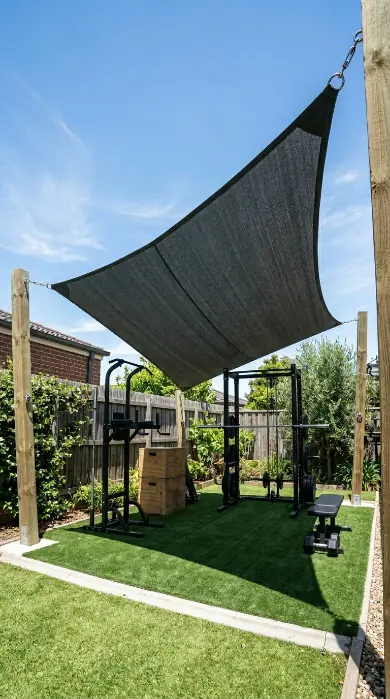
Training outdoors is perfect until the sun is directly overhead at midday in July, at which point every exposed surface becomes a liability and training quality drops sharply. A simple shade solution — either a DIY timber pergola frame over the main training zone or a heavy-duty shade sail stretched diagonally across two anchor posts — extends the usable hours of the outdoor gym dramatically and adds a permanent architectural presence to the space that makes it feel like a designed installation rather than improvised equipment in a garden. A shade sail in a deep charcoal or natural stone color complements the equipment and turf without introducing any visual noise, and the filtered light it casts across the training surface has a quality that makes the whole outdoor gym feel genuinely considered.
10. Mount a Waterproof Bluetooth Speaker on a Fence Post
Music is not a luxury in a gym — it is a training tool. The right playlist at the right volume measurably changes output, pacing, and training quality. In an outdoor gym setup, a single weatherproof Bluetooth speaker mounted permanently at ear height on a fence post at the edge of the turf removes the need to bring a speaker outside every session, eliminates the risk of leaving an expensive portable speaker exposed to the elements, and creates a clean, intentional audio setup that is always ready when you are. A matte black or dark grey IP67-rated outdoor speaker mounted on a simple pipe bracket and connected to your phone wirelessly takes the last friction point out of starting a training session and makes the whole outdoor gym feel genuinely complete.

11. Create a Barbell and Plate Storage Wall on the Fence Line
A barbell leaning against a fence looks like negligence. A barbell on a dedicated wall-mounted storage bracket on the fence line looks like a gym. The difference costs less than twenty dollars in hardware. Two simple barbell J-hooks mounted at shoulder height on a timber fence post hold the bar horizontally and securely. Below them, a weight plate tree built from two horizontal steel rods welded to a single upright and bolted through the fence panel holds your full plate set organized by weight. The entire fence-line storage system takes up zero floor space, zero turf space, and presents your barbell and plates as organized, deliberate equipment on display rather than items that have been left somewhere to be dealt with later.

12. Install Low-Voltage Solar Stake Lights Around the Turf Perimeter
An outdoor gym that only functions during daylight hours is an outdoor gym that misses every 5:30am session, every post-work winter evening, and every early morning in the months where sunrise is simply too late to be useful. Low-voltage solar stake lights positioned at regular intervals around the turf perimeter solve this completely for a cost that is almost embarrassingly low. Choose stake lights in a matte black finish with a warm amber solar LED — not the cool blue-white that turns every outdoor space into a security installation — and press them into the ground at the turf edge every 80 to 100cm around the full perimeter. The result is a warm amber-lit training zone at dusk and dawn that looks, from any distance, like a deliberately designed performance space. The training experience under warm perimeter light on open turf is genuinely difficult to replicate indoors.

13. Add a Resistance Band Station to the Pull-Up Bar Frame
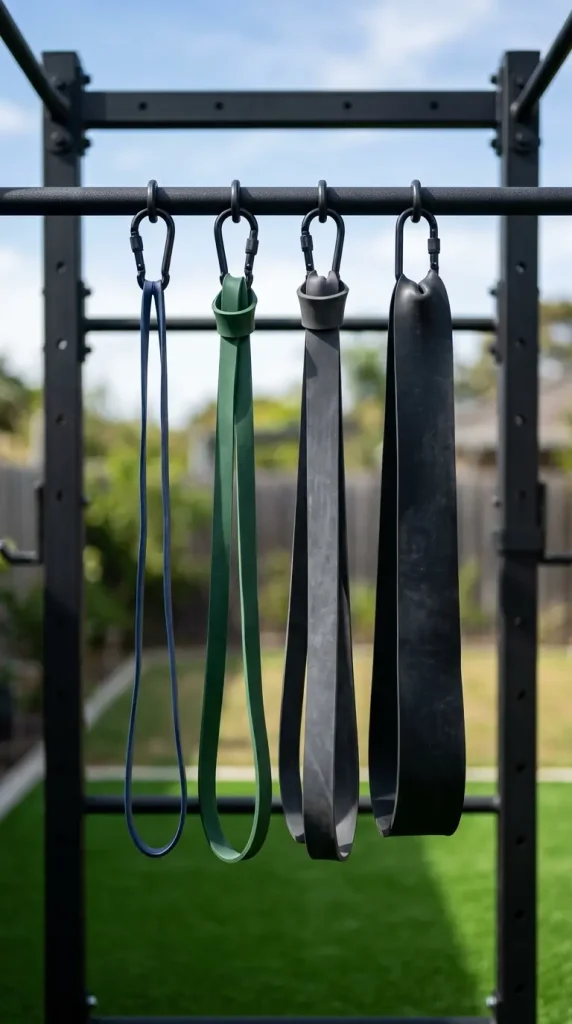
A resistance band station requires zero additional space, zero additional equipment purchases beyond the bands themselves, and adds an enormous range of training options to any outdoor gym — banded pull-ups, assisted push-ups, face pulls, external rotation work, banded squats, and more. Hang a dedicated set of four loop resistance bands in graduating resistance levels — light, medium, heavy, and extra-heavy — on separate carabiner clips attached to a horizontal bar at the top of your pull-up frame. Color-coded bands in deep matte tones — navy, dark green, charcoal, and black — hanging in graduated width order look deliberately organized and styled. Store a second set of clip-on anchor attachment points on one of the lower crossbars for cable-style pulling movements from different heights and angles.
14. Define the Gym Entrance With Two Timber Posts and a Rope
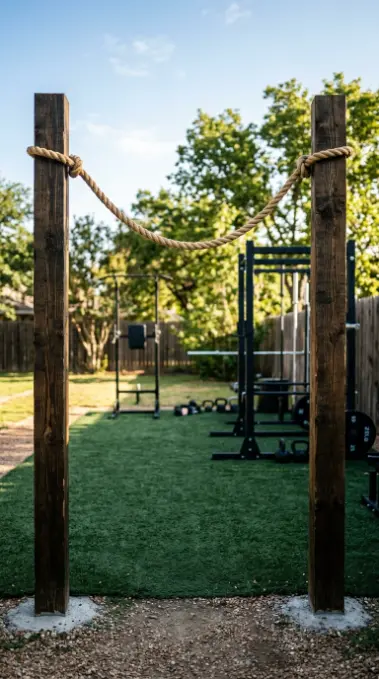
A gym entrance does not require a door, a wall, or any structure at all — it requires a threshold. Two treated timber posts set in concrete on either side of the turf access point, connected at the top by a single length of natural manila rope looped casually between them, creates a defined entrance to the gym space that is purely symbolic in its function and completely powerful in its effect. The moment you step through that entrance, the space on the other side has a different quality — it is the gym, and you are entering it with intention. The posts can also carry the gym’s name or a single word burned into a small timber plank hung on the rope if you want an extra layer of identity for the space. It costs almost nothing, it takes an afternoon to build, and it transforms the outdoor gym from a collection of equipment on turf into a place with a beginning.