26 Cozy Home Office Warm Wood Linen Neutral Style Ideas
A home office built from warm wood, natural linen, and a tightly controlled neutral palette succeeds at something most conventional office furniture never attempts: making the place where work happens feel as considered and as calm as any other room in the house. The cold, clinical, performance-oriented language of typical office furniture — black mesh chairs, glass desks, harsh fluorescent task lighting — assumes that productivity and comfort are separate goals, while the cozy neutral office assumes the opposite, that a body and mind genuinely at ease will do better work than one merely tolerating its surroundings for eight hours.
Warm wood is the material that does the most foundational work in this aesthetic, because its visible grain, its natural color variation, and its slow-changing patina over years of use stand in direct contrast to the synthetic uniformity of laminate, MDF, and powder-coated steel furniture. A desk, shelving unit, or chair frame in oak, walnut, or ash carries an inherent warmth that no paint color applied to a cheaper material can replicate, and this warmth becomes the anchor color from which every other material and textile choice in the room is selected.
Linen contributes the textile softness that keeps a wood-heavy room from feeling like a furniture showroom rather than a lived-in workspace — a linen desk chair cushion, linen curtains diffusing harsh outdoor light, a linen-covered notice board, or simply a folded linen throw on a reading chair in the corner. Linen’s particular quality of looking slightly relaxed and slightly imperfect even when freshly pressed gives the entire room a sense of ease that a stiffer, more formal fabric like velvet or heavy cotton canvas cannot achieve in the same way.
The neutral palette that unites wood and linen together — warm white, oatmeal, soft greige, pale stone, and the wood tones themselves — succeeds because it removes color as a source of visual noise or fatigue across a long workday, allowing texture and natural material variation to provide all the visual interest a person needs without anything competing for attention or becoming tiring to look at after the fortieth hour of the week spent in the room.
These 26 ideas cover every dimension of the cozy neutral home office — from the foundational desk and chair choices to the shelving, lighting, textile layering, and plant styling, and the complete office where every surface from the desk grain to the linen curtain works together as one fully realized, calm, genuinely restorative place to work.
1. The Solid Wood Desk as the Foundational Anchor
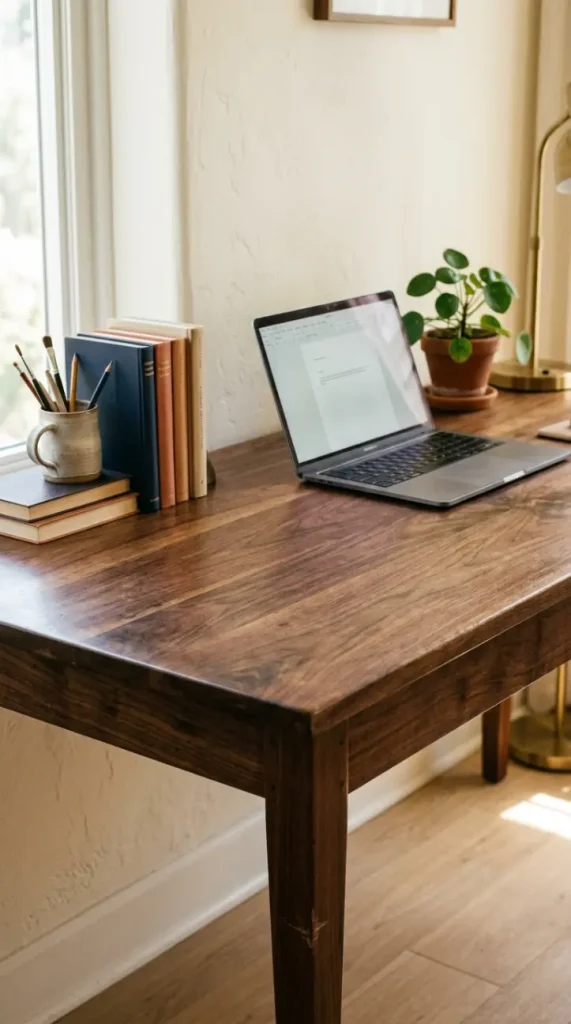
The desk is the single piece of furniture a home office is built around, and choosing one in solid wood rather than veneer, laminate, or painted MDF establishes the room’s entire material language before any other decision is made. A desk in warm oiled walnut or white oak, with its grain left visible rather than painted over, develops a richer patina with years of daily use — the slight sheen where forearms rest, the faint scuff where a chair has been pushed back thousands of times — that a synthetic surface can only fake and never actually earn, and this slow visible aging is precisely what gives a wood desk the quality of feeling like a genuine long-term companion to the work done at it rather than a replaceable commodity.
2. A Wood-Framed Chair With Woven Cane and Linen Cushion
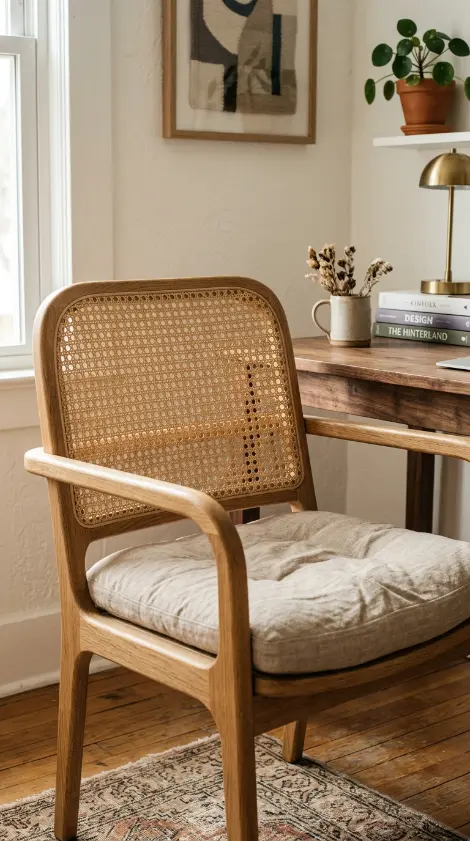
Most ergonomic office chairs are built entirely from mesh, plastic, and powder-coated steel specifically because those materials are cheap, durable, and easy to mass-produce, but a chair built instead from a solid wood frame with a woven cane back and a linen-covered cushion proves that comfort and natural materials are not mutually exclusive. The cane back’s open weave allows air to circulate against a sitter’s back during long stretches of work, solving the same practical problem mesh chairs solve but through a material with genuine warmth and texture, while a well-filled linen cushion on the seat provides the actual cushioning comfort that a bare cane seat could not offer on its own.
3. Linen Curtains to Soften and Diffuse Harsh Daylight
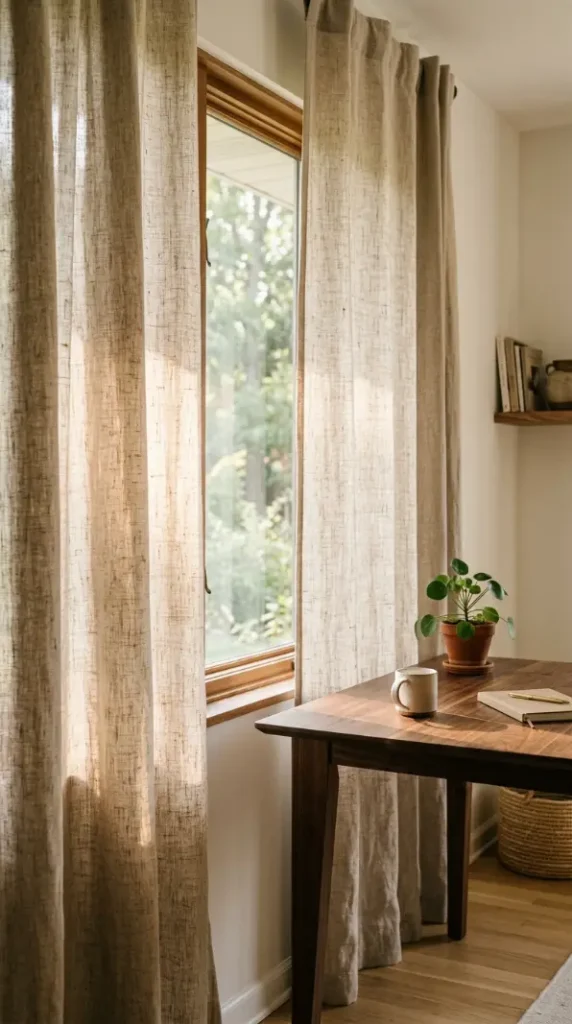
Direct, unfiltered daylight falling onto a desk and screen creates exactly the kind of harsh glare and contrast that makes a workday physically tiring on the eyes, and a pair of natural linen curtains — left mostly open during the day but available to soften the light when the sun sits at a low, glaring angle — solves this practical lighting problem while contributing the textile softness central to the entire aesthetic. Linen’s particular weave diffuses rather than blocks light, meaning the room stays bright and naturally lit even when the curtains are drawn partway, achieving genuine glare reduction without the cave-like darkness that a heavier blackout curtain would create in a room meant for active daytime work.
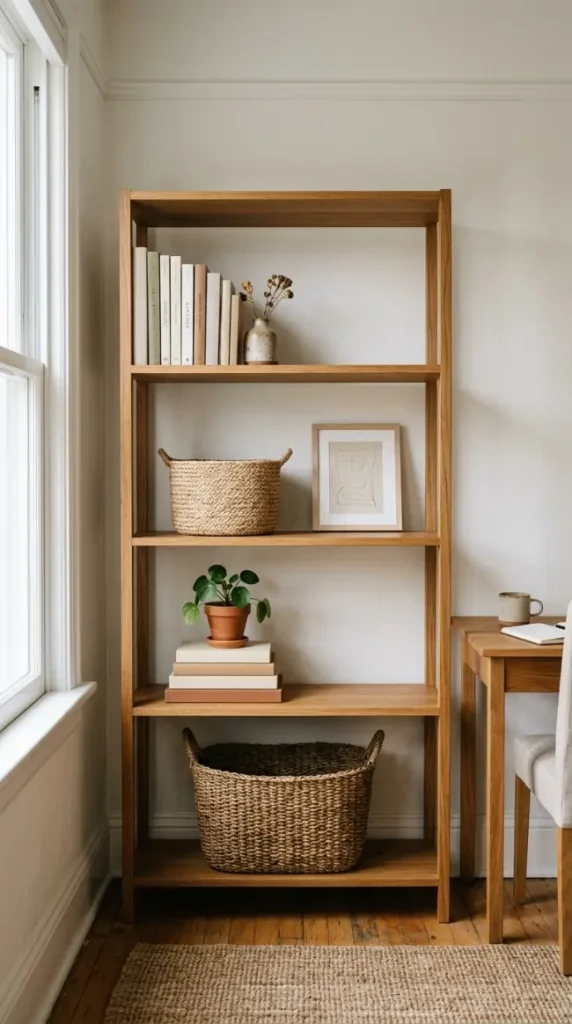
4. Open Wood Shelving Styled With Restraint
Open shelving in the same warm wood tone as the desk, rather than a closed cabinet, keeps a home office’s storage visible and integrated into the room’s overall material story rather than hidden behind a flat door that contributes nothing to the space visually. The key to making open shelving feel calm rather than cluttered in a neutral office is restraint in what gets displayed: books grouped by color or simply allowed to show their natural cloth and paper spine variety, two or three ceramic or woven vessels rather than a dozen, and deliberate empty space left on at least one shelf, applying the same generous-spacing principle that governs any well-styled surface to an entire vertical wall of storage.
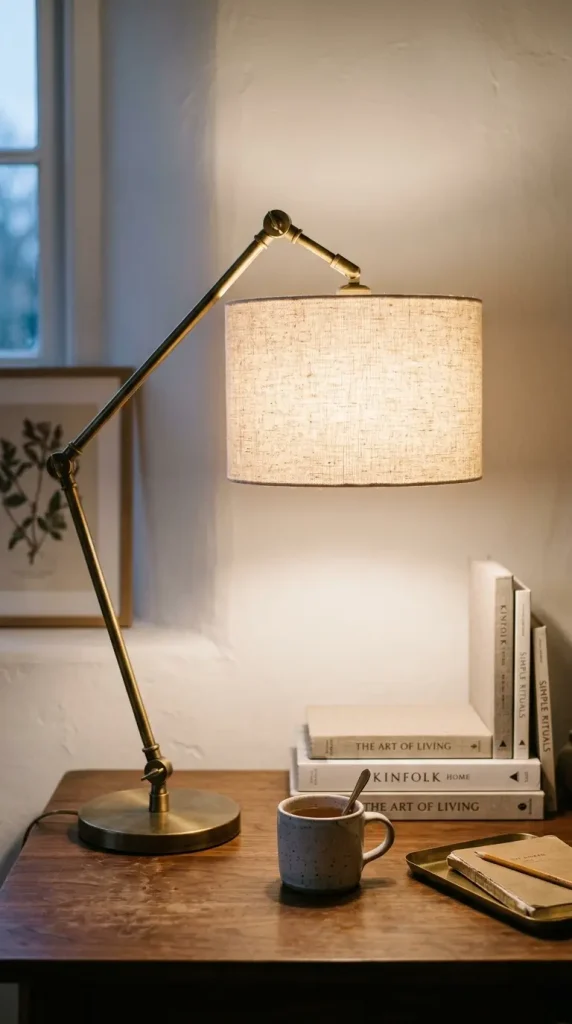
5. A Warm Brass Desk Lamp With a Linen Shade
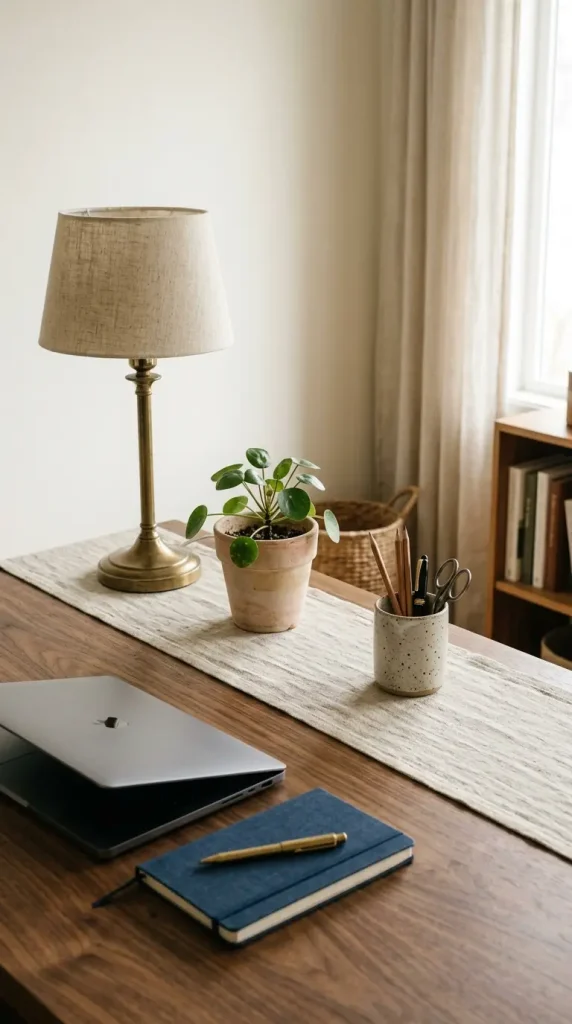
A desk lamp with a base in warm brass and a shade in natural linen rather than white plastic or cold metal combines two of the room’s core materials into the single object most responsible for the quality of light during evening or overcast work sessions. The linen shade diffuses the bulb’s light into a soft, warm, slightly textured glow rather than the harsh directional beam a bare bulb or a hard plastic shade would produce, and the brass base, like brass hardware anywhere else in a warm neutral room, develops a deepening patina over years that only adds to its character rather than detracting from it.
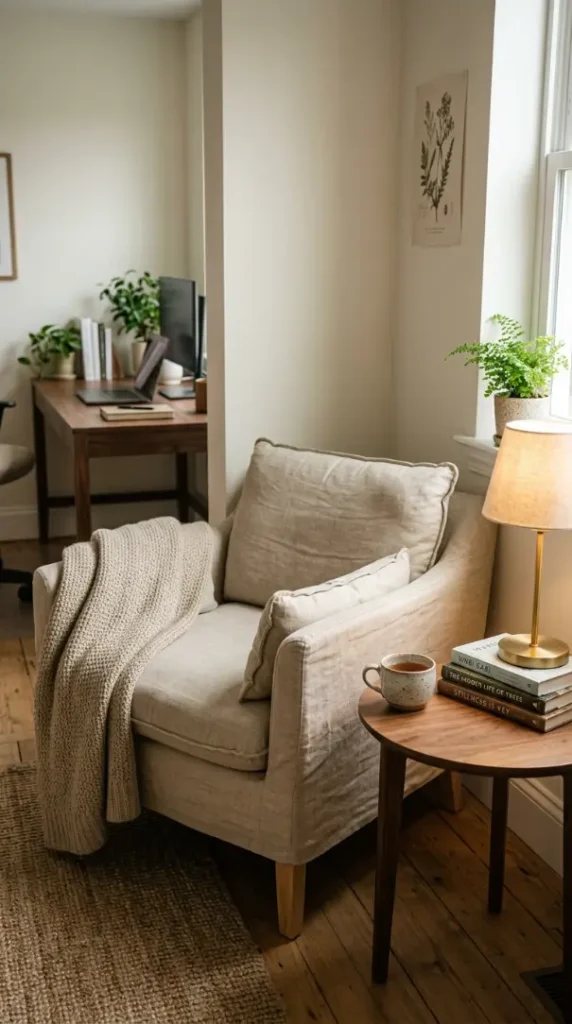
6. A Reading Nook Corner to Separate Working From Resting
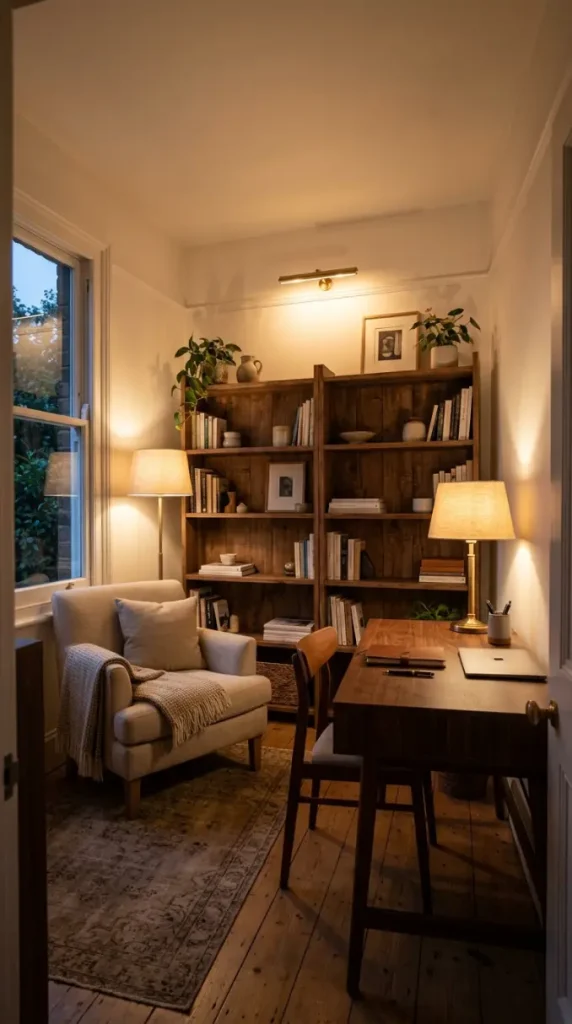
Dedicating one small corner of the home office to a single armchair, rather than filling every square meter with desk and storage, gives the room a place to physically step away from work without leaving it entirely, solving the specific problem of a home office bleeding into every hour of the day because there is nowhere within the room to sit that does not face a screen. An armchair in natural linen, paired with a small side table and a soft throw, signals that this corner belongs to thinking, reading, and pausing rather than producing, and the simple act of physically turning a body away from the desk toward this different chair creates a small but genuine psychological boundary between working and resting that staying seated at the same desk all day cannot offer.
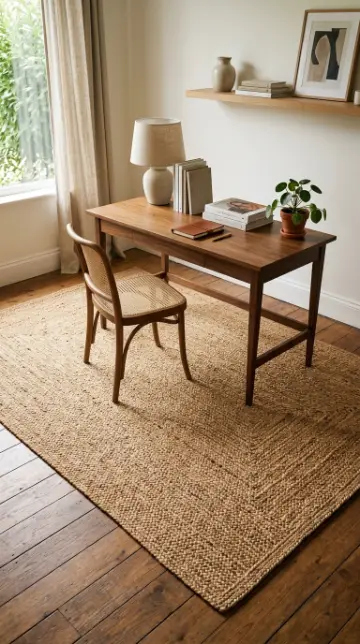
7. A Natural Jute or Wool Rug to Anchor the Desk Zone
A rug placed beneath and around the desk does the same zoning work in a home office that it does in any living room, defining the working area as a distinct zone within the larger room while adding a layer of textural warmth underfoot that bare wood or tile flooring cannot provide on its own. A natural jute rug, with its visible coarse weave, reinforces the room’s commitment to honest natural materials and pairs texturally with the linen and wood elsewhere in the space, while a soft wool alternative in a similar warm neutral tone offers a plusher, quieter option for anyone who spends long hours barefoot or wants to dampen the room’s acoustics slightly. Either choice should sit large enough that the desk and chair remain fully on the rug even when the chair is pushed back, rather than a small mat that the chair rolls awkwardly on and off throughout the day.
8. A Linen-Covered Pinboard Instead of a Plastic Corkboard
A pinboard covered in natural linen rather than left as bare cork or a synthetic fabric-wrapped board extends the room’s textile language into its most utilitarian object, the surface where notes, reminders, and reference pages get pinned up and lived with daily. The linen covering, stretched taut over a simple wood frame, gives pinholes a cleaner, less visually messy appearance than they leave in raw cork, and the fabric’s neutral tone means whatever gets pinned to it — a printed photograph, a handwritten note, a swatch of fabric — sits against a calm, consistent backdrop rather than competing with the busy, mottled texture of standard cork board.
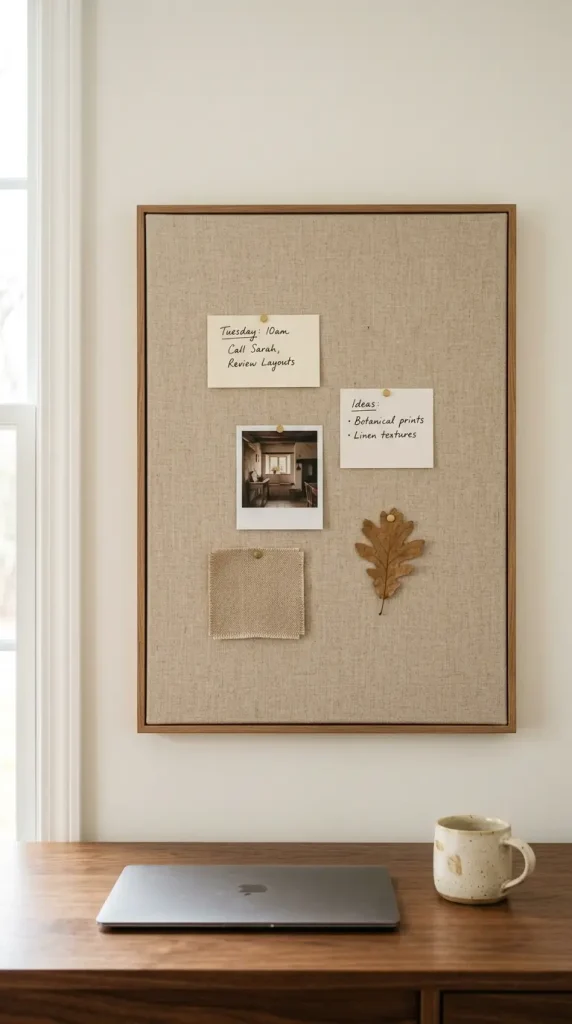
9. Layering Books by Spine Texture Rather Than Color
Most book-styling advice defaults to arranging by color, but a neutral wood-and-linen office benefits more from arranging books by spine texture and material instead, grouping cloth-bound spines together, leather-bound spines in another cluster, and paper jacket spines in a third, because this approach celebrates the natural material variety already present in any real, well-used book collection rather than imposing an artificial rainbow order on top of it. This texture-first arrangement keeps the shelving feeling like a genuine, lived-in library built up over years of actual reading rather than a styled prop arranged for how it photographs, and it sits more comfortably within the room’s broader material-first philosophy than a color-coordinated arrangement ever could.
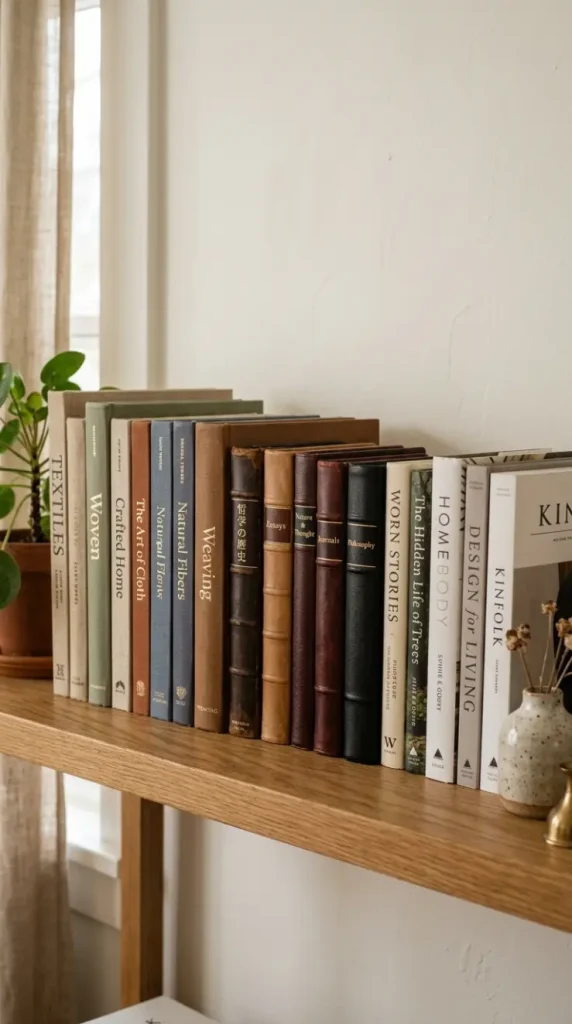
10. A Single Architectural Plant for Living Contrast
One substantial plant — a fiddle leaf fig, an olive tree, or a large snake plant in a pale stone or unglazed terracotta pot — positioned where it can be seen from the desk introduces the single living, growing element in a room otherwise built entirely from static natural materials, and its presence does real work beyond decoration: studies on workplace environments consistently link visible greenery to reduced stress and improved focus during long stretches of screen-based work. Choosing one substantial plant rather than several smaller scattered specimens keeps the room’s restrained, considered styling intact, treating the plant as a singular sculptural object worthy of its own visual space rather than as one of many decorative accessories competing for attention.
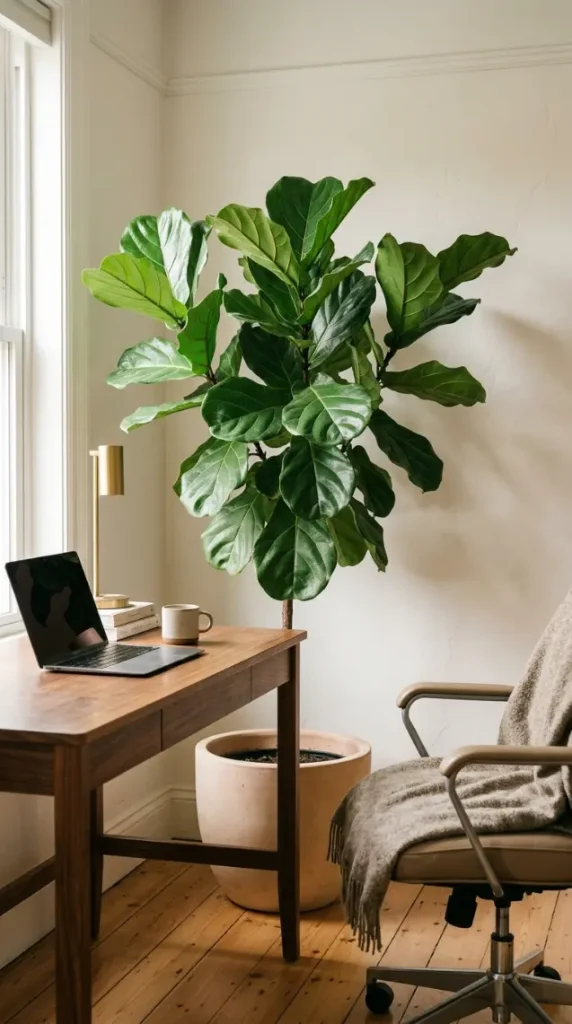
11. A Woven Storage Basket Beneath the Desk
A single woven basket — in natural seagrass, rattan, or jute — placed on the floor beneath or beside the desk gives the room a place for the cables, chargers, notebooks, and loose papers that would otherwise accumulate on the desk surface itself, solving the same practical clutter problem that a plastic file box solves but through a material that belongs to the room’s established natural palette rather than fighting against it. Choosing a basket large enough to genuinely hold a meaningful amount of clutter, rather than a small decorative one that fills immediately, means it actually functions as working storage rather than existing purely as a styling prop beside the desk legs.
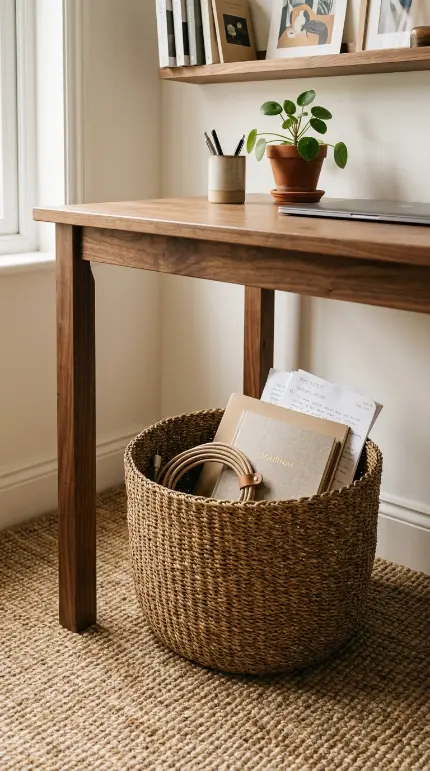
12. A Linen Table Runner Beneath the Desk Accessories
A narrow linen runner placed along the back edge of the desk, beneath the lamp, the small plant, and the pencil cup, does for the desk surface what a runner does for any console or dining table: it creates a defined textile zone that visually grounds the small objects sitting on it, while protecting the wood surface beneath from the scuffs and water rings that loose objects can leave directly on bare wood over time. The runner’s presence also signals, in the same quiet way a linen tablecloth does, that this surface is treated with the same domestic care as any other surface in the home rather than being relegated to pure utility because it happens to be where work gets done.
13. Warm Recessed or Picture-Rail Lighting Instead of Overhead Fluorescent
The single overhead fluorescent or cool-white LED fixture standard in most home offices casts the flat, shadowless, slightly blue-toned light most responsible for making a workspace feel clinical regardless of how warm the furniture beneath it is, and replacing it with warm recessed downlights, a picture-rail light washing the wall above the shelving, or simply several warm-toned lamps positioned around the room at different heights, eliminates this single largest source of visual coldness. Warm light at 2700K to 3000K color temperature, distributed across multiple smaller sources rather than one dominant overhead beam, creates the layered, shadow-and-highlight quality of light found in any well-lit living space, finally bringing the room’s lighting into alignment with the warmth already established by its wood and linen materials.
14. A Ceramic Catch-All Tray for Daily Small Objects
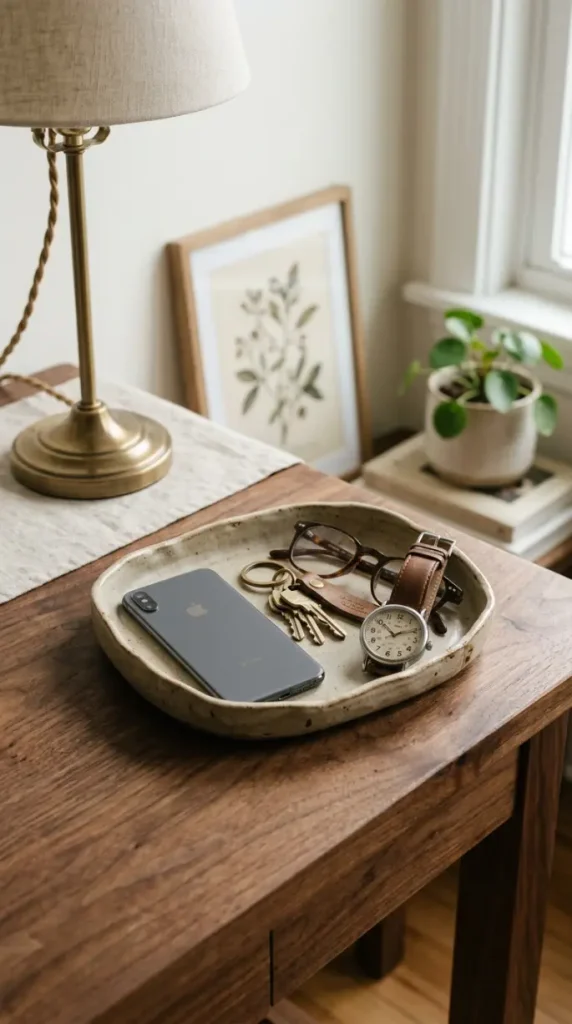
A shallow ceramic tray, in an unglazed stoneware or a simple matte glaze, positioned at one corner of the desk gives the small daily objects that otherwise scatter across a work surface — a phone, a set of keys, a pair of reading glasses, a watch removed before typing — one consistent, considered home rather than letting them land randomly wherever they happen to be set down. This small object performs the same function for a desk that an entry console’s key bowl performs near a front door, and its presence as one of the desk’s permanent fixtures means the daily ritual of arriving at the desk and leaving it both begin and end with a small, deliberate act of placing things down rather than dropping them.
15. A Wool Felt Desk Pad Instead of a Plastic Mouse Mat
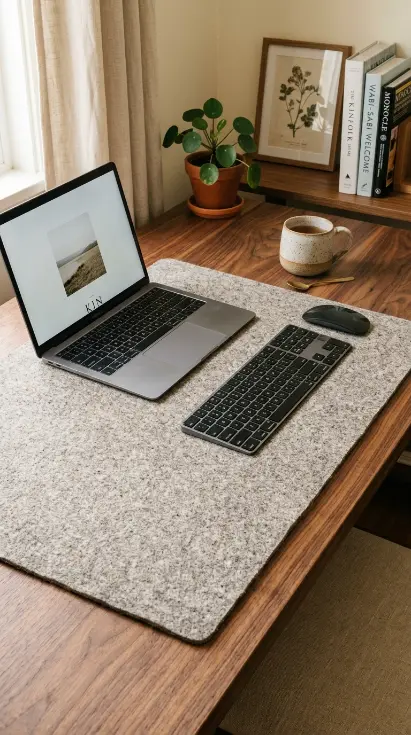
A full-desk felt pad, sized to cover most of the desk’s working surface, replaces both the plastic desk mat and the separate small mouse pad that conventional office setups typically require, while contributing one more layer of natural material and muted color to the desk surface itself. Wool felt’s dense, slightly textured surface provides genuine smooth gliding function for a mouse while also softening the visual and acoustic experience of typing, since a felt-covered surface dampens the sharp clack of a keyboard against bare wood in a way that contributes to the room’s overall sense of hushed calm, and the material’s natural color range, from oatmeal to soft charcoal, sits easily within the established neutral palette.
16. A Linen Roman Shade as an Alternative to Curtains
In a home office where a window sits directly behind or beside the desk, a linen Roman shade — fabric pleating neatly upward into soft folds when raised rather than stacking to one side like a curtain panel — offers a more controlled and more tailored alternative to flowing curtains, particularly useful when desk space is tight and a curtain’s fabric bulk at the window’s edge would crowd the work area. The shade’s pleated folds, even in its lowered position, catch soft shadow along each fold line the way any gathered linen does, and its clean, fitted silhouette when fully raised keeps the window opening unobstructed and the light entering the room as direct and bright as the workday requires.
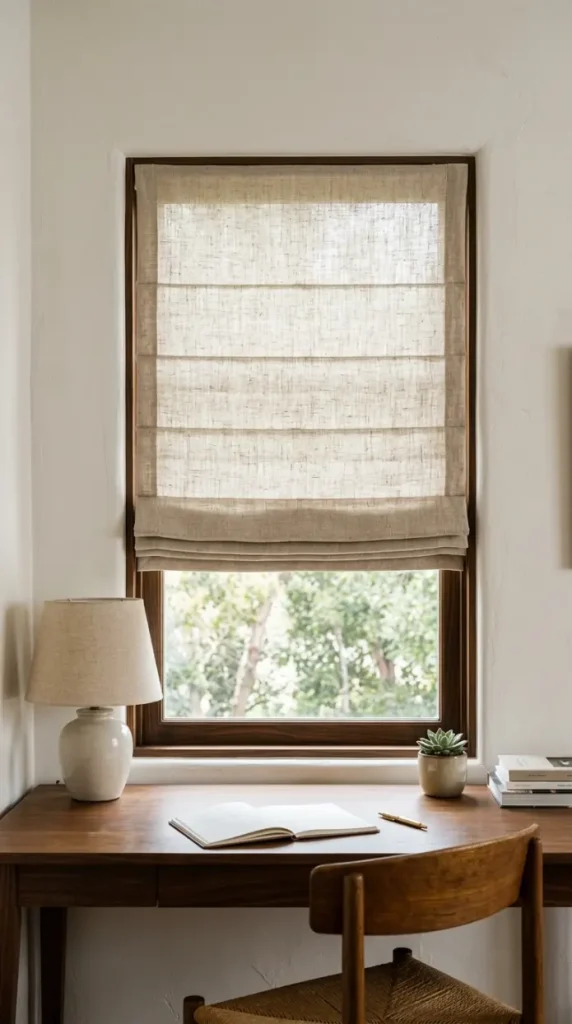
17. A Wood and Linen Filing Cabinet Disguised as Furniture
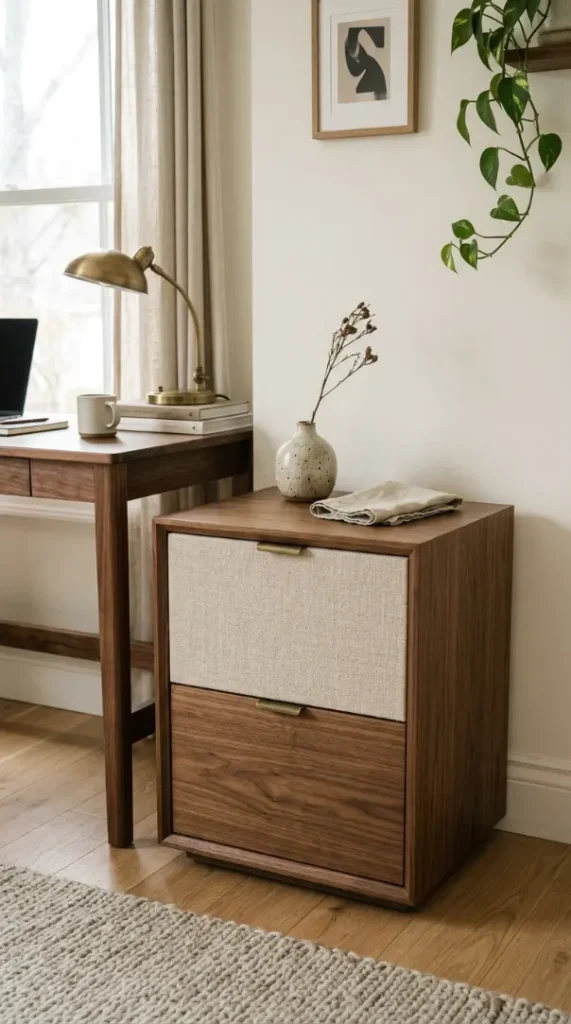
A filing cabinet clad in the same warm wood as the desk, or built as a simple wood cabinet with a linen-covered front panel rather than the standard grey metal drawer unit, removes the single most visually institutional object likely to appear in any home office and replaces it with something that reads as genuine furniture rather than imported office equipment. Positioned beneath the desk as a rolling unit or as a freestanding piece beside the shelving, this disguised filing storage keeps necessary paper organization fully functional while ensuring that nothing in the room visually announces itself as “office furniture” in the generic commercial sense, reinforcing the room’s overall success at feeling like any other considered room in the home.
18. A Small Stack of Vintage Books as a Monitor Riser
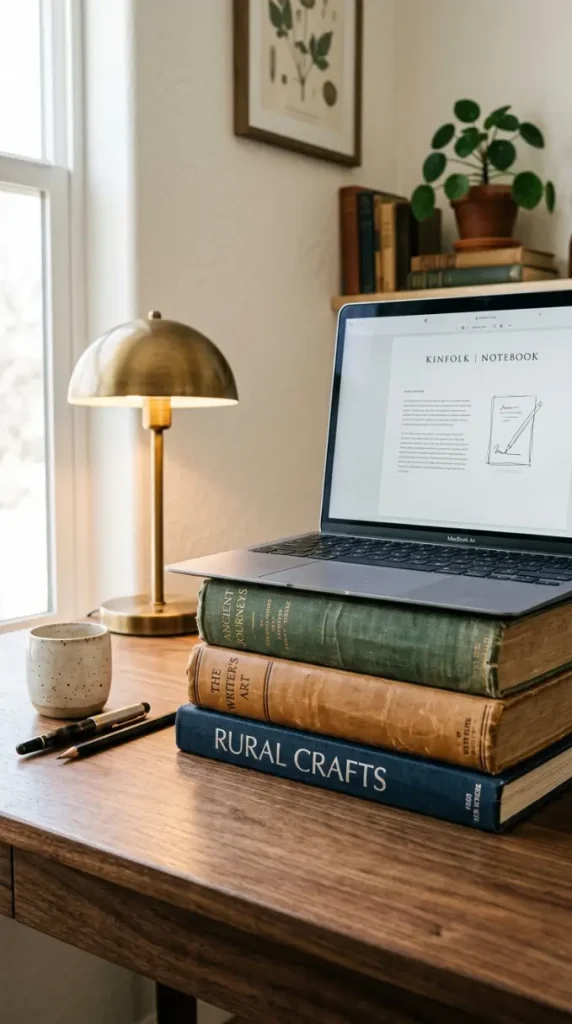
Raising a laptop or monitor to a more ergonomically correct eye level is a genuine physical necessity for anyone spending long hours at a screen, and a small stack of two or three substantial vintage hardcover books, their cloth or leather spines facing outward, performs this function while contributing yet another layer of warm material texture rather than requiring a separate purchased plastic or acrylic riser stand. The books should be chosen for their genuine height-appropriate thickness and their spine’s visual character rather than their content, functioning here as architecture rather than as reading material, and this small substitution typifies the entire room’s approach: solving a practical need through an object that already belongs to the room’s material world rather than importing something that does not.
19. A Linen Cord-Wrapped Cable Management System
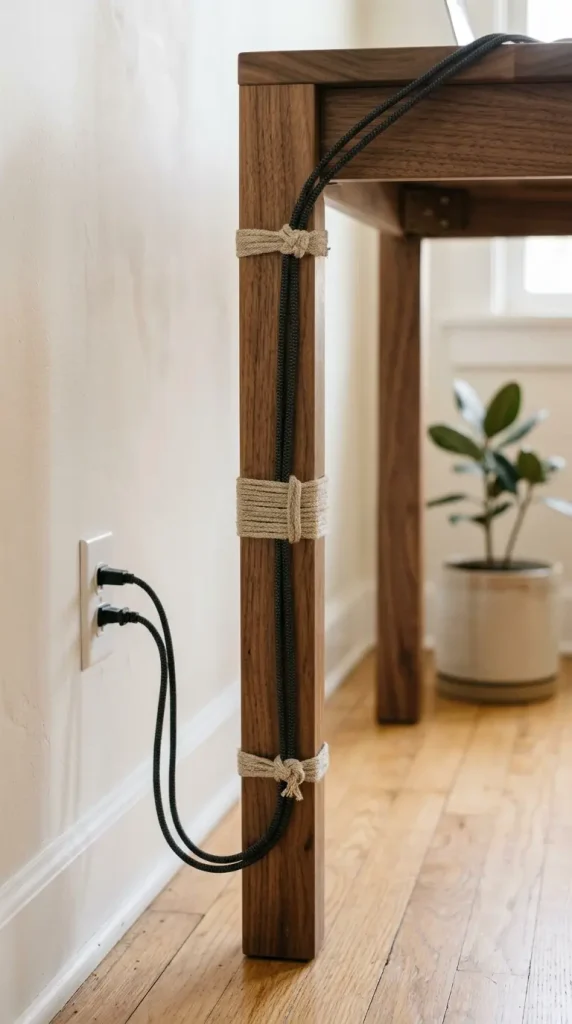
Bundling the inevitable tangle of charging cables and cords running from the desk to the wall outlet with a simple wrap of natural linen cord or fabric tape, rather than the bright-colored plastic cable ties or black zip ties typical of most desk setups, keeps even the most purely functional and least visible part of the office’s infrastructure consistent with its material palette. A few loose cable runs wrapped neatly in matching oatmeal linen cord, secured at intervals along the back desk leg, turns a typically ignored tangle of wiring into something that, if glimpsed at all, reads as another small considered detail rather than the one obviously synthetic element hiding in an otherwise all-natural room.
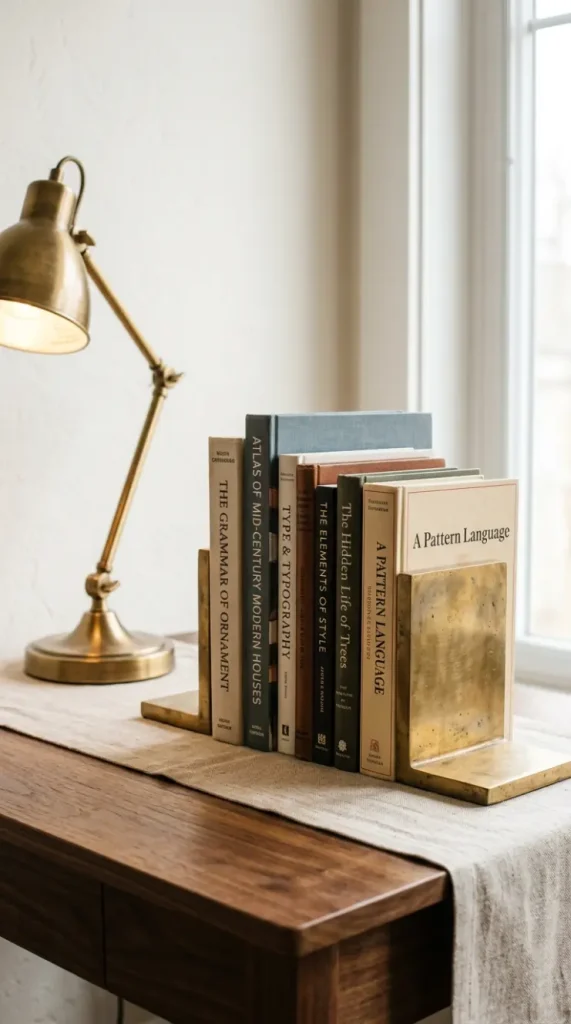
20. A Small Brass or Wood Bookend Pair to Frame a Working Library
A pair of bookends, in solid brass or in the same wood as the desk, positioned at either end of a small working reference library on the desk or the nearest shelf, gives a frequently used cluster of books — dictionaries, style guides, current project references — a defined boundary that keeps them standing upright and accessible rather than slowly leaning and sliding across the desk surface as books are pulled out and replaced throughout the day. Beyond their practical function, a well-chosen pair of bookends in a material echoing the lamp’s brass or the desk’s wood becomes one more small, considered object reinforcing the same material vocabulary running through every other choice in the room.
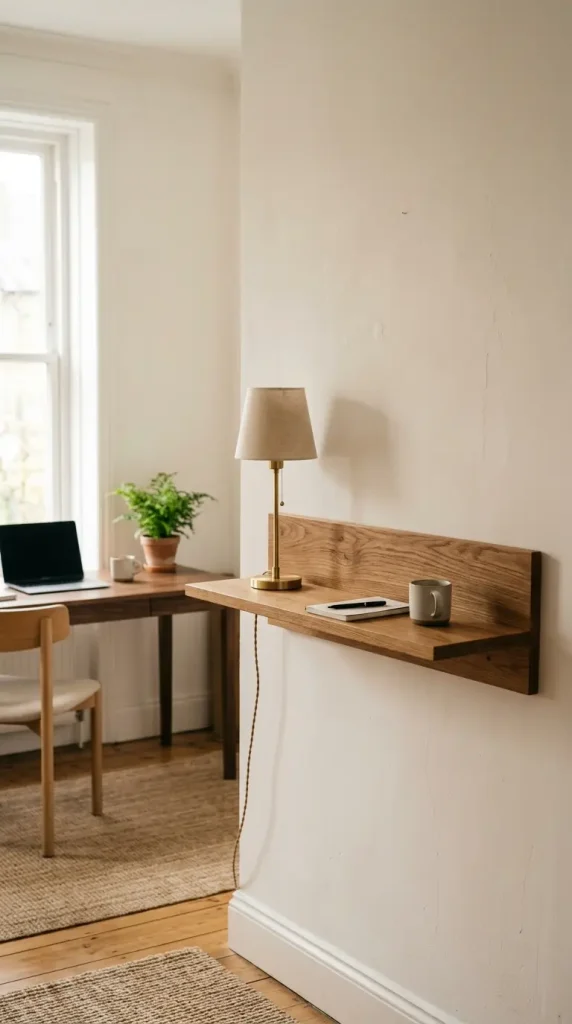
21. A Wall-Mounted Wood Shelf for a Standing Work Break
A single narrow wood shelf, mounted at standing height on the wall opposite or beside the desk, gives the room a place to stand and work briefly — sorting mail, reviewing a printed document, or simply standing up from the desk chair for ten minutes without leaving the room entirely — addressing the genuine physical benefit of alternating between sitting and standing throughout a long workday without requiring a full sit-stand desk conversion. The shelf, in the same warm wood as the desk and shelving, holds nothing permanent beyond perhaps one small lamp, keeping its surface clear and ready for whatever brief standing task the day calls for.
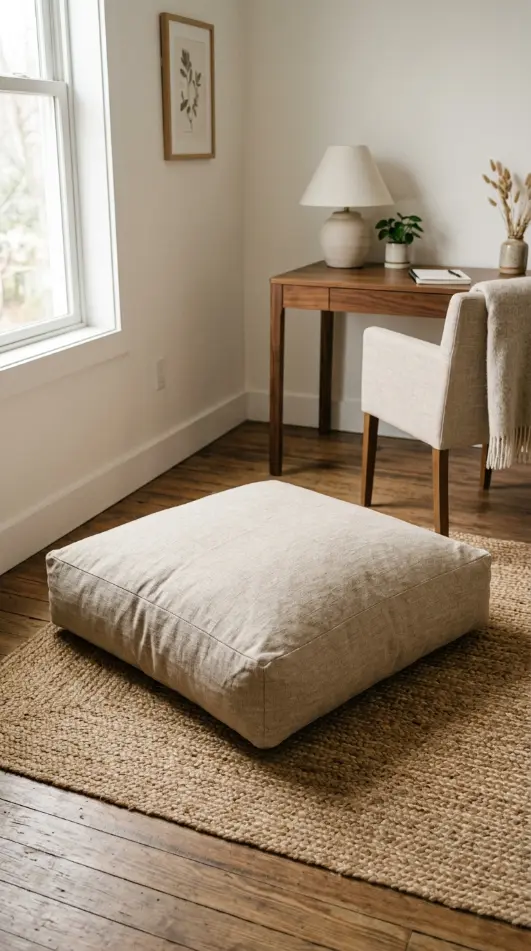
22. A Linen Floor Cushion for Floor-Level Stretch Breaks
A simple floor cushion, in the same oatmeal linen as the armchair and runner elsewhere in the room, positioned on the jute rug in a corner of the office, gives the body a place to sit on the floor for a few minutes of stretching, breathing, or simply a change of physical posture during a demanding day, extending the room’s commitment to genuine restorative function down to floor level in the same way the cloud bedroom’s floor cushions extended its softness downward. This is a small, low-cost addition, but its presence signals that the room anticipates and accommodates the body’s actual physical needs throughout a long day rather than assuming a single desk chair will serve every posture a person might require.
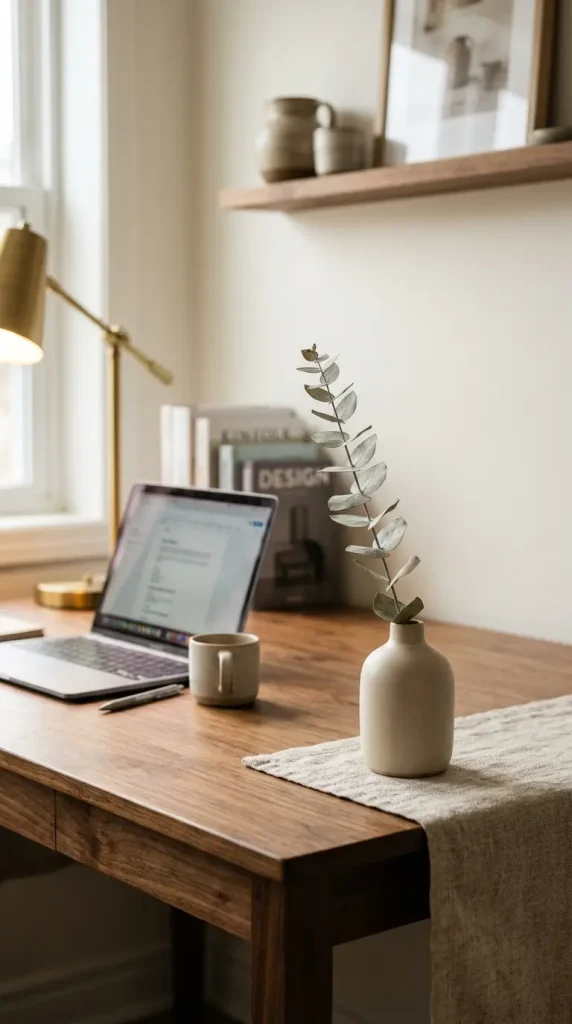
23. A Small Ceramic Vase With a Single Seasonal Stem
One small ceramic bud vase on the desk, holding a single seasonal stem — a sprig of eucalyptus, one stem of dried wheat, a single garden rose in summer — rather than a larger arranged bouquet, gives the desk a quiet, low-maintenance living detail that changes gently through the year without requiring the ongoing care a larger arrangement or a second plant would demand. Its small footprint means it never competes for desk space with actual work materials, and the simple act of replacing one stem every week or two becomes a small, pleasant ritual marking the passage of time across a working year that otherwise might pass entirely unmarked at a desk.
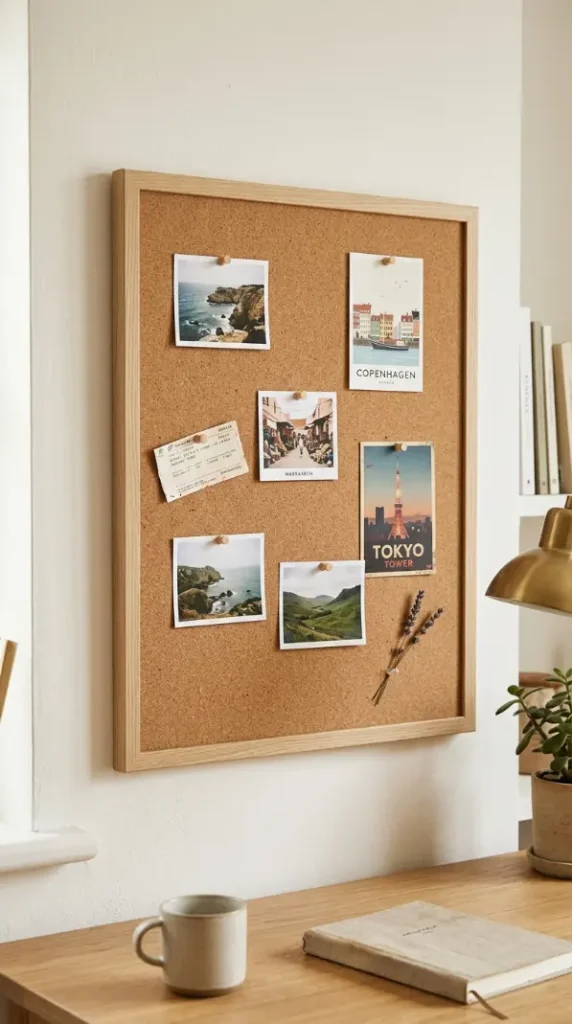
24. A Wood-Framed Cork Map or Travel Pinboard for Personal Touch
A second, smaller pinboard, framed in matching wood and either left as natural cork or covered in a muted map print, gives the office one wall element entirely dedicated to personal rather than functional content, a place for travel photographs, pinned postcards, or a small collection of pressed tickets and mementos that have nothing to do with current work tasks. Positioned somewhere visible from the desk chair but distinct from the primary linen working pinboard, this second board acknowledges that a genuinely restorative office benefits from at least one wall surface dedicated purely to memory and personal history rather than active task management.
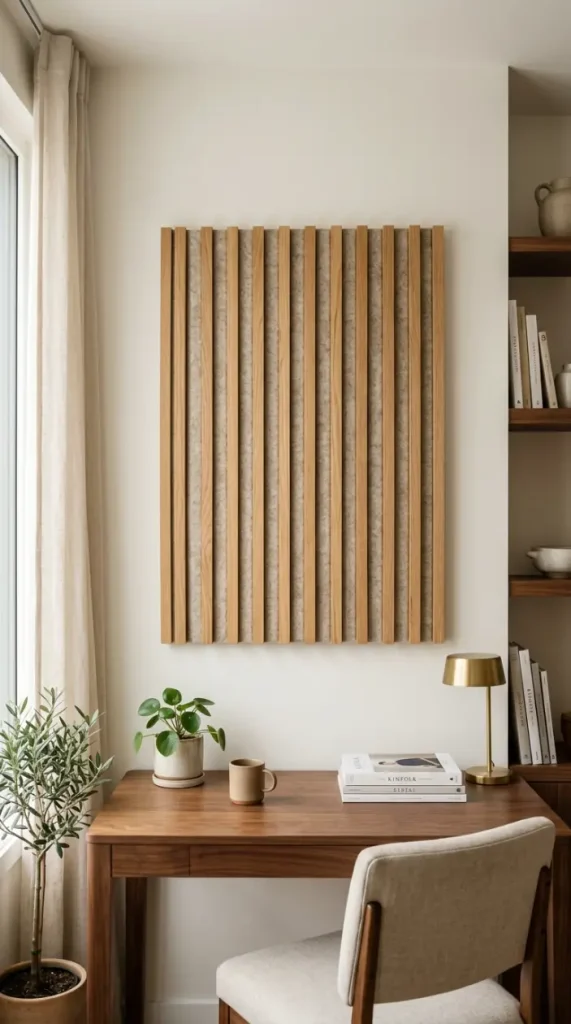
25. A Wood and Wool Acoustic Panel for a Quieter Room
A simple acoustic panel, built with a visible wood slat frame over a wool felt core in a warm neutral tone, mounted on the wall behind or beside the desk, addresses the practical problem of sound reflecting harshly off bare walls and hard flooring during video calls or focused concentration work, while looking like a genuine piece of textured wall art rather than the black foam wedge typical of converted closets and podcast studios. The wood slats, spaced evenly across the panel’s face, echo the same material language as the desk and shelving, proving that a functional acoustic intervention can be designed with the same visual intention as every decorative choice in the room rather than being treated as a purely technical afterthought.
26. The Complete Cozy Neutral Office — Every Material Together
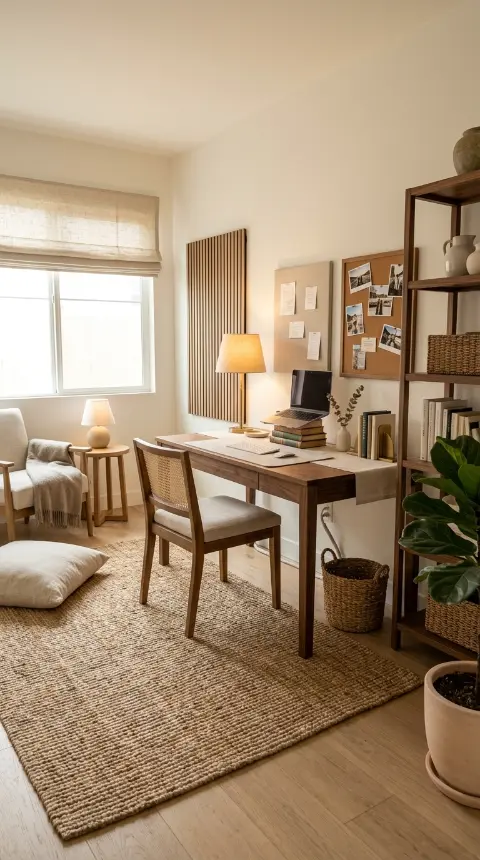
The complete cozy neutral home office is the fully realized version of every principle in this guide working together across one entire room: a solid walnut desk anchoring the space, a wood-framed cane chair with a linen cushion, linen curtains or a Roman shade diffusing the window’s light, open wood shelving styled with deliberate restraint, a brass lamp with a linen shade providing warm evening light, a reading nook with its own armchair and throw clearly separating rest from work, a jute rug anchoring the desk zone, a linen pinboard and a separate personal memory board on the walls, a woven basket and a disguised wood-and-linen filing cabinet handling storage, small considered objects like the ceramic catch-all tray and the bud vase, and even the room’s acoustics and cable management addressed in matching natural materials. Every surface from the desk grain to the smallest brass bookend speaking the same warm, calm, considered material language, proving that the room where work happens can be built with exactly the same intention as any other room in the home.