
26 Outdoor Patio Ideas With a Cozy Pergola Dining Setup
A pergola changes the experience of an outdoor patio more fundamentally than any other single structure — not by enclosing it, but by defining it. The moment a pergola frame rises above a patio dining table, the space beneath it becomes a room. Not a room with walls, not a room with a ceiling in the conventional sense, but a room nonetheless — with a defined boundary overhead, a sense of shelter that an open patio cannot provide, and a quality of filtered light falling through the structure above that is one of the most beautiful light conditions available in any domestic setting.
The outdoor patio with a pergola dining setup is the most universally desired garden feature for a reason that goes beyond aesthetics: it solves the fundamental problem of outdoor dining, which is the absence of shelter from sun, light rain, and the psychological exposure of sitting in completely open space. The pergola provides overhead definition without enclosure, filtered shade without darkness, shelter without separation from the garden and the air around it.
These 26 ideas cover every dimension of this combination — from the pergola structure material and form to the dining table and chair selection, the climbing plant and greenery strategy, the lighting that makes the pergola dining setup genuinely atmospheric after dark, the flooring beneath, the privacy and enclosure solutions at the pergola sides, and the complete cozy pergola dining patio in its most fully realized form across every season and every light condition.
1. Aged Timber Pergola Structure Over the Dining Zone
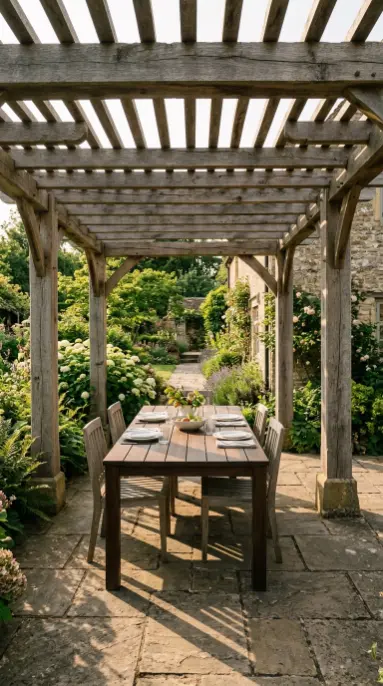
The pergola structure material is the decision that determines the entire character of the outdoor patio dining setup — and aged or naturally weathered timber is the material that most naturally delivers the cozy, sheltered, atmospheric quality the pergola dining experience is built on. Douglas fir, cedar, or oak pergola rafters allowed to weather to a natural silver-grey or treated with a warm aged oil finish have a surface quality — the grain, the weathering variation, the warmth of the timber tone — that steel and aluminium pergola systems can never replicate. The timber rafters running in parallel rows above the dining table create a directional overhead geometry that is itself a beautiful design element before any climbing plant or lighting is added to it.
2. Climbing Wisteria Over the Pergola Canopy
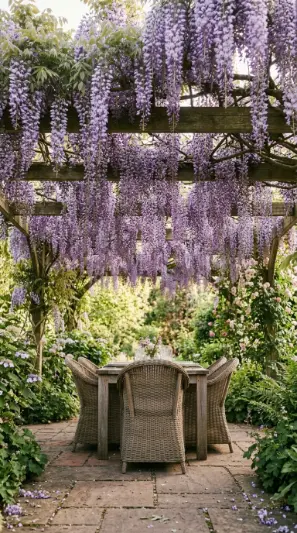
Wisteria is the climbing plant that most completely transforms a timber pergola into a living room — when fully established, it covers the rafter structure with a dense canopy of grey-green leaves and, in season, produces cascading clusters of pale lavender or white flowers that hang through the pergola rafters and fill the dining space below with fragrance and filtered violet-white light. The dappled light quality beneath a wisteria-covered pergola — moving slightly in any breeze, shifting as the light changes through the day — is the most beautiful natural light condition an outdoor dining space can have. Wisteria takes three to five years to reach full coverage, but even in its second year it begins to deliver the atmospheric quality that makes the pergola dining space feel genuinely extraordinary.
3. String Lights Woven Through Pergola Rafters
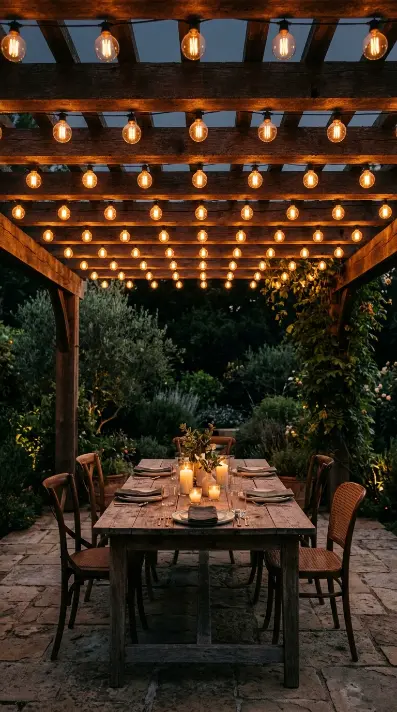
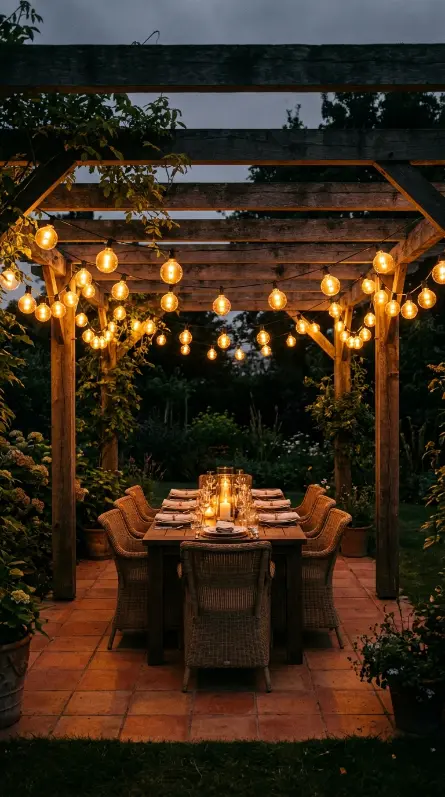
String lights woven through the timber rafters of a pergola are the single lighting decision that most transforms the outdoor dining patio from a daytime structure to an all-evening atmospheric room — and the specific quality of the Edison filament globe on a warm amber string, hung at rafter level approximately 250cm above the dining table, is the quality that makes every outdoor meal beneath a pergola feel like a genuinely special occasion. The string lights should be woven across the full pergola ceiling in parallel or grid runs, with bulbs spaced at approximately 25-30cm intervals — dense enough to create a ceiling of warm points of light rather than isolated bulbs, but not so dense that the individual bulb forms and the warm filament glow of each one is lost.
4. Long Dark Timber Dining Table as the Pergola Centerpiece
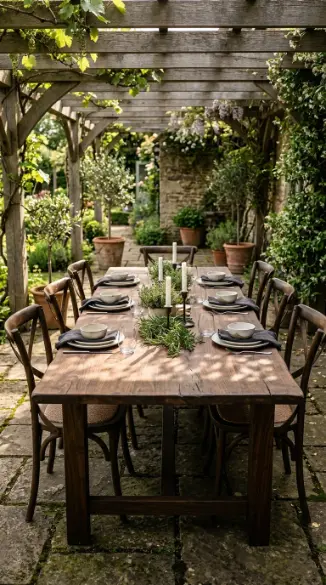
The dining table is the centerpiece of the pergola dining setup — the piece around which every other decision organizes itself — and for a cozy outdoor patio pergola, the right table is long, dark, and made of timber with genuine grain character. A dark walnut or weathered dark teak outdoor dining table, approximately 220-260cm long and 90cm wide, positioned at the center of the pergola’s covered zone, creates a surface of material seriousness and warmth that resin, aluminium, and most other outdoor table materials cannot deliver. The dark timber surface in the dappled light beneath a planted pergola, set simply with white ceramics and linen napkins and candles, is one of the most photographically and atmospherically powerful outdoor table compositions available.
5. Rattan and Timber Outdoor Dining Chairs Around the Pergola Table
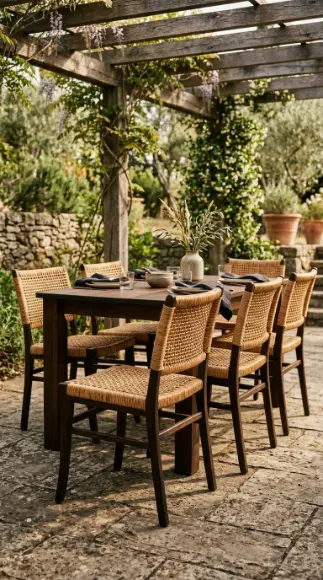
The dining chairs around the pergola table determine the cozy quality of the setup more than any other single element — and the combination of natural rattan seat and back weave with a dark timber or black powder-coated steel frame is the chair profile that best delivers the warmth and texture that the cozy pergola dining atmosphere requires. Rattan weave has a surface quality — the irregular natural fiber texture, the warm honey-brown tone, the slight variation across individual weave panels — that introduces a layer of organic warmth to the pergola dining setup that solid timber, aluminium, and resin chairs cannot provide. Eight matching rattan and dark timber dining chairs around a long dark walnut table beneath a planted pergola with string lights above is the complete cozy outdoor dining composition.
6. Terracotta Paver Floor Beneath the Pergola
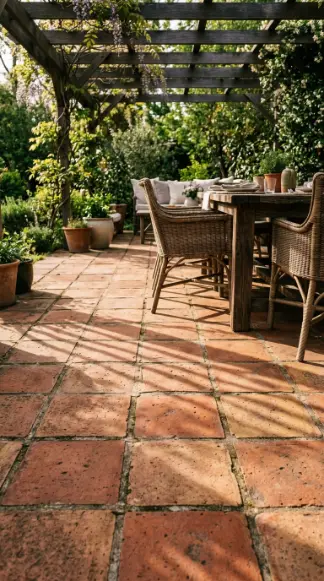
The floor surface beneath the pergola dining setup is the material that anchors the entire outdoor patio to the ground — and for a cozy pergola dining atmosphere, aged terracotta pavers are the floor choice that contributes most warmth and most material character. Terracotta’s warm red-orange clay tone, the natural variation in surface color and texture across individual paver faces, and the beautiful aging quality that develops as terracotta weathers and takes on moss and variation at the joints — all of these make it the most alive and most warm floor material for a cozy outdoor dining space. Large format aged terracotta pavers, approximately 40cm by 40cm, laid in a consistent grid, create a floor surface that feels genuinely old and genuinely warm rather than recently installed and recently chosen.
7. Jasmine and Rose Climbing the Pergola Posts
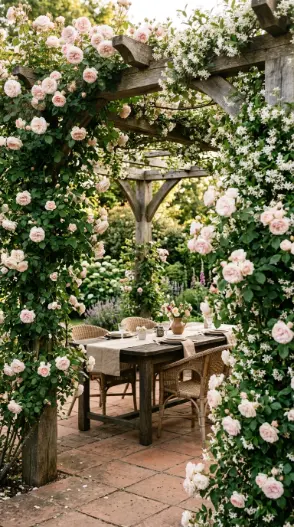
Climbing roses and jasmine growing up the pergola posts and along the lower rafter edges are the plants that make the pergola dining space feel genuinely intimate and genuinely enclosed on its vertical sides — without the visual weight of solid walls or screening. A climbing rose — David Austin or similar — trained up each pergola post and along the first horizontal rafter run, produces soft pink or cream flowers at approximately eye and head height around the dining table perimeter, framing every seated diner within a living floral border and contributing fragrance that makes the outdoor dining experience genuinely multisensory. White jasmine trained alongside delivers additional fragrance and small white star flowers that complement rather than compete.
8. Candles and Lanterns as the Pergola Dining Table Centerpiece
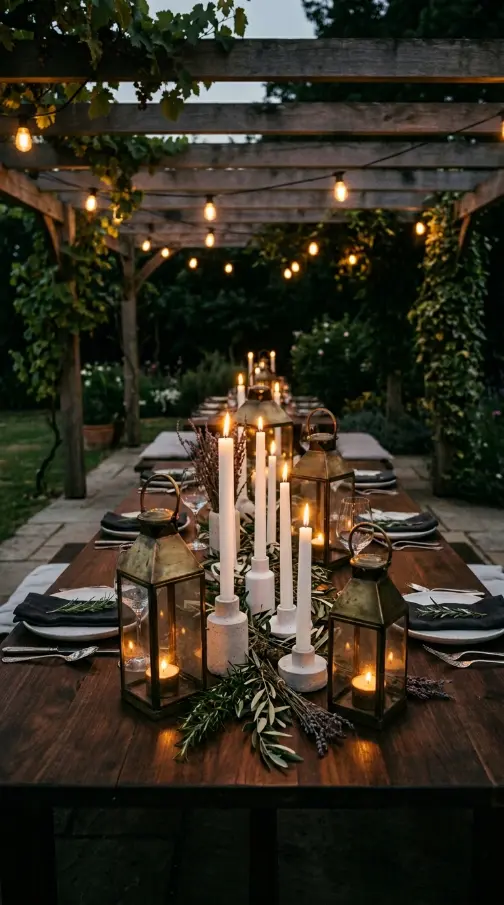
The table centerpiece arrangement for a cozy pergola dining setup should be low enough not to interrupt conversation across the table and atmospheric enough to contribute meaningfully to the evening dining experience — and a long low row of candles and dark lanterns running the full length of the table center achieves both. Three to five church candles in simple ceramic or concrete holders, interspersed with two or three dark iron or aged brass lanterns of varying heights, with sprigs of fresh rosemary, olive branches, or dried flowers laid loosely between them, creates a table centrepiece of genuine warmth and genuine hospitality that is impossible to achieve with a single centrepiece arrangement or a floral decoration.
9. Pergola Side Curtains for Cozy Enclosure
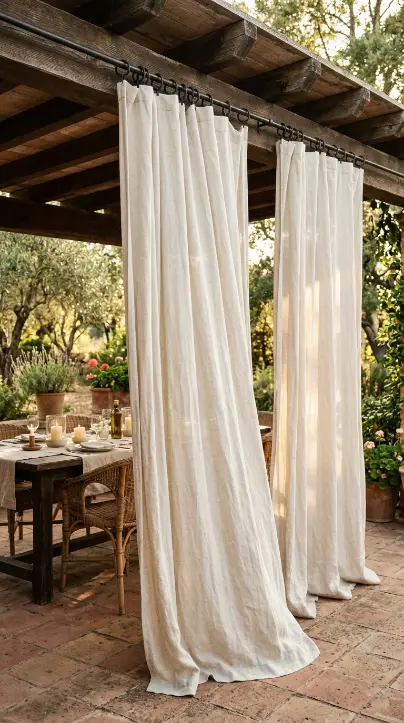
Linen or heavyweight cotton curtain panels hung from the horizontal beams of the pergola sides — not from a separate track but from iron rings on the rafter underside — create a soft enclosure option for the pergola dining space that transforms the open-sided structure into a genuinely intimate and sheltered outdoor room when drawn and returns it to a fully open patio dining space when pushed back. Natural undyed linen in a generous off-white or warm cream, floor length from rafter underside to patio floor, pooling very slightly at the bottom, with a natural drape and fabric weight that moves gently in any breeze — this is the curtain treatment that makes the cozy pergola dining enclosure feel genuinely luxurious.
10. Outdoor Pendant Light Over the Pergola Dining Table
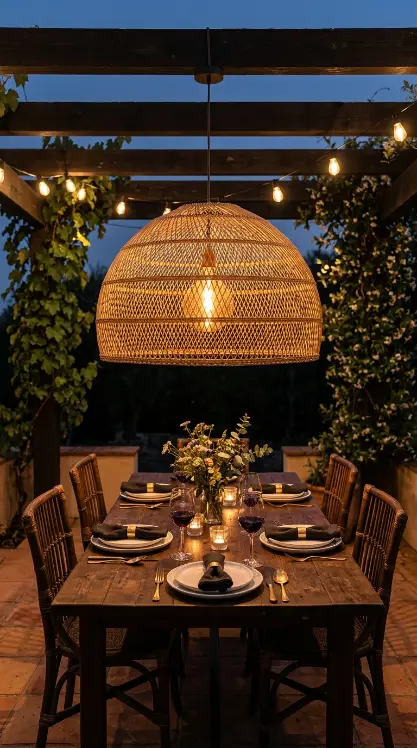
A single large outdoor pendant light — a woven rattan or dark iron dome hung from the center rafter of the pergola directly above the dining table at approximately 180cm from the table surface — provides the primary task light for the dining table and creates a visual anchor overhead that pulls the pergola dining space together as a defined room. The pendant does the same work indoors as it does outdoors: it identifies the table as the center of the space and creates a warm cone of light that makes the faces and the table setting below it glow. For the cozy pergola dining setup, a large woven rattan dome pendant — approximately 60-80cm diameter — is the form that best complements the natural material palette of the timber pergola, the rattan chairs, and the dark timber table.
11. Pergola Dining Patio at Golden Hour
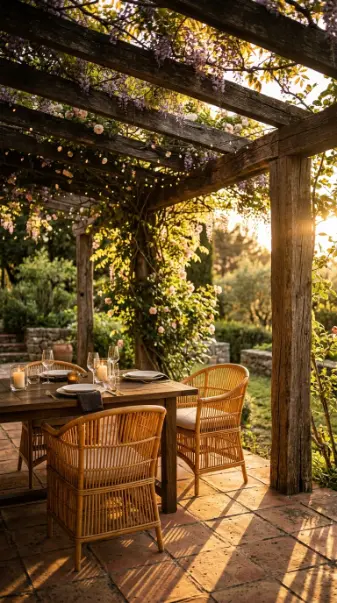
The cozy pergola dining patio at golden hour — that forty-minute window before sunset when the horizontal warm light enters the pergola from the side, rakes across the table surface, catches the rattan chair weave and the timber grain and the climbing plant foliage in warm amber light, and creates long moving shadows through the rafter geometry above — is the version of the pergola dining space that most clearly demonstrates why every element of the material and planting palette was worth the investment. At golden hour, a cozy timber pergola with a dark timber dining table and planted canopy and rattan chairs is not a garden feature — it is one of the most beautiful rooms a house can contain.
12. Reclaimed Timber Pergola for Aged Character
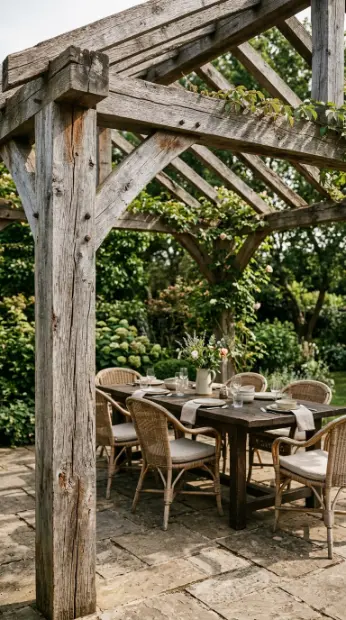
A pergola built from reclaimed or salvaged timber — old barn beams, reclaimed oak, or salvaged hardwood posts and rafters — brings to the outdoor patio dining setup a quality of aged character and material richness that new timber, however well chosen, cannot replicate. Reclaimed timber beams carry the marks of their previous existence — saw marks, bolt holes, surface weathering, grain variation, the accumulated patina of decades — and these marks make the pergola structure feel as though it belongs to the garden and to the site rather than having been recently installed in it. A reclaimed timber pergola over a cozy outdoor dining table makes the patio feel genuinely old, genuinely rooted, and genuinely impossible to replicate.
13. Festoon Lights on the Pergola Perimeter for Evening Ambiance
Festoon lights — the larger-format globe version of string lights, with individual bulbs of 8-10cm diameter on a black cable, hung in catenary curves between the pergola posts and along the perimeter rafter edges — create an outdoor patio evening atmosphere that is more celebratory and more generous in scale than the tighter string light ceiling inside the pergola rafters. Festoon lights hung around the pergola perimeter frame the dining space within a garland of warm amber globes and make the outdoor patio dining setup visible and atmospheric from the garden beyond — they read at a landscape scale, making the lit pergola dining space the glowing warm center of the whole garden at night.
14. Breakfast Beneath the Pergola — Morning Light
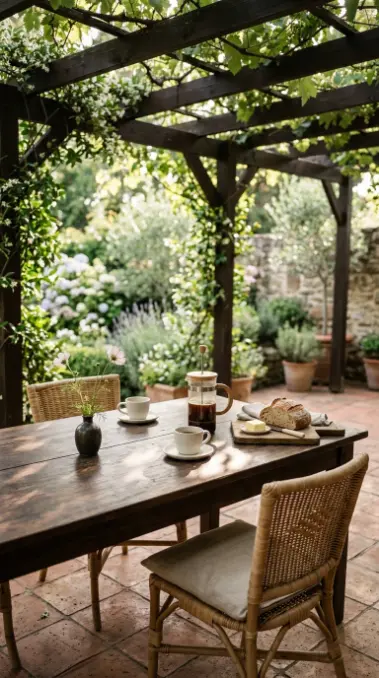
The cozy pergola dining patio at its most domestic and most quietly beautiful moment is early morning — when the light is still low and soft and directional, filtering through the climbing plant canopy and the rafter geometry above, and the dining table is set simply for breakfast with a cafetière, ceramic cups, a small jug of flowers, and a bread board. The pergola dining space at breakfast is the version of the outdoor dining experience that makes the whole investment feel completely worth it — not the grand evening dinner party, but the ordinary morning when the light is right and the garden is still and the coffee is fresh and the table is outside.
15. The Complete Cozy Pergola Dining Patio — Summer Evening
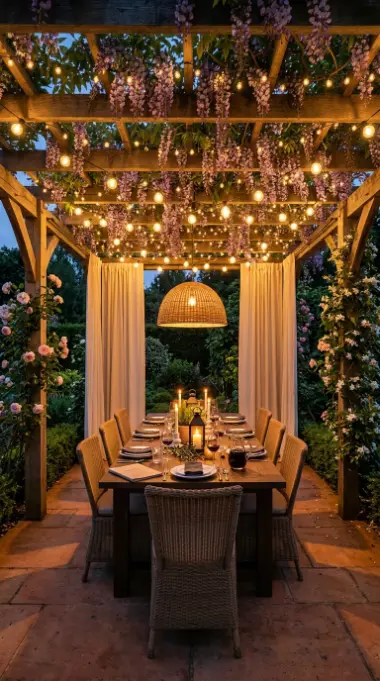
The complete cozy pergola dining patio on a summer evening — table set for eight, string lights and festoon lights and pendant light all glowing, candles burning along the full table center, linen curtain panels softly drawn on two sides, wisteria and climbing roses in flower overhead and on the posts, the warm amber glow from within the pergola spilling onto the terracotta floor and into the garden beyond, the sound of the evening garden all around — is the fullest and most beautiful expression of everything the cozy outdoor pergola dining setup achieves. This is the outdoor room that makes every material choice and every planting decision and every lighting decision feel completely and permanently worth it.
16. Grapevine Trained Over the Pergola for Natural Shade
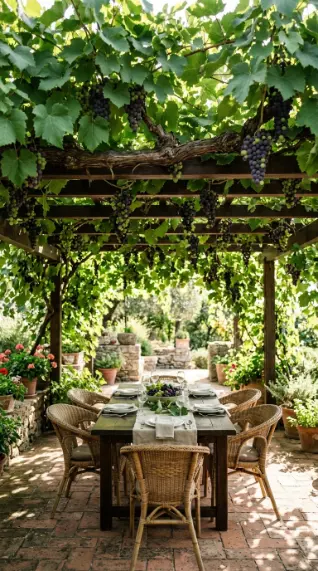
A grapevine trained over a timber pergola is the oldest and most naturally purposeful climbing plant choice for an outdoor dining space — it provides dense summer leaf shade at exactly the season when shade is most needed, produces its own fruit above the dining table in late summer, and then drops its leaves in autumn to allow the maximum winter sun through the bare rafter structure. The combination of function and beauty in a mature pergola grapevine is unmatched by any other climbing plant: the large lobed leaves create a genuinely dense green canopy in July and August, the hanging grape clusters in late summer are among the most beautiful natural forms a pergola ceiling can carry, and the bare twisted main stems in winter have their own austere graphic beauty against the sky.
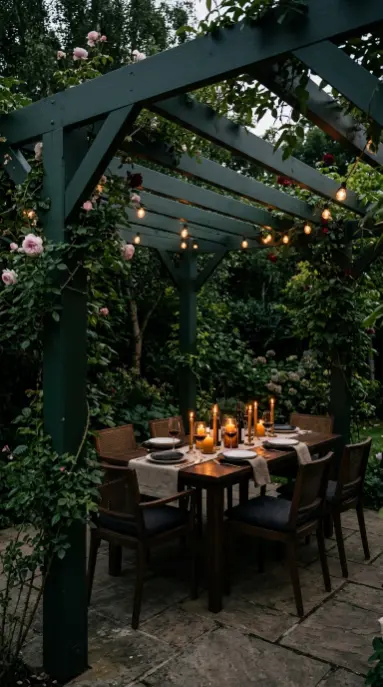
17. Dark Green Painted Pergola Frame for a Moody Outdoor Dining Atmosphere
A timber or steel pergola frame painted in a deep dark green — forest green, olive, or near-black sage — rather than left natural or painted white or grey, creates an outdoor patio dining atmosphere that is fundamentally different from any natural timber or neutral tone pergola. The dark green frame reads as part of the garden rather than as a structure placed in it — it recedes visually against the garden planting beyond, makes the climbing plants appear to grow from the structure itself, and gives the outdoor dining space beneath a sense of enclosure and moodiness that natural timber cannot deliver. Against a dark green pergola frame, white ceramics on a dark table appear more vivid, candlelight appears warmer, and linen curtain panels appear more luxurious.
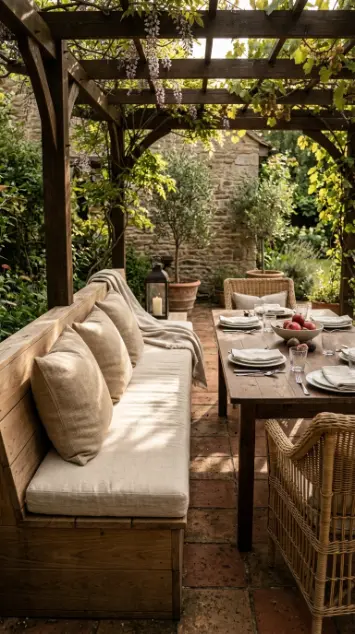
18. Built-In Bench Seating Along the Pergola Side
A built-in timber bench — running the full length of one pergola side at seat height, with a thick upholstered outdoor cushion in natural linen or waterproof canvas — creates a seating configuration for the pergola dining table that is fundamentally more cozy and more convivial than individual chairs on all sides. The built-in bench fixes one long side of the dining arrangement, allows diners to slide along and settle rather than pulling individual chairs in and out, and creates a sense of permanence and architectural integration that moveable chairs cannot provide. Styled with three or four large outdoor cushions in natural linen, a throw folded at one end, and low lanterns on the bench beside the place settings, the built-in pergola bench becomes the most inviting seat in the outdoor dining space.
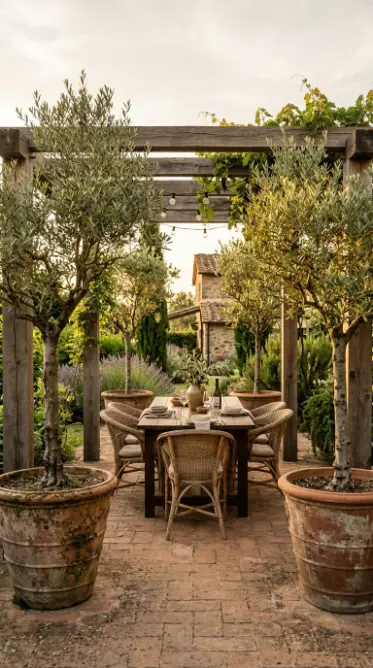
19. Potted Olive Trees at the Pergola Corners
Four large potted olive trees — in aged terracotta or pale concrete pots, one positioned at each pergola post base — create a soft green vertical presence at the four corners of the outdoor patio dining space that anchors the pergola to the ground plane, introduces a layer of living material at post height before the climbing plants reach full coverage, and creates a sense of the dining space being set within a grove of trees rather than simply placed on a patio. Olive trees in large pots are the perfect pergola corner plant: their scale is appropriate, their silvery-green leaf color works with every pergola and table material palette, they are evergreen so they provide year-round presence, and their gnarled trunk form becomes more beautiful the older the specimen.
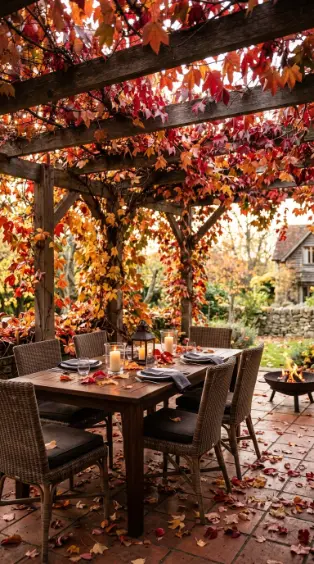
20. Pergola Dining Patio in Autumn — Falling Leaves and Warm Light
The cozy pergola dining patio in autumn — when the climbing virginia creeper or wisteria foliage has turned to deep crimson and amber and gold, when the light is low and honey-warm at a consistent golden angle through the day, when fallen leaves collect on the terracotta floor between the chair legs and the table surface holds the last warmth of the season — is the version of the outdoor patio dining setup that most people do not anticipate and most people find the most unexpectedly beautiful. The autumn pergola dining space, with a fire pit burning nearby, candles on the table at midday, and the crimson climbing foliage overhead in peak autumn color, is one of the most atmospherically rich outdoor dining experiences the garden can provide.
21. Trailing Hanging Plants From the Pergola Rafters
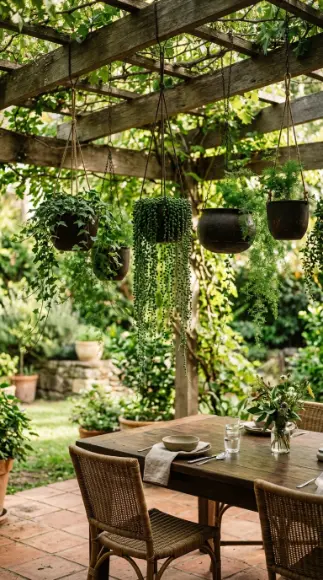
Trailing plants hung from the pergola rafters — string-of-pearls, trailing ivy, or cascading ferns in simple dark iron or terracotta hanging pots suspended between the rafter beams — create a living ceiling layer that differs from the flat climbing plant canopy in bringing plant material down into the dining space at head height and below, creating a genuine sense of being enclosed within a garden rather than merely sitting beneath one. Three to five hanging pots suspended at varying heights from the pergola rafter underside, with trailing growth hanging freely downward 30-50cm, create a layered green overhead atmosphere that makes the cozy pergola dining space feel genuinely wild and genuinely lush.
22. Pergola Dining Patio With an Outdoor Fireplace or Chiminea
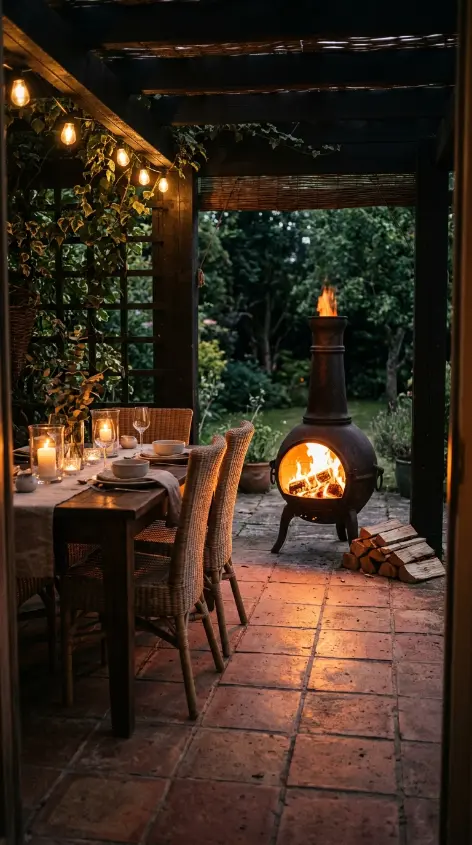
A chiminea or small outdoor fireplace positioned at the open end of a cozy pergola dining patio — not beneath the pergola structure but at its open perimeter, facing inward toward the dining table — extends the usable season of the outdoor dining space deep into autumn and into mild winter evenings, provides a warm visual anchor at the garden end of the patio composition, and creates the specific quality of wood smoke and firelight that no gas heater or electric heat lamp can replicate. A tall dark iron chiminea or a simple rendered masonry fireplace at the pergola edge, with a neat stack of firewood beside it, makes the outdoor patio dining setup feel genuinely self-sufficient and genuinely seasonal.
23. Herbs and Edible Plants Growing Within the Pergola Zone
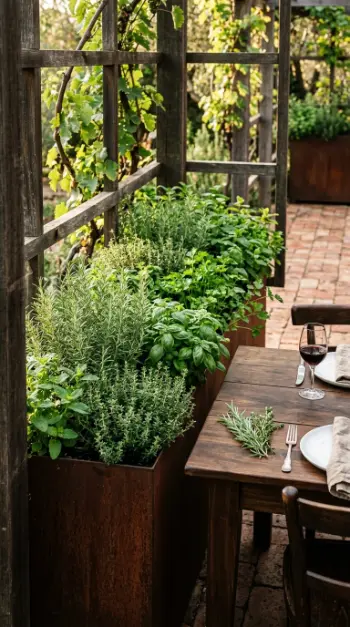
Raised herb beds or deep planter troughs built into the pergola structure itself — along the inside face of one or two pergola sides at bench height, or as freestanding deep timber or dark Corten steel planters within the pergola zone — bring edible and aromatic planting into the immediate dining space, so that the rosemary, thyme, basil, and mint growing within arm’s reach of the dining table are genuinely available for the meal being eaten at it. Herbs growing in abundance within the pergola dining zone, brushed as diners pass, contribute fragrance to the dining atmosphere that is completely specific to the outdoor garden dining experience and completely impossible to replicate indoors.
24. Pergola Dining Patio Flooded With Rain — The Covered Outdoor Room
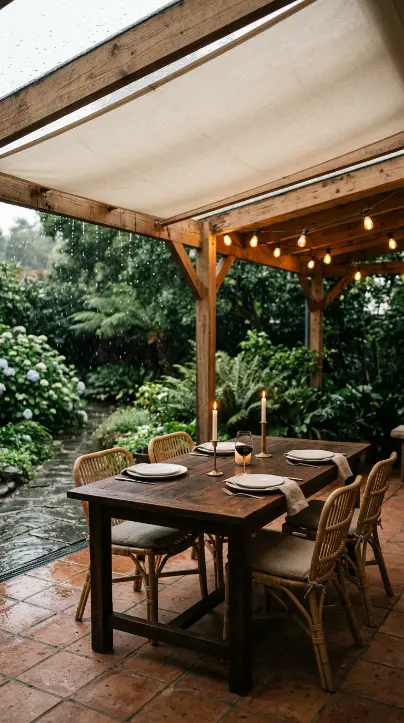
A well-positioned pergola with a retractable canvas roof panel or a corrugated clear polycarbonate roofing section above the dining table zone — not the full pergola but the central dining section — creates an outdoor patio dining space that remains genuinely usable in light to moderate rain, making the covered section of the pergola function as a true outdoor room in all but the most extreme weather. The sound of rain on a canvas or polycarbonate roof above an outdoor dining table, with the garden rain visible beyond the open pergola sides, is one of the most atmospheric and most specific pleasures of the covered outdoor dining experience — completely unavailable to any indoor dining room.
25. Mismatched Vintage Chairs Around the Pergola Table for an Eclectic Cozy Look
A deliberately eclectic mix of vintage and mismatched outdoor dining chairs around the pergola table — a bentwood chair beside a painted wood farmhouse chair beside a rattan chair beside a folding director’s chair, all different in form and finish but related by their aged and organic material quality — creates a cozy pergola dining setup that feels genuinely lived-in and genuinely personal rather than assembled from a single furniture collection. The mismatched chair arrangement around a long dark timber outdoor table under a planted pergola communicates a history of gathering and accumulation that uniform chair sets cannot replicate, and it is the quality that distinguishes a truly cozy outdoor dining space from one that is merely well-styled.
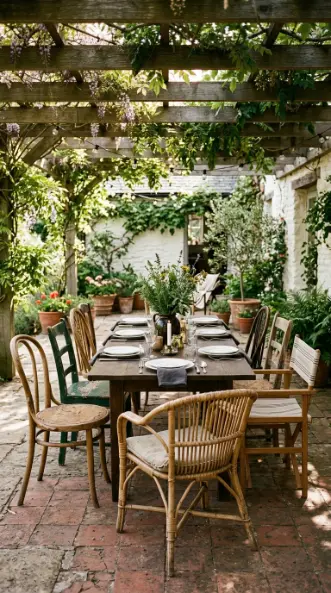
26. The Complete Cozy Pergola Dining Patio — Winter Afternoon
The cozy pergola dining patio on a winter afternoon — bare climbing plant stems weaving through the rafter structure with their own graphic winter beauty, low golden winter sun raking through the open rafter geometry at a long horizontal angle, a simple table set for four with candles burning in the low light, a chiminea burning at the patio edge, natural linen throws over two chairs, the garden bare and quiet beyond — is the version of the outdoor dining space that requires the most confidence in the design and rewards that confidence with the most spare and most quietly extraordinary seasonal atmosphere. The winter pergola dining patio is not a compromised version of the summer experience — it is a completely different and equally beautiful one.