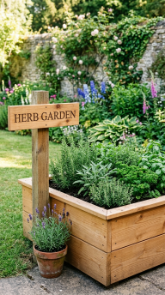
18 Herb Garden Ideas Rustic Cedar Raised Bed Outdoor
There is something deeply satisfying about growing your own herbs. Not the abstract satisfaction of having a garden, but the specific, immediate satisfaction of stepping outside before dinner, pinching a few sprigs of fresh rosemary from your own raised bed, and bringing them back to the kitchen still warm from the afternoon sun. A herb garden is the most personally useful garden you can grow — it produces something you use every single day, it takes up less space than almost any other edible garden, and it delivers a return on effort that no vegetable plot can match for sheer daily practical value.
The rustic cedar raised bed is the form that herb gardening takes when it is done with both intention and character. Cedar is the material choice that gardeners keep returning to not just because it works — though it absolutely does, lasting a decade or more in outdoor conditions without chemical treatment — but because of what it looks like and what it becomes over time. Freshly milled cedar has a warm red-honey tone that sits beautifully in any garden setting. As it weathers, it transitions through amber and gold toward the soft silvery patina that makes a well-aged cedar raised bed look like it has always been part of the landscape — as if the garden grew up around it rather than the other way around.
In 2026, the rustic cedar herb garden is at the center of one of the strongest trends in outdoor living: the productive beautiful garden, where the things you grow are as considered as the way you grow them. The raised bed is not hidden at the back of the property any more. It is positioned on the patio, beside the back door, along the kitchen garden path, or at the center of a dedicated outdoor kitchen garden zone where it can be seen, used, and genuinely enjoyed every day. These 18 ideas cover every dimension of creating a rustic cedar raised bed herb garden outdoors — from the bed design and layout to the herbs you plant, the accessories you add, and the finishing details that make the whole space feel genuinely designed.
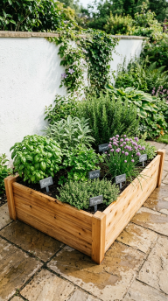
1.Build a Classic Rectangular Cedar Raised Herb Bed
The rectangular cedar raised bed is where most herb gardens begin and where many of them stay permanently — because the classic rectangular form, when built well from quality cedar boards and placed in the right location, is genuinely one of the most satisfying and most beautiful small outdoor structures a garden can have. Go for 1×6 or 1×8 cedar boards and keep pressure-treated timber away from your edible plants — untreated cedar is the correct and the beautiful choice. A standard raised bed of approximately 120cm by 90cm gives you enough growing area for eight to ten different herb varieties while keeping every plant within easy arm’s reach from the sides, meaning you never have to step into the bed itself. Build to a height of 30 to 45cm for the most comfortable working height and the best root depth for deep-rooted herbs like rosemary and sage. Cedar’s natural rot resistance means the bed will handle constant moisture from soil and rain without warping, shrinking, or swelling — and without any of the chemical treatments that less suitable timbers require to survive the outdoor environment.
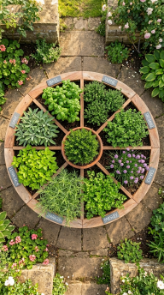
2.Plant a Culinary Herb Wheel Inside a Circular Cedar Frame
The herb wheel — a circular raised bed divided into segments by internal timber dividers radiating outward from a central hub, like the spokes of a cartwheel — is one of the most visually striking and most practically sensible herb garden designs available. It gives each herb variety its own clearly defined growing zone separated from its neighbors by a physical boundary, which is particularly important when aggressive spreaders like mint are included — kept in their own segment, mint stays where it belongs rather than consuming the entire bed. A circular cedar frame of approximately 120cm diameter gives eight to ten individual herb segments around a central decorative hub, which can hold a terracotta pot with a specimen rosemary standard, a small sundial, or a single decorative stone. Plant each segment with a different culinary herb — basil, thyme, oregano, chives, flat-leaf parsley, French tarragon, mint, lemon balm, and sage — and the finished wheel is a kitchen garden that functions as a garden feature, a decorating element, and a cooking resource simultaneously.
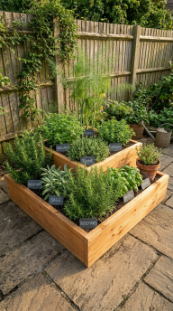
3.Stack Two Cedar Raised Beds in a Tiered Pyramid Formation
A tiered cedar raised bed — where a smaller, narrower bed is placed centered on top of a larger base bed to create a two-level pyramid formation — is the herb garden design that gives the most growing area in the smallest footprint while also creating one of the most visually dramatic and most garden-worthy outdoor structures a compact space can have. The pyramid formation creates two distinct growing environments on a single footprint: the lower, wider base bed with deeper soil is ideal for large-rooted herbs like rosemary, sage, and fennel, while the upper, shallower tier is perfect for compact herbs like thyme, oregano, and basil that need less depth. The tiered structure also makes harvesting intuitive — reaching into the upper tier for the herbs used most frequently, and into the lower tier for the larger perennial herbs that need less daily attention. In natural cedar, the two tiers of warm-toned boards stack visually in a formation that looks deliberately architectural from every angle in the garden.
4.Create a Cedar Raised Bed Kitchen Garden Beside the Back Door
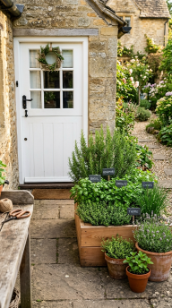
Positioning a cedar raised herb bed directly beside the back door — the door you use to exit to the garden from the kitchen — is the single most practical herb garden placement decision possible, and it is also one that produces a visual result more beautiful than almost any other garden planting position. When the raised bed is right beside the back door, herb harvesting becomes a reflex rather than an errand: you are cooking, you need rosemary, you open the back door, pinch three sprigs, and you are back at the stove in under thirty seconds. The repeated daily use of the garden gives it a warmth and a liveliness — plants being regularly tended and harvested stay healthier and bushier than neglected ones — and the cedar raised bed beside the door becomes part of the everyday architecture of the home rather than an aspirational project at the back of the property. Add a small potting bench beside the raised bed, a terracotta pot collection on the step beside the door, and a simple slate-labeled herb marker system in the bed itself, and the back door herb garden becomes the most characterful and most functional corner of the entire property.
5.Build a Cedar U-Shaped Raised Herb Garden for Maximum Accessibility
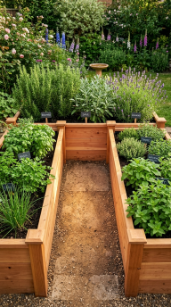
A U-shaped cedar raised bed — three rectangular bed sections arranged in a U formation with an open center walkway that allows you to step inside the U and access every part of every planting from a central standing position — is the most ergonomically considered and most productive herb garden layout possible for a gardener who grows a large herb variety collection. The U-shape gives you access to the inner face of all three bed sections from the center without ever having to reach from the outside, which means bed widths can be double what a standard side-access rectangular bed allows — up to 120cm wide sections instead of the 60cm maximum that outside-access beds require. In natural cedar with post-and-board construction and matching cedar corner caps, a U-shaped herb garden becomes a substantial outdoor structure that defines its own zone within the garden, creates a sense of enclosure and purpose in the growing area, and looks genuinely architectural rather than merely functional.
6.Add a Built-In Bench Seat Around the Cedar Raised Bed
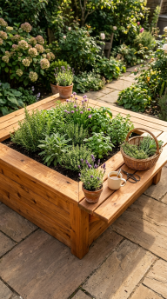
A cedar raised herb bed with a built-in bench seat — the bed frame extended outward at the top to create a wide flat ledge that serves as seating on all four sides, or on two sides in a corner arrangement — is the herb garden upgrade that transforms a purely functional growing structure into a place where people actually want to spend time. The wide cedar top rail, approximately 25 to 30cm wide and at a comfortable sitting height of 45 to 50cm, provides a seat for weeding, harvesting, or simply sitting beside the herbs on a summer evening. It also functions as a surface for setting down baskets, tools, and harvested bundles while working in the bed. The bench seat integration requires wider top boards on the frame than a standard raised bed — but the additional timber cost is immediately justified by the transformation in how the herb garden is actually used. A raised bed you can sit beside is visited more often, tended more carefully, and enjoyed more genuinely than one you can only stand beside.
7.Plant a Mediterranean Herb Collection in Weathered Cedar
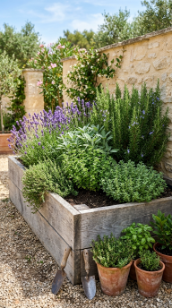
The Mediterranean herb collection — rosemary, lavender, thyme, sage, oregano, and marjoram — is the herb garden that asks for the least water, survives the most neglect, and rewards the most modest effort with the most consistently beautiful and most aromatic result. These are sun-loving, drought-tolerant herbs from the same coastal and mountain terroirs of southern Europe, and they grow together beautifully precisely because they share the same needs: full sun, well-drained soil, and very little fuss. In a weathered cedar raised bed — cedar that has been left to develop its natural silver-grey patina over a season or two — the Mediterranean herb collection finds its most visually appropriate container. The weathered silver-grey of aged cedar references the same sun-bleached, heat-cured material quality of the stone walls and olive wood of the landscapes these herbs originally come from. Plant the tallest herbs at the back, the spreading ones at the sides, and the lowest ground-covering varieties along the front edge so the planting creates a natural tiered visual from every viewing angle.
8.Install a Cedar Raised Herb Bed With a Trellis Back Panel
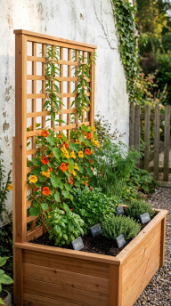
Adding a cedar trellis panel to the back of a raised herb bed — a lattice or simple vertical and horizontal rail trellis attached to the rear of the bed frame and rising approximately 90 to 120cm above the bed rim — gives the herb garden a vertical growing dimension that a standard open bed cannot provide, and it gives the entire structure a visual presence and an architectural completeness that transforms it from a planting container into a genuine garden feature. The trellis back panel supports climbing or scrambling herbs like climbing nasturtiums, trailing lemon verbena, or trained espalier herbs, and it also provides a natural tying point for tall herbs like fennel and dill that benefit from wind support in exposed positions. Even without plants trained onto it, the cedar trellis back panel gives the raised herb bed a strong vertical silhouette that reads as designed from every viewing angle in the garden — particularly from a distance, where the combination of the rustic cedar bed frame and the trellis back panel creates a visual anchor for the entire garden space.
9.Style the Herb Bed Surroundings With Gravel Paths and Terracotta Pots
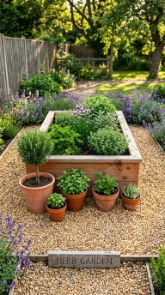
The space immediately surrounding the cedar raised herb bed — the area between the bed and the rest of the garden — is as important to the overall aesthetic of the herb garden as the bed itself. A gravel or pea shingle path running around the base of the raised bed creates a clear visual boundary between the growing structure and the surrounding lawn or planting, keeps weeds from encroaching on the bed sides, and provides a dry, clean surface for kneeling beside the bed when harvesting or weeding. Warm buff or honey pea gravel complements natural cedar beautifully — both materials sitting in the same warm, earthy color family. Terracotta pots of varying sizes arranged on the gravel beside the raised bed — each holding a different herb that benefits from being grown separately, like mint, or a purely decorative herb like scented geranium — extend the herb garden visually beyond the raised bed boundaries and create a layered, collected appearance that makes the whole corner of the garden feel like a dedicated kitchen garden zone rather than a single planting feature.
10.Build a Rustic Cedar Raised Bed From Reclaimed Timber
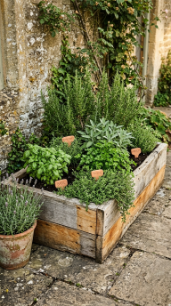
A raised herb bed built from reclaimed cedar timber — salvaged fence boards, old decking planks, or decommissioned cedar posts that carry the character of their previous lives — is the herb garden with the most genuine rustic quality available, because the rustic character is not applied or designed but simply the natural result of using materials that have already lived outdoors for years. Reclaimed cedar boards bring their own history to the raised bed: a varied patina that shifts between silver, grey, honey, and warm brown depending on how different sections weathered in their previous location, old nail holes that become decorative details rather than defects, slightly irregular edges that give the finished bed an organic quality that freshly milled timber cannot replicate. Build the bed with the same joinery as a standard cedar raised bed — corner posts, screwed boards, and a level foundation — but embrace the character variation rather than trying to eliminate it. A herb garden built from reclaimed cedar boards is a bed that looks like it has been there forever from the first season it is planted.
11.Label Herbs With Handmade Slate or Terracotta Markers
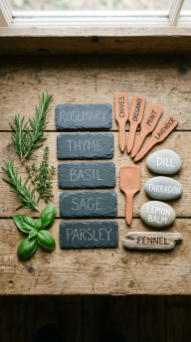
The herb label is the small detail that takes a lush green planting of similar-looking plants from an aesthetically complete herb garden into one that is both beautiful and genuinely informative — and the choice of label material is where the rustic cedar herb garden aesthetic can be either perfectly completed or slightly undermined. Plastic plant labels belong in polytunnels, not in a rustic cedar raised bed. The labels that belong beside the cedar are the ones that share the same material language as the bed itself: handmade slate labels with names scratched directly into the surface, small terracotta label stakes with handwritten names in a permanent marker, smooth river stones with herb names painted in white, or short lengths of thick jute twine tied to small pieces of driftwood with the herb name painted or burned onto the wood face. Any of these label approaches costs almost nothing to make, takes thirty minutes to complete for an entire herb garden, and produces a result that completes the rustic garden aesthetic in a way that no purchased plastic or metal label set could ever match.
12.Create a Potting Station Beside the Cedar Raised Bed
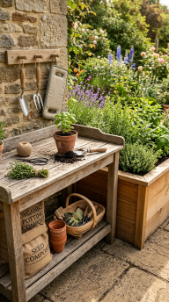
A small outdoor potting station positioned immediately beside the cedar raised herb bed — a narrow natural timber work bench with a lower shelf for soil and compost, a hook rail above for hanging tools, and the various terracotta pots and seed trays of the active growing season organized across its surface — turns a single raised bed into a complete outdoor kitchen garden zone with its own workspace and its own dedicated territory in the garden. The potting station does not need to be large or expensive to be transformative — a simple plank-top bench on hairpin legs or a reclaimed timber workbench of approximately 90cm width gives enough surface for repotting, seed sowing, and harvest prep without imposing a large footprint on the garden space. Position it on the same gravel or paving surface as the raised bed, accessorize it with the tools and containers of the active season, and the combination of the rustic cedar raised herb bed and the potting station beside it creates the kind of productive, characterful outdoor kitchen garden corner that makes people want to come and stand in it even when there is nothing specific to be done there.
13.Grow Herbs in a Cedar Raised Bed With Divided Compartments
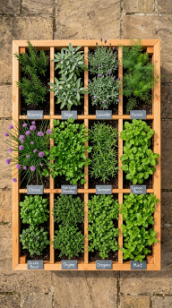
A cedar raised herb bed with internal timber dividers — thin cedar boards or planks set into the soil inside the bed to create individual growing compartments for each herb variety — is the organizational approach that gives every herb its own defined territory and eliminates the most persistent problem of shared herb beds: the aggressive spreaders taking over. Mint, lemon balm, and tarragon are the notorious offenders — given open bed space, they run through the soil and crowd out everything else within a season. Individual cedar compartments within the raised bed are the elegant solution: the visual warmth of the cedar divider rails gives the bed an internal structure that reads as decorative as well as functional, the compartments make harvesting intuitive because each plant is immediately identifiable by its zone, and the overall appearance of the divided bed — a grid of different green textures within a warm cedar frame — is one of the most visually satisfying herb garden arrangements possible.
14.Use a Cedar Raised Bed to Frame a Formal Knot Garden
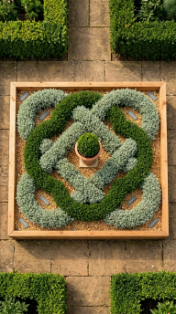
A knot garden — the intricate, interwoven pattern of low clipped herb hedging that was the defining garden feature of the formal English Tudor garden — is one of the most dramatic and most beautiful things a cedar raised bed can contain, and it is also genuinely achievable in a modest garden with the right low-growing herbs and a single season of patient shaping. The classic knot garden uses three or four different low-growing herbs — dwarf box, santolina, germander, and lavender — clipped into interlocking geometric bands that appear to weave over and under each other, creating a formal pattern visible from above. Inside a square cedar raised bed of approximately 90cm per side, a simple four-quadrant knot pattern using alternating bands of santolina and dwarf germander clipped to a uniform 15cm height creates a formal miniature garden that looks spectacular in all four seasons and becomes more refined and more defined with every clip it receives.
15.Harvest and Display Fresh Herbs in a Rustic Kitchen Bundle
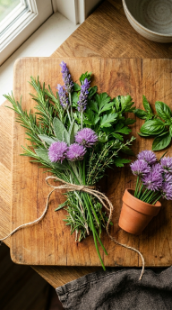
The moment when the herb garden connects most directly to the kitchen — the harvest — is also one of the most visually beautiful moments the rustic cedar herb garden creates, and it deserves to be treated as a deliberate ritual rather than a hasty grab before dinner. A full harvest from an established cedar raised herb bed produces a collection of cut stems in dramatically different colors, textures, and fragrances — deep green rosemary, sage, and basil; silver-grey lavender; golden fennel fronds; the delicate white of parsley flower heads when allowed to mature — that, gathered together and tied with natural jute twine into a loose herb bundle, is one of the most beautiful and most aromatic kitchen objects possible. Hung upside down on a hook above the kitchen work surface, stored in a stone crock beside the stove, or laid across a natural timber cutting board as an ingredient arrangement for an evening’s cooking, the harvested herb bundle is the point at which the outdoor garden and the indoor kitchen become part of the same continuous pleasure.
16.Add Solar Lanterns and Fairy Lights to the Herb Garden for Evening Atmosphere
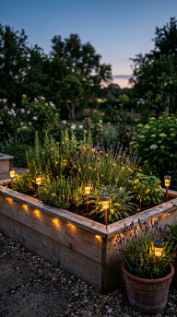
The cedar raised herb garden at night — when the cooking smells from the kitchen mix with the garden fragrance of rosemary, lavender, and thyme in the warm evening air, and the soft glow of solar lanterns illuminates the herbs from among their stems — is one of the most genuinely pleasurable outdoor moments a home garden can provide. Small solar stake lanterns placed directly in the soil of the raised bed between the herb plants, or battery-powered micro LED fairy lights woven loosely through the herb stems and over the cedar frame edges, turn the functional daytime kitchen garden into an atmospheric evening garden feature that makes the outdoor space worth being in long after the sun has gone down. Warm amber LED lights — never cool white — are the correct choice for the rustic cedar herb garden aesthetic. They complement the warm tones of the cedar and the warm fragrance of the herbs in the same way that firelight would, and they create the kind of softly glowing garden moment that no stronger or more directed light source could replicate.
17.Grow a Tea Herb Garden in a Compact Cedar Raised Bed
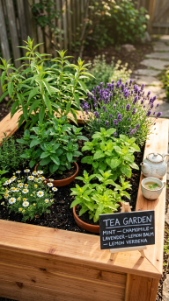
A tea herb garden — a raised bed dedicated entirely to herbs used for making fresh herbal infusions — is the most specific and most characterful single-theme herb garden possible, and in a compact cedar raised bed it becomes a genuinely beautiful and genuinely useful corner of the outdoor space. The tea herb collection includes: peppermint, spearmint, and lemon balm for classic fresh mint teas; chamomile with its apple-scented white daisy flowers for soothing evening infusions; lemon verbena for a vivid citrus tea; lavender for an aromatic floral brew; and tulsi basil for an adaptogenic herbal tea that has become increasingly popular. Plant the mint varieties in individual submerged terracotta pot sections within the bed soil to contain their spreading habit, allow the chamomile to self-seed freely for an abundant floral harvest, and position the lemon verbena — which grows into a substantial shrubby plant — at the back where it can reach its full height without shading the lower-growing herbs. Label each herb with handmade markers and add a small framed chalkboard listing the tea blending possibilities directly beside the bed.
18.Pair the Cedar Raised Herb Bed With a Kitchen Garden Sign
A handmade garden sign — carved, burned, or painted on a piece of reclaimed cedar board and mounted on a post beside the raised herb bed or on the garden wall above it — is the finishing detail that completes the rustic cedar herb garden aesthetic and announces the space with exactly the right character. The sign does not need to say much. “HERB GARDEN” in simple carved or burned lettering. “KITCHEN GARDEN.” “GROW YOUR OWN.” Or the name of the property if the garden has one. A piece of reclaimed cedar board approximately 30 to 40cm long with the lettering applied by wood burning tool — which gives the warmest, most characterful result — sealed with a clear outdoor wax and mounted on a simple post beside the raised bed is a project that takes an afternoon and produces a result that immediately gives the herb garden a name, a presence, and a sense of permanence that no amount of fine planting can achieve on its own. The sign signals that this garden was designed and built with intention — that the person who made it cares about both what it grows and how it looks.